
Blog
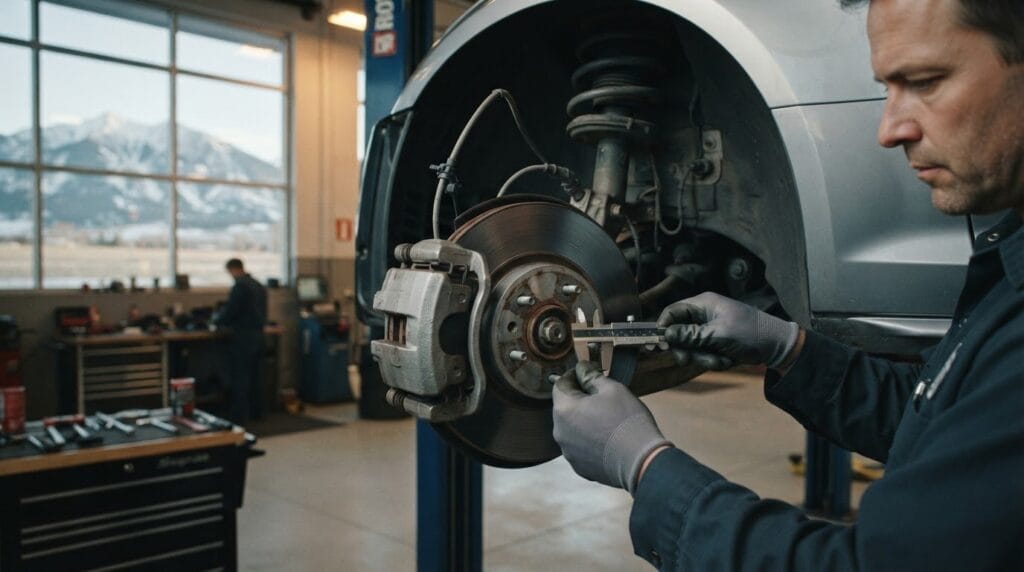
What if a brake noise points to more than worn pads? A squeal, grinding sound, pulsing pedal, or pull to one side can signal a problem, but symptoms alone don’t identify the cause. Because brakes rely on several parts working together, guessing which one needs attention can miss an issue elsewhere in the system.
It’s understandable to feel uncertain when the pedal changes or a dashboard warning light comes on. Pads, rotors, calipers, brake fluid, and ABS all play different roles, and similar symptoms can have different causes. A qualified inspection can help identify what’s happening and explain why a repair is recommended.
This guide explains how the main brake components work, which warning signs call for prompt attention, and when it’s safest to stop driving and seek professional help. You’ll also learn what details to share with a technician, such as when the symptom began, what it sounds or feels like, and whether a warning light appeared. Those observations can help focus the diagnosis.
Key Takeaways
- Brake systems turn vehicle motion into heat to slow or stop the car, with components working together from pedal input to wheel braking.
- ABS and stability systems can influence braking, but they don’t replace the mechanical components that need inspection.
- Use symptoms as clues, not a diagnosis. An inspection can help identify which part of the brakes needs attention.
- Check your owner’s manual for vehicle-specific maintenance intervals, and keep a clear record of when symptoms occur and how they feel.
- Before arranging help in Belgrade, ask about experience with your vehicle, diagnostic findings, and parts sourcing. Euro Performance Auto Shop LLC has ASE-certified technicians specializing in European vehicles, but confirm directly whether it handles your specific brake concern.
Brakes 101: What the System Does and Why Every Component Matters
Brakes slow or stop a vehicle by converting motion into heat. Pressing the pedal starts a chain of actions that applies friction at the wheels, though the exact hardware and controls vary by vehicle.
A brake system is the complete set of components that turns a driver’s braking input into controlled slowing at the wheels; a brake part is one element within that system. A worn part can affect system performance, but identifying the cause means considering how the components work together. The Brake overview describes the broader principles of friction and different brake types.
How does a car brake system slow the wheels?
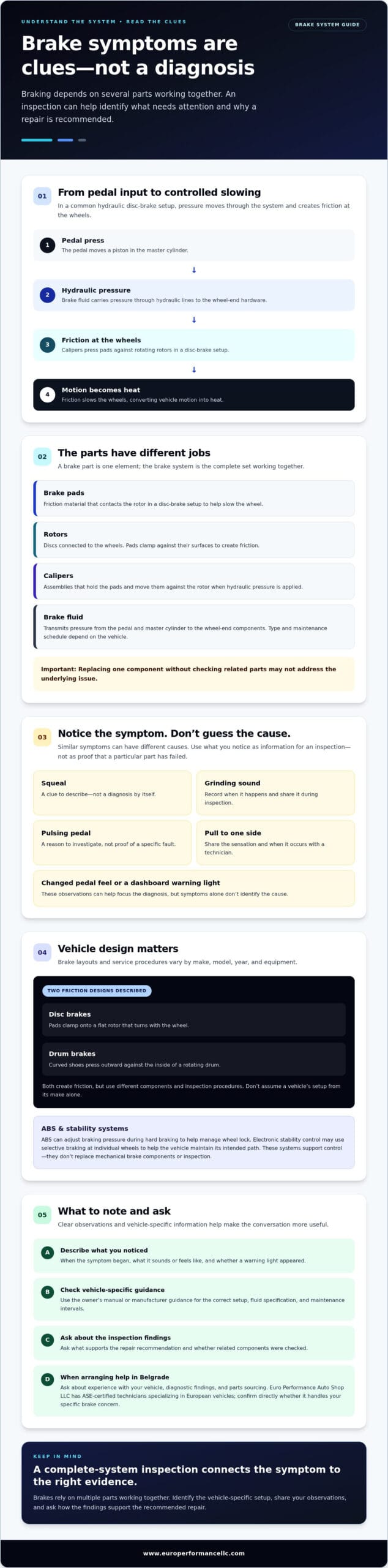
In a common hydraulic setup, pressing the pedal moves a piston in the master cylinder and creates pressure in the brake fluid. That pressure travels through hydraulic lines to the braking hardware at the wheels. In a disc-brake setup, calipers use the pressure to press brake pads against rotating rotors. Friction between pads and rotors slows the wheels and converts motion into heat.
Not every vehicle uses the same layout. Some have disc brakes at all four wheels; others use different arrangements across the front and rear axles. The sequence and components can also vary with vehicle design. Consult vehicle-specific service information rather than assuming another model’s setup applies to yours.
What do pads, rotors, calipers, and brake fluid do?
- Brake pads: Friction material that contacts the rotor in a disc-brake setup to help slow the wheel.
- Rotors: Discs connected to the wheels. Pads clamp against their surfaces to create friction.
- Calipers: Assemblies that hold the pads and move them against the rotor when hydraulic pressure is applied.
- Brake fluid: Hydraulic fluid that transmits pressure from the pedal and master cylinder to the wheel-end components. Its specified type and maintenance schedule depend on the vehicle, so check the owner’s manual or manufacturer guidance.
These parts must work together. Replacing one component without checking related parts may not address the underlying issue. Ask for inspection findings to be explained in the context of the complete system.
ABS, or the anti-lock braking system, monitors wheel behavior and can adjust braking pressure during hard braking to help manage wheel lock. It supports control, but it doesn’t replace attentive driving, appropriate following distance, or a properly maintained braking system.
How Brake Components Work Together in European Cars
European vehicles don’t share one universal brake layout. Disc brakes are common, but a vehicle may use different designs on the front and rear axles. Make, model, year, and equipment affect the parts fitted and the correct service procedure. Check the owner’s manual or ask a technician to confirm your vehicle’s configuration before ordering parts or assuming how its brakes are built.
How do disc brakes and drum brakes differ?
In a disc setup, pads clamp onto a flat rotor that turns with the wheel. In a drum setup, curved shoes press outward against the inside of a rotating drum. Both create friction to slow the vehicle, but they use different components and inspection procedures. Neither design is automatically best for every vehicle or position. For an accessible overview of hydraulic braking principles and component interaction, see How Brakes Work.
Don’t identify a vehicle’s setup by its make alone. Consult the manual or ask a qualified technician to verify which components and specifications apply to your exact model.
Replacing one brake component doesn’t automatically resolve every symptom, because the cause may lie in another part of the system or in how its components work together. Vibration, for example, is a reason to investigate, not proof that a particular part needs replacement. Ask what inspection findings support a recommendation and whether related components were checked.
What role do ABS and electronic stability systems play?
ABS, the anti-lock braking system, can adjust braking pressure during hard braking to help prevent a wheel from remaining locked. Electronic stability control may also use selective braking at individual wheels to help the vehicle maintain its intended path. These systems support control in certain conditions, but they don’t replace the mechanical parts that create braking force or the need for vehicle-specific inspection and maintenance.
A brake or ABS warning indicator that stays on deserves prompt attention. The light’s meaning and recommended response can vary by model, so consult the owner’s manual. If a warning appears alongside a change in braking performance, follow the manual’s safety instructions and arrange a professional diagnosis rather than assuming an electronic system has corrected the issue.
For a European vehicle, confirm that proposed parts and service procedures match its specific make and model. Euro Performance LLC is a Belgrade repair shop with ASE-certified technicians specializing in European vehicles. You can learn about Euro Performance LLC and confirm directly whether it handles your vehicle and brake concern.
Brake Warning Signs: What They Can Tell You, and What They Cannot
A sound or change in pedal feel can point to an area that needs attention, but it can’t confirm which part has failed. Noise alone doesn’t prove that pads or rotors need replacement. Note what happens, when it occurs, and whether braking or vehicle control has changed. Have persistent or worsening symptoms assessed.
What can squealing, grinding, or vibration mean?
A brief squeak can have several possible explanations, including moisture or surface debris. Recurring squealing may be associated with pad wear or contact between components. Grinding can indicate more serious contact or wear and shouldn’t be ignored. Vibration during braking may involve the rotors, but other wheel or suspension concerns can also contribute. These are possibilities, not diagnoses.
A short-lived sound doesn’t establish that everything is safe. If a noise returns, gets louder, or comes with pulling or reduced control, arrange an inspection promptly.
| Observed symptom | Possible system area | Recommended next action |
|---|---|---|
| Persistent squealing | Pads or another contact point | Arrange an inspection, especially if the sound is worsening. |
| Grinding | Friction surfaces or related hardware | Treat it as urgent and seek professional advice. |
| Vehicle pulls while braking | Brake components, tires, or suspension | Have the cause assessed rather than assuming one part is responsible. |
| Vibration or pulsing under braking | Rotors or other wheel and suspension components | Schedule an inspection if it persists or affects control. |
| Soft, spongy, or unusually low pedal | Hydraulic system or another brake-control issue | Stop safely. Don’t continue driving if braking response is compromised. |
| Brake-system warning indicator | Meaning varies by vehicle and warning | Check the owner’s manual and seek prompt diagnosis. |
When does a brake warning light or soft pedal need urgent attention?
Changed braking response is safety-critical. If the pedal suddenly feels soft, sinks unusually far, or the vehicle doesn’t slow as expected, move to a safe location and stop. Don’t continue driving with compromised braking ability. Follow your owner’s manual for the warning indicator’s specific meaning and instructions; dashboard messages differ by model.
A brake or ABS warning that remains illuminated needs professional diagnosis, even if the vehicle seems to respond normally. Tell the technician which light appeared, whether it stayed on or came and went, and what you felt or heard. Those details can guide the inspection without treating a symptom as proof that one component must be replaced.
Brake Maintenance and Inspection: Practical Steps for Vehicle Owners
There isn’t one inspection interval that fits every car. Manufacturer recommendations, vehicle use, driving conditions, and observed condition all matter. Use the service schedule for your exact make, model, and year. For brake-fluid service, check the manual rather than relying on a universal mileage or time rule. Euro Performance LLC’s European car factory scheduled maintenance guide explains why following vehicle-specific maintenance guidance matters.
How often should brakes be inspected or serviced?
Follow the manufacturer’s schedule and arrange an inspection sooner if you notice a new noise, vibration, pulling, warning light, or change in pedal feel. Frequent stop-and-go driving, steep routes, heavy loads, and other driving conditions can affect component wear, so consider the vehicle’s condition as well as its scheduled intervals. Brake-fluid recommendations also vary by vehicle. Check the owner’s manual or manufacturer documentation for the correct specification and service guidance.
What should you expect during a professional brake inspection?
An inspection generally considers the reported symptoms and relevant brake components, but the exact checks and procedures depend on the vehicle and concern. Ask the technician to explain what was inspected, which findings support each recommendation, and whether measurements or other evidence are available. This helps you distinguish an observed issue from a suggested repair and understand whether related components were considered.
Before arranging an appointment, use this simple routine:
- Note the symptoms. Record when they began, what you hear or feel, and whether they happen under particular driving conditions.
- Check the manual. Look up the vehicle’s maintenance schedule and any instructions for dashboard warnings.
- Arrange an inspection. If braking response has changed or a warning appears, follow the manual’s safety guidance and seek professional advice promptly.
- Discuss the findings. Share when symptoms occur, any warning lights, recent service, and changes in how the vehicle responds. Ask what evidence supports recommended work.
For European vehicles, model-specific knowledge can be useful because parts and procedures differ across makes and models. Euro Performance LLC is a Belgrade shop with ASE-certified technicians specializing in European vehicles. Its European vehicle repair guide for Belgrade provides more information about its specialization. Confirm directly whether the shop handles brake inspections or repairs for your specific vehicle. Contact Euro Performance LLC to ask about your vehicle.
Choosing Brake Help in Belgrade, Montana: What to Ask Before Repairs
A clear diagnosis connects the symptom you reported to specific inspection findings. Before approving work, ask the shop to explain what it found, which components need attention, and how the recommendation relates to your vehicle’s requirements. This helps you understand the proposed repair instead of relying on a symptom alone to identify the cause.
What should you ask a shop before approving brake work?
Confirm that the shop services your vehicle’s make, model, and specific concern. Then ask practical questions such as:
- Who will inspect the vehicle? Ask about the technician’s credentials and experience with your make and model.
- What supports the recommendation? Request the inspection findings, the components involved, and any measurements or other evidence the shop can provide.
- Which parts are proposed? Ask whether the parts meet your vehicle’s specifications and whether OE-manufacturer options are available. Confirm which parts are included in the estimate.
- What needs attention first? Ask the technician to explain safety priorities and whether any other findings can be monitored rather than addressed immediately.
A useful explanation makes clear what was observed and why the proposed work addresses it. If something is unclear, ask for the finding to be explained in plain language before authorizing the repair.
When is a European-vehicle specialist relevant for brake concerns?
Vehicle-specific experience can matter because parts, diagnostic processes, and service procedures vary across makes and models. For a modern European vehicle, ask whether the shop has experience with your particular model and can verify the correct specifications. A specialist may also help investigate symptoms that don’t point clearly to one cause, but confirm that the shop handles your specific brake concern.
Euro Performance LLC is located in Belgrade, Montana, and specializes in European vehicles. Its technicians are ASE-certified, and the shop performs European vehicle repair and complex diagnostics. This doesn’t confirm that it currently offers a particular brake inspection or repair, or supports every European model for that work. Verify availability and vehicle fit directly before booking.
If you have a European vehicle concern, you can contact Euro Performance about European vehicle repair in Belgrade to discuss your vehicle and confirm whether the shop can address the brake service you need.
Make Your Next Brake Decision with Confidence
Brake symptoms are important clues, not a diagnosis. Since pads, rotors, fluid, and electronic systems work together, an inspection should connect what you’ve noticed to clear findings and explain why any recommended work is needed. Follow your vehicle’s maintenance schedule, and treat a change in braking response or a persistent warning as a safety concern.
For a European vehicle, model-specific experience can help clarify the next step. Euro Performance LLC is based in Belgrade and has ASE-certified technicians who handle European vehicle repair and complex diagnostics, using parts from top OE manufacturers. Confirm directly whether the shop can address your specific brake concern and supports your vehicle before arranging service.
Contact Euro Performance LLC about European vehicle repair in Belgrade to discuss your vehicle and ask about available help. Share what you’ve noticed and confirm whether the shop can handle your specific brake concern.
Frequently Asked Questions
How do car brakes work?
Car brakes slow a vehicle by creating friction that converts motion into heat. In a common hydraulic system, pressing the pedal sends pressure through brake fluid to components at the wheels. With disc brakes, calipers press pads against rotating rotors; other vehicles may use different layouts, including drum brakes. ABS can adjust braking pressure under certain conditions to help manage wheel lock, but it doesn’t replace careful driving or system maintenance.
What are the most common signs that brakes need inspection?
Common signs include persistent squealing or grinding, vibration during braking, the vehicle pulling to one side, a soft or unusually low pedal, and a brake-system warning light. These symptoms can point to different areas and don’t identify a failed part on their own. Note when each symptom occurs and whether it’s getting worse. Arrange an inspection for persistent changes, and treat reduced braking response as a safety concern.
Is it safe to drive if my brakes are making noise?
Noise alone can’t confirm whether a vehicle is safe to drive, so don’t use the sound as a diagnosis. A recurring squeal, grinding noise, or sound accompanied by vibration, pulling, or changed pedal feel needs prompt attention. If braking response is reduced or unpredictable, stop in a safe place and don’t continue driving. If you’re unsure, consult the owner’s manual and contact a qualified technician for guidance.
How often should brakes be checked?
Follow the inspection and maintenance schedule in your owner’s manual because intervals vary by vehicle, design, and use. Driving conditions and observed component wear can also affect when an inspection is appropriate. Don’t wait for a scheduled check if you notice a new noise, warning indicator, pulling, vibration, or change in pedal feel. Brake-fluid service requirements differ too, so verify the correct guidance in manufacturer documentation.
What is the difference between brake pads and rotors?
Brake pads are friction materials that press against a rotor to help slow a wheel in a disc-brake system. The rotor is the flat disc that turns with the wheel, while the caliper holds and moves the pads against it. They work together, but they’re separate components and can have different wear conditions. A technician should inspect the system and explain the findings before recommending replacement.
What does the ABS warning light mean?
An illuminated ABS warning light indicates that the anti-lock braking system may need attention, but its meaning and recommended response depend on the vehicle. Check the owner’s manual for model-specific instructions and arrange professional diagnosis if the light stays on. If braking feels different, the vehicle doesn’t slow as expected, or another brake warning appears, stop safely and don’t continue driving with compromised braking performance.
Can I tell which brake part is faulty from the noise?
No. A squeal or grinding sound can have several possible causes, and the sound alone can’t confirm whether pads, rotors, or another component needs repair. A brief noise also shouldn’t be treated as proof that the system is fine. Note when it happens, how often it returns, and whether braking or steering changes. An inspection can connect those observations to evidence about the vehicle’s condition.