
Blog

You don’t have to wait for a serious conflict to work on your relationship. Explaining the need for a preventative repair to my husband can mean presenting it as a shared way to stay connected, not as proof that something is badly wrong. The goal is to find small, practical ways to notice tension and reconnect before it grows.
It’s understandable if the idea feels uncomfortable: he may hear “repair” as blame or criticism, while you may simply want more closeness and better conversations. Start by describing what you miss or hope to build, then make room for his perspective. Listening first can help the conversation feel like an invitation, not a verdict.
This article explains how to raise the idea with empathy, understand what your husband hears, and choose a realistic change together. You’ll also learn how everyday habits, thoughtful repair attempts, and support during difficult conversations can help you care for your relationship before a problem feels overwhelming.
Key Takeaways
- Frame preventative relationship repair as a shared way to stay connected, and choose one small, achievable change together.
- Ask about your husband’s feelings and try to understand what he heard before explaining your intentions.
- Use appreciation, validation, and specific apologies to make repair feel sincere rather than defensive.
- Notice when avoiding difficult moments is reinforcing distance, and agree on a calm time to return to important conversations.
- For vehicle repairs, compare recommendations with the vehicle’s factory-scheduled maintenance needs and the issue being addressed.
Choosing repair strategies together
Preventative repair can mean tending to a relationship before distance hardens into recurring conflict. Agree on one specific, achievable change, such as sharing coffee without phones or taking a walk after dinner. Treat the routine as a practical experiment in connection, not a test of who is right or who needs fixing.
Gottman’s Repair Checklist offers phrases partners can choose together to help de-escalate conflict. Pick wording that sounds natural to both of you, such as “Can we start again?” or “I want to understand.” Try the phrases during a calm conversation first, then decide how either partner can signal a pause when a disagreement intensifies.
For a compassionate example of conflict communication, watch Terri Cole’s video:
Make the plan mutual. Each partner can name one small action that helps them feel connected, then agree on a routine that makes room for both. For example, one person might want time to talk after work, while the other prefers a quiet transition. A workable agreement could be a brief check-in after dinner, with both partners taking turns sharing what’s on their minds.
When conflict rises, a pause can protect the conversation from becoming more damaging. Name the break and set a return time, such as taking a 20-minute break before resuming. If either person still feels overwhelmed, explain that clearly and agree when to return. The point is to pause the argument, not abandon the repair.
What questions should I ask a repair professional before approving work? Ask what inspection finding supports the recommendation, what the work addresses, and what could happen if it waits. Also ask which item is urgent, which can be monitored, and how the recommendation relates to the vehicle’s factory-scheduled maintenance.
Are there safety risks if this repair is postponed? The risk depends on the part and the problem. Ask the professional to explain whether it affects safe vehicle operation, what signs mean you should stop driving, and how postponement could affect the vehicle’s condition.
How do we prioritize preventative repairs on a household budget? Start with safety concerns and maintenance tied to the vehicle’s schedule, then weigh the evidence and consequences of delay. Ask for recommendations grouped by urgency so you and your husband can make a clear, shared decision without treating every suggested repair as equally pressing.
The same shared approach can guide relationship care: choose one routine, try it consistently, and discuss what feels useful. If the first choice doesn’t suit both partners, adjust the plan together rather than turning the attempt into another point of conflict.
Listening before explaining intent
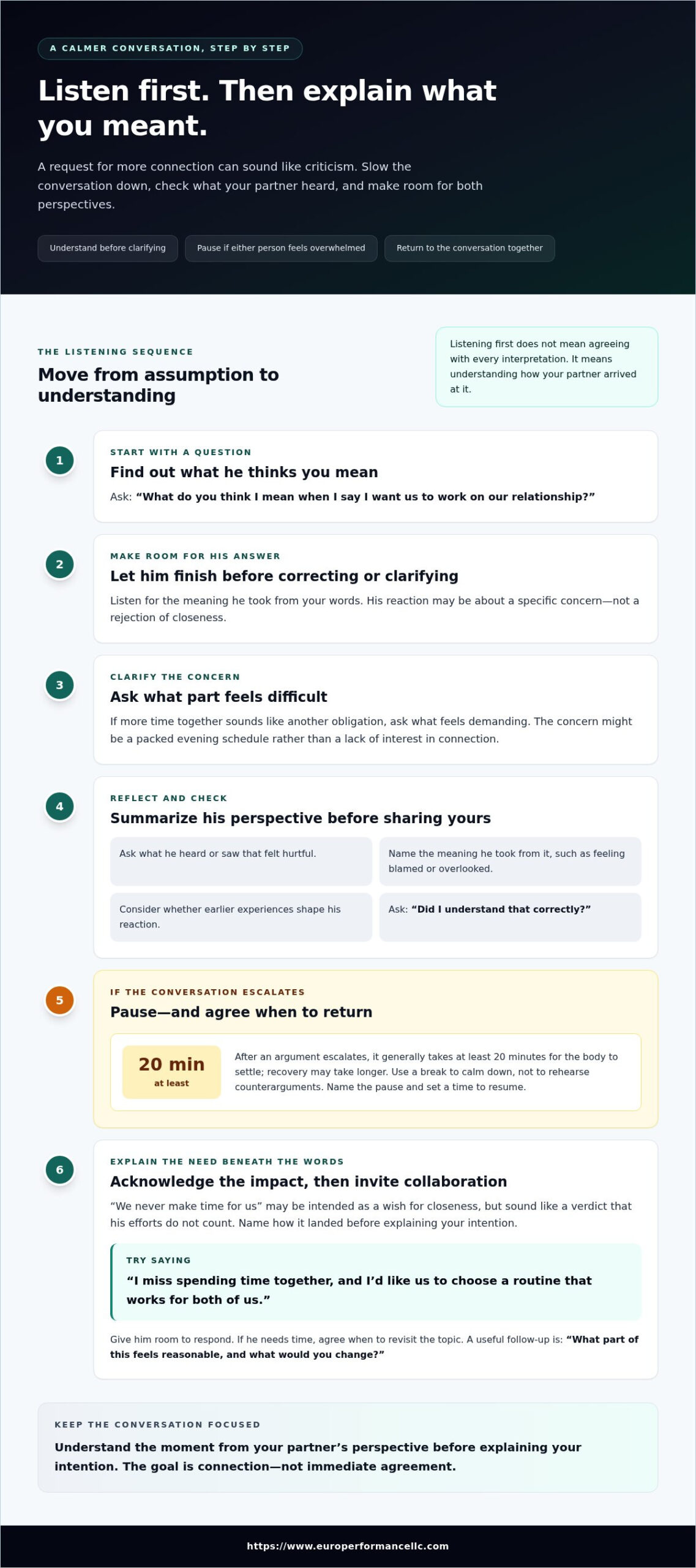
Before proposing a relationship change, understand what your partner thinks is happening. A request for more connection may sound like criticism if your husband hears, “You’re failing me.” Begin with a specific question: “What do you think I mean when I say I want us to work on our relationship?” Let him finish before correcting or clarifying his answer.
Listening first doesn’t require agreeing with every interpretation. It means understanding how your partner arrived at it. If he says a request for more time together feels like another obligation, ask what part feels demanding. He may be reacting to a packed evening schedule, not rejecting closeness. Clarifying that distinction helps you discuss the actual concern instead of debating an assumption.
During an escalating argument, heart rate can rise and perspective-taking can drop sharply. That makes a careful explanation harder to hear. If either of you feels overwhelmed, pause the conversation and agree when to return. After an argument escalates, it generally takes at least 20 minutes for the body to settle, and recovery may take longer. Use the pause to calm down, not to rehearse counterarguments.
When you return to the conversation, try to understand the moment from your partner’s perspective before sharing your intention. Consider these steps:
- Ask what he heard or saw that felt hurtful.
- Reflect the meaning he took from it, such as feeling blamed or overlooked.
- Ask whether earlier experiences between you shape his reaction.
- Summarize his perspective, then ask if you understood it correctly.
For example, “We never make time for us” may be intended as a wish for closeness. Your partner might hear it as a verdict that his efforts don’t count. You could first acknowledge that the words sounded dismissive, then explain the need beneath them: “I miss spending time together, and I’d like us to choose a routine that works for both of us.” Naming the impact before the intention helps keep the conversation focused on connection.
Give your partner room to respond, even if his first reaction feels lukewarm. A repair conversation isn’t a demand for immediate agreement. If he needs time, agree on when to revisit the topic instead of pressing for a decision. Try asking, “What part of this feels reasonable, and what would you change?” It invites collaboration without requiring either person to abandon their perspective.
If the discussion concerns a vehicle’s maintenance, separate the relationship conversation from the technical question. Ask what the recommendation addresses and what evidence supports it; specialized European auto repair can address vehicle-related concerns. Then return to the shared decision with clearer information and space for each partner’s view.
Using humor, validation, apologies, and empathy
Small conversational choices can make a repair feel welcoming or dismissive. Humor may soften tension when both partners feel safe, but it shouldn’t make light of a hurtful moment. If your husband says he felt criticized, a joke about being “the relationship maintenance manager” could sound like another jab. Acknowledge his concern first. Save playful humor for a moment when you’re both receptive.
Validation means recognizing your partner’s experience without claiming that every interpretation is correct. Try, “I can see why my wording sounded like blame,” before explaining what you meant. That names the impact instead of arguing over whether he should feel hurt. Ask what part landed hardest, then listen without interrupting or correcting details.
An apology works best when it identifies your own specific action. “I’m sorry you got upset” focuses on his reaction. “I’m sorry I dismissed your idea during dinner” names what you did. Then say what you’ll try next time, such as asking a question before disagreeing. A clear apology takes responsibility without turning into a list of excuses.
Defensiveness often eases when each person owns a part of the problem and shows interest in the other’s feelings. If you raised a relationship concern during a stressful evening, you might say, “I chose a difficult time, and I want to understand how that felt for you.” This doesn’t mean taking responsibility for everything. It shows your partner you’re examining your contribution while staying curious about his experience.
Say your appreciation aloud, too. Your husband may not realize you noticed that he handled dinner or made time for a difficult conversation. Be specific: “I appreciated that you stayed with the conversation even when it felt uncomfortable.” Concrete recognition builds fondness, appreciation, and respect, which counter contempt. A broad “You’re great” can feel pleasant, but recognizing a specific action gives your partner a clearer reason to feel valued.
Empathy brings these tools together without requiring instant agreement. If your partner says he feels pressured by a request for more connection, reflect that concern: “You’re worried this will become another obligation.” Then explain your need without dismissing his: “I miss having time together, and I’d like us to find something that feels manageable.” Ask what change could work for both of you, then acknowledge any repair attempt, even if you still need time to respond. A sincere effort matters more than perfect wording. Warmth can help, but accountability and careful listening make a repair credible.
What problems can delaying a preventative repair cause?
In relationships, delaying repair can allow one painful moment to shape the next conversation. If a partner feels dismissed and then avoids raising concerns, the silence may seem peaceful at first. Yet unresolved hurt can make later disagreements feel tied to the earlier one. Couples can become caught in a cycle where each person expects criticism or withdrawal.
Avoidance can also make small bids for connection easier to miss. Imagine one partner sharing a story after work and getting only a distracted response. If that pattern repeats, the partner may stop reaching out, and everyday opportunities for closeness can shrink. Responding with attention, a brief question, or a warm gesture helps keep connection from depending on a major conversation.
Delaying repair may turn a specific concern into a broader accusation. “I felt alone when we skipped our walk” can become “You never make time for me” after similar disappointments go unaddressed. The broader claim is harder to discuss because it invites a debate about “never” and “always,” rather than the original moment. Naming the event and its impact earlier keeps the conversation focused.
Outside stress can add another layer. If work pressure or family demands go unspoken, partners may experience each other’s requests as additional obligations. A brief check-in about what is weighing on each person can help the relationship remain a refuge. Predictable routines, such as coffee together or a walk after dinner, create regular chances to reconnect before distance becomes the norm.
Physical affection can also fade when hurt remains unaddressed. Small gestures, such as holding hands or offering a caring touch, may help partners feel like a couple outside sexual intimacy. Both people should welcome these gestures; they aren’t substitutes for listening or resolving a concern. If affection feels strained, a direct conversation about comfort and closeness can clarify expectations.
For a vehicle, postponing an identified maintenance concern can leave the underlying condition unaddressed. The consequences depend on the component and the professional’s findings, so ask what the recommendation is intended to prevent and whether it affects safe operation. Specialized European auto repair addresses vehicle concerns, while relationship repair calls for a conversation between partners.
If repeated conflict keeps returning to the same unresolved issue, couples therapy can help partners practice everyday connection and make repair more reliable. The suggested approach is to begin couples counseling once a month for a couple of sessions, then decide together what schedule feels right. The goal isn’t perfect agreement; it’s for both partners to speak, listen, and return to concerns with greater care.
How to tell whether a preventative repair is necessary or an upsell
A vehicle repair recommendation is easier to evaluate when it connects to a specific finding, maintenance requirement, or concern. Ask the professional to explain what they observed, which component is involved, and how the proposed work addresses it. For example, “This part is worn” is less useful than an explanation of the inspection finding and its practical significance.
Compare the recommendation with the vehicle’s factory maintenance schedule. Scheduled maintenance and work prompted by an inspection are different reasons for service. Ask which applies, what information supports the recommendation, and whether the work addresses an existing condition or helps maintain the vehicle. A clear explanation connects the finding to the proposed action without relying on pressure.
Ask the professional to distinguish urgency from preference. Some work may need prompt attention because it affects safe operation; other recommendations may involve monitoring or planned maintenance. Request a plain-language explanation of what postponement could mean for the specific component. Don’t assume every preventative recommendation is urgent, or that every unfamiliar recommendation is an upsell.
Use these questions to make the discussion concrete:
- What inspection finding supports this recommendation?
- What does the repair address, and what may happen if it waits?
- Is this required by the vehicle’s maintenance schedule, or based on a condition found during inspection?
- Which item should be handled first, and which can be monitored?
- What changes would indicate the vehicle needs attention sooner?
A recommendation deserves closer examination if its explanation is vague, the professional can’t connect the work to a finding or schedule, or every item is described as equally urgent. These are reasons to ask for clarification, not automatic proof of an upsell. A useful explanation identifies the affected component, explains the reason for the work, and distinguishes immediate concerns from future maintenance.
Review the information together before approving work. One partner can note the professional’s explanation while the other asks follow-up questions. Then compare the recommendation with your vehicle records and household priorities. If the vehicle is due for scheduled maintenance, its service history can help clarify whether the proposed work fits the maintenance plan or addresses a separate finding.
Keep the conversation with your husband focused on evidence rather than suspicion. You might say, “Let’s understand what the inspection found and decide which item matters most.” That invites a shared decision without framing either partner as careless or overly cautious. A clear explanation can also make it easier to discuss timing and budget calmly.
For a European vehicle, use a repair conversation to clarify the inspection finding, the recommended work, and its priority. Discuss a European vehicle repair concern with a professional who can address the vehicle’s needs.
Euro Performance Auto Shop: Specialized European Auto Repair
Euro Performance Auto Shop LLC helps European vehicle owners address maintenance and repair concerns with specialized European auto repair. If your discussion with your husband involves a vehicle, separate the relationship conversation from the technical decision: review the recommendation, ask what it addresses, and compare it with the vehicle’s maintenance needs.
For planned upkeep, Factory Scheduled Maintenance (FSM) and routine services can help you follow the vehicle’s maintenance requirements. Advanced Wheel Alignment & ADAS Calibration addresses specific vehicle needs when appropriate. These automotive services are distinct from preventative relationship repair, which depends on listening, empathy, and shared choices between partners.
For help with a European vehicle’s maintenance or repair, contact Euro Performance Auto Shop LLC in Belgrade, MT to discuss your needs.
Make the Next Conversation a Shared Step Forward
The next step doesn’t need to solve every concern at once. Choose one specific conversation or small action that feels manageable to both of you. If you’re explaining the need for a preventative repair to your husband, focus on what you hope to protect or improve, then invite him to shape the plan with you. A shared decision can begin with curiosity, not complete agreement.
Keep relationship care distinct from vehicle maintenance. They call for different kinds of expertise, even when both involve prevention and a shared household decision. For European vehicle concerns, Euro Performance Auto Shop LLC offers Specialized European Auto Repair, Factory Scheduled Maintenance (FSM), and Advanced Wheel Alignment & ADAS Calibration. Clear information about the vehicle can help you discuss its needs together without turning a maintenance question into a personal disagreement.
Contact Euro Performance Auto Shop LLC today to discuss European vehicle maintenance or repair. Take the conversation one step at a time, and make room for both perspectives as you decide what comes next.
Frequently Asked Questions
Can this help before problems even start?
Yes. Preventative relationship care lets couples discuss expectations before a recurring disagreement takes shape. For example, agree on how to raise concerns about household decisions, then use that approach when a new issue comes up. This can make it easier to address a concern while it’s still specific. For vehicle maintenance, following the manufacturer’s schedule helps address service needs before they become a breakdown concern.
What if my partner won’t do the preventative work?
Ask what makes the change difficult before deciding your partner doesn’t care. He may be concerned about timing, household priorities, or what the recommendation involves. Narrow the discussion to one choice and invite his input, such as deciding what information would help you both feel ready. If the issue involves vehicle safety, keep it separate from relationship tension and seek a clear explanation of the concern.
Which matters more, prevention or repair?
Neither replaces the other. Prevention helps maintain connection or follow a vehicle’s scheduled maintenance needs; repair addresses a problem that already exists. If a concern has surfaced, don’t treat a preventative routine as a substitute for discussing it directly. For a vehicle, distinguish scheduled maintenance from work recommended after an inspection. The reason for the work determines which category applies and what decision needs attention first.
How to explain the benefits of preventative repairs to a spouse
When explaining the need for a preventative repair to my husband, I’d connect the request to a shared goal, then ask what he thinks. For example: “I’d like us to understand what this maintenance addresses so we can decide together.” Keep the discussion grounded in the specific recommendation, not worst-case predictions. For a European vehicle, compare the proposed work with its maintenance needs and inspection findings.
How much does the repair cost now versus after a breakdown?
For automotive work, the price depends on the case and is given after a quote request; it depends on the vehicle, the service needed, and the work identified. A breakdown may involve additional work if other components are affected, so compare the specific findings rather than assuming a fixed cost difference. Euro Performance Auto Shop LLC lists some services as “Varies,” and does not provide a universal repair-cost comparison.