
Blog
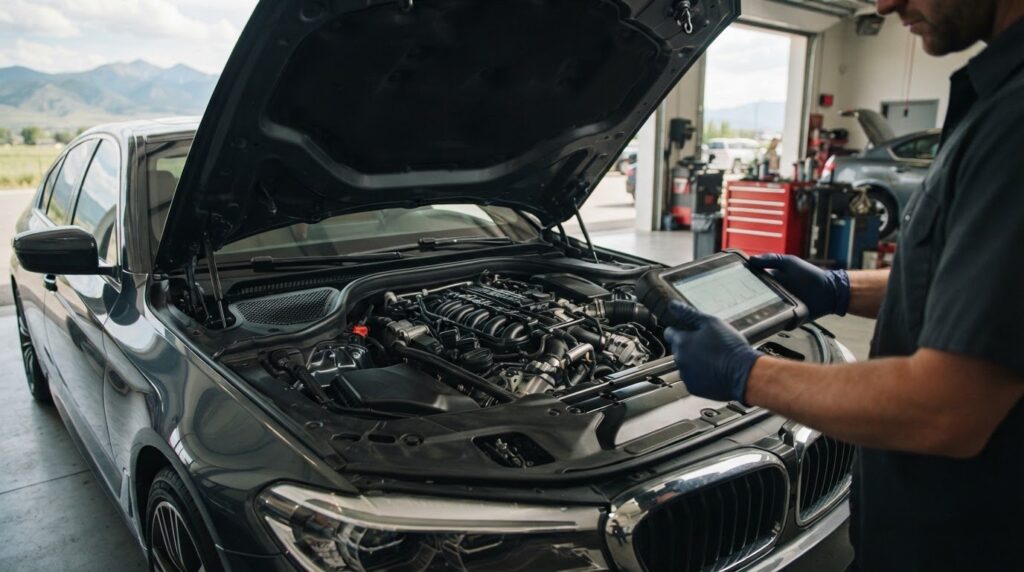
The Mercedes-Benz intake manifold repair cost in Bozeman depends on the fault and the work needed to fix it, not just the vehicle’s model. Engine design, model year, diagnostic findings, parts, and labor all affect the estimate. A gasket leak, for example, may require different work from a problem with the intake manifold runner control.
It’s reasonable to want a clear explanation before approving a repair, especially when symptoms such as rough running or poor performance can have more than one cause. The estimate depends on the specific diagnosis and is provided after a quote request, with the engine, access to the affected parts, and required repair work determining the cost. This article explains how diagnostics help distinguish common intake manifold problems, why Mercedes-Benz model and engine differences matter, and which failure causes can influence the repair plan.
Key Takeaways
- Compare labor estimates by looking at the repair work and access required, not the hourly rate alone.
- Engine layout and model year can change parts access and labor time, so the vehicle’s exact configuration matters.
- Diagnostic testing helps distinguish a gasket leak from a runner-control fault before parts are replaced.
- Overheating, poor performance, and air leaks can point to intake manifold trouble; prompt diagnosis can help limit further engine issues.
- Gaskets may be replaced when damaged or leaking, while manifold condition and the specific fault determine whether repair or replacement makes sense.
Independent shop and dealership labor rates
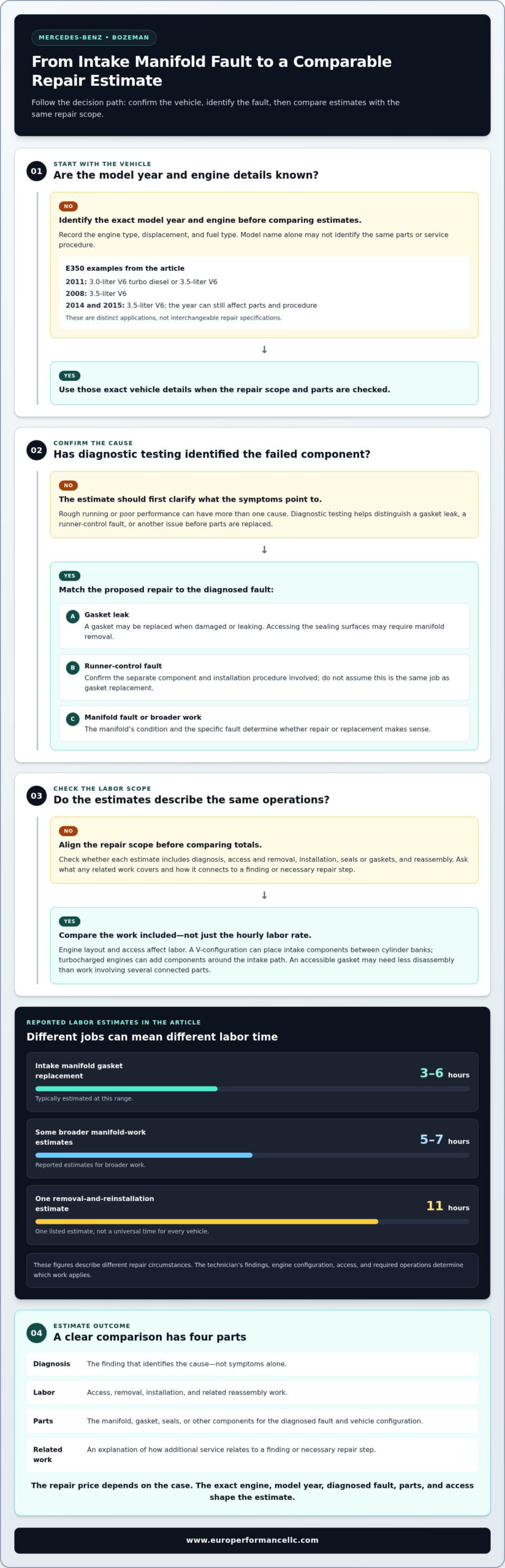
For a Mercedes-Benz intake manifold repair in Bozeman, labor depends on the diagnosis, engine layout, and access to the manifold. Independent shops and dealerships may use different hourly labor rates, so compare the work included in each estimate, not just the rate. The repair price depends on the case and is provided after a quote request; diagnostic findings, engine configuration, labor time, and required parts shape the estimate.
Engine layout affects how a technician reaches the manifold and its seals. A V-configuration can place intake components between cylinder banks, where surrounding parts may need removal for access. Turbocharged engines can add components around the intake path. An accessible gasket may require less disassembly than a repair involving several connected parts. These differences help explain why two Mercedes-Benz vehicles with similar symptoms may need different amounts of labor.
Labor estimates also depend on the actual procedure. Intake manifold gasket replacement is typically estimated at 3-6 hours. Some reported estimates for broader manifold work range from 5-7 hours, while one removal-and-reinstallation estimate lists 11 hours. Those figures describe different repair circumstances, not a fixed time for every Mercedes-Benz. The technician’s findings and the specific engine determine which operations apply.
A useful estimate separates the work into clear categories. As you review the proposed repair, ask what each category covers:
- Diagnosis: Testing identifies whether symptoms point to a gasket leak, runner-control fault, or another issue.
- Labor: The estimate should describe access, removal, installation, and related reassembly work.
- Parts: The parts list should identify the manifold, gasket, seals, or other components needed for the diagnosed fault.
- Related work: Any additional service should connect to a finding or a necessary step in the repair.
Before approving work, compare estimates with the same repair scope. Check whether each includes diagnosis, replacement parts, seals, and reassembly. A lower hourly rate may not mean a lower total if the proposed job includes different tasks or labor time. A higher estimate may reflect additional disassembly or a separate component failure, rather than an inflated charge. Confirm that the proposed repair addresses the diagnosed cause, not just the symptoms.
For an informed comparison, record the vehicle’s model year, engine, symptoms, and diagnostic findings. Match those details against the labor and parts listed in each estimate. This makes differences easier to understand and helps keep the repair plan focused on the actual fault.
Cost differences by model year and engine
Mercedes-Benz model year alone doesn’t determine an intake manifold repair estimate. The engine, failed component, parts required, and access for the repair all matter. For example, an E350 can have different engine configurations across model years, so a quote for one E350 shouldn’t automatically be applied to another. Use the vehicle identification details and engine information when comparing estimates.
Examples show why precise identification matters. A 2011 E350 may have a 3.0-liter V6 turbo diesel or a 3.5-liter V6. A 2014 E350 and a 2015 E350 are both listed with a 3.5-liter V6, but model year can still affect the parts and procedure involved. A 2008 E350 with a 3.5-liter V6 is another distinct application. These are not interchangeable repair specifications.
The diagnosed component matters, too. Replacing an intake manifold differs from replacing its gasket or repairing the runner control. A runner-control fault may involve a separate component and installation procedure. A gasket leak may require manifold removal to access the sealing surfaces. Before comparing estimates, confirm that each identifies the same fault and repair operation. Otherwise, they may cover different work.
Engine design affects labor because technicians must reach the failed part, remove interfering components, and reassemble the intake system. A turbo-diesel configuration and a gasoline V6 can have different surrounding components and service steps. Even two 3.5-liter V6 vehicles may differ by year in parts fitment or access. Those details influence the labor plan, while the parts list reflects the specific application.
- Identify the vehicle: Record the model year, E350 designation, and engine type, including displacement and fuel type.
- Confirm the failure: Distinguish a gasket leak from a manifold or runner-control issue.
- Compare the scope: Check that estimates describe the same parts and installation work.
- Review the parts fit: Match components to the vehicle’s year and engine configuration.
Published E350 examples show variation across model years and engine types, including separate estimates for 2008, 2011, 2014, and 2015 vehicles. Treat them as illustrations of application differences, not as a price schedule for every E350. The repair price depends on the case and is provided after a quote request; the exact engine, model year, diagnosed fault, parts, and access determine the estimate.
For a Bozeman estimate, provide the complete model and engine details, then ask for the diagnosed fault and repair scope in writing. If an estimate says only “intake manifold work,” ask which component and procedure it covers. That clarification helps establish whether the repair fits the vehicle and whether estimates address the same issue.
Diagnostic testing and repair advice
Intake manifold gasket replacement typically takes 3-6 hours; if several engine components need removal, the repair can take a day or more. Driving with a suspected leak can risk overheating, poor performance, and engine damage, so stop if the vehicle overheats and arrange prompt diagnosis.
Symptoms alone don’t identify the failed component. Rough running, high idle, or reduced performance can point to an intake leak, but other problems can cause similar signs. A technician should connect test results to a specific fault before recommending parts. For example, a runner-control problem can contribute to lean or rich engine operation, so the system should be assessed rather than replacing the gasket automatically.
A focused diagnostic process helps distinguish these possibilities. The technician can review stored fault codes, inspect intake connections and gasket areas, and test for air leaks. They can also check whether the runner-control mechanism responds as intended. Each result should support the proposed repair. Replace intake manifold gaskets when they are damaged or leaking, not simply because the vehicle has reached a particular mileage.
Ask which test identified the fault, what component failed, and how the symptoms support the diagnosis. Also ask whether the estimate includes manifold removal, replacement parts, seals, and reassembly, and whether any additional work is linked to a test finding. Clear answers make the repair plan easier to understand before you approve the work.
The repair scope depends on the test results. A confirmed gasket leak may call for gasket replacement, while a runner-control fault requires work on that system. An intake manifold adjuster repair kit usually requires manifold removal, which affects the procedure. If the manifold must come off, the technician can inspect accessible sealing surfaces and related connections during the job. That doesn’t mean every nearby part needs replacement; each part should have a documented reason.
- Describe the symptoms: Note when rough running, high idle, or reduced performance occurs.
- Request the finding: Ask what test points to a leak or runner-control fault.
- Review the scope: Match the diagnosed problem to the listed parts and labor.
- Discuss driving: Report overheating or worsening performance before continuing to use the vehicle.
For Mercedes-Benz intake manifold work in Bozeman, the diagnosis should explain both the fault and the proposed fix. A sound estimate connects symptoms, test results, parts, and labor in a traceable sequence. That detail helps prevent replacing a gasket when the evidence points elsewhere, or overlooking a damaged gasket when testing confirms a leak. If the vehicle is overheating, treat it as urgent rather than continuing to drive and risking further engine damage.
Common causes of intake manifold failure
Problems can develop at a Mercedes-Benz intake manifold, its gaskets, or the runner-control mechanism. Depending on engine design and leak location, a damaged gasket may allow air or coolant to escape. These faults can affect engine performance and require different repairs, so the mechanic should identify the failed part before recommending replacement.
Heat and repeated engine temperature changes put stress on gasket sealing surfaces. Over time, a gasket can harden, compress unevenly, or lose its ability to seal. A leak may then admit unmetered air and disrupt the air-fuel mixture, causing poor idling or uneven running. These symptoms indicate a need for diagnosis, not proof that a particular component has failed.
Physical damage can affect the manifold or its sealing surfaces. A crack, warped surface, damaged connection, or disturbed seal can create an intake leak. Improper installation can also cause sealing problems if components aren’t aligned or fastened correctly. A mechanic can inspect accessible areas, test suspected leak points, and compare the findings with engine behavior.
Runner-control faults have a different cause and repair path from gasket leaks. The mechanism directs airflow through the intake system, and a sticking or malfunctioning control can contribute to lean or rich engine operation. Testing should establish whether the runner control moves and responds correctly. Replacing a gasket alone won’t fix a confirmed actuator or runner-control failure.
Intake manifold gasket problems can cause overheating, poor performance, and potential engine damage while driving. Treat overheating as an urgent warning. Stop driving if the temperature rises beyond its normal range and arrange an inspection. Continuing to operate an overheating vehicle can increase the risk of further damage.
Warranty, recall, or extended coverage doesn’t automatically apply to every intake manifold fault. Review the vehicle’s warranty documents and any applicable coverage notice; eligibility depends on the written terms and the specific repair condition.
- Record symptoms: Note rough idle, uneven running, overheating, or changes in performance.
- Request a diagnosis: Ask the mechanic to identify whether the fault involves a gasket, manifold, or runner control.
- Match repair to evidence: Compare inspection and test findings with each part listed for replacement.
- Keep documentation: Save the diagnosis, repair order, and coverage paperwork for future reference.
For example, rough running with a confirmed air leak calls for attention to the leak’s location and sealing surface. A runner-control fault instead requires assessment of that mechanism. These distinctions matter because the correct repair depends on the cause, not just similar symptoms. Prompt diagnosis can also address leaks before overheating or poor performance leads to further engine concerns.
Can a Mercedes-Benz intake manifold be repaired, or does it usually need replacement?
A Mercedes-Benz intake manifold doesn’t always need replacement when symptoms appear. The right repair depends on which component failed and whether the manifold itself remains serviceable. A leaking gasket may call for gasket replacement, while a damaged manifold may require a different solution. Diagnosis should distinguish these faults before parts are selected.
Start with the sealing surfaces and the manifold body. If inspection finds a damaged gasket but no manifold damage, replacing the gasket may address the leak. If the manifold is cracked or its sealing surface is damaged, a gasket alone won’t fix the underlying problem. The technician’s findings should explain which part failed and why the proposed repair is appropriate.
Sealant isn’t generally recommended as a long-term substitute for an intake manifold gasket. It may not provide a durable repair where the gasket is designed to seal the joint. A recurring leak also deserves a careful inspection, rather than another temporary fix. For example, a reported Mercedes-Benz S430 developed an intake-manifold leak twice. That repeat occurrence shows why technicians should investigate the leak’s cause.
Retorquing may be appropriate only when inspection supports that approach. In one S430 owner report, retorquing the manifold resolved a repeat leak in 20 minutes. That account describes one vehicle, not a general repair procedure. It doesn’t establish that retorquing will fix other leaks or replace a damaged gasket. The correct step depends on the condition of the manifold, fasteners, and sealing surfaces.
Use these distinctions when reviewing a repair recommendation:
- Gasket leak: Replace the gasket when inspection identifies damage or leakage.
- Manifold damage: Assess the manifold itself when a crack or damaged sealing surface is found.
- Repeat leak: Look for an underlying cause instead of relying on sealant as a lasting fix.
- Retorquing: Consider it only when the inspection findings support that specific repair.
Before approving work, ask the technician to identify whether the fault is in the gasket, manifold, or another intake component. Request the inspection finding that supports repair or replacement. If the recommendation is to replace the entire manifold, ask what damage rules out a gasket-level repair. If retorquing is proposed, ask what evidence shows the joint can seal correctly afterward.
Choose the repair that addresses the documented fault, not simply the most extensive option. Review the next step for your Mercedes-Benz repair.
Euro Performance Auto Shop LLC: Specialized European Auto Repair
Euro Performance Auto Shop LLC provides Specialized European Auto Repair for Mercedes-Benz owners with intake manifold symptoms or a diagnosed fault. ASE-certified technicians handle complex diagnostics and repairs to identify whether the issue involves a gasket, manifold, or related intake component. A clear diagnosis connects the vehicle’s symptoms to the proposed repair plan, making this a practical next step when rough running, performance changes, or a suspected leak needs evaluation.
To discuss the concern, share your Mercedes-Benz model year, engine details, symptoms, and any diagnostic results you already have. These details help frame the issue and focus the conversation on the work required. Contact Euro Performance Auto Shop LLC to discuss your Mercedes-Benz intake manifold concern.
Move Forward With a Clear Repair Plan
Your next step is to make the repair decision with the vehicle’s longer-term care in view. Keep the diagnosis and repair records with your Mercedes-Benz maintenance history. This gives future technicians useful context and helps you track how the vehicle responds after service. The Mercedes-Benz intake manifold repair cost in Bozeman is only one part of that decision; clarity about the work and its place in ongoing care matters too.
Euro Performance Auto Shop LLC offers Specialized European Auto Repair for Mercedes-Benz concerns, along with Factory Scheduled Maintenance and Wheel Alignment. These services address different vehicle needs, so choose the one that fits the work your vehicle requires. A focused conversation can help you explain the concern and identify a practical next step without committing to unrelated work.
Contact Euro Performance Auto Shop LLC to discuss your Mercedes-Benz service needs. With a clear plan and documented maintenance, you can move ahead with greater confidence.
Frequently Asked Questions
What is the average Mercedes-Benz intake manifold repair cost in Bozeman, Montana?
There isn’t one average that applies to every Mercedes-Benz intake manifold repair in Bozeman. The estimate depends on whether the fault involves a gasket, manifold, or runner-control component, plus the engine and access required. For an accurate figure, the vehicle needs a diagnosis and a quote for the specific work. Share the model year, engine details, and symptoms when requesting an estimate.
How much does Mercedes-Benz intake manifold replacement cost by model and year?
Replacement estimates vary by model year and engine because parts fitment and installation steps differ. An E-Class with a gasoline V6 may require a different procedure than a turbo-diesel configuration. Confirm the engine and the failed component before comparing estimates. Also check whether each estimate covers the manifold itself, related seals, and installation, rather than a gasket or runner-control repair alone.
What is the labor time and hourly labor rate for this repair in Bozeman?
Gasket replacement is typically estimated at 3-6 hours, while extensive disassembly can extend the work to a day or more. The hourly rate varies by shop, and the total labor charge also depends on the operation and engine access. Ask for the estimated labor time and the tasks it includes. That lets you compare repair scopes, not just hourly rates.
What parts are included in a Mercedes-Benz intake manifold repair or replacement estimate?
An estimate may include the diagnosed component, such as a gasket, manifold, or runner-control part, along with required seals. It should also identify labor for removal, installation, and reassembly. Coolant service may be included if the repair procedure requires it. Review each listed part against the diagnosis and ask which finding supports replacing it.
What symptoms and diagnostic trouble codes indicate an intake manifold problem in a Mercedes-Benz?
Rough idle, high idle, uneven running, or reduced performance can warrant intake-system testing, but symptoms alone don’t prove a manifold fault. A malfunctioning runner control can contribute to lean or rich operation. Diagnostic trouble codes can guide testing, but a code alone doesn’t establish which part failed. Ask the technician to connect scan results with inspection and test findings.
How much do Mercedes-Benz dealerships and independent shops in Bozeman charge for intake manifold repair?
Charges vary with the shop’s labor rate, diagnosed fault, engine configuration, parts, and repair scope. A dealership and an independent shop may quote different totals, so compare the same operation and included parts. Request an itemized estimate showing diagnostic work, labor time, components, and related procedures. The total depends on the specific repair and diagnosis.