
Blog
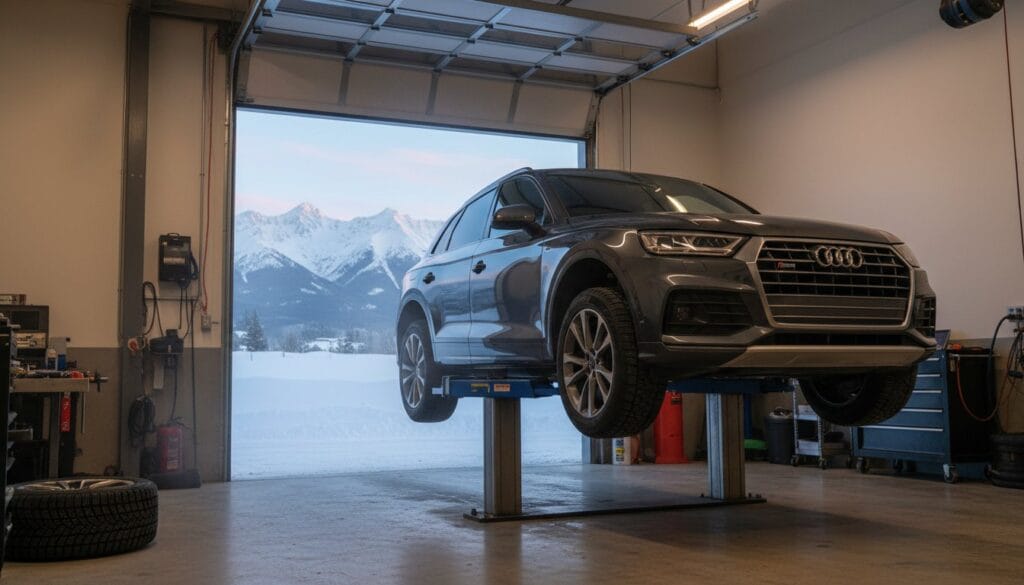
Imagine standing in a Belgrade parking lot at 6:00 AM while the thermometer reads -32°F, only to have your BMW’s ignition click once and fall silent. For owners of high-performance imports, this isn’t just an inconvenience; it’s a genuine risk to the precision components that make these vehicles exceptional. You likely already know that Montana’s winters are unforgiving, but standard maintenance often misses the nuances required for foreign engineering. Effective montana winter car preparation for european cars requires more than just a tire swap. It demands a technical understanding of how sub-zero temperatures affect European-spec oils and complex air suspension systems.
We understand the anxiety of driving over icy mountain passes or worrying if your ADAS sensors will fail in a heavy Gallatin County snowstorm. This expert checklist for the 2026 season will teach you how to protect your vehicle’s integrity and ensure it starts reliably every single morning. We’ll preview the critical steps our ASE certified technicians use to winterize everything from your cooling system to your battery’s cold-cranking capacity, giving you total peace of mind on the road.
Key Takeaways
- Understand how Montana’s unique “dry cold” environment affects the rubber seals and plastic components of your high-performance European engine differently than other climates.
- Master the essentials of montana winter car preparation for european cars by ensuring your synthetic oils and cooling systems are rated for reliable flow at -20°F.
- Learn why specialized winter tires and precise ADAS calibration are critical for navigating the icy Bozeman Pass and protecting your vehicle’s safety systems.
- Discover the specific 2026 maintenance steps for often-overlooked components like door seals and wiper heaters to ensure total sub-zero reliability.
- Find out why an inspection by ASE certified technicians using the latest diagnostic tools is the most effective way to safeguard your BMW, Audi, or Mercedes this season.
The Montana Winter vs. European Engineering: Why Preparation Matters
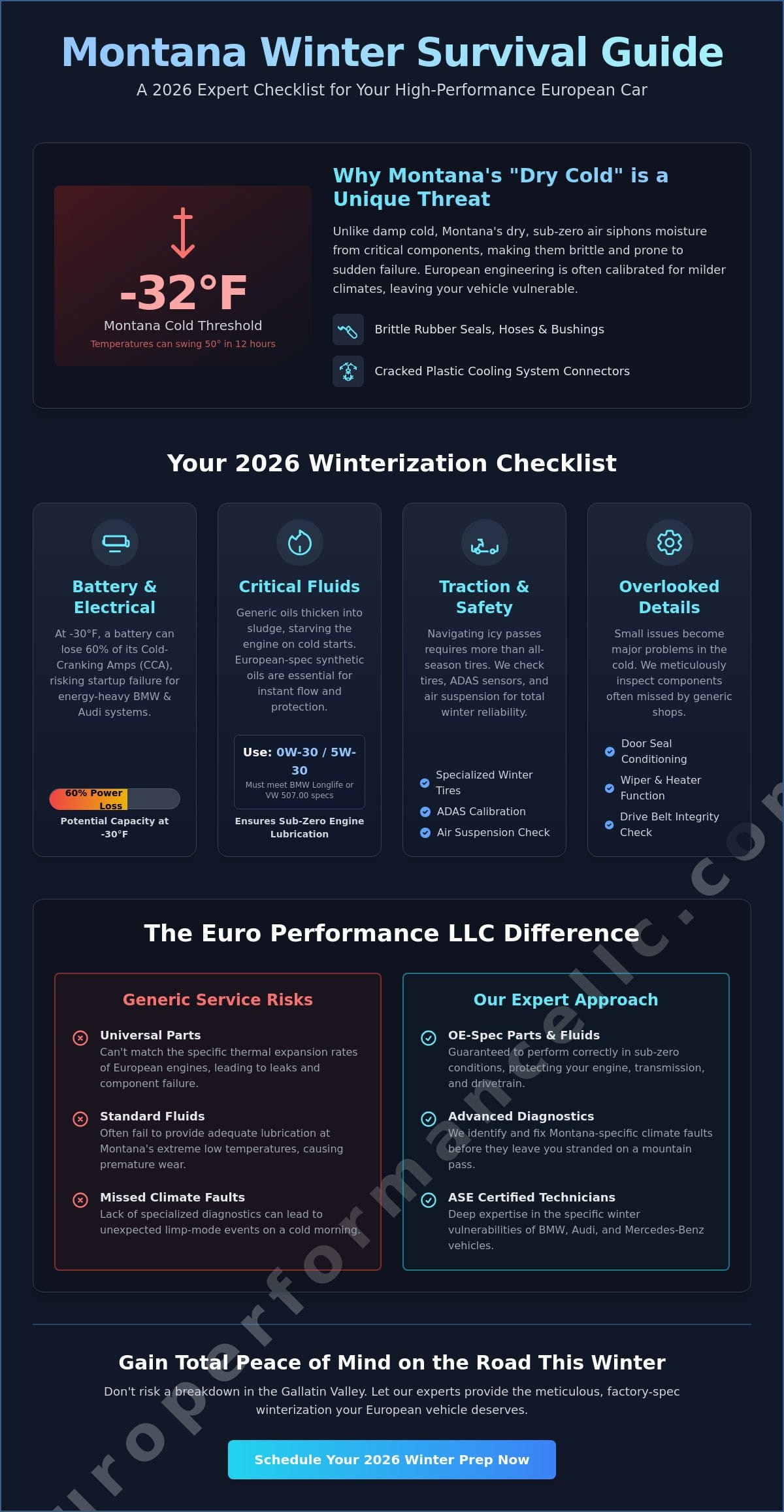
Montana winter car preparation for european cars is a necessity for anyone living in the Gallatin Valley. While BMW, Audi, and Mercedes-Benz engineers design vehicles for high performance, they often calibrate systems for European climates that rarely mirror the extreme conditions of Belgrade or Bozeman. In 2026, maintaining winter reliability requires a deep understanding of how Montana’s unique environment interacts with precision German and Italian machinery. Unlike the damp cold found in coastal regions, Montana features a “dry cold” that siphons moisture from rubber bushings, drive belts, and plastic cooling system connectors, making them brittle and prone to sudden failure.
Understanding What is Winterization? provides a baseline, but European performance protection goes several steps further. These vehicles rely on complex sensors and tight tolerances that can fail if generic fluids or sub-standard parts are used. To ensure your vehicle survives a season where temperatures can swing 50 degrees in twelve hours, you need a strategy tailored to high-end engineering. Our ASE certified technicians focus on the specific vulnerabilities of these marques to prevent costly mid-winter breakdowns.
To better understand how these extreme temperatures affect critical components like your power supply, watch this helpful video:
The -30°F Threshold: What Happens to Your BMW or Audi?
When the thermometer hits the -30°F mark, the chemical reactions inside your battery slow down drastically. A battery that worked perfectly in September might lose 60% of its cold-cranking amperage in January. This is particularly problematic for Audi and BMW models that use energy-heavy start-stop systems and advanced infotainment modules. Furthermore, air suspension systems common in Mercedes-Benz SUVs often struggle in Belgrade winters. Moisture trapped in the lines can freeze, causing the vehicle to sag or the compressor to burn out. While some drivers still believe in letting the car warm up for twenty minutes, European manufacturers recommend driving gently after 30 seconds to ensure the engine and drivetrain reach operating temperatures simultaneously.
Why Specialized Belgrade Maintenance Beats Generic Service
Generic repair shops often use universal parts that don’t account for the specific thermal expansion rates required by European engines. At Euro Performance LLC, we use specialized diagnostics to catch Montana-specific climate faults before they trigger a limp-mode event. Using OE (Original Equipment) parts is vital because they are tested to maintain their seal even when plastic components contract in sub-zero weather. We consider factory scheduled maintenance to be the baseline for winter safety. Our team ensures that every fluid, from coolant to transaxle oil, meets the 2026 standards for viscosity and thermal protection. This meticulous approach provides the peace of mind you need when navigating snowy mountain passes.
Critical Fluid and Thermal Management for Sub-Zero Reliability
In the Gallatin Valley, winter is a structural test for your vehicle’s plumbing. When temperatures drop below -20°F in Belgrade or Bozeman, standard fluids often reach their physical pour point limits. Effective montana winter car preparation for european cars requires moving beyond all-season compromises to fluids specifically engineered for Arctic-level thermal management. This is not just about convenience; it’s about preventing internal component failure during a high-friction cold start.
European-Spec Oil: Why 0W-30 and 5W-30 Matter
Viscosity measures internal friction. At a Belgrade cold start, 0W-30 or 5W-30 synthetic oil must flow instantly to the valvetrain. Using generic oil that doesn’t meet BMW Longlife or VW 507.00 specs can cause engine wear during the first 30 seconds of operation. Our expert oil change services in Bozeman ensure your engine receives the shear stability required for Montana’s climate. These oils maintain a thin enough consistency to lubricate vital parts even when the engine block is freezing.
Cooling Systems and Brittle Plastic Protection
German engineering frequently utilizes high-grade plastics for expansion tanks and cooling flanges. These materials become brittle over time. When Montana temperatures swing 40 degrees in twelve hours, these plastics can fracture under the pressure of thermal expansion. We recommend a 60/40 mix of OE blue or violet coolant to prevent freezing. Following an official government checklist helps with general readiness, but your Audi or Mercedes needs specific inspections of the water pump for micro-cracks before the first hard freeze.
Intelligent Battery Management and Registration
Modern European cars use Intelligent Battery Sensors (IBS). You can’t simply swap a battery; you must register it with the vehicle’s computer. This process adjusts the charging profile for an AGM battery’s specific chemistry. In Montana, we test the State of Health (SOH) rather than just the State of Charge (SOC). Our ASE certified technicians can verify your battery’s ability to provide cold cranking amps when the mercury stays below zero.
Diesel owners in Gallatin County face unique challenges. While “winter-grade” diesel is treated to prevent wax crystals from clogging filters, your vehicle’s fuel heater must be functional to handle -25°F mornings. European-spec fluids are designed to maintain molecular integrity under these extreme pressures. This ensures your car starts as reliably in January as it does in June. Proper preparation includes:
- Flushing old coolant to ensure the pH balance protects aluminum engine heads.
- Testing the freeze point of your windshield washer fluid to prevent reservoir cracking.
- Verifying the integrity of rubber seals and plastic coolant connectors.
- Checking fuel additives for diesel models to prevent gelling in the fuel lines.
Traction, Alignment, and ADAS Calibration for Icy Roads
Driving a high-performance European vehicle through a Montana winter requires a specialized approach to traction. While many manufacturers equip cars with all-season tires, these rubber compounds often harden when temperatures drop below 45 degrees Fahrenheit. For drivers frequenting the Bozeman Pass or the winding curves of Gallatin Canyon, dedicated winter tires provide the necessary siping and rubber flexibility to grip packed snow. This is a core component of montana winter car preparation for european cars. Our ASE certified technicians recommend following an official winter vehicle checklist to ensure your tires, fluids, and emergency gear are ready before the first major storm hits Belgrade.
Maintaining the signature “European feel” during a blizzard involves more than just deep treads. It requires a synergy between the mechanical grip of the tire and the electronic stability systems of the car. When these systems work together, your Mercedes-Benz or Volkswagen maintains its composure on black ice. Without proper preparation, even the most advanced all-wheel-drive system cannot overcome the laws of physics on a frozen Montana highway.
Precision Alignment for Winter Control
Precision is the hallmark of European engineering. However, even a 0.1-degree deviation in your wheel alignment can cause “crabbing” on icy Montana highways. This occurs when the rear wheels don’t track directly behind the front wheels, leading to unpredictable slides on Highway 191. The deep potholes common in Belgrade and Bozeman can easily disrupt the complex multi-link suspension systems found in BMW or Audi models. Maintaining correct geometry is essential for safety and tire longevity. If you notice your steering wheel is off-center, consult our alignment shop guide to understand how we maintain factory specifications for European-made vehicles.
ADAS Calibration: Safety Sensors in the Snow
Modern European cars rely on Advanced Driver Assistance Systems (ADAS) to keep you safe. These systems use radar in the grille and cameras behind the windshield to monitor lane position and following distance. Snow buildup or road salt can blind these sensors. More importantly, many owners switch to a “minus-size” winter tire and wheel package to improve deep-snow performance. This change in tire height or diameter can alter the sensor’s field of vision.
A professional ADAS calibration is necessary to ensure your lane-keep assist and emergency braking function correctly on slick surfaces. Precision matters here. A misaligned sensor might fail to detect a hazard during a whiteout. We use the latest tools and technology to ensure your safety systems remain reliable throughout the season. This technical diligence preserves the handling of your vehicle even when the roads are covered in a thick layer of ice.
The 2026 European Car Winter Survival Checklist
Residents in Belgrade and Bozeman know that Gallatin Valley winters don’t offer second chances. Proactive montana winter car preparation for european cars ensures that your precision-engineered vehicle performs as intended when the thermometer drops below -10°F. Our technicians recommend completing this checklist at least 14 days before the first forecasted accumulation of snow to avoid the seasonal rush at local service centers.
Exterior and Visibility Preparation
European door seals use high-quality rubber that can bond to the metal frame when moisture freezes at 32°F. To prevent being locked out, apply a specialized silicone lubricant or OE-spec rubber conditioner to all seals. This simple step prevents the “frozen shut” scenario that often leads to torn gaskets and expensive replacements. For Mercedes-Benz and Volvo owners, verify the functionality of heated wiper systems and headlight washers. These components often fail due to mineral buildup or old fluid, yet they’re essential for visibility on the slushy stretch of I-90 between Belgrade and Bozeman.
Protecting your paint is equally vital for long-term value. The Montana Department of Transportation frequently uses magnesium chloride and salt brines on Highway 191. A 9H-rated ceramic coating or a high-solids polymer wax provides a sacrificial layer. This barrier prevents these harsh chemicals from etching into your clear coat during the five months of active road treatment.
Regularly washing away these corrosive deposits is just as important; Nanak Car Wash provides the specialized cleaning and detailing needed to keep your European car’s exterior in pristine condition all winter.
The “Euro-MT” Emergency Kit Essentials
Standard jumper cables are a significant risk for modern European electronics. A sudden voltage spike can damage sensitive control modules, leading to electrical failures that require specialized diagnostic tools to reset. Instead, carry a high-capacity portable lithium-ion jump pack with a minimum 1500-peak amp rating. This provides a clean, regulated power surge that’s safer for your car’s computer systems.
Your kit must also include your vehicle’s specific tow eye bolt. Most European cars require this threaded bolt, usually found in the trunk’s tool kit, to be safely pulled onto a flatbed. If this part is missing, a recovery team might be forced to hook onto suspension components, causing thousands in damage. For the daily Bozeman-to-Big Sky commute, your kit should also include:
- A heavy-duty 12V tire inflator: Cold air causes tire pressure to drop by roughly 1 PSI for every 10-degree decrease in temperature.
- Specific OE-approved coolant: European engines often require specific G12 or G13 formulas that aren’t always available at standard gas stations.
- Sub-zero rated gear: Include a 0°F rated sleeping bag and insulated gloves in case of a mechanical breakdown in the Gallatin Canyon.
- Traction mats: These are more effective than sand for heavy, rear-wheel-drive luxury sedans.
Taking these proactive steps before the first major storm hits the Gallatin Valley protects both your safety and your automotive investment. Our ASE certified technicians use the latest tools and technology to ensure every component of your vehicle is ready for the freeze. Schedule your winter preparation service today.
Trust the Experts: Professional Winterization at Euro Performance LLC
Preparing your vehicle for sub-zero temperatures requires more than a quick fluid check. Our ASE certified technicians provide a specialized alternative to the dealership; offering the same level of technical expertise with a more personalized, transparent approach. We understand that Montana winter car preparation for european cars involves addressing specific engineering nuances found in BMW, Audi, VW, and Mercedes models. These vehicles require precise care to handle the Gallatin Valley’s extreme climate shifts.
Our comprehensive winter inspection process is methodical. We evaluate the unique cooling system requirements of BMWs, the Quattro all-wheel-drive systems in Audis, and the sensitive electronics in Mercedes-Benz models. We don’t just look for current failures; we identify potential issues before they leave you stranded on a mountain pass. Every service includes a rigorous assessment of:
- Battery Health: We test cold-cranking amps to ensure your battery can handle -20°F starts.
- Fluid Integrity: We verify that your engine coolant and washer fluid are rated for Montana’s deep freezes.
- Braking Systems: Our team checks pads, rotors, and ABS sensors for reliable stopping power on ice.
- Tire Condition: We ensure your winter rubber has sufficient tread depth and correct pressure.
The Euro Performance LLC guarantee rests on our commitment to quality. We use parts from top OE manufacturers, ensuring that your vehicle receives components built to the original factory specifications. This maintains your car’s performance and longevity without the inflated costs often found at regional dealerships.
Our Master Craftsman Approach to Winter Service
We utilize a proven three-step process: Schedule, Estimate, and Repair. This sequence ensures complete transparency for every Montana owner. When you book your appointment, we provide a clear timeline. Once our technicians complete their diagnostic, you receive a detailed estimate before any work begins. We don’t perform unnecessary repairs. Our focus remains on safety-oriented advice that keeps your European vehicle reliable throughout the season.
Effective montana winter car preparation for european cars is about proactive maintenance rather than reactive repairs. We strongly recommend that you don’t drive your vehicle if a critical warning light appears; especially during a snowstorm. Our team acts as your professional advisor, prioritizing the mechanical integrity of your car above all else.
The seasonal rush in Belgrade begins as soon as the first frost hits the ground. Secure your peace of mind by booking your winterization appointment now. Contact Euro Performance LLC today to ensure your European vehicle is ready for whatever the 2026 Montana winter delivers.
Drive with Confidence Through the 2026 Montana Winter
Surviving sub-zero temperatures in a high-performance vehicle requires more than a simple oil change. Proper montana winter car preparation for european cars demands a focus on specialized fluid chemistry and thermal management systems that protect sensitive seals when the thermometer drops. Our 2026 checklist highlights that precise ADAS calibration and alignment are critical for maintaining safety on unpredictable, icy surfaces. At Euro Performance LLC in Belgrade, our ASE certified technicians utilize advanced diagnostic tools to ensure your BMW, Audi, Mercedes, or VW meets the highest standards of reliability.
Don’t leave your winter safety to chance or generalist shops. We specialize in the meticulous engineering of European makes, providing the technical proficiency your car deserves. Our team in Belgrade uses the latest alignment technology to guarantee your vehicle handles correctly in the harshest conditions. By following a professional maintenance schedule, you ensure your vehicle remains a reliable asset throughout the season. We’re here to provide the peace of mind that comes with expert care. Your European car was built for performance; we make sure it delivers even in the snow.
Schedule Your Montana Winter Preparation at Euro Performance LLC Today
Frequently Asked Questions
Do I really need winter tires in Bozeman if I have Audi Quattro or BMW xDrive?
Yes, dedicated winter tires are essential for safety in Bozeman because all-wheel drive doesn’t improve your stopping distance on ice. Tests show that winter tires reduce braking distances by 30% compared to all-season tires on packed snow. While Audi Quattro and BMW xDrive provide excellent power distribution, they can’t create grip where none exists. Our ASE certified technicians recommend tires with the 3-Peak Mountain Snowflake symbol for reliable winter performance.
Why does my European car take longer to start when it is below zero in Montana?
Sub-zero temperatures cause your battery to lose 60% of its cranking power while simultaneously thickening your engine oil. European engines require high-torque starts to function correctly. When it’s -15 degrees in Montana, your battery’s chemical reaction slows down significantly. This combination makes it harder for the starter motor to turn the engine over, leading to the sluggish starts common in Belgrade winters.
Can I use regular green antifreeze in my Mercedes-Benz or Volkswagen?
No, you must avoid using generic green antifreeze in your Mercedes-Benz or Volkswagen. These manufacturers specify OAT or Si-OAT coolants like G12++ or G13 to protect their unique alloy cooling systems. Using the wrong fluid can lead to water pump failure or radiator clogs within 10,000 miles. Our team uses only OE-approved fluids to ensure your cooling system remains corrosion-free throughout the coldest months of the year.
Should I register a new battery in my BMW, or can I just swap it myself?
You must register a new battery in your BMW to update the charging algorithm managed by the Engine Control Unit. If you don’t register it, the car will continue charging the new battery as if it’s old, which can kill the battery in less than 24 months. Our technicians use professional diagnostic equipment to complete this process, ensuring your vehicle’s electronics operate at peak efficiency and reliability.
What is the best engine oil for a Montana winter for a high-mileage European car?
The best engine oil for montana winter car preparation for european cars is a full synthetic 0W-40 that meets your specific manufacturer approvals. The 0W rating means the oil remains fluid down to -40 degrees, ensuring immediate lubrication for your turbocharger and camshafts. In high-mileage engines, this prevents the internal wear that occurs during the 90% of engine damage caused by cold starts.
How do I prevent my European car’s air suspension from freezing or failing in the winter?
You can prevent air suspension failure by ensuring your system’s air dryer is serviced and free of moisture. Moisture trapped in the lines freezes when temperatures drop below 32 degrees, which blocks the valves and causes the compressor to overheat. We suggest a professional inspection of your bellows and lines every 2 years to catch small leaks before they lead to expensive component failures.
Does Euro Performance LLC provide winter pre-purchase inspections for used European cars?
Yes, Euro Performance LLC offers a specialized 50 point winter pre-purchase inspection for all European-made vehicles. We evaluate the health of the charging system, cooling system, and all seasonal safety components. This service provides 100% transparency for buyers in the Gallatin Valley, helping you avoid unexpected repairs during the 150 days of freezing temperatures we typically face in Montana.
Why is my check engine light flashing only when it is extremely cold outside?
A flashing check engine light signifies a severe engine misfire that is dumping raw fuel into your exhaust system. We strongly recommend you stop driving immediately to avoid destroying your catalytic converter. Extreme cold often stresses aging ignition coils or spark plugs until they fail completely. If you see this warning, contact our ASE certified technicians right away to schedule a professional diagnosis and repair.