
Blog
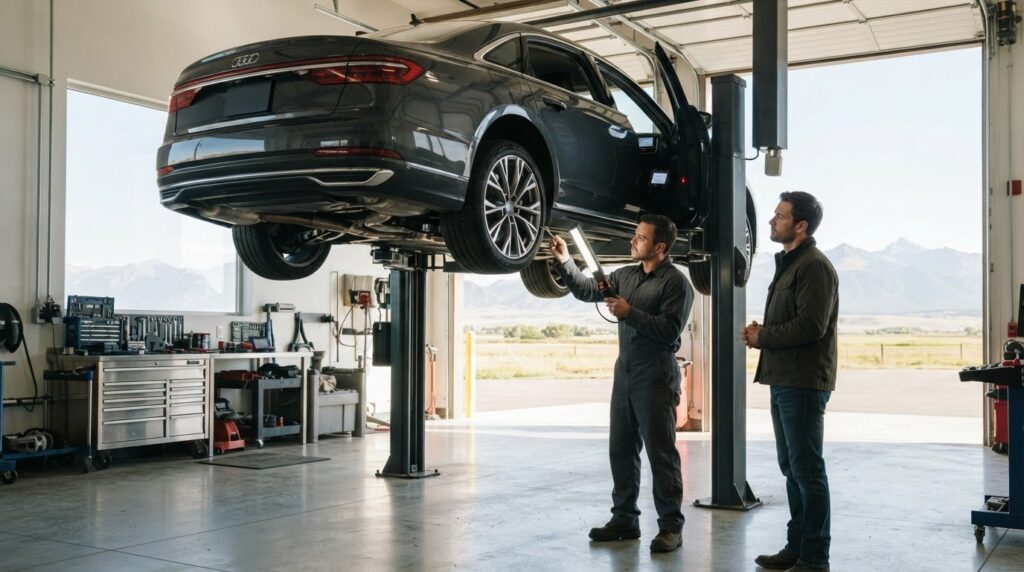
A dashboard with no warning lights doesn’t rule out hidden issues: pending diagnostic codes can be stored before a malfunction indicator lamp turns on. For peace of mind from a used Mercedes inspection in Gallatin Valley, a pre-purchase inspection can examine key systems, check the frame and undercarriage for accident damage or poor repairs, and use a test drive to assess engine, brake, and suspension performance. The findings and recommendations help you weigh the car’s condition before deciding whether to buy.
It’s reasonable to want more than a quick look at a vehicle this complex. A careful inspection can make visible concerns easier to understand and give you a clearer basis for discussing the car and its condition.
In this article, you’ll learn what an inspection can cover, how fluid leaks, brakes, suspension, climate control, and diagnostic findings factor into the review, and what to expect from the report. You’ll also see how specialized European auto repair and factory scheduled maintenance fit into the next steps after an inspection.
Key Takeaways
- Use inspection findings to separate immediate concerns from maintenance needs you can plan for after purchase.
- Pay close attention to climate-control performance and signs of fluid leaks, since symptoms can point to issues that aren’t obvious at a glance.
- Read the report alongside the vehicle’s service records so you can understand both its documented maintenance and current condition.
- A Mercedes-Benz Certified Pre-Owned vehicle’s eligibility review includes title and service-history checks, which add context to your own buying decision.
- Use the recommendations to decide whether to proceed, negotiate, or reconsider the vehicle before committing to the purchase.
Benefits of a used-car pre-purchase inspection
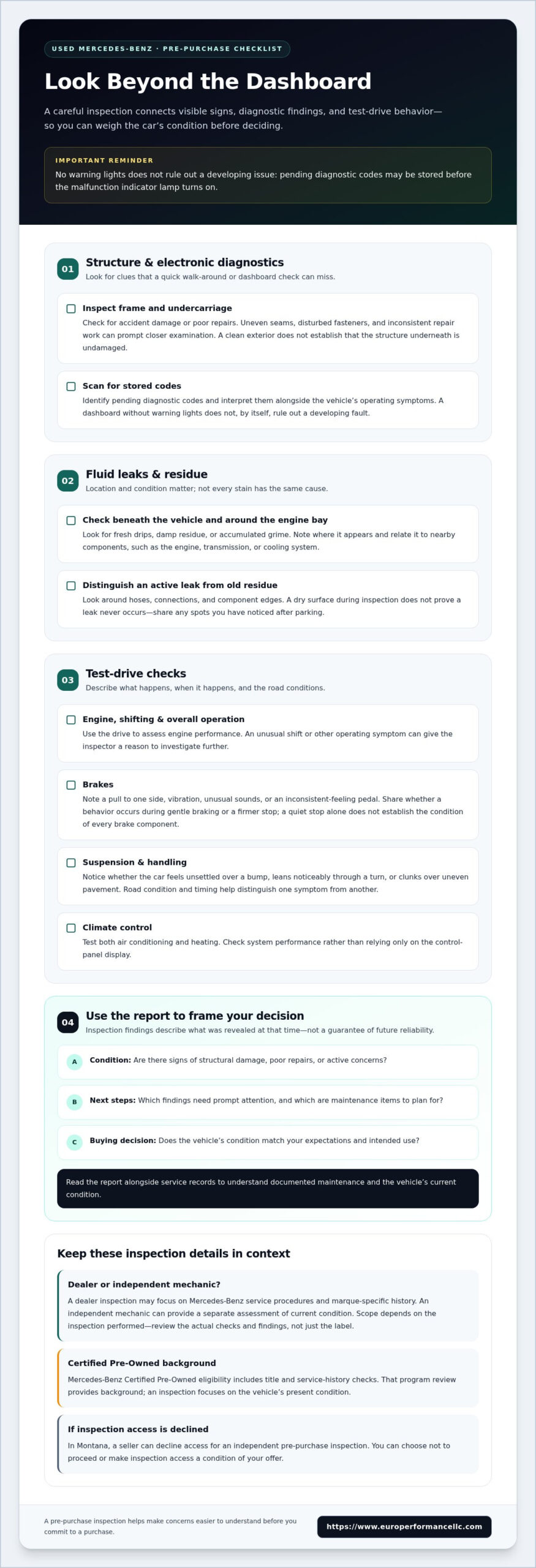
For peace of mind, arrange a used Mercedes inspection in Gallatin Valley before committing to a purchase. A pre-purchase inspection provides an independent assessment of a specific Mercedes-Benz. It can reveal visible damage, developing mechanical concerns, and maintenance needs that a seller’s description may not explain. The findings help you decide whether to proceed, discuss the vehicle’s condition, or walk away.
A useful inspection looks beyond the dashboard and a brief walk-around. It includes checking the frame and undercarriage for accident damage or poor repairs. Uneven seams, disturbed fasteners, or inconsistent repair work can prompt closer examination. A clean exterior alone doesn’t establish that the structure underneath is undamaged.
Electronic diagnostics add another layer of information. Pending diagnostic codes can be stored before they turn on a malfunction indicator lamp, such as the check engine light. A dashboard without warning lights does not, by itself, rule out a developing fault. An inspection can identify stored codes and help interpret them alongside the vehicle’s operating symptoms.
A test drive also matters. It lets the inspector evaluate engine, brake, and suspension performance under operating conditions. For example, a pull while braking, a vibration, or an unusual shift can provide a reason to investigate further. These observations help distinguish a concern that needs attention from a feature that simply warrants monitoring.
How does a Mercedes-Benz dealer inspection compare with an independent mechanic’s inspection? A dealer inspection may focus on Mercedes-Benz service procedures and marque-specific history, while an independent mechanic can provide a separate assessment of the car’s current condition. The scope depends on the inspection performed, so the report’s actual checks and findings matter more than the label.
Can a seller refuse an independent pre-purchase inspection in Montana? Yes, a seller can decline to provide access for an independent inspection. If that happens, you can choose not to proceed or make inspection access a condition of your offer.
Use the inspection to organize your decision, not to expect a guarantee about future reliability. A report describes what the inspection revealed at that time. It can still help you weigh questions such as:
- Condition: Are there signs of structural damage, poor repairs, or active concerns?
- Next steps: Which findings need prompt attention, and which are maintenance items to plan for?
- Buying decision: Does the vehicle’s condition match your expectations and intended use?
Mercedes-Benz Certified Pre-Owned eligibility includes checks of the vehicle’s title and service history. That program review can provide useful background, while an inspection focuses on the vehicle’s present condition. A used Mercedes inspection in Gallatin Valley can add peace of mind by giving you a clearer view of the car before purchase.
Fluid leaks, brakes, suspension, and climate control
A useful inspection combines a stationary review with a test drive. These checks help connect visible signs, operating behavior, and comfort-system performance.
Fluid leak checks
Inspect the ground beneath the Mercedes-Benz and accessible areas around the engine bay for fresh drips, damp residue, or accumulated grime. Note the fluid’s location and appearance, then relate it to nearby components rather than assuming every stain has the same cause. A leak near the engine, transmission, or cooling system can have different implications. The report should distinguish an active leak from old residue and explain what needs closer attention.
Look for signs of seepage around hoses, connections, and component edges. A dry surface during inspection doesn’t prove that a leak never occurs, so mention any spots you’ve noticed after the car has been parked. That detail can help the inspector compare your observation with the vehicle’s condition.
Brake condition checks
A pre-purchase inspection includes a test drive to evaluate brake performance. Pay attention to a pull to one side, vibration during braking, unusual sounds, or a pedal that feels inconsistent. Each symptom gives the inspector a specific behavior to investigate and document. A quiet stop alone doesn’t establish the condition of every brake component.
Ask the report to describe observable wear and any concerns found during the drive or inspection. Clear findings help you understand whether the brakes appear serviceable or need further attention. If the Mercedes-Benz behaves differently during repeated stops, share when the change occurs, such as during gentle braking or a firmer stop.
Suspension behavior
The test drive also evaluates suspension performance. Notice whether the Mercedes-Benz feels unsettled over a bump, leans noticeably through a turn, or makes a clunk over uneven pavement. Describe the road condition and the sound or sensation. Specific observations give the inspector useful context for evaluating handling and locating possible concerns.
Review the findings alongside the drive notes. A symptom that appears over bumps may differ from one that occurs while turning or braking. That distinction helps explain the inspection’s recommendations without treating every sound as the same fault.
Climate-control operation
Test the air conditioning and heating rather than relying on the control-panel display. Check whether the system produces a change in cabin temperature and listen for unusual noises. A seller can conceal a leaking air-conditioning evaporator core by topping off refrigerant, potentially leaving you with a nonworking air conditioner and a repair bill weeks later. Replacing a leaking evaporator core in a used car can cost thousands of dollars.
Ask the inspector to record whether the climate system operates and any signs that warrant further diagnosis. A test during the inspection offers a useful snapshot, while your notes about when the system falters can add context. Together, the observations help you judge the car’s comfort systems and weigh any unresolved concern before purchase.
Inspection reports and recommendations
A report turns an inspection into practical next steps. Ask for written findings that identify each concern, explain its location, and distinguish immediate attention from future maintenance. For example, “oil residue near the engine” is less useful than a note describing where it appears and whether the inspector observed active leakage.
What records and information should I request before buying a used Mercedes-Benz? Request the title, available service records, repair invoices, and the vehicle identification number so you can compare the documents with the car. Mercedes-Benz Certified Pre-Owned eligibility includes checks of the vehicle’s title and service history.
A generic used-car inspection checklist may be described as a 59-point inspection, but the point count alone doesn’t explain what was examined. Review the actual checklist and report for specific observations. Confirm that it documents the vehicle’s identification, inspection scope, test-drive findings, diagnostic results, visible damage, and any areas needing follow-up.
Useful recommendations explain why a finding matters and what action it supports. A report might flag uneven tire wear as a reason to assess alignment, or describe a warning light and related diagnostic result. Look for clear distinctions between observed symptoms and suspected causes. That wording helps you understand what the inspection established and what may require additional diagnosis.
What should I do if an inspection finds problems with a used Mercedes-Benz? Sort the findings by safety, function, and maintenance priority, then use the written report to decide whether to proceed, negotiate, or decline the purchase. For an unclear or serious finding, seek a more focused diagnosis before making your decision.
Read each recommendation alongside the seller’s records. If a service invoice lists a repair, compare its date and described work with the inspection’s current observations. A record of past work provides context, but it doesn’t establish the vehicle’s present condition. Note gaps or inconsistencies, such as a recurring warning or a repair that doesn’t appear to address the reported symptom.
- Observed condition: What did the inspector see, hear, or measure?
- Priority: Which finding affects safe operation or basic function?
- Next step: Does the report recommend monitoring, maintenance, or diagnosis?
- Supporting records: Do invoices and service entries match the vehicle’s condition?
Use these questions to discuss the report with the seller and clarify which findings are documented. Keep the report, diagnostic notes, and service records together; that organized file helps you compare the inspection with the vehicle’s history and make a deliberate buying decision.
Inspection services in Bozeman, Montana
For a used Mercedes-Benz located in Bozeman, plan the inspection around access to the vehicle, its records, and a road test. Agree with the seller on where the car will be available and when an inspector can examine it. Clear arrangements help ensure the assessment can include both a stationary review and a test drive.
Start with the vehicle identification number (VIN), make, model, and seller’s contact details. Share the VIN and any known symptoms when arranging the inspection. For example, if the seller reports a warning that appeared earlier, that context can help the inspector assess relevant diagnostic information rather than relying only on what appears during the appointment.
Coordinate access to the Mercedes-Benz and its service records before the inspection. Ask the seller to have available invoices, maintenance entries, and title information ready for review. Records can help explain a documented repair or identify a service gap. They don’t replace an assessment of the car’s current condition, so keep the inspection and history review as separate sources of information.
Set aside enough time for the agreed inspection scope. A test drive requires a suitable route and permission to operate the vehicle. A route with ordinary starts, stops, and turns can help the inspector observe how the Mercedes-Benz behaves in common driving situations. If the car cannot be driven, note that limitation when reviewing the findings.
Use a simple sequence to keep the appointment organized:
- Before the appointment: Share the VIN, seller’s details, and known symptoms.
- At the vehicle: Provide access to available records and identify concerns you’ve noticed.
- During the inspection: Confirm the agreed scope includes relevant checks and a test drive when possible.
- Afterward: Read the report and recommendations before deciding whether to proceed.
Bozeman buyers may also consider where the vehicle is stored and how the seller can make it available. A car parked at a residence, workplace, or sales location can involve different access arrangements. Confirm the location and the person who will meet the inspector so the assessment can focus on the Mercedes-Benz rather than avoidable coordination issues.
For a vehicle elsewhere in the Gallatin Valley, clarify its location before scheduling. A difference between the seller’s advertised location and the car’s actual location can affect appointment planning. Keep the seller, inspector, and buyer aligned on the same time, place, and vehicle details.
When you receive the report, compare its observations with the service records and the seller’s description. For example, if an invoice lists a repair but the inspection records the same symptom, treat that as a point to understand before purchase. A clear sequence, from VIN sharing through report review, helps Bozeman buyers use inspection findings to make a considered decision.
What does Peace of Mind offer for used Mercedes-Benz inspections in the Gallatin Valley?
A pre-purchase inspection gives a buyer an assessment of a specific Mercedes-Benz before purchase. It can help identify concerns, clarify the vehicle’s condition, and guide the next decision. The inspection is separate from a seller’s description and from any certification program.
Mercedes-Benz Certified Pre-Owned vehicles follow a program with its own eligibility checks. Those checks include the vehicle’s title and service history. The program also includes a 24-hour Roadside Assistance Program and a factory-backed limited warranty with unlimited total vehicle miles. These benefits are distinct from an independent assessment of the car’s current mechanical condition.
For a used Mercedes-Benz in the Gallatin Valley, start by identifying the exact vehicle and its location. Share its VIN and known symptoms when arranging access. Ask the seller to make available the car and relevant records. A clear appointment plan helps the inspection focus on the vehicle rather than missing information or access.
Review the inspection report by category, such as structure, diagnostics, road-test observations, and visible wear. A finding should describe what the inspector observed and where. For example, a note about a warning indicator is more useful when paired with diagnostic findings. Recommendations then help distinguish a concern requiring further attention from a maintenance item to plan.
Compare those observations with the Mercedes-Benz service history. An invoice describing previous work can provide context, but it does not establish the car’s present condition. If the report identifies a concern that also appears in a repair record, consider what the finding means for your purchase decision. Keep the report and records together for a clear reference.
A practical decision sequence is:
- Arrange access: Confirm the Mercedes-Benz location, seller, and inspection appointment.
- Review findings: Read the written observations and recommendations by system.
- Compare records: Match available service entries with the vehicle and report.
- Choose your next step: Proceed, discuss the findings, seek focused diagnosis, or decline.
The right next step depends on what the inspection actually finds. A report can inform your decision, but it cannot predict every future repair or replace the vehicle’s service history. For a Mercedes-Benz Certified Pre-Owned car, consider both the program’s title and history checks and the inspection’s observations. Together, they provide different information for weighing the purchase.
Euro Performance Auto Shop LLC: Specialized European Auto Repair
Euro Performance Auto Shop LLC can help after your inspection identifies a Mercedes-Benz maintenance or repair concern. If the report recommends further work, the shop’s Specialized European Auto Repair can address issues involving European vehicles. Factory Scheduled Maintenance and Routine Maintenance support ongoing service needs after purchase.
Some inspection findings may point to a specific follow-up. For example, a vehicle that needs alignment can be evaluated through Wheel Alignment, while a concern involving driver-assistance systems may call for ADAS Calibration. The report helps you understand which next step is relevant, rather than treating every finding as the same repair.
Bring the inspection report and available service records when discussing the vehicle’s needs. To learn more about service for your Mercedes-Benz, contact Euro Performance Auto Shop LLC.
Make Your Next Mercedes-Benz Decision With Confidence
A used Mercedes inspection in Gallatin Valley can offer peace of mind as you decide whether to buy. Treat the report as a starting point for ownership planning: note which maintenance items need attention, keep the findings with the vehicle’s records, and revisit them as service comes due. That gives you a practical reference after the purchase, not just a one-time snapshot.
If the inspection points to follow-up work, Euro Performance Auto Shop LLC offers Specialized European Auto Repair, Factory Scheduled Maintenance, and Wheel Alignment. The right next step depends on the report: a maintenance recommendation may call for scheduled service, while an alignment concern may need a focused assessment.
Share your Mercedes-Benz’s needs with Euro Performance Auto Shop LLC to discuss an appropriate service path. With clear findings and a considered plan, you can move forward with greater confidence in your decision.
Frequently Asked Questions
Where can I get a used Mercedes-Benz inspected in Bozeman or the Gallatin Valley?
For Bozeman or the Gallatin Valley, arrange a pre-purchase assessment with a shop experienced in European vehicles. Euro Performance Auto Shop LLC in Belgrade focuses on European-made vehicles and provides comprehensive inspections. Before booking, coordinate vehicle access with the seller and share the Mercedes-Benz’s VIN, model, and available service records. Those details help prepare for the specific vehicle and its documented history.
What is included in a Mercedes-Benz pre-purchase inspection?
A Mercedes-Benz pre-purchase inspection reviews the vehicle’s condition and produces findings to inform your purchase decision. The assessment can combine a physical review, diagnostic checks, and operating observations. Ask for a written report that identifies the inspection scope, records relevant observations, and separates visible symptoms from recommended next steps. For example, an unexplained dashboard alert should be documented alongside any related diagnostic findings.
Are independent Mercedes-Benz specialists available in the Gallatin Valley?
Yes, European-vehicle repair specialists are an option in the Gallatin Valley. Euro Performance Auto Shop LLC focuses on European-made vehicles, including Mercedes-Benz, and its technicians are ASE certified. A specialist’s familiarity with European vehicles can be useful when interpreting service records or planning maintenance after purchase. Choose the inspection based on the vehicle’s needs and the written scope, not simply on whether the provider is a dealership.
How do I schedule a used Mercedes-Benz inspection near Bozeman, Montana?
Request an appointment and provide the Mercedes-Benz’s model, VIN, seller’s location, and any known concerns. Euro Performance Auto Shop LLC recommends appointments, which can be scheduled online, by phone, email, or text. Coordinate access with the seller before selecting a time, and gather service records or repair invoices for the appointment. Sharing those details helps connect the vehicle’s history with its current condition.
What common problems should I check for in a used Mercedes-Benz?
Review service records for missed maintenance, repeated repairs, or gaps that leave the vehicle’s history unclear. During the inspection, note unexplained warning indicators, signs of poor prior repairs, and uneven tire wear that may warrant attention. Compare the seller’s description with the written findings. If a check-engine light is flashing, do not drive the vehicle; arrange towing instead.