
Blog
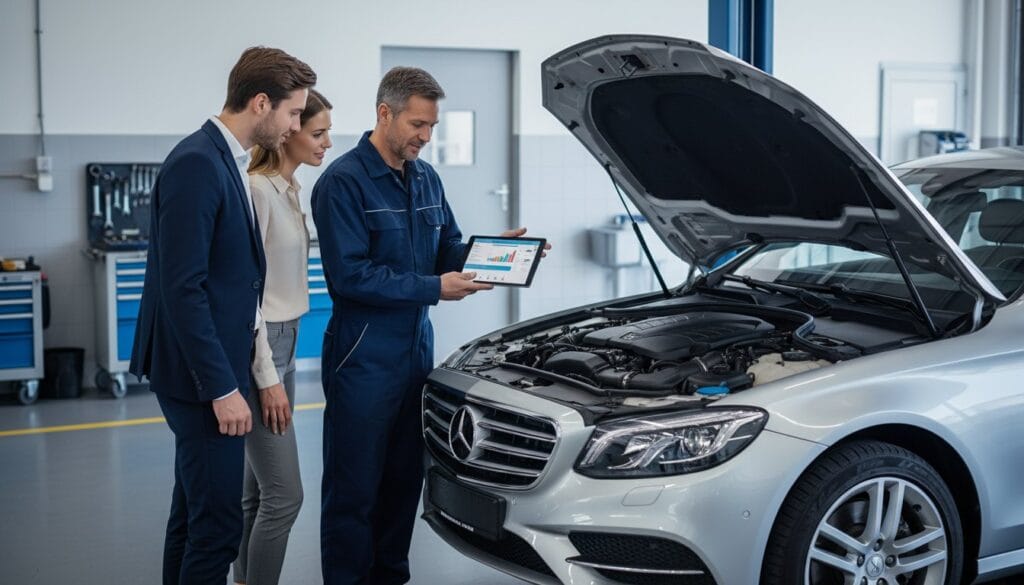
The excitement of finding the perfect used car can quickly be overshadowed by a single, nagging question: what if it has hidden problems? That underlying fear of purchasing a vehicle with costly, undisclosed issues is a valid concern for any buyer. This uncertainty is precisely why a professional used car pre purchase inspection is not just an option, but an essential step in the buying process. It is the most effective, reliable method to protect your investment and ensure the vehicle you are considering is a sound purchase, not a source of future headaches.
In this comprehensive guide, our expert technicians will walk you through everything you need to know. We will detail what a thorough inspection covers, explain how to easily arrange one with a private seller or dealership, and provide a complete checklist for your reference. By the end, you will have the confidence to negotiate a fair price, a clear understanding of the car’s current and future maintenance needs, and the peace of mind that comes from making an informed, expert-backed decision.
Key Takeaways
- Learn why an independent evaluation is the single most critical step to avoid purchasing a vehicle with costly, hidden problems.
- Follow a clear process for arranging a used car pre purchase inspection and understand why you must choose a shop that is independent of the seller.
- Discover how to interpret the inspection report to differentiate between minor fixes, valuable negotiation points, and serious red flags.
- Find out why European vehicles like BMW, Audi, and Mercedes require a specialist’s eye to identify brand-specific issues a general technician might overlook.
What is a Pre-Purchase Inspection (PPI) and Why is it Non-Negotiable?
A Pre-Purchase Inspection (PPI) is a detailed, independent evaluation of a used vehicle’s condition, performed by a qualified, expert technician before you commit to buying. Its primary purpose is to uncover potential mechanical, safety, and cosmetic issues that are not obvious during a standard test drive. This professional assessment, as detailed in this overview of what a pre-purchase inspection entails, provides an unbiased report on the vehicle’s true health, empowering you to make an informed and confident decision.
It is essential to understand that a vehicle history report is a useful supplement, but not a substitute for a physical inspection. These reports only document what has been officially recorded and cannot reveal the quality of past repairs, underlying corrosion, worn-out components, or unreported accident damage. Only a hands-on evaluation can provide a complete picture.
To better understand the meticulous process involved, this video provides a helpful guide:
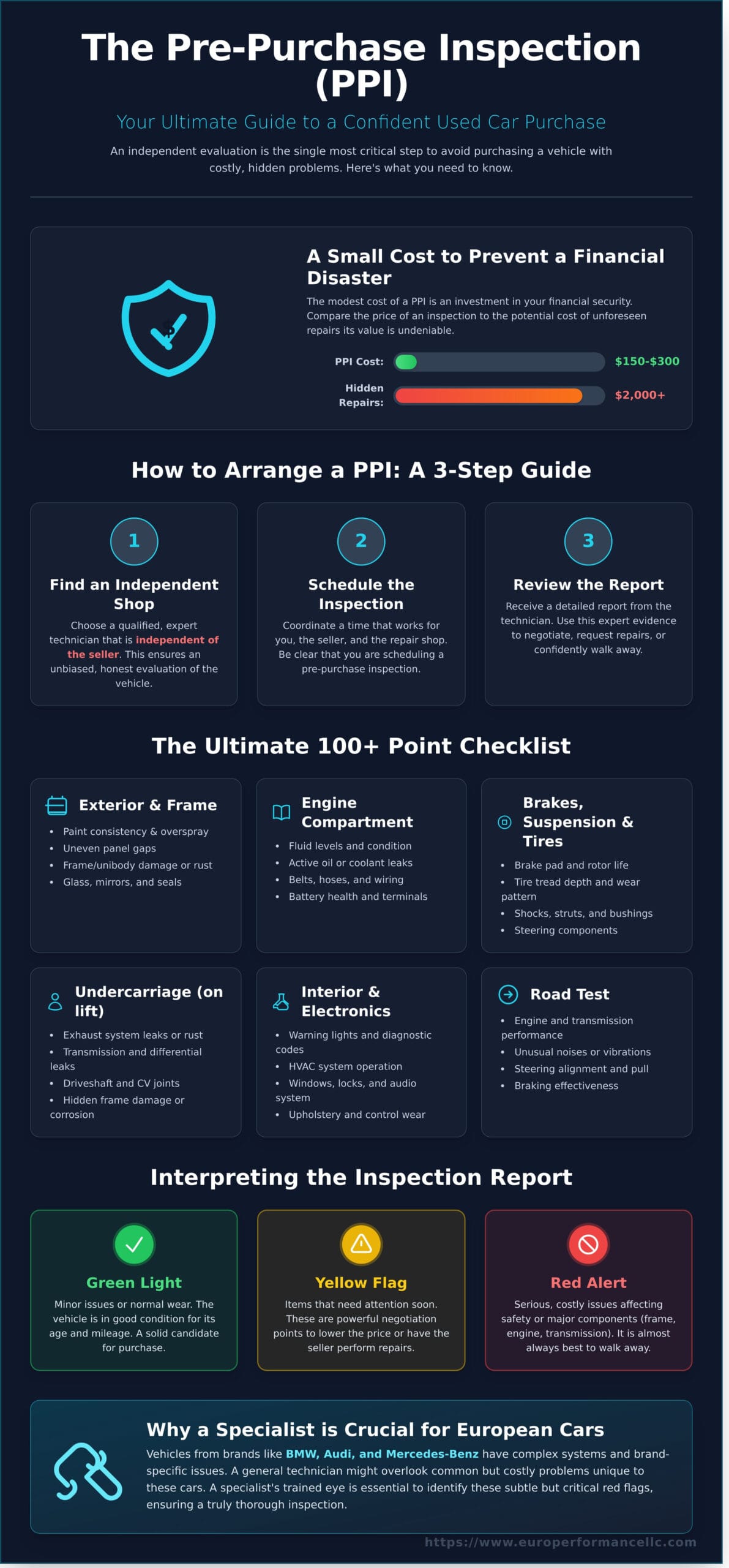
The modest cost of a PPI is an investment in financial security and peace of mind. When you compare the price of a thorough inspection to the potential cost of unforeseen repairs, its value becomes undeniable. A professional PPI is your most reliable safeguard against purchasing a vehicle with expensive, hidden problems.
The True Cost of a ‘Good Deal’
A vehicle that appears pristine can conceal significant liabilities that are invisible to an untrained eye. Our ASE certified technicians frequently identify critical issues during a used car pre purchase inspection that would have resulted in thousands of dollars in repairs. These often include:
- Hidden frame or unibody damage from a poorly repaired collision.
- Early signs of transmission failure or significant engine oil leaks.
- Complex and costly electrical faults within modern computer systems.
- Worn suspension and braking components that compromise safety and performance.
Gaining the Upper Hand in Negotiations
A detailed inspection report from a trusted, independent auto repair facility provides objective, expert evidence of a vehicle’s condition. This document is a powerful and legitimate tool for negotiation. You can use the findings to justify a lower purchase price, request the seller complete specific repairs prior to purchase, or simply gain the professional validation you need to walk away from a problematic car. It shifts the power dynamic in your favor.
The Ultimate PPI Checklist: Over 100 Points Our Experts Examine
A professional used car pre purchase inspection is a meticulous, systematic process that goes far beyond a simple test drive and a glance under the hood. It is this comprehensive evaluation that separates a confident purchase from a costly mistake. Our ASE-certified technicians utilize a detailed checklist covering more than 100 individual points to uncover hidden issues that sellers may not be aware of or may not disclose. This level of scrutiny is precisely why trusted sources like the Federal Trade Commission consumer advice strongly recommend getting an independent mechanical inspection before you buy.
A critical component of our process is the use of a professional vehicle lift, which allows for an unobstructed view of the undercarriage-an area where significant problems like frame damage, rust, and fluid leaks often hide. While our checklist is exhaustive, please note that the specific points of inspection are adapted for the vehicle in question, with special attention given to the complex systems found in high-performance European cars.
Exterior, Body, and Frame
The vehicle’s exterior tells the story of its life. Our experts are trained to read this story, looking for subtle signs of past accidents and poor repairs. We methodically examine:
- Paint and Panels: Checking for inconsistent paint texture, overspray on trim, and uneven panel gaps that indicate collision repair.
- Frame Integrity: A lift-based inspection for any signs of cracks, rust perforation, or bent frame rails that compromise structural safety.
- Glass and Seals: Inspecting all glass for chips and cracks, and ensuring window and door seals are intact to prevent leaks.
- Functional Components: Testing all exterior lights, turn signals, and windshield wipers for correct operation.
Engine Compartment and Mechanicals
The heart of the vehicle requires a detailed assessment to gauge its health and predict future reliability. We inspect for:
- Fluid Leaks: A thorough search for active or past leaks from the engine, transmission, power steering, and cooling systems.
- Belts and Hoses: Examining all belts for cracking or fraying and all hoses for bulges, brittleness, or softness.
- Battery and Charging System: Testing the battery’s health, checking for corrosion on terminals, and verifying the alternator is charging correctly.
- Fluid Condition: Assessing the color and consistency of the engine oil, coolant, and transmission fluid for signs of contamination or neglect.
Interior and Electronics
Modern vehicles, especially European models, are packed with complex electronics. We test every switch, button, and feature to ensure full functionality, including:
- Electronic Systems: Operating the power windows, seats, locks, sunroof, and the complete infotainment system (navigation, audio, Bluetooth).
- HVAC Performance: Verifying that both the air conditioning and heating systems perform effectively and reach appropriate temperatures quickly.
- Dashboard Warnings: Scanning for any active or stored trouble codes and ensuring no warning lights (Check Engine, ABS, Airbag) are illuminated.
- Upholstery and Trim: Inspecting seats, carpets, and headliners for excessive wear, stains, or odors that could indicate hidden issues like water damage.
Undercarriage, Suspension, and Brakes
With the vehicle on a lift, we can properly evaluate the components that ensure your safety and ride quality. This includes:
- Tires and Wheels: Checking tire tread depth, looking for uneven wear patterns that suggest alignment issues, and verifying the age of the tires.
- Braking System: Measuring the thickness of brake pads and rotors, and inspecting brake lines and calipers for leaks or corrosion.
- Suspension Components: Examining shocks, struts, control arms, and bushings for leaks, wear, or damage that could lead to poor handling.
- Exhaust System: Inspecting for rust, holes, or loose components from the manifold to the tailpipe.
How to Arrange a PPI: A Practical Step-by-Step Guide
Once you’ve found a promising vehicle, the next crucial step is coordinating the inspection. A common question we hear is, “How do I get the car from the seller to my mechanic?” The process is more straightforward than you might think, but it requires clear communication and a firm stance on one non-negotiable point: the inspection must be performed by an independent, trusted third party-not a shop recommended by the seller. This ensures an unbiased and comprehensive assessment of the vehicle’s true condition.
The logistics differ slightly depending on whether you are buying from a private individual or a dealership.
Arranging an Inspection with a Private Seller
When dealing with a private party, transparency and clear expectations are essential for a smooth process. We recommend a methodical approach:
- Agree on Price: Settle on a purchase price that is contingent on the vehicle passing the inspection to your satisfaction. This clarifies that the deal is not final until you have the results.
- Propose Logistics: Suggest a specific time for the inspection and offer to meet the seller at your chosen repair facility. This demonstrates that you are a serious buyer with a clear plan.
- Clarify Payment: It is standard practice for the buyer to pay for the inspection. State this upfront to avoid any confusion.
- Be Accommodating: The seller may reasonably ask to accompany the vehicle to the shop or request a small, refundable deposit to ensure you return the car.
Arranging an Inspection with a Dealership
Reputable dealerships are well-acquainted with the PPI process and should not object. Inform your salesperson early that your offer is conditional on a satisfactory independent inspection. Most dealers will readily agree, as it builds trust and facilitates the sale. They may offer to drive the vehicle to your mechanic or allow you to take it yourself. As automotive authorities like J.D. Power emphasize, a thorough pre-purchase inspection is a standard part of due diligence. Be wary of any dealer who insists the inspection must happen at their own service center; this defeats the purpose of an unbiased assessment.
Ultimately, the seller’s reaction to your request for a used car pre purchase inspection is as telling as the report itself. An honest seller with nothing to hide will welcome the chance to validate the vehicle’s condition. Any significant pushback or outright refusal is a major red flag, and your best course of action is to walk away.
This focus on verification is key. While a PPI checks the car’s integrity, understanding the seller’s transparency is just as critical. For those interested in the broader field of truth verification, you can visit Morgan Polygraph to learn about the methodologies professionals use.
Interpreting the Inspection Report: Green Lights, Yellow Flags, and Red Alerts
Once your trusted technician completes the evaluation, you will receive a detailed report. It’s crucial to understand that no used vehicle is perfect; the objective of a used car pre purchase inspection is not to find a flawless car, but to gain a complete and transparent understanding of its current condition. This report, complete with a list of findings and estimated repair costs, is your most powerful tool. A professional mechanic will walk you through each item, explaining the severity and providing a clear roadmap for negotiations and future maintenance.
Green Light: Minor Issues and Future Maintenance
These are the common, expected findings on a pre-owned vehicle and should not deter you from a purchase. They represent normal wear-and-tear and are typically inexpensive to address.
- Worn wiper blades
- Dirty cabin or engine air filters
- An upcoming oil change or fluid top-off
While minor, these items can be used as small leverage points during price negotiation.
Yellow Flag: Issues to Address Soon
Yellow flags are more significant than green lights and require careful consideration. These are issues that will need attention in the near future and must be factored into your budget. Examples include tires with 30% tread life remaining, an aging serpentine belt, or a minor, non-critical fluid seep. The estimated cost to repair these items should be directly subtracted from your offer price, ensuring you don’t overpay for upcoming maintenance.
Red Alert: Deal-Breakers and Major Problems
This category includes severe issues that are often prohibitively expensive to repair and can compromise the vehicle’s safety and reliability. A thorough used car pre purchase inspection is designed to uncover these critical flaws.
- Any evidence of frame or unibody damage from a major collision.
- Signs of flood damage, such as rust in unusual places or silt under the carpets.
- Significant engine, transmission, or differential problems.
In nearly all cases, a red alert is a clear signal to walk away from the vehicle and continue your search. The financial risk and potential for future headaches are simply too high.
If you have questions about an inspection report for a European vehicle, our ASE certified technicians are here to provide expert guidance you can trust.
Why a Specialist is Crucial for European Car Inspections
While any pre-purchase inspection is better than none, European vehicles like BMW, Audi, and Mercedes-Benz are engineered with a level of complexity that demands specialized expertise. Their unique systems, intricate electronics, and specific maintenance requirements mean that a general mechanic, however skilled, can easily overlook critical, brand-specific issues. Opting for a specialist isn’t just a preference; it’s a necessary step to protect your investment and ensure you have a complete picture of the vehicle’s health.
Brand-Specific Knowledge
Our ASE-certified technicians possess years of hands-on experience exclusively with European-made vehicles. This deep familiarity means we know precisely where to look for common, and often costly, potential problems that a generalist might miss during a standard used car pre purchase inspection. This specialized knowledge provides a far more accurate and in-depth assessment of the vehicle’s true condition.
- BMW: We meticulously check for vulnerabilities in the cooling system and signs of oil leaks from the valve cover or oil filter housing gaskets.
- Audi: Our inspection focuses on evidence of oil consumption issues common in certain TFSI engines and the condition of the timing chain components.
- Mercedes-Benz: We pay close attention to the complex Airmatic suspension systems, which can be a significant source of future repair costs.
This principle of specialization extends to the rapidly growing market of used electric and hybrid vehicles. For these cars, the most critical and expensive component is the high-voltage battery. Its health cannot be assessed with standard mechanical checks and requires specific diagnostic testing to determine its true condition and remaining lifespan. If you’re considering a used EV, you can learn more about EVdiagnostika.si, a service providing independent battery diagnostics.
Advanced Diagnostic Equipment
Modern European cars are rolling computers, with dozens of interconnected modules controlling everything from the engine to the safety systems. A generic code reader can only access basic powertrain data, leaving you blind to potential issues within these complex networks. We utilize factory-level diagnostic scanners to communicate with every module in the vehicle, uncovering proprietary error codes that provide a complete electronic health report.
This capability is essential for accurately assessing sophisticated systems like Advanced Driver Assistance Systems (ADAS), transmissions, and vehicle security modules. Without this technology, an inspection is fundamentally incomplete. Don’t risk a purchase based on partial information. Schedule a specialized European car PPI with us and gain the peace of mind that comes with a truly comprehensive evaluation.
Secure Your Investment with an Expert Pre-Purchase Inspection
Navigating the used car market can be complex, but as this guide has shown, a detailed inspection is your most powerful tool. The key takeaways are clear: a pre-purchase inspection is a non-negotiable step to protect your investment, a comprehensive checklist reveals the true condition of a vehicle, and specialized expertise is crucial for high-performance European cars.
Don’t leave a significant purchase to chance. At Euro Performance Auto Shop LLC, our ASE Certified Technicians specialize in brands like BMW, Audi, and Mercedes, using advanced, factory-level diagnostic tools to provide an unparalleled analysis. A professional used car pre purchase inspection gives you the objective data needed for total peace of mind. Ready to make a confident decision? Schedule Your Pre-Purchase Inspection in Belgrade Today and get behind the wheel of a vehicle you can trust.
Frequently Asked Questions About Pre-Purchase Inspections
How much does a pre-purchase inspection cost?
The cost of a pre-purchase inspection typically ranges from $150 to $300, depending on the vehicle and the depth of the evaluation. High-performance or luxury European models may be at the higher end of that range due to their complex systems. This investment is minimal compared to the potential cost of unforeseen repairs. Our detailed inspection provides a comprehensive report, giving you a clear picture of the vehicle’s mechanical and electronic health before you make a final decision.
How long does a typical used car inspection take?
A thorough inspection by one of our ASE certified technicians generally takes between 90 minutes and two hours. This timeframe allows for a comprehensive visual check, a detailed mechanical and electronic systems diagnosis, and a crucial road test to evaluate the engine, transmission, steering, and braking performance under real-world conditions. A more complex vehicle or one with suspected issues may require additional diagnostic time to ensure a complete and accurate assessment of its condition.
Can I be present during the inspection?
Yes, we encourage you to be present, particularly for the final review of our findings. While insurance and safety protocols may restrict access to the service bay while the vehicle is on a lift, our technician will be happy to walk you through the inspection report afterward. This allows you to see any areas of concern firsthand and ask specific questions. Our goal is to provide a transparent assessment to help you make a fully informed purchasing decision.
What’s the difference between a state inspection and a pre-purchase inspection?
A state inspection is a basic check to ensure a vehicle meets minimum legal safety and emissions standards required for registration. In contrast, a comprehensive used car pre purchase inspection is a much more detailed evaluation. It is designed to uncover potential mechanical, electrical, or cosmetic issues that could lead to expensive repairs. Our technicians examine everything from engine and transmission health to the condition of the frame, providing you with a complete vehicle health report.
Should I get a PPI for a Certified Pre-Owned (CPO) car?
We strongly recommend it. While the “certified” label offers some reassurance, the quality and thoroughness of these programs can vary significantly between manufacturers and dealerships. An independent pre-purchase inspection provides an unbiased, third-party assessment of the vehicle’s true condition. It acts as a crucial verification step, ensuring that the CPO checklist was not just completed, but completed accurately, giving you genuine peace of mind about your investment.
What if the seller refuses to allow an inspection?
A seller’s refusal to permit an independent inspection is a major red flag. A confident and transparent seller should have no issue with a potential buyer verifying the vehicle’s condition. Refusal often suggests the seller may be aware of significant hidden problems they do not wish to disclose. In this situation, we strongly advise you to be extremely cautious and consider walking away from the purchase to avoid inheriting costly and undisclosed issues.