
Blog
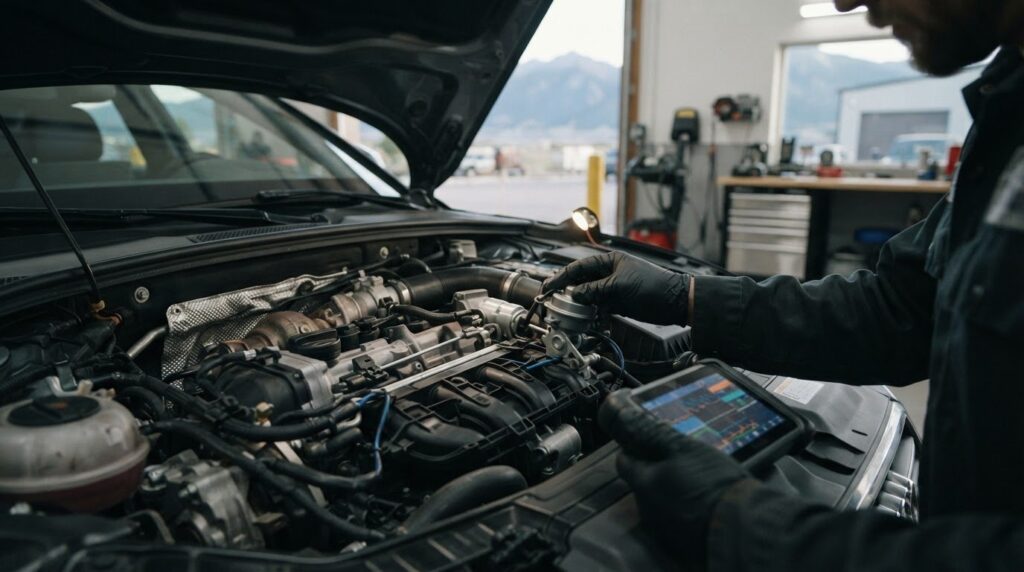
An intake-runner fault code doesn’t automatically mean the runner control motor has failed. Before authorizing a vw intake manifold runner control motor replacement, it’s important to know that a faulty position sensor, damaged wiring, a loose connector, restricted linkage, or a problem with the runner flaps can produce a similar code or symptoms. Rough idle, hesitation during acceleration, reduced fuel economy, or an illuminated Check Engine Light can point toward the intake system, but symptoms alone don’t identify the failed component.
A methodical diagnosis helps determine whether the motor, another part of the intake system, or an electrical circuit is at fault. This guide explains the motor’s role, the symptoms that may prompt testing, and how scan-tool information, visual inspection, and component checks help distinguish possible causes. You’ll also learn what can affect the repair scope and fitment, so you can understand the findings and options before work is authorized.
Euro Performance Auto Shop LLC provides European vehicle diagnostics and Engine Repair in Belgrade, MT. ASE-certified technicians can start with a Complimentary Check Engine Light Code Scan, then use Electronic Diagnosis to assess what the fault points to and what further testing is needed. The sections ahead explain the diagnostic process and what to expect from a VW-specific assessment.
Key Takeaways
- A runner-control fault code identifies a system or circuit concern, not necessarily a failed motor. Diagnosis should isolate the cause before parts are replaced.
- Compare a confirmed actuator fault with possible wiring, linkage, or manifold issues to understand why the repair scope can differ.
- Whether vw intake manifold runner control motor replacement is suitable depends on the vehicle’s design, the diagnosis, and the applicable service information.
- Access, fasteners, and any calibration or relearn steps can vary by VW engine and model, so the repair process is vehicle-specific.
- Vehicle identification and service information help technicians verify the correct component and repair approach before work begins.
What the VW Intake Manifold Runner Control Motor Does, and What a Fault Can Mean
A runner control motor is an actuator that moves a mechanism in the intake manifold to change runner position and influence how air flows through the engine. The component’s name, location, and operation vary by Volkswagen engine and model year. Technicians verify the configuration using the vehicle identification and the relevant service information.
The motor is only one part of the system. Runner flaps sit within the intake manifold, and a linkage may connect them to the actuator. Wiring supplies the electrical connection, while a position sensor or another feedback method may report movement to the control unit, depending on the vehicle’s design. A stored fault can identify a concern in this system without proving which component has failed.
This video shows an example of TDI intake manifold repair. It provides visual context, but it isn’t a model-specific replacement procedure for every VW runner-control system.
How the runner control motor interacts with the intake manifold
In designs with an electronically controlled actuator, the engine control unit can command runner movement. A feedback signal may help it assess the position. The mechanism and control strategy differ by vehicle. A variable-runner arrangement changes how intake airflow behaves as operating conditions change. The general concept is described in this overview of the variable-length intake manifold.
That general explanation doesn’t establish how a particular VW is configured. A fault could involve the actuator, a sticking flap, damaged linkage, wiring, or position feedback. Because these parts work together, diagnosis should identify the failed point before deciding whether vw intake manifold runner control motor replacement is appropriate.
Symptoms that can prompt a runner-control diagnosis
A Check Engine Light, a stored intake-runner fault, rough idle, hesitation during acceleration, reduced fuel economy, or occasional stalling can prompt further investigation. These symptoms don’t confirm a runner-control motor failure. Similar concerns can come from other engine or intake-system problems, so the pattern of symptoms and test results matters.
Before the diagnostic appointment, note when the warning appeared and how the vehicle behaved. Record whether hesitation occurs during acceleration, whether idle quality changes, and whether the concern comes and goes. If a warning message appears, note its wording. These details help technicians assess the complaint alongside scan-tool information instead of treating a single code as proof that the motor needs replacement.
- Actuator: moves the runner-control mechanism when the vehicle’s design calls for it.
- Runner flaps and linkage: direct or transmit movement within the intake assembly.
- Wiring and position feedback: support actuator operation and, where equipped, report movement.
How Technicians Diagnose a VW Intake Manifold Runner Control Motor Fault
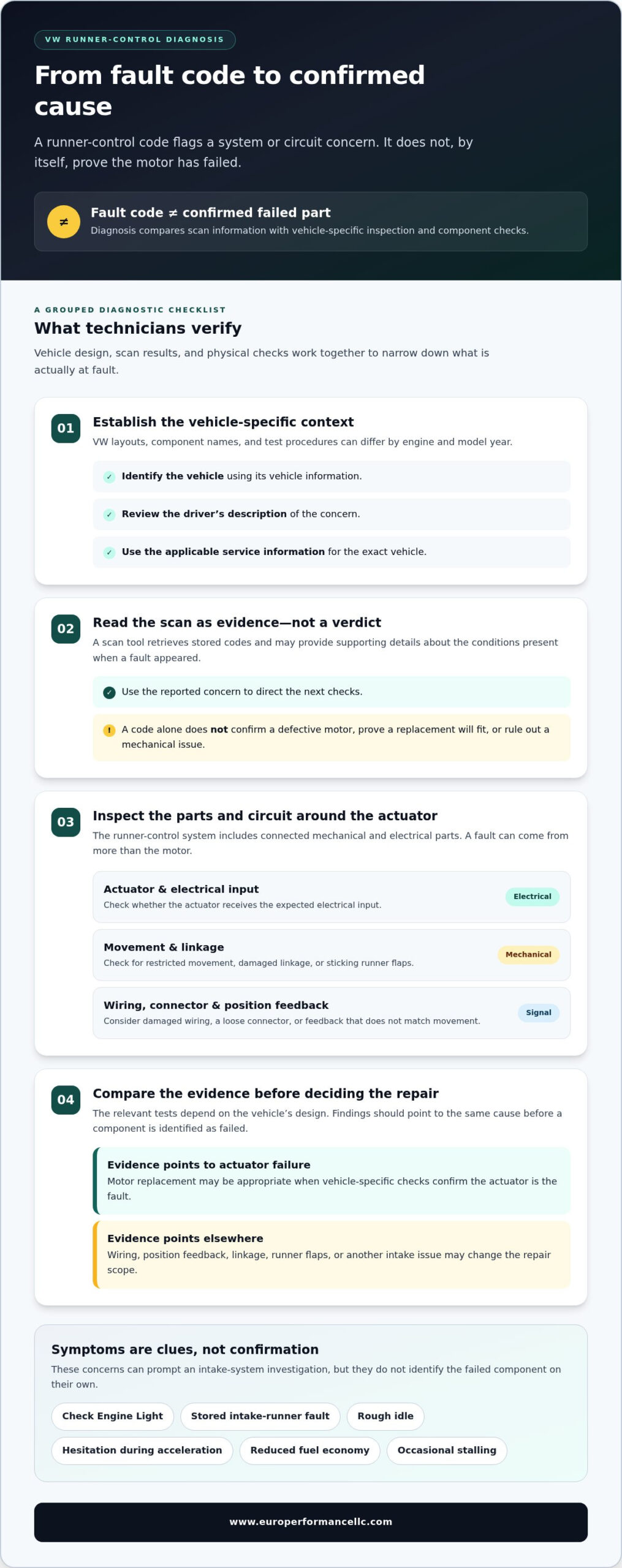
A reliable diagnosis starts with the specific vehicle, not a replacement-part listing. Technicians identify the VW using its vehicle information, review the driver’s description of the concern, and retrieve stored fault information. Engine and model-year differences matter because component names, layouts, and test procedures can vary. The diagnostic process should follow the service information for that vehicle.
A fault-code scan identifies a reported system or circuit concern; it doesn’t, by itself, confirm which component has failed. A code may be consistent with an actuator issue, but it can also relate to wiring, position feedback, linkage, or another intake component. Confirming the cause means checking whether the evidence from relevant tests points to the same fault.
What a fault-code scan can, and cannot, tell you
A scan tool retrieves stored codes and, when available, supporting details such as operating conditions recorded when a fault appeared. That information helps direct the next checks. It doesn’t prove that the motor is defective, confirm that a replacement part will fit, or rule out a mechanical problem. Codes and test data need to be interpreted for the exact vehicle, not treated as a universal diagnosis.
Euro Performance Auto Shop offers a Complimentary Check Engine Light Code Scan as an initial information-gathering step. The scan can show what the vehicle’s control system reported, but further Electronic Diagnosis may be needed to isolate the underlying cause. For broader context on intake design, an SAE International technical paper on variable intake manifold design discusses engineering considerations; it doesn’t replace VW-specific service procedures.
Checks that help isolate the failed component
After reviewing the scan results, a technician can inspect the related parts and circuits. The aim is to determine whether the actuator receives the expected electrical input, whether its movement is restricted, and whether available feedback agrees with the commanded position. The appropriate measurements and tests depend on the vehicle’s design and diagnostic information.
- Inspect connectors and wiring. Look for visible damage, loose connections, corrosion, or other circuit concerns that could interrupt actuator operation.
- Examine the linkage and intake components. Check for disconnection, binding, damage, or visible conditions that could restrict runner movement.
- Assess actuator operation. Where supported by vehicle-specific diagnostic tools, compare commanded movement with available position feedback or test results.
- Use the correct service information. Follow the procedure for that engine and model rather than assuming one test applies across all Volkswagens.
If the scan points to a circuit fault and inspection finds damaged wiring, replacing the motor alone may leave the original issue unresolved. If test results support an actuator failure, that evidence can inform the repair recommendation. This distinction makes a vw intake manifold runner control motor replacement a diagnosis-led decision rather than a guess. Euro Performance Auto Shop provides European vehicle diagnostics in Belgrade, MT, to connect scan information with the checks needed to identify the fault. Learn more about European vehicle diagnostics.
Motor-Only Replacement or Intake Manifold Repair: How to Compare Options
The right repair depends on what testing identifies, not just the fault description. A motor-only repair may be appropriate when the actuator is confirmed faulty, can be serviced separately, and the correct part fits the vehicle. If the fault lies elsewhere, replacing the motor may leave the problem unresolved. A larger repair should likewise be supported by evidence of a manifold or runner-mechanism fault, rather than assumed from a code alone.
Use this comparison to understand the kinds of findings that can shape a repair recommendation. The actual parts and procedures depend on the VW’s design and service information.
Diagnostic finding
How it may affect repair scope
Confirmed actuator fault
A motor-only replacement may be considered if the actuator is serviceable separately and the correct component fits the vehicle.
Wiring or connector fault
The affected circuit or connection may need repair; replacing a functioning motor would not address the identified cause.
Linkage issue
A disconnected, damaged, or restricted linkage may require attention to the mechanical connection rather than the actuator alone.
Manifold or runner-mechanism fault
A broader assembly repair may be appropriate if testing identifies damaged or non-serviceable parts within the manifold system.
When a motor-only replacement may be appropriate
This option makes sense only when test results support actuator failure and the vehicle’s construction and service guidance allow the motor to be replaced separately. Fitment must be matched to the exact VW model, year, engine, and relevant part information. A broad marketplace fitment list can be a useful reference, but it doesn’t establish that a part is correct for an individual vehicle. The vw intake manifold runner control motor replacement decision should follow both diagnosis and fitment verification.
When diagnosis points beyond the motor
Damaged wiring or a poor connector can interrupt operation. A binding linkage or fault in the runner mechanism may also change the repair scope. These findings are distinct from a confirmed failed actuator, and neither automatically means the entire manifold must be replaced. The recommended repair should match the part or assembly identified by the evidence.
Before authorizing work, review the technician’s findings, the proposed repair scope, and a vehicle-specific estimate. Confirm which component failed, why the recommended repair addresses it, and whether the actuator is serviced separately on that engine. Euro Performance Auto Shop’s European-vehicle experience supports a model-specific assessment in Belgrade, MT. Read more about Euro Performance Auto Shop.
What to Expect During VW Runner Control Motor Replacement
A professional vw intake manifold runner control motor replacement begins by confirming that the actuator is the source of the fault. The technician reviews diagnostic findings, identifies the vehicle and engine, then verifies the replacement part against the applicable service information. This avoids relying only on a broad fitment description that may not match the individual VW.
Once the part and repair scope are established, the technician plans access to the actuator and related components. Depending on the engine layout, surrounding parts may need to be moved to reach the runner-control mechanism. The technician follows the procedure for that vehicle rather than applying universal removal instructions. Fastener requirements, access points, and any calibration or relearn procedure can vary.
- Confirm the diagnosis. Review test results and verify that the actuator, rather than wiring, linkage, or another intake component, is responsible.
- Verify the replacement part. Match component information to the vehicle’s identification, model, year, engine, and service guidance.
- Access the component. Follow the vehicle-specific procedure to reach the actuator without assuming every VW has the same layout.
- Replace and reassemble. Install the confirmed part and restore any components moved during access according to service information.
- Test the repair. Check actuator operation and review fault information after the work, as applicable to the vehicle.
Why replacement steps differ across Volkswagen models
Volkswagen engines can differ in component placement, surrounding hardware, and how the actuator connects to the runner mechanism. Those differences affect access and labor. Vehicle identification and the correct service information guide the parts and work scope. A generic online guide can explain the broad process, but it can’t replace the procedure for a specific engine and model.
Torque values, fastener handling, and any adaptation or relearn steps should come from the relevant service data. Guessing at these details risks an incomplete repair or incorrect installation. The technician should be able to explain which steps apply to the vehicle and why.
Post-repair checks and appointment preparation
After installation, the technician can verify actuator operation using checks supported by the vehicle’s diagnostic system, then review fault information for signs that the concern remains. The exact verification depends on the model and available test data. If a calibration or relearn applies, it should follow the specified procedure rather than a generic reset sequence.
To help the assessment, bring notes about when symptoms occur, any warning messages, and previous scan or repair information. Euro Performance Auto Shop LLC provides European vehicle repair in Belgrade, MT, with ASE-certified technicians and advanced diagnostic equipment. Learn about VW repair assessment.
Get a VW Runner-Control Diagnosis in Belgrade, MT
A runner-control fault needs a clear diagnostic path before repair is approved. Euro Performance Auto Shop LLC provides European vehicle diagnostics and repair in Belgrade, MT. ASE-certified technicians use advanced diagnostic equipment to assess the vehicle, identify the likely source of the concern, and explain the recommended scope. This helps distinguish a confirmed actuator problem from an issue that calls for attention elsewhere in the intake system.
When parts are needed, the shop sources them through OE manufacturer and leading supplier partnerships. Repairs are backed by a satisfaction guarantee, giving you a clear basis for considering the assessment and repair recommendation.
How to arrange an assessment and understand repair scope
An appointment is strongly recommended and can be made by phone, email, text, or the online form. Bring details about symptoms, warning messages, and any earlier diagnostic results. The Complimentary Check Engine Light Code Scan can provide initial information, but a scan alone may not identify the failed component. Further Electronic Diagnosis may be needed before the technician can recommend a vehicle-specific repair.
Review the findings and proposed repair scope before authorizing work. For a vw intake manifold runner control motor replacement, understand which test results point to the actuator, how the correct part was identified, and whether another intake-system component is involved. The estimate should reflect the diagnosis rather than assume the motor or full manifold is at fault.
- Bring: symptom timing, warning-message details, and prior scan or repair information.
- Review: the diagnostic findings, recommended parts, and repair scope.
- Clarify: whether additional testing is needed beyond the initial code scan.
Financing includes a 30-second application. 90% of people are approved. No hard credit check. No fees or penalties. Payment options are 3, 6, or 12-month flexible payment plans. These are payment-plan terms, not a repair quote; the estimate depends on the vehicle’s diagnosis and required work.
Safety warnings and the right next step
If the Check Engine Light is flashing, treat it as a serious warning. Do not drive your vehicle when the Check Engine light is flashing, and we strongly recommend having your vehicle towed to the closest available repair shop.
If the steering wheel shakes, do not treat it as a normal condition. This is definitely not a normal driving condition and often points to issues like warped front brake discs that require an immediate brake system inspection, as prolonged driving can further damage steering and suspension components.
For a measured next step, arrange a VW diagnostic appointment with Euro Performance Auto Shop LLC in Belgrade, MT. The team can assess the concern, explain the repair options, and help you understand the work before you authorize it. Arrange a VW diagnostic appointment.
Move Forward With a Clear Repair Plan
The next step isn’t to guess at a part. Get a vehicle-specific assessment and understand what the findings support before authorizing work. That keeps the decision about vw intake manifold runner control motor replacement grounded in evidence for your vehicle, not a general fitment claim or an assumption about the entire intake assembly.
At Euro Performance Auto Shop, European-vehicle expertise, advanced diagnostic equipment, OE-supplier parts, and a satisfaction guarantee support a careful repair process. A Complimentary Check Engine Light Code Scan can begin the assessment, with further diagnosis used as needed to clarify the repair scope.
Bring any warning messages, symptom notes, or previous diagnostic information. A clear account of what you’ve noticed gives the technician a useful starting point and helps keep the assessment focused on your VW.
Schedule a VW diagnostic appointment in Belgrade, MT for a repair plan based on your vehicle’s needs.
Frequently Asked Questions
Can a VW intake manifold runner control motor fault cause the Check Engine Light to come on?
Yes, a fault in the runner-control system can trigger the Check Engine Light. The warning indicates that the vehicle has detected a concern, but it doesn’t confirm that the motor itself has failed. A vw intake manifold runner control motor replacement is appropriate only if testing supports that repair. Note whether the light stays on or appears intermittently, and share when it first came on during the diagnostic assessment.
Will a runner control motor fault clear itself, or does it need diagnosis?
The warning may turn off if a fault isn’t detected again, but that doesn’t establish that the underlying issue is resolved. Stored information may still help a technician understand an intermittent concern. Arrange diagnosis even if the light goes out, especially if the engine’s behavior changes or the warning returns. If possible, record when it happened, how long it lasted, and whether it followed a particular driving condition.
Can wiring or a connector cause the same symptoms as a failed runner control motor?
Yes. A loose, damaged, or corroded connection can interfere with the actuator circuit and create a concern that resembles a motor fault. For example, an intermittent concern may suggest a failing actuator, while inspection may identify an electrical connection issue. A technician can examine the connector and wiring and test the relevant circuit before recommending parts, helping avoid replacement based on symptoms alone.
Does a replacement runner control motor need vehicle-specific programming or adaptation?
It depends on the VW’s engine and control system. Some repairs may require a specified setup, adaptation, or relearn procedure, while others may not. Don’t assume a replacement is ready to operate without post-installation checks. The technician should use the service information for your exact vehicle to determine whether a procedure applies and verify operation afterward. Model, year, and engine details help establish the correct requirements.
How long does a VW intake manifold runner control motor replacement take?
There isn’t one reliable time estimate for every VW. The work can depend on access to the component, engine layout, confirmed repair scope, and whether testing identifies related issues that also need attention. A vehicle-specific estimate follows identification of the vehicle and review of the diagnostic findings. If wiring or linkage needs repair, the time required may differ from an actuator-only job.
Should I drive if my Check Engine Light is flashing?
No. Treat a flashing Check Engine Light as a serious warning, particularly if the engine is running roughly or losing power. DO NOT TO DRIVE your vehicle when Check Engine light is flashing… we recommend to tow your vehicle to the closest repair shop available. Don’t continue driving to see whether the warning stops. Arrange a tow and tell the repair shop what symptoms appeared with the flashing light.
What should I do if my steering wheel shakes at higher speeds?
Arrange a prompt brake-system inspection rather than dismissing the shake as normal. This is definitely not a normal driving condition… warped front brake discs… inspect brake system… prolonged driving can damage steering and suspension components. Note when the shaking begins and whether braking changes it, then share those details with the technician. If the shake is severe, avoid continuing the trip and arrange help to have the vehicle inspected safely.