
Blog
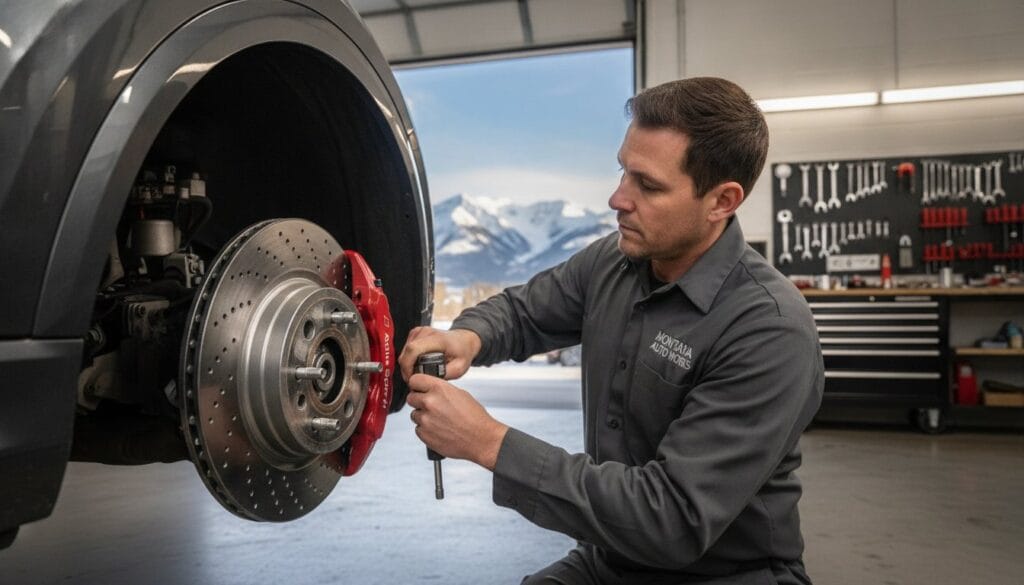
Does your Audi still possess the precise stopping power required for a heavy descent down Bozeman Pass, or have you noticed a concerning shimmy in the brake pedal? Many Gallatin Valley drivers find themselves caught between the absolute necessity of mountain safety and the sticker shock of high dealership service quotes. Understanding the audi brake pads and rotors cost bozeman residents face in 2026 is the first step toward maintaining your vehicle’s performance without overpaying for a name brand.
We agree that your safety shouldn’t be a matter of compromise, especially when navigating steep grades and icy intersections. This guide promises to demystify the technical requirements of European braking systems and provide a transparent look at the factors that influence your final service bill. You’ll learn why specialized thermal management is critical for Montana driving, the real differences between original equipment and premium aftermarket components, and why a methodical, independent expert is often the most cost-effective choice for your Audi’s long-term reliability and performance.
Key Takeaways
- Learn how specific vehicle trim levels and local labor rates influence the total audi brake pads and rotors cost bozeman drivers can expect to pay in 2026.
- Understand how frequent Gallatin Canyon descents and winter road treatments like magnesium chloride accelerate wear on specialized European braking components.
- Identify critical audible and tactile warning signs, such as pedal pulsation or metallic grinding, that indicate a need for immediate professional inspection.
- Discover why utilizing ASE-certified technicians and OE-grade parts is essential for maintaining the precision engineering and safety standards of your Audi.
Understanding Audi Braking Systems: More Than Just Stopping Power
Audi engineering is defined by precision. Nowhere is this more evident than in the braking system. While many drivers focus solely on the audi brake pads and rotors cost bozeman service centers provide, the mechanical reality involves a sophisticated interplay of hydraulics and electronics. A modern Audi Disc brake assembly consists of high-performance calipers, high-carbon rotors, and specialized pads, all monitored by electronic sensors. This system does more than stop the car; it works in tandem with the Quattro all-wheel-drive system to apply micro-braking forces to individual wheels. This maintains stability during aggressive cornering or on slick Montana roads.
To better understand the variables involved in a professional brake service, watch this helpful video:
To achieve the “bite” that Audi drivers expect, the factory utilizes “softer” brake pad compounds. These materials offer superior friction and heat management but wear more quickly than the harder pads found on domestic trucks. High-carbon rotors are paired with these pads because they dissipate heat more efficiently than standard cast-iron versions. This thermal management is vital for preventing “brake fade” during long descents in the Gallatin Valley. Additionally, the Quattro system uses individual wheel braking to provide torque vectoring. This hidden workload is why Audi components often show wear earlier than domestic counterparts.
The Difference Between OE, OEM, and Aftermarket Parts
Original Equipment (OE) parts are the exact components installed at the factory. Original Equipment Manufacturer (OEM) parts are made by the same company but sold under their own brand, such as Brembo or Akebono. When evaluating the audi brake pads and rotors cost bozeman specialists quote, remember that you’re paying for an integrated safety system. While some aftermarket pads look identical, they often lack the specific chamfers and shims required for European calipers. This mismatch is the primary cause of the high-pitched “brake squeal” that plagues many DIY repairs. Investing in OE-grade components ensures your vehicle maintains its factory-specified stopping distance and noise-free operation.
Brake Wear Sensors: Your Audi’s Early Warning System
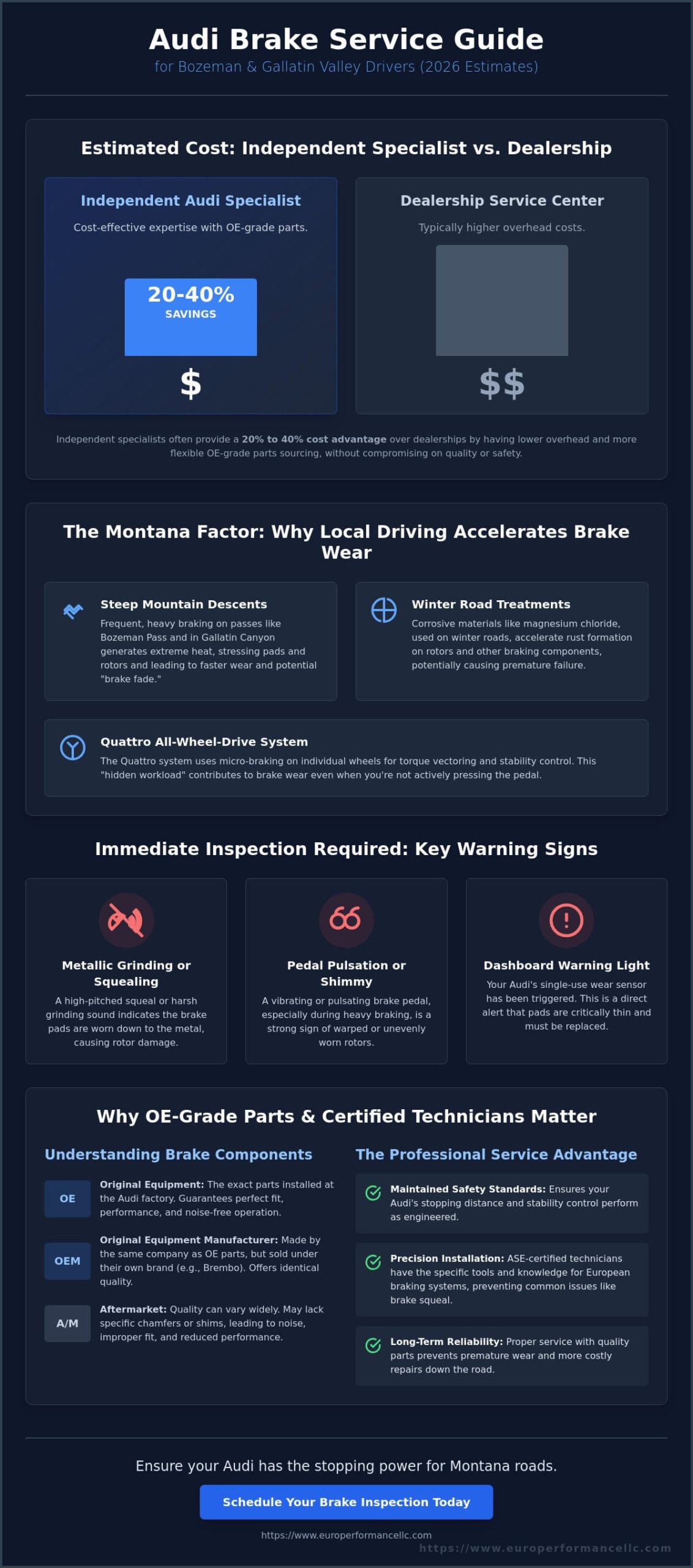
Most Audi models feature electronic wear sensors embedded within the brake pads. When the friction material reaches a critical thinness, the sensor’s circuit is broken, which triggers a warning light on your dashboard. These sensors are single-use components; once the light is active, the sensor has been physically ground down and must be replaced alongside the pads. Ignoring this indicator is particularly dangerous during Montana winters. Reduced pad thickness limits the system’s ability to clear snow and road salt from the rotor surface, which directly impacts your stopping time in freezing conditions.
Estimated Audi Brake Pads and Rotors Cost in Bozeman
Determining the audi brake pads and rotors cost bozeman drivers will encounter depends heavily on the specific engineering requirements of the vehicle. While general market data provides a baseline, the Gallatin Valley reflects a specialized service environment. Several factors dictate the final invoice, including the model year, specific trim levels, and whether the vehicle is a standard commuter or a high-performance variant. Generally, front brake assemblies require a higher investment than rear sets. This is because the front system handles approximately 70% of the vehicle’s stopping load and utilizes larger, more complex components to manage the resulting friction.
In the Bozeman area, independent specialized shops typically provide a cost advantage of 20% to 40% compared to local dealership service departments. This price difference isn’t due to a reduction in quality; it’s a result of lower overhead and more flexible parts sourcing. Most Audi rotors are designed to be replaced alongside the pads. These rotors are engineered with a specific thickness to optimize weight and heat dissipation. By the time a set of pads is exhausted, the rotor has usually reached its minimum wear limit. Attempting to resurface these thin rotors is often unsafe and leads to premature warping.
Cost Expectations by Audi Model Category
The first tier includes compact and mid-size models like the A3, A4, and Q3. These vehicles use standard single-piston calipers and smaller rotors, representing the most accessible entry point for service. Luxury and full-size models, such as the Q7, A8, and Q8, sit in a higher tier. These larger vehicles require heavy-duty components and more friction material to bring their increased mass to a safe stop. Finally, S and RS performance models command a premium. These vehicles often feature multi-piston Brembo systems and massive, cross-drilled rotors designed for track-level heat management.
Parts vs. Labor: Where Your Money Goes
A significant portion of your service bill is dedicated to high-quality rotors. These are not simple pieces of cast iron; they are precision-engineered components that must withstand extreme thermal cycles. Labor precision is also a factor. Most modern Audis utilize an Electronic Parking Brake (EPB), which requires specialized diagnostic tools to retract the calipers safely. Without these tools, the rear brake system can be damaged during a routine pad swap. Utilizing Factory Scheduled Maintenance allows technicians to monitor pad thickness before the rotors are compromised, potentially saving you from more extensive repairs.
Maintaining optimal braking performance is a critical component of mountain safety, a topic detailed extensively in the Montana Department of Transportation winter driving guide. For a precise assessment of your vehicle’s current condition, you can consult with a local specialist to ensure your Audi remains prepared for the unique demands of the Gallatin Valley.
The Montana Factor: How Bozeman Driving Affects Audi Brakes
Bozeman’s geography dictates the lifespan of your Audi’s braking components. Sustained braking during a descent from Big Sky or through the Gallatin Canyon can push rotor temperatures into a range that compromises the integrity of lower-quality parts. This thermal stress is why the audi brake pads and rotors cost bozeman owners expect often includes the price of high-carbon rotors designed specifically to resist warping under pressure. Beyond the heat, our extreme temperature swings cause brake fluid to absorb moisture more rapidly. This reduces the fluid’s boiling point and can lead to a soft pedal when you need stopping power most during a sudden mountain storm.
Towing trailers or carrying heavy outdoor gear further amplifies these stresses. When an Audi is loaded to its gross vehicle weight, the kinetic energy required to stop is significantly higher. This places a massive burden on the friction material and the hydraulic system. For Gallatin Valley drivers, brake maintenance isn’t just a routine chore; it’s a critical safety preparation for a high-altitude environment that punishes standard automotive components. It’s why local expertise and the use of OE-grade materials are non-negotiable for regional reliability.
Managing Brake Fade on Steep Descents
Brake fade occurs when the friction components can no longer convert kinetic energy into heat effectively. You might notice the pedal traveling further toward the floor or a distinct lack of “bite” during a long downhill stretch. This is often caused by gas buildup between the pad and rotor or boiling brake fluid. Ensuring your vehicle undergoes a comprehensive inspection before the first snow ensures your system can handle the increased hydraulic pressure required on icy grades. High-performance fluid with a high boiling point is essential for maintaining a consistent pedal feel.
Corrosion and the “Montana Seize”
Winter road treatments in the Gallatin Valley are notoriously aggressive. Magnesium chloride is highly effective at melting ice, but it’s equally effective at corroding the aluminum and steel components of your Audi’s calipers. This often results in “seized” slide pins, which prevent the caliper from releasing fully. The result is a pad that stays in constant contact with the rotor, leading to overheating and rapid wear. We follow rigorous NHTSA brake testing standards to ensure every component moves with factory precision. Meticulous cleaning of the caliper brackets and the application of high-temperature ceramic lubricant are standard steps in our professional service process to prevent the audi brake pads and rotors cost bozeman residents face from inflating due to avoidable caliper failures.
When to Replace Your Audi Brakes: Signs and Symptoms
Identifying when your vehicle requires service is essential for maintaining safety and managing the audi brake pads and rotors cost bozeman drivers anticipate. While electronic sensors provide an automated warning, mechanical symptoms often appear first. A “mushy” or soft brake pedal often indicates air or moisture in the hydraulic lines, a common result of the thermal cycling previously discussed. Conversely, a pedal that requires excessive pressure suggests a failing vacuum booster or glazed pads that have lost their friction coefficient. These performance changes are often gradual, making them easy to overlook until a panic stop is required.
Listen for high-pitched squealing during light braking or a deep grinding sound that signals complete friction material depletion. Clicking or rattling sounds often point to worn anti-rattle clips or loose caliper hardware. If you feel a distinct pulsing through the steering wheel or brake pedal during deceleration, the system is likely suffering from uneven friction surface engagement. These tactile warnings are your vehicle’s way of communicating that the mechanical integrity of the braking system is compromised.
The “Audi Squeal”: Is it Normal?
Audi utilizes high-performance semi-metallic pads that provide exceptional cold-weather bite. These pads contain metallic fibers that can occasionally produce a slight squeal under light application, which is a normal characteristic of the material. However, a persistent, piercing screech usually indicates that the mechanical wear tab is making contact with the rotor. This is a deliberate safety feature designed to alert you before the audi brake pads and rotors cost bozeman service includes expensive caliper repairs. Distinguishing between performance noise and a wear indicator requires a methodical ear.
Vibration Under Braking: The Warped Rotor Myth
Many drivers attribute a vibrating pedal to “warped” rotors. In reality, physical warping of a heavy-duty Audi rotor is rare. The vibration usually stems from “cementite” or uneven brake pad deposits that have fused to the rotor surface due to extreme heat. Because Audi rotors are engineered with precise metallurgical compositions and thin wear tolerances, they cannot be “turned” or resurfaced on a lathe like domestic components. Replacing the rotors is the only professional way to restore a smooth, vibration-free pedal. If you’ve noticed any of these symptoms, schedule a professional brake inspection to ensure your vehicle remains safe for the road.
Why Euro Performance is the Bozeman Area Specialist for Audi Brakes
Euro Performance Auto Shop LLC provides a technically superior alternative to high-priced dealerships. Our ASE-certified technicians specialize exclusively in European engineering. This specialized focus ensures that the audi brake pads and rotors cost bozeman owners incur reflects precision labor and factory-grade components rather than inflated dealership overhead. We prioritize the use of OE-grade parts for every service. This commitment maintains the vehicle’s original safety ratings and the specific performance characteristics intended by the manufacturer. By choosing a specialist, you ensure that your high-value asset receives the meticulous care it requires to navigate the Gallatin Valley safely.
Precision Tools for Modern Audis
Servicing a modern Audi requires more than just mechanical skill. It requires advanced diagnostic software. Most current Audi models utilize an electronic parking brake (EPB) system. This system must be electronically retracted via specialized software before any physical service can begin. Attempting to force these calipers open manually can lead to catastrophic failure of the internal motors. Additionally, there is a direct link between ADAS calibration and your vehicle’s braking performance. Systems like automatic emergency braking rely on precise sensor data. Euro Performance Auto Shop LLC is equipped with the necessary technology to ensure these complex safety systems are perfectly synchronized with your new hardware.
Local Expertise and Transparency
We believe that transparency is the foundation of a professional relationship. Every service at Euro Performance Auto Shop LLC includes a digital vehicle inspection. This process provides you with clear photographic evidence of your pad thickness and rotor condition, allowing you to make informed decisions about your vehicle’s care. While we serve the entire Gallatin Valley, our location in Belgrade allows us to offer a more efficient and personalized experience than many Bozeman-based facilities. We understand how local driving habits and environmental factors accelerate wear on European components. By following a structured Audi service plan, you can maintain the long-term health of your vehicle while managing the audi brake pads and rotors cost bozeman residents expect. Schedule your appointment today to experience the difference that specialized European expertise provides.
Securing Your Audi’s Performance for the Road Ahead
Maintaining the stopping power of your Audi is a non-negotiable requirement for navigating the steep grades and unpredictable weather of the Gallatin Valley. As we have explored, the audi brake pads and rotors cost bozeman residents anticipate is an investment in both precision engineering and mountain safety. By selecting specialized European care, you ensure that your vehicle benefits from components designed to handle extreme thermal cycles and corrosive winter road treatments. Proactive maintenance doesn’t just save you money; it preserves the meticulous handling and response that define the Audi driving experience.
Euro Performance Auto Shop LLC provides the expert alternative to high-priced dealership service. With ASE Certified Technicians and specialized European diagnostic tools, we deliver the methodical care your vehicle deserves. We exclusively use top OE manufacturer parts to guarantee that your factory performance remains intact. You don’t have to choose between affordability and technical excellence when it comes to your safety. Request an Audi Brake Service Quote from Euro Performance Auto Shop LLC to secure your peace of mind before your next trip through the canyon. We look forward to helping you keep your Audi in peak condition for every Montana adventure.
Frequently Asked Questions
How long do Audi brake pads and rotors typically last in Montana?
Most Audi brake components last between 30,000 and 50,000 miles under normal conditions. In the Gallatin Valley, this lifespan often decreases due to the high-friction demands of canyon driving and frequent stop-and-go traffic in winter weather. We recommend a professional inspection every 10,000 miles to ensure your pad thickness remains above the safety threshold.
Can I replace just the brake pads and keep my old rotors?
We generally advise against “pad slapping” on European vehicles. Audi rotors are engineered with precise metallurgical properties and thin wear tolerances that usually reach their minimum limit at the same time as the pads. Installing new pads on worn rotors can cause poor heat dissipation, increased stopping distances, and pedal pulsation during emergency braking.
Why does the Audi dealership in Bozeman charge so much for brakes?
Dealership pricing is largely driven by high corporate overhead and manufacturer-mandated labor rates. These facilities often have significant administrative costs that are reflected in the final invoice. In contrast, the audi brake pads and rotors cost bozeman residents find at specialized independent shops is typically 20% to 40% lower while utilizing the same high-quality components.
What is the difference between ceramic and semi-metallic pads for an Audi?
Semi-metallic pads are the factory standard for Audi because they offer superior thermal conductivity and “cold bite” in freezing temperatures. Ceramic pads are often preferred by drivers who want to minimize brake dust, but they may lack the aggressive stopping power required for heavy mountain descents. For Montana driving, semi-metallic compounds usually provide the safest performance margin.
Does my Audi need a brake fluid flush at the same time as new pads?
Audi specifies a brake fluid flush every two years regardless of mileage. Brake fluid is hygroscopic, meaning it absorbs moisture from the air, which can lead to internal corrosion and a spongy pedal feel. Replacing the fluid during a brake job ensures the entire system is free of contaminants and can withstand the high temperatures generated on steep grades.
Is it safe to drive my Audi if the brake wear light is on?
It’s not safe to ignore a brake wear indicator for more than a few days. This light triggers when the friction material has worn down to approximately 2mm or 3mm. Once you reach this point, the risk of metal-on-metal contact increases significantly, which can damage your calipers and lead to a total loss of braking efficiency in a panic stop.
How long does a full Audi brake replacement take at Euro Performance Auto Shop LLC?
A standard brake service for a single axle at Euro Performance Auto Shop LLC typically takes between two and four hours. This duration includes the mechanical installation, electronic parking brake recalibration, and a thorough road test to bed the new friction materials. More complex performance models or those requiring ADAS sensor checks may require additional time for precision calibration.
Will aftermarket brakes void my Audi factory warranty?
No, your factory warranty remains valid when using high-quality aftermarket or OE-grade parts. Federal law, specifically the Magnuson-Moss Warranty Act, prevents manufacturers from requiring you to use dealership parts to maintain your warranty coverage. As long as the components meet or exceed the original engineering specifications, your vehicle’s protection remains fully intact.