
Blog
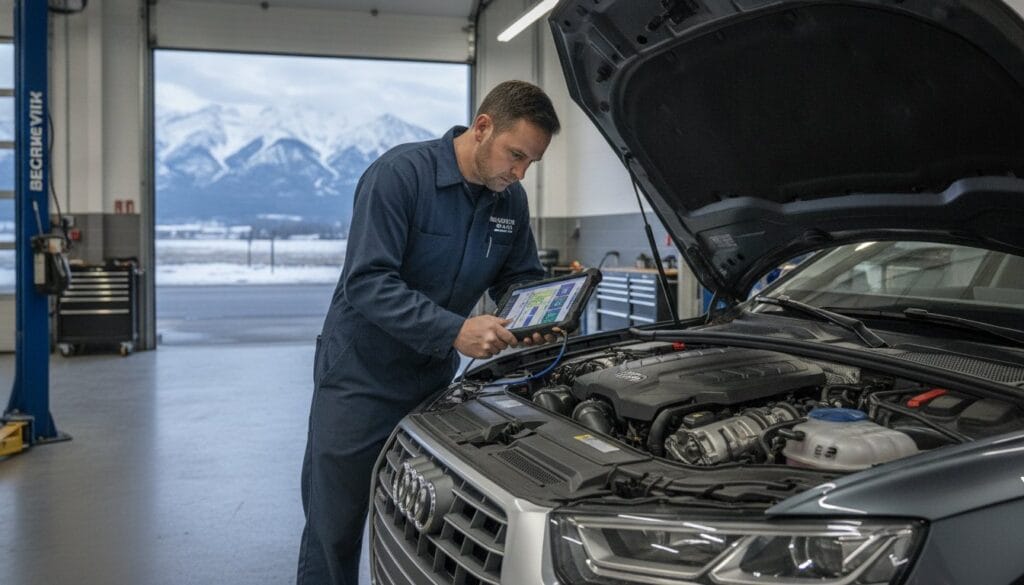
Imagine starting your morning in the Gallatin Valley only to be met by a flashing check engine light and a stuttering idle. For many Montana drivers, this moment brings immediate stress because of the high costs and three week wait times often found at the local dealership. You shouldn’t have to choose between an overbooked service department and a generic shop that uses a “parts-cannon” method to guess at repairs. Professional Audi engine diagnostics Bozeman specialists provide a necessary middle ground. These services offer the technical proficiency your German vehicle demands without the administrative hurdles of a corporate franchise.
We understand that your Audi represents a significant investment in engineering and safety. You deserve a diagnostic process that is as methodical and precise as the car itself. This article details why specialized engine analysis is essential for navigating Montana’s extreme temperature swings and demanding terrain. You’ll learn how advanced diagnostic technology identifies performance issues quickly; this ensures you receive a transparent, accurate repair plan. We will also cover how opting for an expert alternative in Belgrade provides dealership level expertise and OE parts while keeping your maintenance schedule on track.
Key Takeaways
- Understand why standard scanners fail to read complex Bosch and Continental management systems, requiring specialized Audi engine diagnostics Bozeman experts for accurate results.
- Learn how the “Bozeman Effect” of high altitude and extreme temperature swings contributes to carbon buildup and performance loss in FSI and TFSI engines.
- Discover the role of factory-level software like ODIS and VCDS in performing live data logging to catch intermittent misfires that generic shops often miss.
- Identify the critical differences between yellow and red engine warning lights and the immediate steps every driver should take to prevent mechanical failure.
- See how choosing a specialized independent shop in Belgrade provides access to ASE-certified technicians and OE parts without the typical dealership wait times.
Beyond the Check Engine Light: Why Audi Diagnostics Are Unique
Audi vehicles are marvels of German engineering, featuring sophisticated engine management systems designed by industry leaders like Bosch and Continental. These systems monitor hundreds of parameters simultaneously to balance power, fuel efficiency, and emissions. While most cars have a standard check engine light, your Audi also utilizes an Electronic Power Control (EPC) warning. This light specifically monitors the drive-by-wire system, throttle body, and various engine sensors. Understanding the distinction between these alerts is the first step in professional Audi engine diagnostics Bozeman drivers need to maintain vehicle longevity.
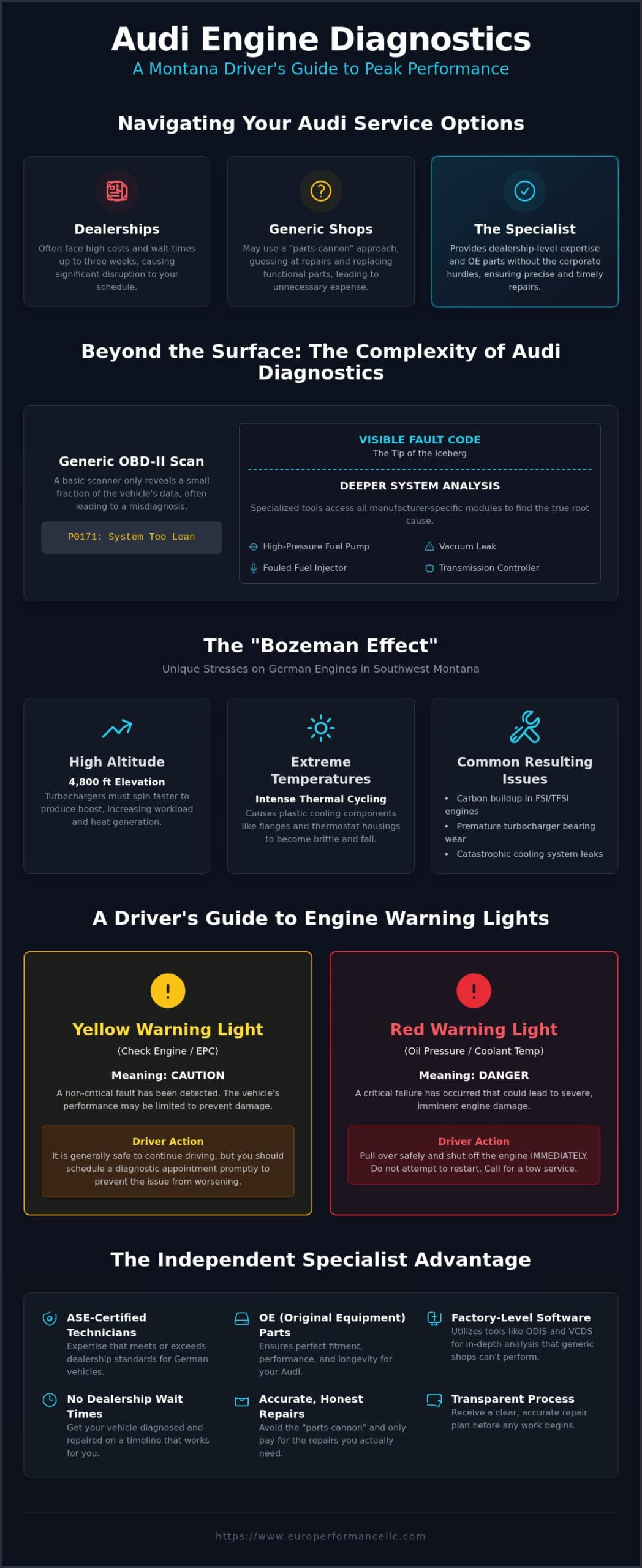
A generic P-code retrieved from a basic scanner rarely tells the whole story. It might point to a lean fuel condition, but it won’t explain if the root cause is a failing high-pressure fuel pump, a vacuum leak, or a fouled fuel injector. This is where technician expertise becomes critical. Our ASE-certified technicians interpret raw data through the lens of specific Audi architecture, ensuring that we resolve the underlying mechanical failure rather than just clearing a code.
To better understand the technical nuances of these engines, watch this helpful video:
The Difference Between Generic and Specialized Diagnostics
Many owners assume that a free scan at an auto parts store is sufficient for their vehicle. However, On-Board Diagnostics (OBD) standards only require manufacturers to reveal emissions-related data to generic tools. Specialized Audi diagnostics access manufacturer-specific sub-systems, including the ABS module, transmission controllers, and the Quattro all-wheel-drive system. By identifying the exact failing component within these layers, we avoid “parts-cannon” repairs. This precision saves you money by preventing the replacement of perfectly functional parts and reducing labor time.
The Complexity of Modern Audi Engine Management
Modern Audi engines feature a dense network of interconnected sensors for turbocharging, direct fuel injection, and complex emissions controls. These components must work in perfect synchronization, especially on the Audi Quattro AWD platform where engine torque management directly impacts traction and handling. Audi engine diagnostics is a multi-layer digital and mechanical audit of VAG-specific systems. This thorough approach ensures that high-performance German components operate within their tight factory tolerances, providing peace of mind during long-distance mountain travel or daily commutes in the Gallatin Valley.
Common Audi Engine Issues in the Gallatin Valley
Driving an Audi in Southwest Montana presents unique challenges that standard maintenance schedules don’t always account for. The “Bozeman Effect” describes the combined stress of high altitude operation and extreme temperature fluctuations on German powertrains. At nearly 4,800 feet, your turbocharger must spin faster to produce the same boost levels as it would at sea level. This increased workload makes high quality oil and efficient cooling systems non-negotiable for anyone frequently crossing mountain passes. When these systems are pushed to their limits, specialized Audi engine diagnostics Bozeman services become essential to catch minor wear before it results in a breakdown.
Turbocharger health is specifically tied to oil quality and cooling efficiency. During long climbs up Bozeman Pass, the heat generated by the turbo is immense. If the oil is degraded or the cooling system is underperforming, the turbo bearings can suffer premature wear. Older Audi models also face cooling system vulnerabilities where plastic flanges and thermostat housings become brittle after years of intense thermal cycling. A small leak can quickly escalate into a catastrophic overheat during a summer heatwave, making proactive pressure tests a vital part of your local service routine.
Carbon Buildup and Performance Loss
FSI and TFSI engines utilize direct injection technology to maximize power. While efficient, this design prevents fuel from washing over the intake valves. Over time, carbon deposits accumulate and physically restrict airflow. In the Gallatin Valley, short winter trips often prevent engines from reaching full operating temperature, which accelerates this buildup. Common symptoms include a rough idle, decreased fuel economy, and noticeable stumbles during a cold start. We use precision diagnostic tools to measure airflow deviations, helping us determine if a mechanical carbon cleaning is required to restore your engine’s factory performance.
Cold Start and Battery Health in Montana Winters
Extreme cold is a primary enemy of automotive electronics. In Montana, sub-zero temperatures can cause sensors to send erratic data to the Engine Control Unit (ECU), leading to hesitation or “limp mode” errors. Modern Audi models also utilize sophisticated battery management systems that require precise calibration. When you replace a battery, it must be registered with the vehicle’s computer. Without this digital handshake, the alternator may overcharge the new unit, significantly shortening its lifespan. Ensuring your vehicle is prepared for the season requires a specialized European auto repair audit to verify that all electronic systems are resilient enough for the winter months.
The Technical Edge: Advanced Tools for Audi Engine Analysis
Precision in German automotive repair relies on more than just mechanical skill; it requires the same digital tools used at the factory level. While generic scanners provide a starting point, true Audi engine diagnostics Bozeman specialists utilize VAG-specific software like ODIS (Offboard Diagnostic Information System) and VCDS. ODIS is the factory-level diagnostic system that allows for deep module communication, software updates, and component adaptations. These tools enable us to look past simple error codes and see the specific logic used by the engine control unit to manage performance. This level of transparency is vital for complex systems where a single sensor failure can trigger a cascade of unrelated warnings.
Static testing in a service bay often fails to reveal intermittent issues that only occur under specific load conditions. We utilize live data logging during real-world test drives to capture high-speed snapshots of engine parameters. By monitoring ignition timing, fuel rail pressure, and turbocharger boost levels in real time, we can identify “ghost” misfires or transient vacuum leaks that don’t always trigger a permanent light. This data-driven approach ensures that we find the root cause on the first visit, preventing the frustration of recurring performance issues. Additionally, modern engine management is often intertwined with safety systems, making ADAS calibration a necessary consideration when sensors in the front fascia or windshield are disturbed during engine-related repairs.
Software-Level Analysis vs. Physical Inspection
Effective diagnostics require a balance between digital data and physical evidence. We analyze long-term and short-term fuel trims to determine if the engine is compensating for air leaks or fuel delivery problems. However, software cannot see a cracked vacuum line or a leaking gasket. For these scenarios, we employ specialized smoke machines to reveal hidden leaks and digital borescopes to inspect internal components like cylinder walls or intake valves without engine disassembly. This thoroughness is especially important when following the Audi Service Schedule guide, as it allows us to catch wear before it leads to a mechanical failure. Furthermore, factory-level software is the only way to reset service intervals correctly, ensuring your vehicle’s onboard computer accurately tracks your maintenance history.
OE Parts and Diagnostic Integrity
A diagnosis is only as good as the repair that follows it. After identifying a faulty component, we prioritize the use of Original Equipment (OE) parts from the manufacturers that originally supplied Audi, such as Bosch, Pierburg, or Mann. Using “white-box” generic sensors in a high-performance German engine introduces unnecessary risk. These inferior parts often have wider tolerances that can confuse the ECU, leading to erratic performance or even new diagnostic codes. By utilizing components that match factory specifications, we maintain the integrity of the repair and ensure that your Audi continues to perform with the precision and reliability intended by its designers.
Dealing with Engine Warning Lights: A Bozeman Driver’s Guide
Encountering a warning light on your Audi dashboard can be unsettling, but a structured response prevents further mechanical damage. Your first step is to identify the color of the light. A red icon indicates a critical failure; you must pull over and shut down the engine immediately. A yellow icon signifies a non-critical fault that requires attention but usually allows you to reach a service center. Following this, perform a quick physical assessment. Check for unusual symptoms such as smoke from the tailpipe, metallic knocking noises, or rhythmic vibrations through the steering wheel. These observations provide vital context for Audi engine diagnostics Bozeman technicians during the intake process.
It is tempting to visit a local parts store to have the code cleared for free. However, this is a mistake that hides the root cause of the issue. Clearing the light resets the “freeze frame” data, which is the snapshot of engine conditions at the exact moment the fault occurred. Without this data, intermittent problems become much harder and more expensive to track down. Instead of just clearing the fault, you should consult a European performance specialist for a comprehensive scan that preserves diagnostic integrity.
Decoding Common Audi Dashboard Symbols
Understanding specific Audi symbols helps you gauge the urgency of a repair. The EPC (Electronic Power Control) light is unique to the Volkswagen Auto Group and typically relates to the throttle body, accelerator pedal, or traction control. If you own a TDI model, the glow plug light or a Diesel Particulate Filter (DPF) icon may appear. In Montana’s cold climate, short trips often prevent the DPF from reaching the temperatures needed to self-clean, leading to soot accumulation. You should also distinguish between oil warnings. A yellow light usually indicates a low oil level, whereas a red light indicates a loss of oil pressure, which can destroy an engine in seconds.
When to Tow vs. When to Drive
The behavior of the Check Engine Light (CEL) dictates your next move. A solid yellow light means the emissions system has detected a fault, but the car is safe to drive to a shop. If the light is flashing, it indicates a severe misfire that is actively dumping unburned fuel into your expensive catalytic converters. A flashing MIL (Malfunction Indicator Lamp) requires an immediate tow to Belgrade. Some Audi models will enter “Limp Mode” to protect the drivetrain. While this allows for limited speed and power, it is a temporary safety measure. If your vehicle feels significantly underpowered, you should schedule a professional diagnostic appointment to prevent a minor sensor issue from becoming a major mechanical failure.
The Euro Performance Advantage for Audi Diagnostics
Choosing where to service your Audi is a decision that impacts both vehicle reliability and your ownership experience. Euro Performance LLC in Belgrade provides a strategic advantage for Gallatin Valley residents. Our facility offers a more accessible, value-driven alternative to the congestion of downtown Bozeman. By focusing exclusively on European specialty repair, we maintain a level of technical proficiency that matches or exceeds dealership standards. Our ASE-certified technicians bring decades of combined experience to every service bay, ensuring that Audi engine diagnostics Bozeman owners receive the highest level of care available in the region.
We believe in complete transparency throughout the diagnostic process. Rather than simply handing you a repair bill, we show you the digital data and physical findings that inform our recommendations. This methodical approach ensures you understand the specific needs of your vehicle before any work begins. We are also strictly committed to factory scheduled maintenance protocols. Following these manufacturer standards is essential for keeping your warranty intact and preventing the performance degradation often seen in high-mileage German engines operated in Montana’s demanding climate.
Dealership Expertise Without the Markup
Sourcing Original Equipment (OE) parts is a cornerstone of our service model. We utilize the same top-tier components from manufacturers like Bosch and Continental that the dealership uses, but without the significant corporate markup. Our independent structure allows for competitive labor rates and a level of personalized attention that larger franchises often fail to provide. You have the opportunity for direct communication with the master technician working on your vehicle. This direct line of contact ensures your specific concerns are addressed and that the technical nuances of your Audi are fully understood by the person performing the repair.
Scheduling Your Diagnostic Service
Efficiency is a priority for our team. We understand that long lead times at the dealer can leave you without a vehicle for weeks; we offer faster turnaround times and a streamlined appointment process to get you back on the road safely. Every diagnostic session includes a comprehensive inspection that looks beyond the initial warning light to ensure the overall health of your vehicle’s complex systems. Schedule your Audi engine diagnostics at Euro Performance LLC today. Our Belgrade location is ready to provide the precision care your German engineering requires to navigate mountain passes and winter commutes with confidence.
Securing Your Audi’s Performance in the Gallatin Valley
Maintaining a high-performance vehicle in Southwest Montana requires more than just routine care; it demands a technical partner who understands the intricacies of VAG-specific engineering. We’ve explored how specialized software and master technician expertise are the only reliable ways to navigate the “Bozeman Effect” of high altitude and extreme cold. By prioritizing professional Audi engine diagnostics Bozeman drivers can avoid the costly guesswork of generic repairs and the significant wait times often found at traditional dealerships.
Our facility in Belgrade serves as a dedicated hub for European excellence, combining ASE Certified Technicians with advanced VAG-specific diagnostic software. We provide the technical transparency and accuracy your vehicle deserves, ensuring every sensor and mechanical component operates within factory tolerances. Whether you’re preparing for a cross-country trip or managing daily winter commutes, your peace of mind is our priority. Take the first step toward long-term vehicle health by choosing specialized care that matches the quality of your German engineering.
Book Your Precision Audi Diagnostic Appointment in Belgrade at Euro Performance LLC. We look forward to helping you drive with confidence on every Montana road.
Frequently Asked Questions
Why is my Audi check engine light on but the car feels fine?
Your check engine light can activate for minor issues like a loose gas cap or a sensor reading that is slightly out of factory specifications. Modern Audi engine management systems detect these deviations long before you notice a change in performance. Even if the car feels normal, the computer may be adjusting fuel trims to compensate for a hidden leak. Ignoring these early warnings can eventually lead to more expensive repairs like catalytic converter failure.
Can I take my Audi to a generic auto repair shop for diagnostics?
While any shop can read basic codes, generic repair facilities often lack the specialized VAG software required for deep module analysis. Standard OBD-II scanners only provide surface-level emissions data. A specialist uses manufacturer-specific tools to communicate with every onboard computer, including the transmission and Quattro systems. This level of detail is necessary to avoid unnecessary parts replacement and ensures your German-engineered vehicle is repaired according to factory standards.
How much does an Audi engine diagnostic test cost in Bozeman?
Diagnostic fees in the Gallatin Valley depend on the depth of the analysis and the time required for testing. While specialized shops offer a value-driven alternative to dealerships, the cost reflects the use of factory-level software and the expertise of ASE-certified technicians. Investing in professional Audi engine diagnostics Bozeman services ensures an accurate result the first time. This prevents the high costs associated with misdiagnosis or replacing functional components based on generic error codes.
Will an independent diagnostic service void my Audi factory warranty?
No, using an independent specialist for diagnostics or maintenance does not void your factory warranty. Federal law protects your right to choose your service provider. We follow all factory scheduled maintenance requirements and utilize OE parts to ensure your vehicle stays within warranty compliance. Our technicians provide the detailed documentation necessary to prove your Audi has been maintained to professional standards, giving you peace of mind without the high dealership service premiums.
What is the difference between an EPC light and a Check Engine light?
The EPC (Electronic Power Control) light specifically monitors the drive-by-wire system, including the throttle body and accelerator pedal. In contrast, the Check Engine light usually focuses on emissions and fuel system components. An EPC warning is often more urgent and may trigger a restricted “limp mode” to prevent engine damage. Both symbols indicate that the vehicle’s computer has detected a fault that requires a professional scan to identify the underlying cause.
How long does a professional Audi engine diagnostic take?
A thorough diagnostic session generally takes one to two hours to complete. This window allows our technicians to perform a comprehensive module scan, review freeze-frame data, and conduct a physical inspection of the engine bay. If the issue is intermittent, we may need additional time for live data logging during a test drive. We focus on a methodical process to ensure we find the root cause rather than just treating the symptoms.
Can cold Montana winters cause my Audi engine light to come on?
Montana’s sub-zero temperatures frequently impact vehicle electronics and sensor accuracy. Extreme cold can cause a drop in battery voltage, which triggers various warning lights as modules struggle to communicate. Additionally, cold weather makes plastic and rubber components brittle, which can lead to vacuum leaks or cracked intake boots. While some lights may be temporary, it’s important to verify the fault to ensure the cold hasn’t caused a legitimate mechanical failure in your Audi.
What should I do if my Audi engine light starts flashing?
A flashing engine light is a critical warning that you should pull over and stop the engine as soon as it’s safe. This signal indicates a severe misfire that can cause permanent damage to your catalytic converters and engine internals. Continuing to drive with a flashing light is dangerous and leads to significantly higher repair costs. You should have your vehicle towed to a specialist for Audi engine diagnostics Bozeman experts provide to identify the failure.