A cold-start rattle is a warning, not a verdict. On Audi EA888 2.0T engines, a metallic rattle lasting 1-3 seconds is a common early sign of timing-chain tensioner wear. Audi timing chain tensioner failure symptoms can also include persistent rattling, rough idle, misfires, or hard starting, but a sound alone doesn’t confirm the cause.
That distinction matters because similar symptoms can have different explanations, while a loose chain can put the engine at risk of serious damage. The concern is especially relevant to EA888 Gen 3 engines in the A3, A4, Q5, and Q3, as well as older EA888 generations that are more prone to chain stretch. This guide explains which Audi models and engine generations are affected, what early warning signs can look and sound like, and how a timing-chain diagnosis assesses the evidence. You’ll also learn why fault codes, engine behavior, and signs of wear need to be considered together rather than treating one brief rattle as a diagnosis.
Key Takeaways
- Model year and engine generation help identify which Audi vehicles may be more susceptible to timing-chain wear.
- Misfires, rough idle, hard starting, and relevant fault codes can add important context to engine noise.
- A reliable diagnosis weighs scan data, engine behavior, and signs of timing-component wear together.
- Because a loose chain can cause serious engine damage, persistent or worsening symptoms call for prompt attention.
Which Audi models and engine generations are most affected?
Audi timing-chain risk varies by engine generation, not just model badge. The EA888 2.0T appears in A3, A4, Q5, and Q3 models from 2016 through 2023. More specifically, A3 8V models from 2015-2020 use EA888 Gen 3 engines. A4 B9 models from 2017-2023, Q5 FY models from 2018-2023, and Q3 F3 models from 2019-2023 use EA888 Gen 3B engines. On these Gen 3 engines, tensioner symptoms tend to emerge between 80,000 and 130,000 miles, though oil maintenance can affect wear.
Older engines deserve particular attention. Audi EA888 Gen 1 and Gen 2 engines from 2009-2015 are more prone to chain stretch at lower mileages. The 2.0-liter TFSI engines coded CAEB, CDNC, or CPMA in models from 2008 to 2015 are also especially susceptible. Audi’s supercharged 3.0T V6 in the A6, A7, and Q7 from 2009 to 2017 faces timing-chain risks. These ranges identify areas of concern, not a diagnosis for every vehicle.
Chain slack can let valve timing drift, potentially contributing to misfires, rough idle, or hard starting. It may also reduce low-end torque, throttle response, and fuel economy. Worn chains and guides can shed metallic or plastic debris into the engine oil. Debris alone does not prove tensioner failure, but debris alongside engine noise can point to timing-component wear. Long oil-change intervals, incorrect oil specification, or repeatedly low oil can accelerate wear.
Are repairs covered by warranty, recall, or settlement? Coverage varies among Audi models. Eligibility depends on the vehicle and the terms of any applicable warranty, recall, or settlement.
How much does replacement cost in the United States? Cost depends on the engine, required parts, and labor. A diagnostic assessment and detailed estimate can clarify the repair scope.
What damage can failure cause? A loose chain can jump teeth and disrupt valve timing. The pistons may then strike the valves, causing severe engine damage.
What are the first signs of timing chain tensioner failure?
On Audi EA888 2.0T engines, a cold-start rattle can be an early warning, but sound alone doesn’t identify the fault. Check-engine lights, engine behavior, and diagnostic codes provide additional clues. Several Audi timing chain tensioner failure symptoms can overlap with signs of other engine problems, so assess them together.
Check-Engine Light and Diagnostic Codes
A check-engine light means the engine computer has detected a condition that needs diagnosis. Stored trouble codes help describe what it detected. With a possible timing-chain concern, the light may appear alongside rough running, misfires, or hard starting. A code is a clue, not a diagnosis of a specific component. Interpreting it alongside the vehicle’s symptoms helps distinguish a timing concern from other causes of similar engine behavior.
Note whether the light appears with a cold-start rattle, a rough idle, or reduced response. A brief rattle lasting 1-3 seconds on an EA888 2.0T is a recognized early warning sign. If the light accompanies repeated misfires or worsening noise, the combination deserves prompt diagnostic attention. A warning light by itself doesn’t show whether the chain, tensioner, or another system is responsible.
Camshaft and Crankshaft Timing Fault Codes
Camshaft-crankshaft correlation codes indicate that the measured relationship between those components falls outside the range expected by the engine computer. Variable valve timing codes can also point to a timing-related problem. On an Audi, chain slack can let valve timing drift, connecting a control-system warning with a possible mechanical concern.
Consider stored codes alongside symptoms such as rough idle, misfires, or hard starting. A code alone does not prove tensioner failure, and timing-related faults can have several causes. Assess Audi timing chain tensioner failure symptoms together with engine noise and operating behavior, rather than treating a single warning as proof that the chain or tensioner needs replacement.
Sound patterns add useful context. A rattle that persists at warm idle or as engine revs fall during deceleration can suggest excessive chain movement. This differs from a short cold-start noise, so when the sound occurs matters. Record the conditions in which it happens, then share those details during a specialized European auto diagnostic assessment. Audi engine diagnostics can help connect fault codes with the symptoms and timing-system evidence.
Audi timing-chain diagnosis
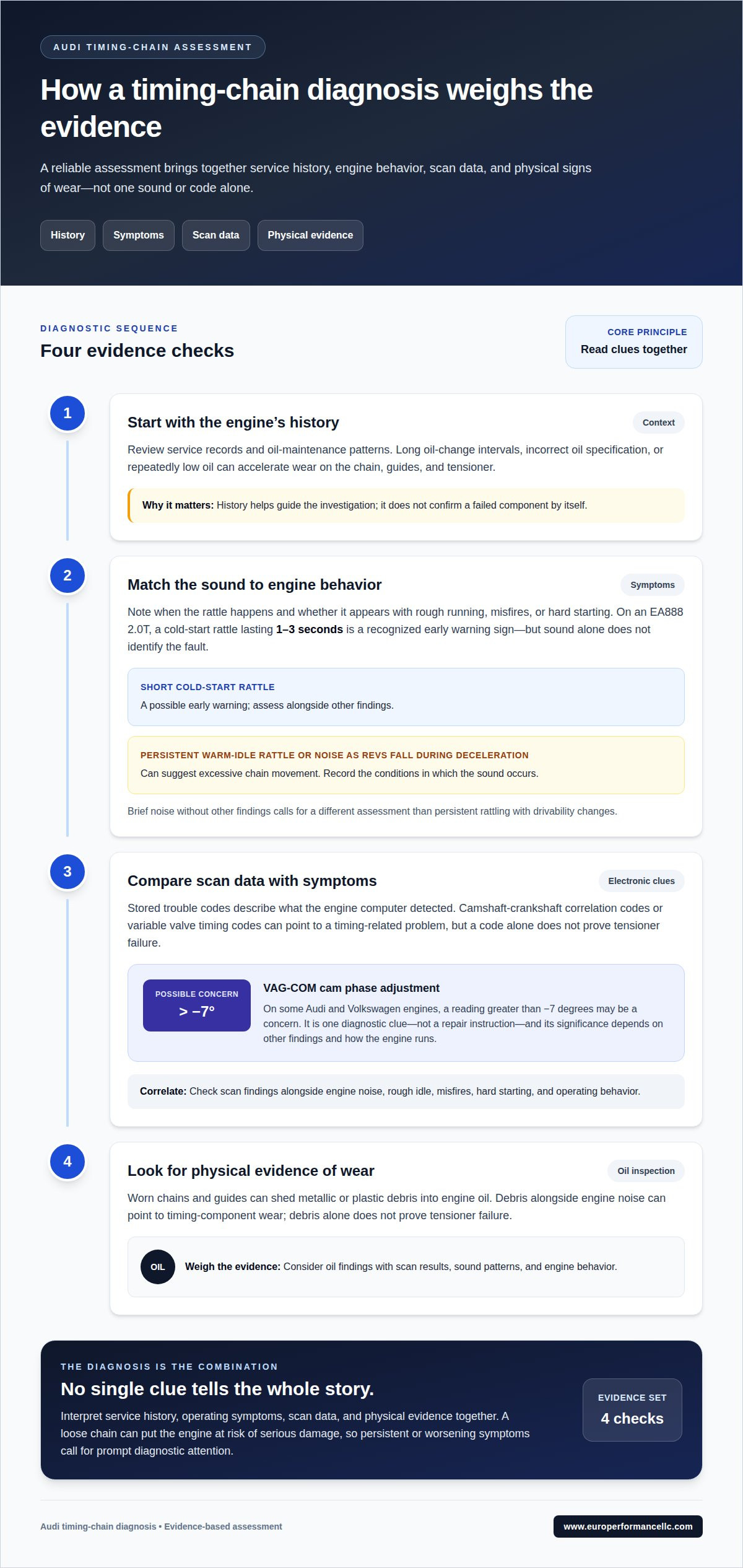
Diagnosing an Audi timing chain combines the engine’s history, operating symptoms, scan data, and physical evidence. No single clue tells the whole story. A technician considers whether a cold-start rattle occurs alongside misfires, rough running, or a stored timing-related code. Engine behavior helps guide the next checks. Brief noise without other findings calls for a different assessment than persistent rattling with drivability changes.
Scan data can show whether camshaft timing is tracking as expected. On some Audi and Volkswagen engines, a VAG-COM cam phase adjustment reading greater than -7 degrees may be a concern. That reading is one diagnostic clue, not a repair instruction. Its significance depends on the engine’s other findings, including stored faults and how the engine runs. Correlation data and symptoms should be interpreted together.
Oil inspection provides another physical check. Worn timing chains and guides can shed metallic or plastic debris into the engine oil. Debris alongside engine noise can indicate timing-component wear, while the sound’s timing and persistence add useful context. A technician can weigh the oil evidence with scan results and engine behavior instead of treating one observation as a complete diagnosis.
Service history helps guide the investigation. Long oil-change intervals, incorrect oil specification, or repeatedly low oil can accelerate wear on the chain, guides, and tensioner. If records are unavailable or the vehicle’s history is uncertain, that context supports a closer examination of the timing system. A diagnosis depends on how the evidence fits together: reported noise, engine performance, scan readings, oil condition, and maintenance history.
Is it safe to drive an Audi with timing chain tensioner symptoms?
Driving an Audi with suspected timing-chain tensioner trouble risks severe engine damage. A loose chain can jump teeth and disrupt the relationship between the crankshaft and camshafts. If that happens, pistons can strike valves. A short trip or gentle acceleration does not remove the mechanical risk, and the fact that the Audi starts does not prove it is safe to keep driving.
Persistent or worsening symptoms need prompt attention. Repeated rattling, a rough-running engine, or misfires alongside a timing-related fault code suggest more than an isolated sound. Timing drift can affect engine operation, and continued use may allow chain movement to worsen. The progression depends on the condition of the chain, guides, and tensioner, but the potential consequences are serious.
Stop driving and arrange transport for an Audi that develops sustained engine noise, loses power, or runs unevenly with a timing warning. Avoid restarting it repeatedly to see whether the noise disappears. A cold-start rattle lasting 1-3 seconds is recognized as an early warning on EA888 2.0T engines, but longer or recurring noise deserves prompt assessment, especially when paired with other symptoms. The sound alone can’t establish how much wear is present.
A technician’s diagnosis can compare the noise, engine behavior, and timing-related scan information before deciding what repair is needed. That assessment helps distinguish a tensioner concern from other faults that may produce similar signs. If the Audi is already rattling persistently or showing multiple symptoms, don’t use it for routine trips while waiting for an assessment. Arrange an Audi engine assessment to address the concern before further driving risks turning a timing fault into extensive internal damage.
Euro Performance Auto Shop LLC
Euro Performance Auto Shop LLC helps Audi owners address timing-chain concerns with specialized European auto repair and complex diagnostics. If your Audi has a recurring rattle, rough running, misfires, or timing-related fault codes, a careful assessment can relate those signs to the engine’s condition. Diagnosis considers the symptoms and available scan information to identify the concern and determine an appropriate repair path.
Accurate findings matter: a warning code alone does not establish tensioner failure, while driving with a loose chain can risk serious engine damage. Euro Performance Auto Shop LLC’s ASE certified technicians work on European vehicles and use advanced technology for diagnostics and repairs. Contact Euro Performance Auto Shop LLC to discuss your Audi’s symptoms and arrange a diagnostic assessment.
Make Your Next Decision With Clear Information
Recognizing Audi timing chain tensioner failure symptoms is a starting point, not a substitute for a vehicle-specific diagnosis. Before arranging an assessment, note when the sound occurs, how the engine behaves, and whether warning lights appear. Service records can also help establish maintenance history and provide useful context for the technician.
These details can turn an uncertain noise into a focused conversation about what to do next. If symptoms persist or worsen, do not take continued operation as reassurance. A careful diagnostic approach can clarify whether the timing system needs attention and help you make an informed decision about the vehicle.
For help with your Audi, contact Euro Performance Auto Shop LLC. A clear account of what you’ve noticed is a practical place to begin.
Frequently Asked Questions
Audi EA888 Cold-Start Rattle: Chain Tensioner Failing?
A cold-start rattle on an Audi EA888 can indicate tensioner wear, but it doesn’t prove the tensioner is failing. The sound’s duration and whether it recurs matter, as do other signs such as rough running or timing-related fault codes. For example, a brief noise on its own gives less diagnostic context than a recurring rattle combined with engine performance changes.
How does timing chain maintenance fit into long-term Audi ownership?
Timing-chain care goes hand in hand with regular oil maintenance and attention to changes in engine behavior. Long oil-change intervals, incorrect oil specification, and repeatedly low oil can accelerate wear on the chain, guides, and tensioner. Comprehensive vehicle service providers such as motortech4x4.co.nz similarly emphasize that timely preventative maintenance is critical for protecting internal mechanical assemblies across all vehicle types. Keep service records to document the engine’s maintenance history. If the history is incomplete, that context can inform an inspection, especially when new engine noise develops.
What causes the tensioner to fail?
Wear, oil-related conditions, and tensioner design can contribute to timing-system problems. Long oil-change intervals, using the wrong oil specification, or repeatedly running low on oil can accelerate wear. Pre-2012 Audi models may also have tensioner design flaws. The updated Gen 3 design includes an improved check valve and more robust ratchet mechanism intended to limit bleed-down, addressing some earlier issues.
What does the repair involve?
Repair scope depends on which timing components show wear. Diagnosis can establish whether the work involves the tensioner alone or a broader timing-chain kit that includes the chain and guides. On a high-mileage engine, technicians may assess connected components together instead of treating one part in isolation. Engine design and inspection findings determine the appropriate repair plan.
What are the common symptoms of Audi timing chain tensioner failure?
Common warning signs include rattling at startup, persistent engine noise, rough idle, misfires, hard starting, and timing-related fault codes. Reduced throttle response or low-end torque may also occur when valve timing drifts. Symptoms can appear together, but none identifies the failed component on its own. For example, a misfire with a correlation code provides different diagnostic context than a misfire without other timing clues.
What does Audi timing chain tensioner rattle sound like on cold start?
The rattle is typically metallic and occurs as the engine starts, rather than sounding like a steady operating hum. On an EA888 2.0T, an early warning may last 1-3 seconds. A longer or recurring rattle is more concerning, especially alongside engine-performance changes. Note whether the sound occurs only at startup or continues at warm idle, since that pattern helps guide diagnosis.