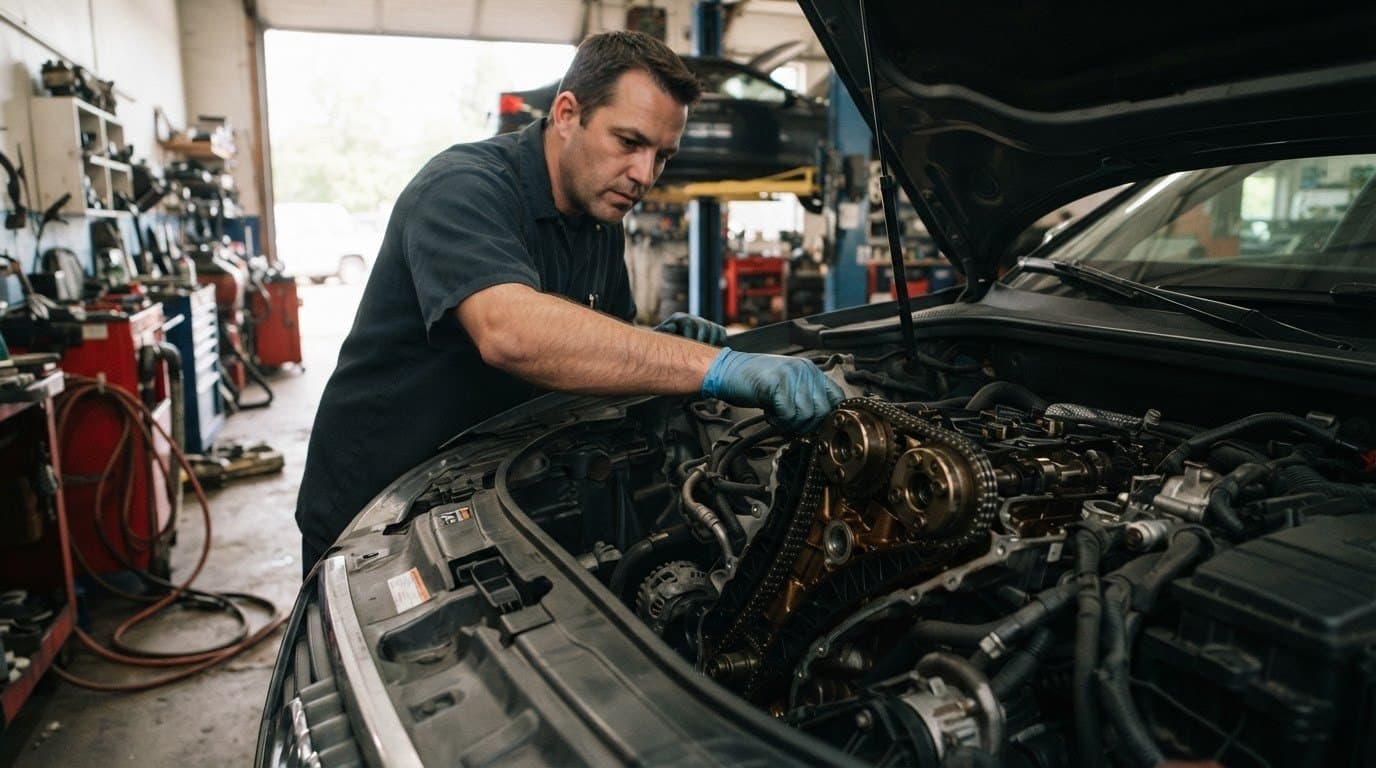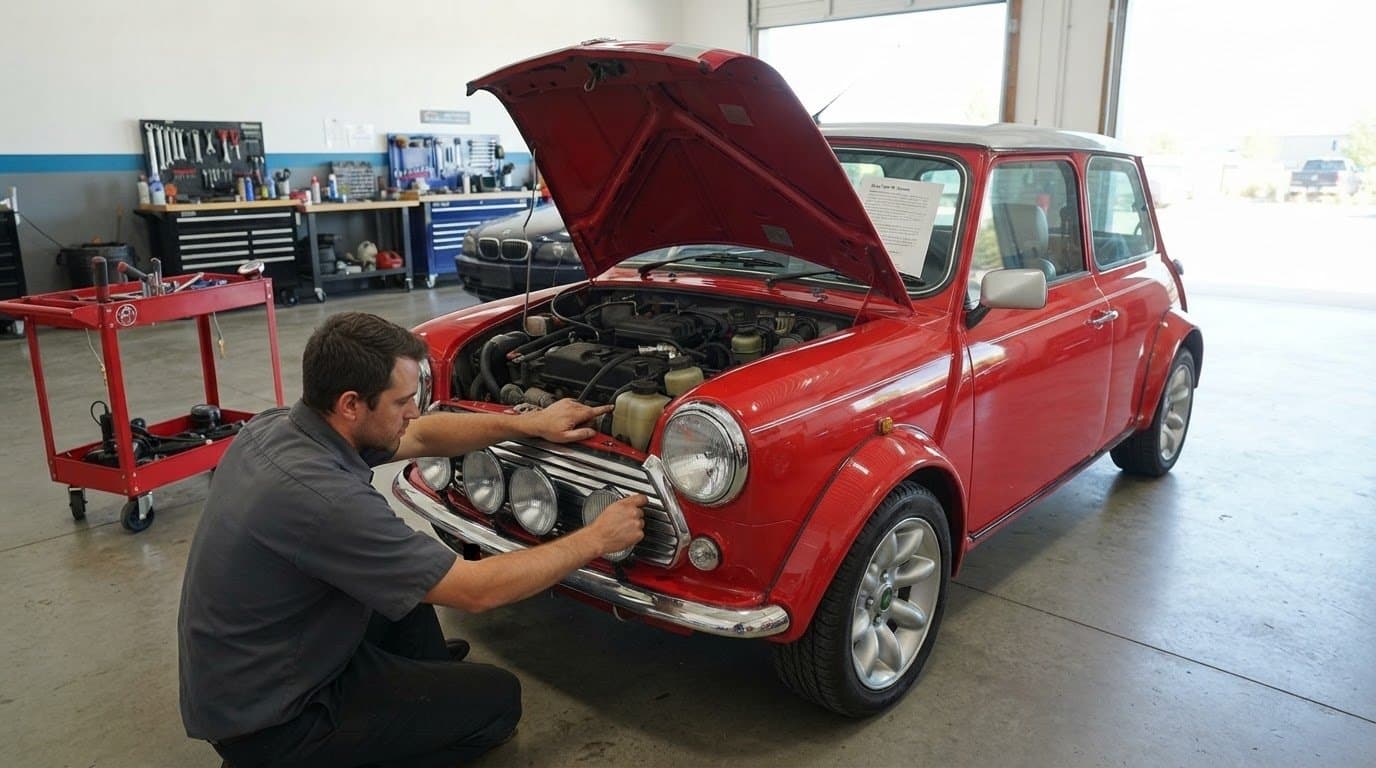
A MINI Cooper electric power steering pump failure can remove power assistance without disconnecting the steering wheel from the wheels. The car may remain steerable, but the wheel can become very heavy, especially at low speeds. If you cannot control the steering confidently, pull over safely and arrange an inspection rather than continuing to drive.
Sudden heavy steering can be alarming, and a pump fault is not the only possible cause. This guide explains how to assess whether it is safe to drive, check the fluid, hoses, reservoir, and electrical system, and distinguish recall repairs from faults that need separate diagnosis. You will also learn which symptoms to watch for and why finding the cause matters before replacing parts.
Key Takeaways
- If steering assistance disappears and the wheel becomes difficult to control, pull over safely rather than continuing to drive.
- Inspect the fluid level and look for leaks, then have the electrical supply and fault codes checked before assuming the pump itself has failed.
- Use your 17-character VIN to check for an open recall, as the National Highway Traffic Safety Administration advises.
- Finding the cause of a pump failure, including a possible cooling-fan problem, can help guide the repair and reduce the risk of another failure.
Is it safe to drive a MINI Cooper with no power steering?
Loss of assistance does not disconnect the steering wheel from the wheels, but it makes control harder. Use these steps to decide what to do next.
-
Assess Steering Safety After Assist Loss
Pull over safely if the steering wheel suddenly becomes too heavy to control confidently. A MINI with failed assistance remains mechanically steerable, but turning takes more physical effort, especially when parking or maneuvering at low speeds. Do not continue your trip if you cannot steer precisely or respond comfortably to turns.
- Consider the driving conditions when assessing the fault. Steering without assistance may feel less difficult at road speed than at low speeds, but that does not make continued driving safe when control is compromised. If the engine has stopped, the MINI owner’s manual says more force is needed to steer and brake because power assistance is unavailable.
-
Check Noisy or Intermittent Power Assist
Note when noise or changing steering effort occurs, such as during parking or after starting the engine. Record whether assistance disappears briefly, returns, or remains absent. On 2002-2011 MINI Cooper models, an electric motor drives the hydraulic steering pump, so noise and intermittent assist warrant inspection of the system rather than an assumption that one component has failed.
- Stop repeated steering tests if the noise grows or assistance cuts out again. A MINI Cooper electric power steering pump failure is one possible explanation, but symptoms alone cannot identify the failed part. Do not rely on assistance returning during a short drive. Arrange a diagnosis before normal use, especially if steering effort changes unpredictably or the wheel becomes difficult to control.
Fluid, hose, reservoir, and electrical checks
The 2002-2011 MINI Cooper and Cooper S use an electro-hydraulic power-assisted steering system with an electric motor driving a hydraulic pump. Check fluid condition, visible leaks, diagnostic codes, and recall eligibility in sequence.
-
Check Fluid, Hoses, and Reservoir
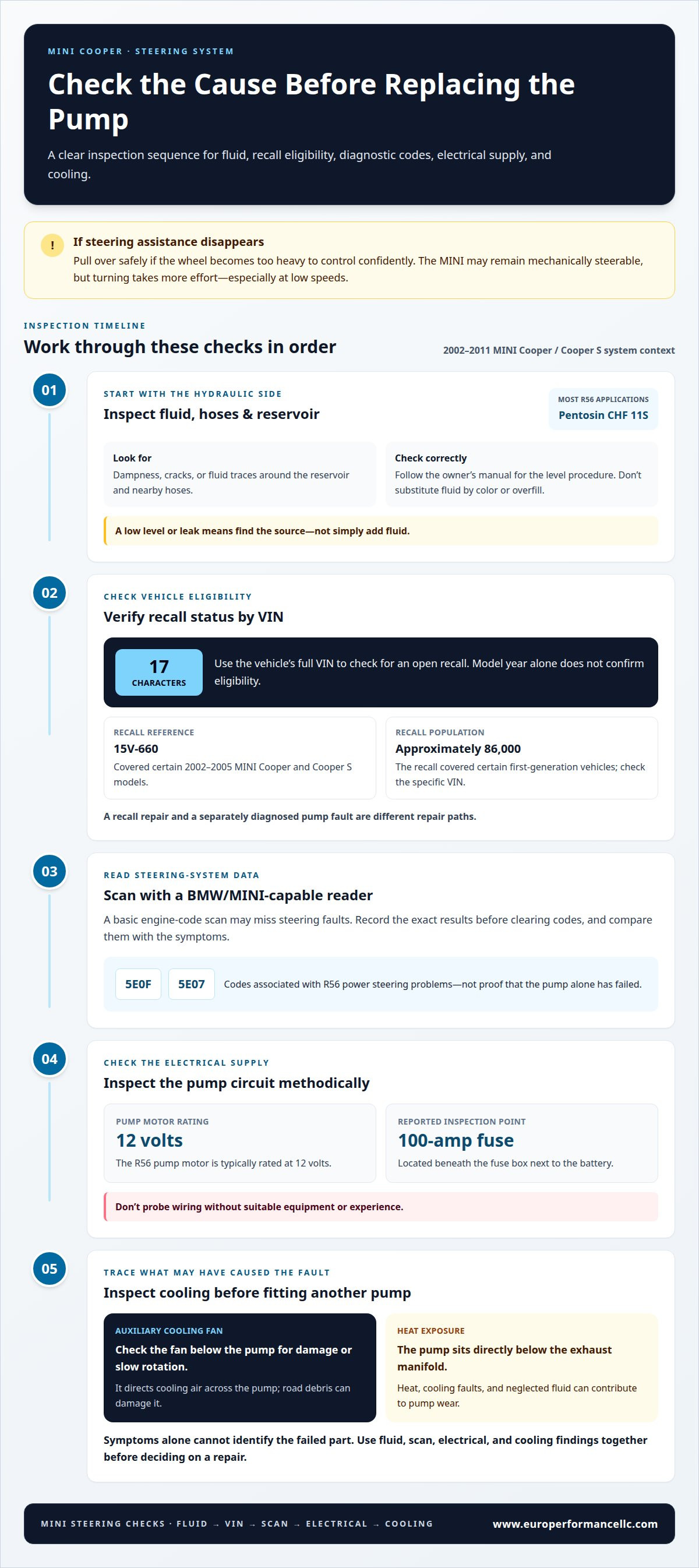
Inspect the reservoir and nearby hoses for dampness, cracks, or fluid traces before topping anything up. Most R56 applications use green Pentosin CHF 11S fluid; don’t substitute another type based only on color. Check the owner’s manual for the correct level procedure and avoid overfilling. A low level or leak calls for finding the source, not simply adding fluid.
- Check recall status using the vehicle’s identification number. A MINI VIN has 17 characters and is used to check for an open recall, according to the National Highway Traffic Safety Administration. Recall 15V-660 covered certain 2002-2005 MINI Cooper and Cooper S models. Eligibility depends on the specific vehicle, so use its VIN rather than model year alone.
-
Run Diagnostics and Check Fault Codes
Have the steering system scanned with a BMW/MINI-capable diagnostic reader. Codes 5E0F and 5E07 are associated with R56 power steering problems; record the exact results before clearing codes. A reader that accesses MINI-specific systems can reveal steering faults that a basic engine-code scan may miss. Use the results alongside symptoms, not as proof that the pump alone has failed.
- Check electrical supply and the pump circuit methodically. The R56 pump motor is typically rated at 12 volts, and the 100-amp fuse beneath the fuse box next to the battery is a reported inspection point. Don’t probe wiring without suitable equipment or experience. A MINI steering system inspection can help connect fluid, electrical, and scan findings.
Recall and non-recall repair options
Separate recall eligibility from a pump repair. The next steps explain which route applies and what replacement involves.
- Check whether recall 15V-660 applies to your MINI before authorizing a recall-related repair. It covered certain first-generation MINI Cooper and Cooper S vehicles, with a recall population of approximately 86,000 vehicles. Eligibility depends on the vehicle, so use its VIN to check for an open recall. A recall repair and a separately diagnosed pump fault are different repair paths.
- If the vehicle isn’t covered by an open recall, have the steering fault diagnosed before choosing a replacement. Loss of assistance often leads to pump assembly replacement, but confirm the fault and inspect related components first. R56 replacement options include genuine MINI/BMW, Bosch or ZF, and rebuilt units. Repair price depends on vehicle fitment, pump choice, related faults, and labor, and is provided after a quote request.
- Plan for a substantial DIY repair, not a simple fluid top-up. A DIY estimate puts pump refitting at about 1.2 hours, while front-end removal has been estimated at about 20 minutes. These are estimates, not a guaranteed total job time. Access, diagnosis, bleeding, and the condition of surrounding parts affect the work.
- Gather the replacement pump assembly, the correct steering fluid, and tools suited to the vehicle before starting. Most R56 applications use Pentosin CHF 11S. A BMW/MINI-capable code reader helps check steering faults; safe vehicle support and fluid-handling equipment are also practical essentials. Inspect the auxiliary pump fan and replace it if damaged or turning slowly. After pump installation, cycle the steering slowly from lock to lock at least five times to help bleed air.
Common pump failure causes
On an R56 MINI, heat, cooling faults, and neglected fluid can all contribute to pump wear. Trace the cause before fitting another pump.
- Inspect the auxiliary cooling fan below the pump for damage or slow rotation. It directs cooling air across the pump, but road debris can damage it. The pump sits directly below the exhaust manifold, where it is also exposed to heat. Include the fan in the inspection even if the pump shows no visible signs of overheating.
- Consider heat and operating conditions when investigating an R56 pump fault. The pump can overheat when worked hard or when its auxiliary fan fails. Check for a damaged fan and consider whether heat exposure may have contributed. Replacing a pump without addressing a failed cooling fan leaves a known source of overheating in place.
- Maintain the correct fluid and respond to contamination or leaks. Most R56 applications use green Pentosin CHF 11S fluid. Neglected fluid, heat exposure, and contamination can shorten an OEM-quality unit’s service life to 60,000 to 80,000 miles. Follow the vehicle’s maintenance guidance, and don’t treat topping up fluid as a fix for a leak.
- Ask for the electrical fault to be investigated if diagnosis points beyond fluid or cooling. Carbon dust was cited in a reported R50 MINI pump electrical short. That example doesn’t establish the cause on every MINI, but it shows why diagnosis should consider electrical faults alongside heat and fluid condition.
- Prevent repeat failure by checking the fan, fluid condition, and contamination whenever steering symptoms appear. These checks can help identify contributing problems before fitting a replacement. For an R56 with recurring symptoms or pump faults, arrange specialized European auto repair to assess the steering system and contributing causes.
Euro Performance Auto Shop LLC: Specialized European Auto Repair
Euro Performance Auto Shop LLC provides specialized European auto repair for MINI steering concerns that need careful diagnosis. If heavy steering, intermittent assistance, or pump-related fault codes persist after your initial checks, a technician can assess the symptoms and related systems before recommending repairs. This is especially useful when fluid, electrical supply, cooling, or pump faults may contribute to the problem.
Euro Performance Auto Shop LLC’s ASE-certified technicians work on European-made vehicles and use advanced diagnostic technology. A methodical inspection can help distinguish a pump fault from a related issue and support an informed repair plan. Contact Euro Performance Auto Shop LLC to discuss your MINI, or visit www.europerformancellc.com.
Make Your Next Steering Decision With Confidence
A MINI Cooper electric power steering pump failure calls for a measured repair decision, not parts replacement based on symptoms alone. Record when steering effort changes, any unusual noise, and the diagnostic findings. This information gives the technician useful context and helps focus the assessment on the vehicle’s actual condition.
Euro Performance Auto Shop LLC offers specialized European auto repair for MINI concerns, as well as factory-scheduled maintenance and wheel alignment. These services support broader vehicle care, while a steering fault still needs diagnosis based on its cause. Choose a repair path using the inspection findings, not the assumption that every heavy-steering symptom points to the pump.
Contact Euro Performance Auto Shop LLC to discuss your MINI’s steering concern and take the next step toward a clear repair plan.
Frequently Asked Questions
Can Wiring or Electrical Power Cause the Problem?
Yes. A fault in the pump’s electrical supply or wiring can interrupt power assistance even when the pump itself is not the root cause. Look for visible damage or loose connections, but do not disconnect or probe energized wiring. A technician can test the power supply and circuit, then compare the results with steering-system fault codes before recommending a component replacement.
Can a MINI R56 EPS Light Be Something Other Than the Pump?
Yes. The R56 uses electro-hydraulic power assistance, so a steering warning doesn’t by itself prove the pump has failed. A related electrical or system fault can also trigger a warning. Record when the light appears, then have the MINI-specific steering system scanned. The stored fault information and physical inspection help distinguish a pump problem from another steering-system issue.
Could the Steering Rack or Suspension Be Responsible?
Yes. A rack or suspension fault can cause steering effort, noise, or handling changes that resemble an assistance problem. For example, uneven resistance as the wheel turns may point to a mechanical issue rather than the pump alone. Note whether the symptom occurs throughout the turn or at a particular position. A physical inspection can help distinguish mechanical binding from loss of assistance.
Is It Safe to Drive When the Steering Suddenly Becomes Heavy?
Do not continue driving if the sudden increase in steering effort prevents controlled turns. The steering remains physically connected, but maneuvering takes more force, particularly at low speeds or in tight spaces. Move out of traffic and stop somewhere safe. Do not test the steering with repeated turns in traffic. Arrange an inspection or recovery if you cannot control the car confidently.
Should I Replace the Power-Steering Pump Based Only on the Symptom?
No. Heavy steering or unusual noise alone cannot identify which component has failed. Before replacing a pump, compare diagnostic findings with the wiring, fluid condition, and other visible evidence. For example, a stored steering fault alongside an electrical supply problem calls for further circuit diagnosis. Confirm the cause first so a replacement does not leave the original fault unresolved.
What Are the Symptoms of a Failing MINI Cooper Electric Power Steering Pump?
Common signs include unusually heavy steering, assistance that cuts in and out, or noise during steering maneuvers. A warning light or stored steering fault can provide useful diagnostic evidence, but neither identifies the failed part on its own. Note when each symptom appears, such as while parking or turning, and share that pattern during diagnosis.