
Blog
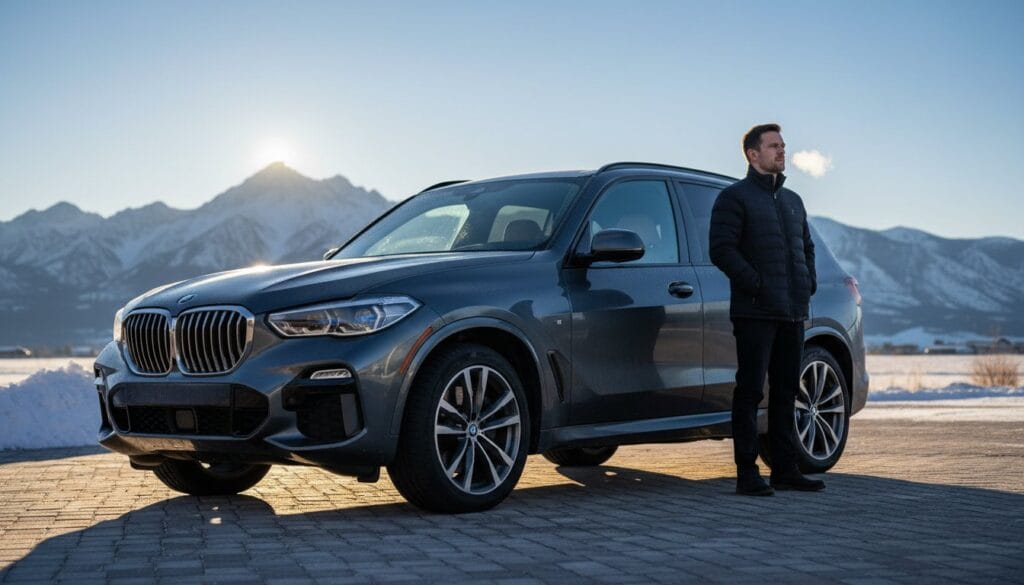
On a Tuesday morning last January, a Belgrade resident stepped into their BMW and faced a -15°F wind chill, only to be met by a sluggish starter and a glowing check engine light. It’s a scenario our ASE certified technicians see frequently during the five months of freezing temperatures we face annually in Montana. You’ve invested in a precision-engineered machine, so it’s natural to feel anxious when bmw cold weather performance issues threaten your vehicle’s reliability. We understand that cryptic dashboard warnings and engine hesitation can be both confusing and stressful.
We agree that your European vehicle should provide confidence, not concern, regardless of what the thermometer says. This survival guide promises to help you identify the specific causes of winter performance drops and provide a proactive maintenance plan to resolve them. You’ll learn how to interpret cold-weather symptoms and discover why specialized care from expert mechanics is essential for your car’s longevity. We’ll outline the exact steps to keep your BMW running with technical proficiency all winter long.
Key Takeaways
- Understand how sub-zero temperatures cause thermal contraction in gaskets and seals, potentially compromising your engine’s high-precision tolerances.
- Learn why specialized OE fluids and robust AGM battery maintenance are essential to overcoming common bmw cold weather performance issues in Montana.
- Discover how to protect sophisticated xDrive systems and air suspension components from the rigors of Gallatin County’s freezing winter blizzards.
- Follow a comprehensive winterization checklist that includes the critical calibration of ADAS sensors to ensure safety on snow-covered roads.
- Identify why specialized diagnostics by ASE certified technicians are necessary to maintain the integrity of European engineering during extreme weather.
Common BMW Cold Weather Performance Issues & Why They Happen
Montana winters frequently drop below -20°F, creating a hostile environment for high-precision German machinery. While BMW engineers test vehicles in extreme climates, the sustained cold in the Gallatin Valley pushes components to their physical limits. Understanding bmw cold weather performance issues starts with recognizing that these vehicles rely on tight tolerances that change when the thermometer plunges. Our ASE certified technicians see these challenges daily as the mercury falls in Belgrade and Bozeman.
To better understand how these conditions affect your vehicle, watch this helpful video regarding winter prevention:
The Science of Sub-Zero Engineering
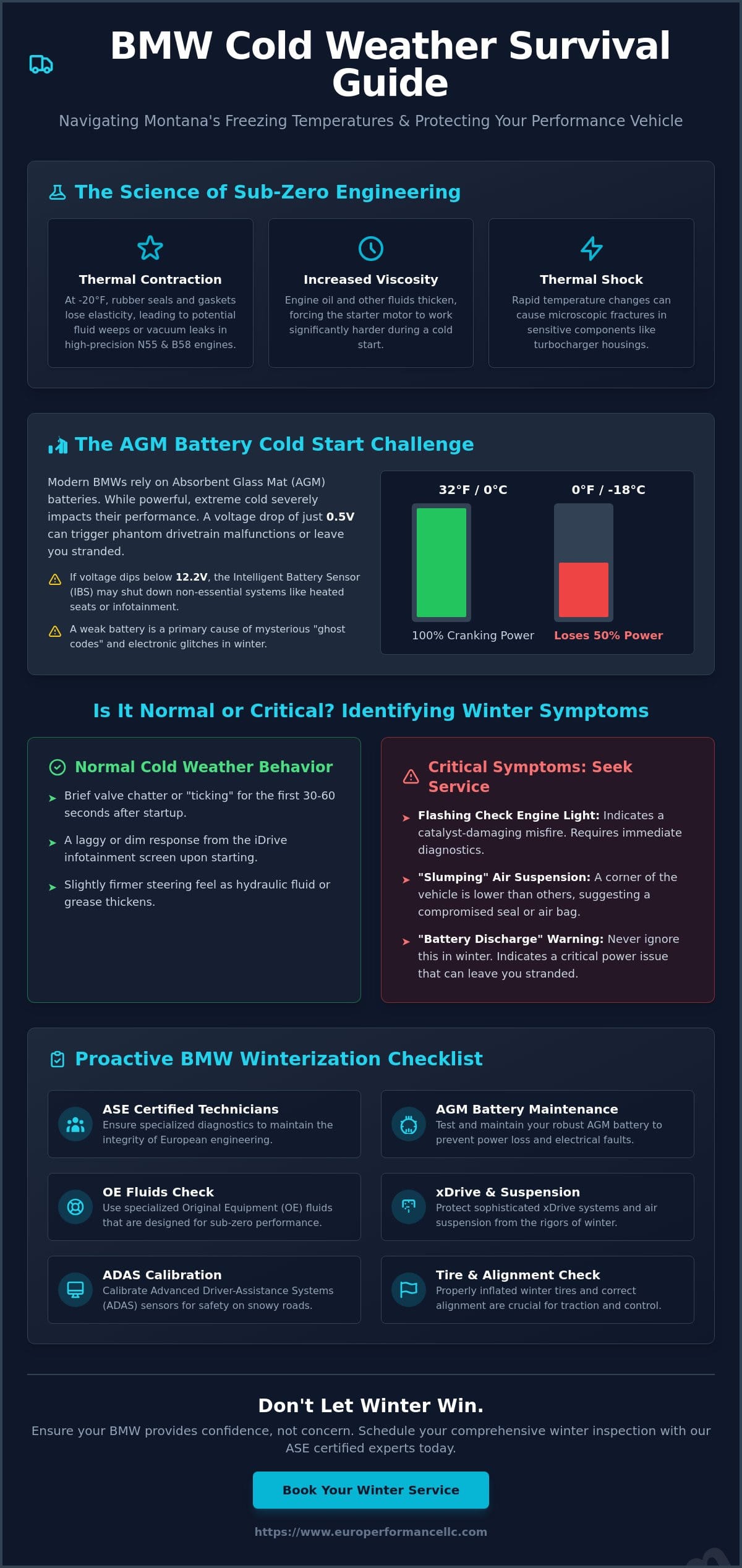
The N55 and B58 engines utilize a mix of aluminum alloys and specialized plastics that react differently to extreme cold. At -20°F, thermal contraction causes rubber seals and gaskets to lose elasticity, which often leads to temporary fluid weeps or vacuum leaks. It’s helpful to understand why cold starts are difficult, as increased oil viscosity and reduced battery chemical activity force the starter to work significantly harder. Thermal shock occurs when rapid temperature changes cause uneven expansion or contraction in turbocharger components, potentially leading to microscopic fractures in the turbine housing. Additionally, the increased density of sub-zero air requires the engine management system to deliver a much richer fuel-air mixture, which can cause rough idling until the oxygen sensors reach operating temperature.
Identifying ‘Normal’ vs. ‘Critical’ Winter Symptoms
Distinguishing between a stubborn cold start and a genuine mechanical failure is vital for maintaining your vehicle’s longevity. You shouldn’t panic if you notice these normal behaviors during a Montana cold snap:
- Brief valve chatter or “ticking” for the first 30 to 60 seconds of operation.
- A laggy or dim response from the iDrive infotainment screen.
- Slightly firmer steering feel as hydraulic fluid or electronic rack grease thickens.
However, certain bmw cold weather performance issues require immediate professional attention to avoid long-term damage. A flashing check engine light indicates a catalyst-damaging misfire that needs an immediate diagnostic. If your air suspension is “slumping” on one corner, the cold has likely compromised a seal or an air bag. You must never ignore a “Battery Discharge” warning in a Montana winter. Modern BMWs are far more sensitive to voltage drops than domestic vehicles because their complex control modules require a stable 12.6V to communicate. A drop of just 0.5V can trigger phantom drivetrain malfunctions or leave you stranded at the trailhead.
Batteries, Fluids, and Electronics: The BMW Cold Start Challenge
Belgrade winters aren’t just cold; they’re volatile. These extreme temperature swings put immense pressure on your BMW’s electrical and fluid systems. Most modern BMWs rely on Absorbent Glass Mat (AGM) batteries. While these are superior to traditional lead-acid types for powering complex electronics, they aren’t invincible. When the thermometer in the Gallatin Valley drops to 0°F, a standard battery loses 50% of its cranking power. This sudden drop often triggers bmw cold weather performance issues that manifest as “ghost codes” or electronic glitches across various control modules.
If your battery voltage dips below 12.2 volts, the vehicle’s Intelligent Battery Sensor (IBS) may shut down non-essential systems like heated seats or infotainment to preserve starting power. Our ASE certified technicians frequently see cars with dozens of stored fault codes that vanish once the battery is fully charged. Maintaining internal engine pressure is equally dependent on these electronics, as the DME (Digital Motor Electronics) must precisely manage fuel injection and spark timing under high-load cold starts.
AGM Battery Capacity and Cold Cranking Amps
A battery’s primary job is providing enough Cold Cranking Amps (CCA) to turn over a high-compression European engine. At 0°F, your BMW requires significantly more energy to start, yet the chemical reaction inside the battery is at its weakest. You’ll notice signs of failure before the first deep freeze hits. Watch for a sluggish starter motor, flickering interior lights, or a “Low Battery” warning on the iDrive screen.
If you replace the battery, you must register it to the vehicle’s computer. BMW’s charging system increases its output as a battery ages to compensate for wear. Installing a new unit without registration leads to aggressive overcharging. This mistake can shorten the lifespan of a new battery by 60% within the first year. Proper registration ensures the alternator provides the exact voltage required for a fresh cell.
Fluid Viscosity and Engine Lubrication
Engine oil acts as the lifeblood of your vehicle, but sub-zero temperatures turn standard oil into a thick, syrup-like consistency. This is particularly dangerous for the Vanos (variable valve timing) system. Vanos solenoids rely on precise oil pressure to adjust camshaft positions. Thick oil prevents these components from moving quickly enough, leading to rough idles or “Drivetrain Malfunction” warnings. Utilizing Expert Oil Change Services in Bozeman, MT ensures your engine uses the correct 0W-30 or 5W-30 synthetic oils designed for flow at -30°F.
Other fluids are equally vulnerable in Montana. Power steering and brake fluids can thicken in high-performance loops, making steering feel heavy or “notchy” during the first few miles of a commute. Most importantly, your coolant mixture must be calibrated. While a 50/50 mix is standard in warmer climates, local owners often require a specific ratio to prevent the engine block from cracking when temperatures hit record lows. If you’re unsure about your vehicle’s winter readiness, you can trust our team to verify your fluid freeze points and battery health before the next storm arrives.
Suspension and Driveline Vulnerabilities in Montana
Montana winters present a unique set of challenges for precision-engineered vehicles. When Gallatin County blizzards hit, your BMW’s xDrive system works overtime to manage traction by constantly shifting torque between axles. While this system is robust, extreme cold can cause electronic actuators to respond with a slight delay. You might notice the car feels less telepathic when temperatures drop below zero. These bmw cold weather performance issues often stem from the physical hardening of rubber components and the increased viscosity of lubricants within the drivetrain.
- Rubber bushings lose up to 40% of their elasticity in sub-zero temperatures.
- Electronic sensors may provide “implausible” data if frost accumulates on external housings.
- Transfer case engagement can feel abrupt until the internal fluid reaches a stable operating temperature.
BMW Air Suspension Failures in Freezing Temps
Owners of the BMW X5 and X7 frequently encounter issues with factory air ride systems during deep freezes. The primary culprit is moisture trapped within the pneumatic lines. When temperatures plummet, this moisture freezes and creates ice blockages that prevent valves from opening or closing correctly. You can perform a “slump test” by checking if one corner of the vehicle sits lower than the others after a night of -20°F weather. If the vehicle fails to level itself upon startup, the air bags or lines likely have cold-weather leaks. Our ASE certified technicians recommend regular desiccant replacement in the air compressor to prevent this moisture buildup before the first frost hits.
Differential and Transmission Response Lag
Cold gear oil behaves differently than it does at operating temperature. In Bozeman or Belgrade, your transmission may feel “notchy” or sluggish during the first few miles of a commute. This happens because the high-viscosity fluid resists movement within the transfer case and gear sets. Adhering to factory scheduled maintenance ensures your driveline fluids are fresh and capable of protecting vital components. If the transmission fluid temperature fails to reach a specific threshold within a set timeframe, the vehicle’s computer may trigger a “limp mode” to prevent internal damage. Beyond the transmission, you’ll likely hear creaks and groans from rubber bushings and control arms. These sounds occur as the rubber loses its ability to flex, a common symptom of bmw cold weather performance issues that usually subsides once the chassis components warm up through friction and movement.
Proactive BMW Winterization: A Montana Survival Guide
Belgrade winters don’t forgive neglect. When temperatures drop below zero, bmw cold weather performance issues often stem from overlooked maintenance. Preparing your vehicle requires more than just a tire swap; it demands a technical assessment of the car’s vital systems to ensure reliability when the Gallatin Valley freezes over.
Essential Cold-Weather Maintenance Tasks
Our ASE certified technicians recommend a rigorous checklist to keep your BMW operational through January. Start with the battery. A lead-acid battery loses approximately 35 percent of its power at 32 degrees and up to 60 percent at -20 degrees. Testing the State of Health (SOH) and ensuring the Cold Cranking Amps (CCA) meet OE manufacturer specifications is the only way to guarantee a start on a frigid morning.
- Treat Rubber Seals: Apply a silicone-based lubricant to door and trunk gaskets. This prevents moisture from freezing the doors shut, which often leads to torn weatherstripping when you try to force them open.
- Test Heating Elements: Verify the operation of the block heater or oil pan heater. Check the power cord for cracks or corrosion that could cause a short circuit during a heavy Montana snowstorm.
- Fluid Checks: Ensure your coolant mix is rated for -40 degrees and fill your reservoir with winter-grade washer fluid that won’t freeze on the windshield at highway speeds.
ADAS and Sensor Calibration in Snow and Ice
Modern BMWs rely on Advanced Driver Assistance Systems (ADAS) to maintain safety. However, road salt and slush buildup can obstruct the radar sensors used for Active Cruise Control and Blind Spot Detection. This debris causes “sensor blindness,” leading to system deactivation or erratic behavior. Professional ADAS calibration is necessary if you’ve recently had a windshield replacement or suspension work.
Even a slight misalignment of the windshield camera can cause lane-keep assist to fail in heavy Montana snow. It’s vital to keep the upper windshield area clear of ice to ensure the camera has a reliable line of sight. If your dashboard displays sensor-related errors after driving through slush, the system likely needs a professional reset and cleaning to restore full functionality.
Specialized Winter Alignments: Winter tires have different tread patterns and softer rubber compounds than all-seasons. A specialized wheel alignment ensures even contact patches. This maximizes traction on icy Belgrade roads and prevents premature wear on expensive winter rubber sets.
Battery Tender Pro-Tip: Use a BMW-approved battery tender during extended cold snaps. If your car sits for more than 48 hours in sub-zero temperatures, a tender maintains the charge and prevents the chemical crystallization that ruins AGM batteries.
Proactive care is the best way to avoid common bmw cold weather performance issues before they leave you stranded. Schedule your comprehensive winter inspection with the experts at Euro Performance LLC to keep your vehicle performing at its peak.
Expert BMW Diagnostics at Euro Performance LLC in Belgrade
Resolving bmw cold weather performance issues requires more than a basic code reader. At Euro Performance LLC in Belgrade, our ASE certified technicians specialize in the intricate systems that Montana winters test most severely. We understand that a BMW is a precision machine; it isn’t a vehicle where you can afford to cut corners. Our team uses advanced diagnostic tools to pinpoint faults in everything from the xDrive all-wheel-drive system to the complex sensors that manage engine timing in sub-zero temperatures.
Generic shops often rely on a “guess-and-check” method that leads to unnecessary part replacements and recurring problems. We take a different approach. By utilizing factory-level diagnostic equipment and focusing exclusively on European makes, we identify the root cause of a malfunction the first time. This technical proficiency is vital for handling complex driveline and electronic issues that Montana’s road salt and extreme temperature swings often trigger. We exclusively use OE parts from original manufacturers to ensure every repair meets the high standards your vehicle was built to maintain.
The Value of Specialized European Auto Repair
High-performance European Performance demands a level of technical proficiency that general repair shops cannot match. Our Belgrade facility is equipped with specialized technology designed to interface directly with BMW’s proprietary software. This allows us to perform deep-system scans and calibrations that are often unavailable at local multi-make garages. Our master craftsmen follow a methodical process. We provide clear estimates and transparent communication, ensuring you understand exactly what your vehicle needs to stay reliable on icy Bozeman roads. We don’t just fix cars; we maintain the engineering integrity of your investment.
Schedule Your Winter Inspection Today
Proactive maintenance is the best defense against the harsh Gallatin Valley climate. It’s much safer to address a weak battery or a degrading coolant hose in our shop than on the side of the interstate during a blizzard. We recommend scheduling a comprehensive winter inspection before the first major snowstorm hits. Our technicians will evaluate your vehicle’s vital systems, including the heating system, battery health, and fluid integrity. We stand behind our work with a satisfaction guarantee and a commitment to quality that Belgrade drivers have relied on for years. Don’t wait for a breakdown to realize your car wasn’t ready for the cold. Schedule your BMW winter service at Euro Performance LLC today and drive with confidence all season long.
Secure Your BMW Against Montana’s Sub-Zero Winters
Montana winters are notoriously harsh. Temperatures in the Gallatin Valley frequently plunge to -30°F, creating significant strain on your vehicle’s vital systems. These extreme conditions directly trigger bmw cold weather performance issues, especially regarding battery health and electronic sensors. Data from AAA indicates that a car battery loses about 60% of its cranking power at 0°F, which often leads to the dreaded cold start failure in precision European engines. Our shop focuses on the technical needs of European-made vehicles to prevent these breakdowns before they happen. We employ ASE certified technicians who understand the specific tolerances required for winter operation in Belgrade. By utilizing advanced ADAS calibration technology, we ensure your safety systems remain accurate even when ice and road salt challenge your sensors. Proactive maintenance isn’t just a suggestion; it’s a necessity for any owner who relies on their car during a Rocky Mountain winter. You deserve the peace of mind that comes from expert service and specialized care. Trust your BMW to Belgrade’s winter experts; schedule your performance diagnostic today!
Stay safe and keep your vehicle performing at its peak all season long.
Frequently Asked Questions
Why does my BMW take longer to start in cold weather?
Chemical reactions within your battery slow down by 50 percent once temperatures drop to 0°F, which reduces the available cranking amps. This loss of power makes it harder for the starter motor to turn over the engine against thickened oil. Our ASE certified technicians find that Montana’s sub-zero mornings often expose batteries that are nearing the end of their 5 year functional lifespan.
Is it normal for my BMW’s air suspension to sit lower in the winter?
It’s common for air suspension systems to settle slightly because air density decreases in cold climates, but it shouldn’t be excessive. If your BMW sits more than 2 inches lower than its standard ride height, it often indicates a seal leak or a failing compressor. You should have our team inspect the system if the vehicle fails to level itself within 30 seconds of ignition.
What does the ‘Battery Discharge While Stationary’ warning mean?
This warning indicates that your BMW’s Intelligent Battery Sensor detected a power draw higher than 80 milliamps while the vehicle was parked. Cold temperatures reduce a battery’s capacity to hold a charge, which makes it easier for background modules to trigger this alert. Persistent warnings usually mean your battery’s state of health has dropped below the 70 percent threshold required for reliable winter operation.
Do I really need specialized oil for my BMW in Montana?
Yes, using a high-quality synthetic oil with a 0W-30 or 5W-30 rating is essential for managing bmw cold weather performance issues in Belgrade. These specific viscosities remain fluid at temperatures as low as -35°F, ensuring that oil reaches critical engine components within 5 seconds of a cold start. Using the wrong oil can result in a 20 percent increase in internal engine friction during winter months.
Can cold weather cause my BMW to go into ‘Limp Mode’?
Extreme cold can trigger ‘Limp Mode’ if ice buildup or thickened fluids cause sensor readings to fall outside of OE manufacturer specifications. This safety protocol limits the engine to 2,500 RPM to prevent catastrophic damage when the computer detects issues like a frozen crankcase ventilation valve. If your dashboard displays a drivetrain malfunction, don’t continue driving; instead, bring it to our specialized facility for a diagnostic scan.
How often should I have my BMW’s ADAS sensors calibrated in winter?
You should have your Advanced Driver Assistance Systems (ADAS) checked at least once per season or if you notice a 10 percent deviation in system accuracy. Snow, salt, and ice buildup can obstruct sensors or cause slight misalignments in the housing. Ensuring these systems are calibrated by professional technicians is vital for maintaining your safety features on icy Montana roads throughout the winter months.
Why is my BMW’s fuel economy lower during the winter months?
Fuel economy typically drops by 15 to 24 percent when temperatures fall below 20°F due to increased engine warm-up times and winter-blend gasoline. Winter fuel contains 1.7 percent less energy per gallon than summer blends, and denser cold air increases aerodynamic drag on the chassis. These factors combined with higher electrical loads contribute significantly to bmw cold weather performance issues and increased trips to the pump.
Should I use a battery tender if I don’t drive my BMW every day in the cold?
We recommend using a microprocessor-controlled battery tender if your vehicle sits for more than 48 hours in sub-freezing temperatures. A tender maintains the optimal 12.6-volt charge without overcharging the cells, which is crucial for European-made vehicles with high electronic demands. This simple maintenance step can extend your battery’s life by 2 to 3 years and ensures your BMW starts every time you need it.