
Blog
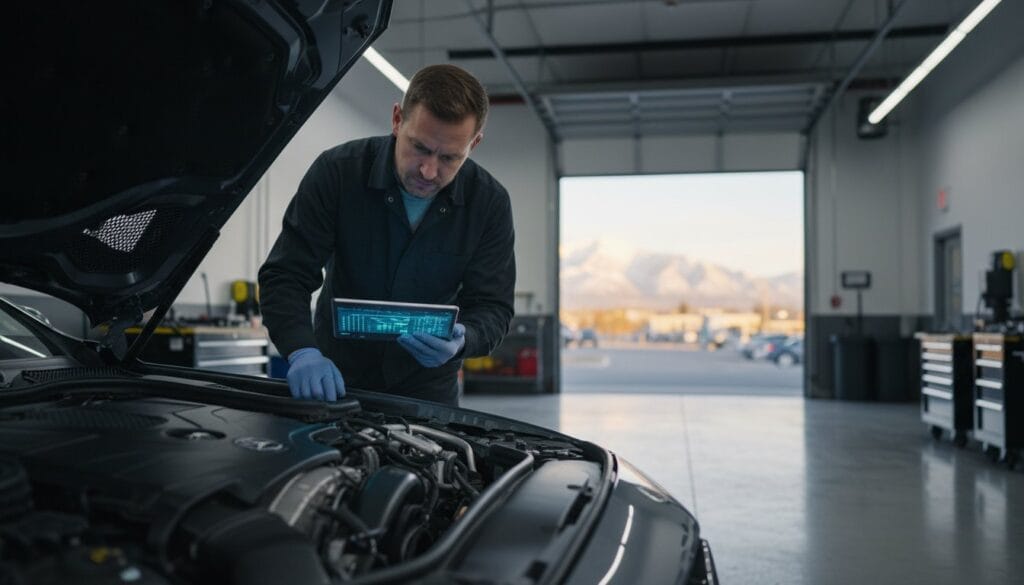
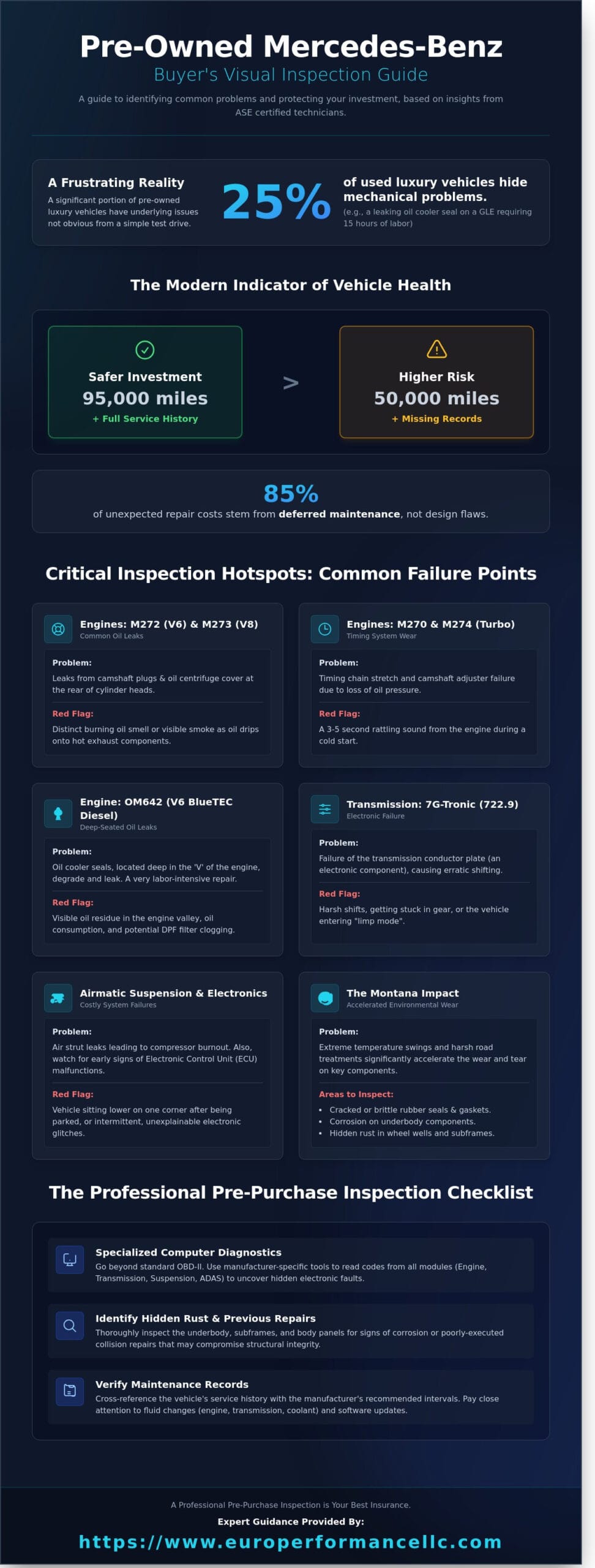
Last Tuesday, a client brought in a 2019 GLE they had just purchased, only to discover that a leaking oil cooler seal was already threatening a 15-hour labor bill. It’s a frustrating reality for many, as approximately 25% of pre-owned luxury vehicles harbor hidden mechanical issues that a standard test drive won’t reveal. While these cars offer world-class engineering, understanding common problems with used mercedes is the only way to protect your investment. You don’t want to end up with a “money pit” because you didn’t recognize a failing Airmatic strut or a clogged BlueTEC DPF filter.
We believe that transparency is the foundation of a reliable purchase. Our ASE certified technicians have compiled this guide to help you evaluate the 2026 used market with the confidence of a specialist. You’ll find a detailed list of red flags to look for during your inspection and a breakdown of which specific engine codes have proven most durable over time. By the end of this article, you’ll know exactly how to verify a vehicle’s condition using the same professional standards we apply at Euro Performance Auto Shop LLC.
Key Takeaways
- Learn why detailed maintenance records are more critical than the odometer reading when evaluating the true value of a pre-owned luxury vehicle.
- Identify the common problems with used mercedes models, including specific oil leak points in M272 engines and signs of transmission conductor plate failure.
- Understand the long-term costs associated with Airmatic suspension systems and how to detect early electronic control unit (ECU) malfunctions.
- Discover how Montana’s extreme temperature swings and road treatments can accelerate wear on rubber seals and underbody components.
- Master the essential steps of a professional pre-purchase inspection, from specialized computer diagnostics to identifying hidden rust and previous repairs.
The Reality of Owning a Pre-Owned Mercedes-Benz
Owning a pre-owned Mercedes-Benz represents a calculated balance between prestige and technical responsibility. Many buyers view the higher cost of parts as a “luxury tax,” but it’s actually the price of maintaining precision engineering. A 2024 industry study suggests that 85% of unexpected repair costs on European vehicles stem from deferred maintenance rather than inherent design flaws. Understanding the Mercedes-Benz history shows a shift from purely mechanical engineering to complex integrated systems that require specific expertise.
To better understand the mechanical complexities you might encounter during your search, watch this helpful video:
In 2026, the odometer reading is no longer the primary indicator of a vehicle’s health. A car with 95,000 miles and a documented service history is often a safer investment than a 50,000-mile car with missing records. Modern engines and Advanced Driver Assistance Systems (ADAS) require specific fluid changes and software updates to function correctly. Neglecting these service intervals leads to the common problems with used mercedes that many buyers fear. Older models like the W124 were famous for being “bulletproof” due to their simple mechanical nature. In contrast, modern versions are tech-heavy machines where a single sensor failure can impact multiple systems. Euro Performance LLC helps Belgrade drivers evaluate these differences so they don’t buy a vehicle that needs immediate, expensive repairs.
The Appeal of the Three-Pointed Star
Mercedes-Benz continues to dominate the used market because of its unmatched ride quality and innovative safety features. Depreciation creates a significant opportunity for savvy buyers to purchase a vehicle that originally cost $80,000 for a fraction of that price. However, specialized care is non-negotiable for these cars. Much like how discerning owners choose premium boarding services like Noah’s Pet Hotel & Spa for their pets, our ASE certified technicians emphasize that high-quality maintenance is the only way to preserve that signature driving experience. Without professional oversight, a bargain purchase can quickly become a financial burden.
Common Myths About Mercedes Reliability
The myth that these vehicles are unreliable usually stems from owners who skip scheduled services. Reliability is a direct result of how well the previous owner followed the manufacturer’s guidelines. Using low-quality aftermarket parts instead of components from OE manufacturers is another frequent cause of failure. It’s vital to remember that a flashing check engine light requires immediate expert attention. We strongly recommend you don’t drive your vehicle if this light is active. Our team uses the latest tools and technology to diagnose common problems with used mercedes, ensuring Belgrade owners have peace of mind on the road.
Engine and Transmission: Critical Mechanical Areas to Inspect
Understanding the common problems with used mercedes requires a close look at the specific powerplants that defined the last two decades. For instance, the M272 V6 and M273 V8 engines are known for oil leaks at the rear of the cylinder heads. These leaks typically originate from the camshaft expansion plugs or the oil centrifuge cover. If left unaddressed, oil drips onto hot exhaust components, creating a distinct burning smell and potential smoke. You should always verify if these plastic components were replaced with updated OE parts during your pre-purchase inspection.
Newer turbocharged models present different mechanical challenges. Timing chain stretch and cam adjuster failures are increasingly documented in M270 and M274 engines. A rattling sound that lasts for 3 to 5 seconds during a cold start is a primary red flag. This indicates the chain tensioner or the adjusters aren’t holding oil pressure correctly. Before finalizing a purchase, check the NHTSA vehicle recalls database to see if the specific VIN has open campaigns related to engine or powertrain safety.
The BlueTEC diesel engines found in Sprinter vans and GL-Class SUVs suffer from specialized issues. The OM642 V6 diesel often develops leaks at the oil cooler seals, which are buried deep in the “V” of the engine. Repairing this requires 10 to 12 hours of labor. Additionally, high-mileage diesel units frequently encounter AdBlue heater failures or clogged Diesel Particulate Filters (DPF); these issues often trigger a “limited starts remaining” message on the dashboard.
Transmission Health and the 7G-Tronic Gearbox
The 7G-Tronic seven-speed transmission is a robust unit, but it’s highly sensitive to fluid quality. One of the common problems with used mercedes is a failing conductor plate. Symptoms include harsh shifting or the transmission getting stuck in one gear, often called “limp mode.” This happens because speed sensors on the plate fail. Regular factory scheduled maintenance is the only way to prevent these electronic glitches. A failing torque converter will often manifest as a subtle shudder or vibration when cruising at steady speeds. Our ASE certified technicians can perform a diagnostic scan to verify the health of the transmission control module.
Cooling System Vulnerabilities
Mercedes-Benz uses extensive plastic in its cooling systems. Over time, these plastic coolant pipes become brittle and crack due to constant heat cycling. You should listen for a high-pitched squeal from the water pump during your test drive; bearing failure is common after 70,000 miles. Using specialized, phosphate-free coolant is mandatory for these vehicles. Using generic coolant leads to internal corrosion and can eventually cause the radiator to leak into the transmission cooler, a catastrophic failure known as cross-contamination.
Electrical Gremlins and Airmatic Suspension Systems
Mercedes-Benz vehicles are celebrated for their sophisticated engineering, yet this complexity often leads to specific maintenance hurdles as the odometer climbs. Owners frequently face a trade-off between the brand’s legendary ride quality and the upkeep of its intricate electronic networks. These issues represent some of the most common problems with used mercedes models that have surpassed the 60,000-mile mark. High-tech features require stable voltage; even a slight drop in battery output can trigger a cascade of “ghost” error codes across the dashboard.
The Command infotainment system and central Electronic Control Unit (ECU) act as the brain of the vehicle. In models produced between 2010 and 2018, screen flickering or total navigation failure often stems from internal hard drive crashes or fiber optic loop breaks. Tech-heavy models like the S-Class place immense strain on the alternator. If the charging system isn’t operating at 100% efficiency, the car may prioritize essential driving functions while shutting down “comfort” modules like heated seats or parking sensors.
Navigating the Airmatic Suspension
The Airmatic system provides a cloud-like ride by replacing traditional coil springs with pressurized air bags. However, rubber components degrade over time. You can often spot a failing system by looking for a “sagging” corner after the car sits overnight. In Belgrade, Montana, we frequently observe the “Montana Lean.” This occurs when extreme cold causes rubber seals to shrink, accelerating air leaks. If you ignore a leaking strut, the air compressor will run continuously to compensate, leading to a much more expensive repair when the pump eventually burns out. Choosing high-quality OE struts rather than cheap aftermarket alternatives ensures the system’s longevity.
Sensor and Module Failures
Precision performance relies on a network of sensors. A fouled Mass Air Flow (MAF) sensor is a frequent culprit for poor fuel economy and sluggish acceleration. Beyond the engine, the Signal Acquisition Module (SAM) manages everything from headlights to wipers. These modules are sensitive to moisture; a clogged sunroof drain can lead to water intrusion that fries the SAM, resulting in unpredictable electrical behavior.
Safety technology also requires specialized attention. As these vehicles age, keeping the safety suite functional is vital. This is why ADAS calibration is necessary after windshield replacements or suspension work. Without precise alignment of the cameras and radar sensors, features like Distronic cruise control or lane-keep assist may fail to engage or, worse, react incorrectly to road conditions. Our ASE certified technicians use specialized diagnostic tools to ensure these complex systems remain reliable for the long haul.
The Montana Impact: How Local Conditions Affect Used Mercedes
Mercedes-Benz vehicles are engineered for the high-speed precision of the Autobahn, but Belgrade winters present a different set of challenges. Understanding the common problems with used mercedes in the Gallatin Valley requires looking beyond the engine bay and examining the environment. Montana experiences annual temperature fluctuations that can span over 100 degrees. This extreme cycle causes rubber bushings, cooling system seals, and vacuum lines to contract and expand repeatedly. Over time, these components become brittle and fail, leading to oil leaks or “limp mode” issues that often surprise new owners.
Corrosion is another significant factor for local buyers. Road crews in Montana frequently use magnesium chloride and road salt to manage ice on I-90 and local mountain passes. While Mercedes-Benz uses high-quality galvanized steel and aluminum, these chemicals can still settle into the underbody. They specifically attack brake lines, exhaust hangers, and the sensitive electronic sensors located near the wheel wells. A used vehicle that hasn’t been regularly washed during the winter months may hide significant rust damage beneath its plastic under-trays.
Cold Starts and Battery Drain
Belgrade winters are notoriously hard on European electrical systems. A lead-acid battery can lose up to 60 percent of its cranking power when temperatures drop to 0°F. Because Mercedes-Benz models rely heavily on complex control modules, a weak battery doesn’t just prevent a start; it can trigger a cascade of false error codes across the dashboard. We also see increased engine wear during cold starts if the vehicle isn’t using the correct synthetic lubricants. Scheduling high-quality oil changes in Bozeman ensures your engine has the proper flow characteristics to protect vital components at -20°F. For owners without heated garages, installing a block heater is a practical step to preserve the starter motor and battery life.
Suspension and Alignment Challenges
The transition from winter to spring in Montana creates frost heaves and deep potholes that punish precision-tuned suspensions. The multi-link suspension systems found in the C-Class and E-Class are designed for handling, not for 4-inch deep craters on Jackrabbit Lane. Impacting a single pothole can knock the steering geometry out of spec, leading to rapid tire wear and reduced fuel economy. You shouldn’t trust a standard “toe-and-go” service for these vehicles. You need a specialized alignment shop that utilizes Euro-specific software and tools to reset the steering angle sensors and Advanced Driver Assistance Systems (ADAS). Keeping the alignment precise protects your steering rack and prevents expensive premature replacement of the control arms.
If you are considering a used Mercedes, don’t leave your investment to chance. Our ASE certified technicians understand exactly how Montana roads affect German engineering.
Schedule a Pre-Purchase Inspection at Euro Performance LLC today
Avoiding the ‘Money Pit’: The Professional Pre-Purchase Inspection
Investing in a luxury vehicle requires more than a cursory glance at the paint and a quick drive around the block. While Mercedes-Benz engineering is world-class, the complexity of these machines means that neglected maintenance can lead to astronomical repair bills. To identify common problems with used mercedes before you sign the title, a professional pre-purchase inspection (PPI) is the only reliable safeguard. It’s the difference between a high-performance daily driver and a permanent resident in your service bay.
- Step 1: Computer Diagnostics: We perform a comprehensive scan using specialized Mercedes software. This goes beyond the check engine light to identify stored faults in the transmission, suspension, and climate control modules.
- Step 2: Visual Inspection: Our technicians examine the chassis for rust, check the engine for oil leaks, and look for signs of previous accident repairs that might not appear on a vehicle history report.
- Step 3: Professional Test Drive: An ASE-certified technician evaluates real-world performance. They listen for specific suspension rattles and feel for the precise gear engagement expected from a Mercedes drivetrain.
- Step 4: The Final Report: You receive a detailed repair estimate. This document serves as a powerful negotiation tool to adjust the purchase price or request repairs before the sale.
Why a Generic Scanner Isn’t Enough
Standard OBD-II readers are designed for basic emissions data. They often miss the proprietary manufacturer-specific codes that reveal common problems with used mercedes systems like the AIRMATIC suspension or the Distronic Plus safety suite. A generic tool typically accesses only the Powertrain Control Module, leaving over 30 other electronic modules unexamined. In newer models, specialized equipment is mandatory to evaluate the health of the hybrid battery or the 48-volt mild-hybrid systems. We also cross-reference the car’s internal computer data against the provided service history to ensure the mileage and maintenance records are authentic.
Euro Performance LLC: Your Belgrade Inspection Partner
We provide peace of mind for Gallatin Valley car buyers through a transparent and methodical approach. Our team understands that buying a European car is a significant commitment. We use our expertise to ensure you make an informed decision. Our process is simple: you schedule the appointment, we provide a comprehensive estimate of any needed work, and you decide whether to buy. A professional used car pre-purchase inspection at our Belgrade shop protects your investment. We use the latest tools and technology to ensure your future Mercedes meets the high standards of German engineering. Trust our team to deliver the technical clarity you need before making a purchase.
Secure Your Investment with Expert Mercedes Insight
Buying a pre-owned Mercedes-Benz in 2026 requires a focused approach to avoid the common problems with used mercedes like Airmatic suspension leaks or timing chain wear in high-mileage engines. Local Montana drivers face specific environmental challenges. For instance, the 45 inches of average annual snowfall in Belgrade often leads to road salt corrosion on critical undercarriage components. Identifying these technical issues early prevents a luxury purchase from turning into a financial burden.
You don’t have to navigate these complexities alone. Our ASE Certified Technicians utilize specialized European diagnostic tools to provide a transparent look at any vehicle’s health. We prioritize your safety and vehicle longevity by recommending quality OE parts from top manufacturers for every necessary repair. This methodical inspection process ensures that every sensor, seal, and mechanical link meets the high standards of German engineering. A professional evaluation gives you the leverage to negotiate fairly or walk away from a potential money pit. Schedule your Mercedes Pre-Purchase Inspection in Belgrade today to ensure your next vehicle delivers the performance and reliability you expect. We’re here to help you drive home with total peace of mind.
Frequently Asked Questions
Is a used Mercedes expensive to maintain compared to a Toyota?
Maintenance costs for a Mercedes-Benz are typically 40 percent higher than for a Toyota according to industry data. Mercedes vehicles require specialized synthetic oils and European-spec components that meet strict OE manufacturer standards. While a Toyota utilizes standard parts, a Mercedes relies on complex systems like the 7G-Tronic transmission that demand precise care to prevent common problems with used mercedes.
What is the most reliable used Mercedes engine to look for?
The M113 V8 engine and the OM642 V6 diesel are the most durable powerplants in the Mercedes lineup. The M113, produced between 1998 and 2007, often reaches 250,000 miles with basic maintenance. Our ASE certified technicians frequently see these engines outlast the vehicle’s interior components. Choosing a model with these specific engines reduces the likelihood of catastrophic mechanical failure during your ownership.
How many miles is too many for a used Mercedes-Benz?
A Mercedes-Benz with over 100,000 miles requires a rigorous inspection, though well-maintained units can exceed 200,000 miles. Statistics show that major suspension and cooling system components often reach their service limit at the 80,000 mile mark. If the vehicle has surpassed 120,000 miles without documented timing chain or transmission service, the risk of expensive repairs increases significantly for the buyer.
Can I take a used Mercedes to a regular mechanic in Belgrade?
You should take your vehicle to a specialized European shop because standard shops often lack the diagnostic tools required for Mercedes software. Euro Performance LLC in Belgrade, Montana, utilizes factory-level scanners to interface with Advanced Driver Assistance Systems (ADAS). Regular mechanics might misdiagnose complex electrical issues, leading to 20 percent higher repair costs due to trial and error parts replacement. This standard of technical expertise is vital for any complex machinery; for example, you can check out E.R.S. Heating & Cooling to see how specialists maintain high-performance HVAC and refrigeration systems.
What are the signs of a failing Airmatic suspension?
A noticeable sagging in one corner after the car sits for 12 hours is the most common indicator of an Airmatic leak. You might also hear the air compressor running longer than 30 seconds or receive a “Car Too Low” warning on the dash. Addressing these common problems with used mercedes early prevents the compressor from burning out, which occurs in 75 percent of neglected leak cases.
Should I buy a used Mercedes without a service history?
No, you should avoid purchasing any European luxury vehicle that lacks a documented maintenance log. Mercedes-Benz vehicles depend on specific service intervals, such as the Service A and Service B cycles every 10,000 miles. Without these records, there’s no proof that the owner used the correct MB 229.5 spec oil. This is vital for preventing internal engine sludge and premature component wear.
What is a Pre-Purchase Inspection (PPI) and why do I need one?
A PPI is a comprehensive 150-point evaluation performed by ASE certified technicians before you finalize a vehicle purchase. This process identifies hidden leaks, stored fault codes, and worn bushings that aren’t visible during a standard test drive. Investing in a PPI typically uncovers issues that allow buyers to negotiate a lower price or avoid a vehicle with thousands of dollars in immediate repair needs.
What happens if I ignore a flashing check engine light in a Mercedes?
You risk destroying your catalytic converters and causing permanent engine damage if you drive with a flashing light. A flashing indicator signifies a severe misfire that’s dumping raw fuel into the exhaust system. We strongly recommend you don’t drive the vehicle. Tow it to a specialist immediately to prevent a minor sensor issue from turning into a total engine rebuild.