
Blog
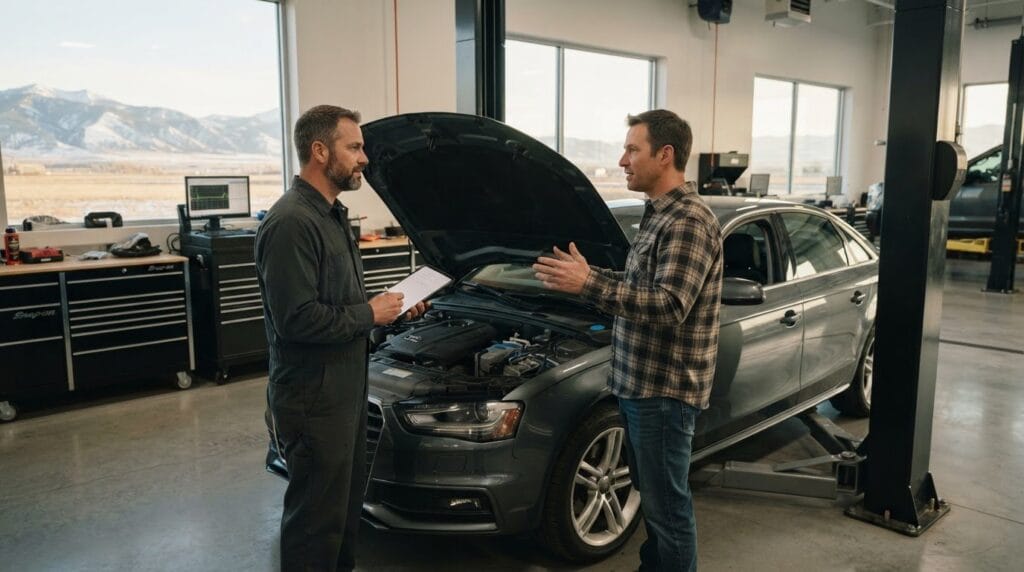
A better repair decision often starts with a mechanic who takes time to understand the problem. An intermittent warning light, unfamiliar noise, or symptom that disappears before your appointment can be difficult to explain. If you’re searching for “finding a mechanic who listens to my concerns belgrade,” look for a shop that treats your description as part of the diagnostic process and explains what its findings mean before recommending work.
You deserve time to describe the symptoms and an explanation of why a repair is being suggested before you approve it. This article explains how to prepare for a diagnostic conversation, what clear communication about findings looks like, and why European-vehicle expertise matters when complex systems are involved. At Euro Performance Auto Shop LLC in Belgrade, ASE certified technicians specialize in European vehicles and use advanced diagnostic technology for maintenance, diagnosis, and repairs. Knowing what to ask can help you make informed decisions with greater confidence.
Key Takeaways
- Look for signs of attentive service, such as focused questions, careful notes, and explanations that address your specific symptoms.
- Your description can guide an inspection, but a symptom alone does not prove that a particular part has failed.
- Compare communication, diagnostic clarity, and European-vehicle expertise as separate criteria when finding a mechanic who listens to my concerns belgrade.
- Prepare vehicle details and symptom notes so you can make the most of the repair conversation and ask focused questions about recommended work.
- Euro Performance LLC’s European-vehicle specialization, ASE certified technicians, advanced diagnostic technology, and OE-manufacturer parts support repair and maintenance decisions.
Finding a Mechanic in Belgrade Who Takes Your Concerns Seriously
Repeating the same symptoms at each visit and leaving unsure what the mechanic found can make it harder to trust the repair process. Intermittent concerns are especially frustrating: a noise may stop before the appointment, or a warning light may disappear before anyone can inspect it. If you’re focused on finding a mechanic who listens to my concerns belgrade, look for signs that your account is guiding the conversation rather than being brushed aside.
Listening doesn’t mean a mechanic must agree with your guess about the cause. It means they take your observation seriously, ask focused questions, and explain what needs to be inspected or tested before identifying a fault. The same symptom can have more than one possible cause, so a careful conversation helps turn what you’ve noticed into useful diagnostic information.
At Euro Performance Auto Shop LLC, open communication is the foundation of dependable local auto care:
What does a mechanic who listens actually do?
A mechanic who listens lets you finish describing the concern before suggesting a likely cause. They ask when it happens, what seems to trigger or ease it, and whether it has changed over time. They may repeat the main issue in their own words to confirm they understood. That gives both of you a clearer starting point for inspection.
Why clear communication matters for Belgrade drivers
A specific symptom history can help guide an inspection toward the conditions you’ve noticed. For example, explaining that a sound occurs during a turn is more useful than saying the car “sounds wrong.” That observation is evidence to investigate, not proof of a particular failed component. Automotive repair involves inspection and diagnosis as well as fixing faults, so communication is a practical part of understanding the work.
Attentive auto service means hearing what the driver observes, checking the concern methodically, and explaining findings in terms the driver can understand.
During an initial conversation, notice whether the mechanic:
- Asks for specifics: They clarify when and where the symptom occurs instead of rushing to a conclusion.
- Listens without interrupting: You have time to describe what you’ve noticed, including whether the issue comes and goes.
- Confirms the concern: They summarize the problem to check that they understood your description.
- Separates facts from possibilities: They distinguish your observations from potential causes that still require testing.
- Explains the next step: They describe what the inspection is intended to establish and leave room for your questions.
You shouldn’t need to arrive with a technical diagnosis. Clear, respectful communication helps you share what you know while leaving the mechanical testing to the technician. If you leave the first conversation understanding what concern is being investigated, you have a stronger basis for discussing the findings and deciding what to do next.
How a Belgrade Mechanic Should Turn Your Concerns Into a Diagnosis
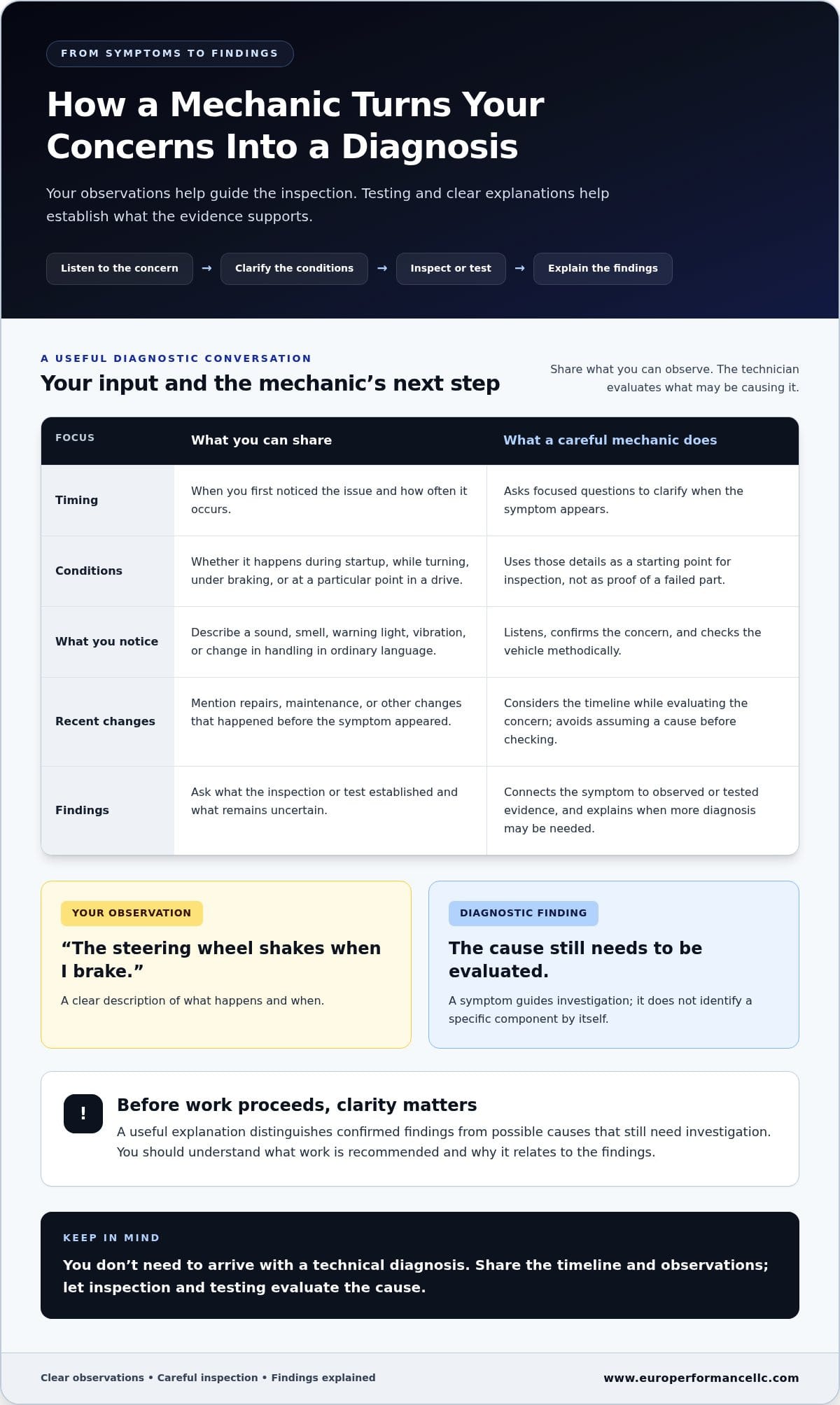
A clear diagnostic conversation follows a practical sequence: understand the concern, clarify the conditions, inspect or test the vehicle, then explain what the evidence supports. The steps depend on the symptom, but the purpose is the same: connect what you’ve noticed with findings that can be assessed instead of jumping straight to a repair recommendation.
A symptom is useful evidence, not a diagnosis. A vibration, for example, tells the technician what you’re experiencing, but it doesn’t identify the specific part or system responsible. The cause needs to be evaluated. This distinction matters when finding a mechanic who listens to my concerns belgrade: good communication respects your observations while allowing for the testing needed to reach a sound conclusion.
What information should you share about the problem?
Give the technician a practical timeline and describe what you can observe. You don’t need mechanical terminology; ordinary language is useful. Note whether the issue is consistent or intermittent, and mention recent work or changes that may help clarify when it began. If you’re unsure about a detail, say so rather than guessing.
- Timing: When did you first notice the issue, and how often does it occur?
- Conditions: Does it happen during startup, while turning, under braking, or at a particular point in a drive?
- What you notice: Describe any sound, smell, warning light, vibration, or change in handling.
- Recent changes: Mention repairs, maintenance, or other changes that happened before the symptom appeared.
Specific observations give an inspection a useful starting point. For instance, “the steering wheel shakes when I brake” describes what happens and when; it doesn’t presume which component is responsible. That keeps the conversation focused on verifying the concern.
How should diagnostic findings be explained?
A useful explanation connects the reported symptom to what the technician observed or tested. It distinguishes confirmed findings from possible causes that still need investigation. If a result is inconclusive, the mechanic should make that clear and explain what additional diagnostic step could help narrow down the cause.
Before work proceeds, you should understand what’s recommended, why it relates to the findings, and what the next step involves. Ask, “What did the inspection show?” or “Which part of this recommendation addresses the symptom I described?” Clear answers help you assess the repair decision without needing to interpret technical terminology on your own.
A reported symptom describes what you experience; a confirmed diagnosis explains what inspection or testing has established.
At Euro Performance LLC, European-vehicle specialization and advanced diagnostic technology support diagnosis and repair. If you’re preparing for a European-vehicle diagnostic conversation in Belgrade, learn about European auto repair and maintenance at Euro Performance LLC.
How to Compare Belgrade Mechanics on Listening and European-Car Expertise
A useful comparison looks beyond location, appointment speed, or convenience. Those factors can matter, but a quick booking doesn’t show whether a shop will understand your concern, explain its diagnostic process, or have relevant experience with your vehicle. When finding a mechanic who listens to my concerns belgrade, compare communication, diagnostic clarity, and European-car expertise separately.
Use the first conversation to notice how the shop handles your concern. Does the staff ask questions and confirm what you’ve described? Can they explain how inspection findings relate to a recommendation? These are practical signs of a considered process, not promises that every diagnosis will be immediate or straightforward.
| What to compare | A strong sign | What to notice |
|---|---|---|
| Communication | Focused questions and confirmation of your concern | You have room to describe the issue and clarify details. |
| Diagnostic clarity | Findings are explained separately from possibilities | The reason for recommended testing or work is understandable. |
| Vehicle expertise | Relevant experience with European vehicles and diagnostic work | The shop’s approach suits the make and systems involved. |
Signs a repair shop is listening rather than assuming
Notice whether the staff asks about the conditions around the symptom before settling on a cause. A clear explanation distinguishes what an inspection or test established from what remains a possibility. You should also have an opportunity to understand the recommendation and raise questions before deciding how to proceed. Attentive service is thoughtful and evidence-led, not simply agreement with a suspected diagnosis.
Look for consistency throughout the conversation. If the explanation changes as new information comes up, the technician should clarify what prompted the update. If more testing is needed, an explanation of what it may help determine is more useful than a confident-sounding guess. This makes it easier to follow the reasoning behind a recommendation.
Why European-vehicle expertise belongs in your comparison
European vehicles can involve interconnected control modules and vehicle-specific software, so relevant diagnostic experience and technology can matter when investigating a concern. Specialization helps frame questions around the vehicle’s systems, while testing determines what the evidence supports. Compare the shop’s expertise with your vehicle’s make and the nature of the issue.
Euro Performance LLC specializes in European vehicle repair and maintenance. Its ASE certified technicians use advanced diagnostic technology and parts from top OE manufacturers. Consider these points alongside communication and diagnostic clarity, without treating any credential or tool as a guarantee of a particular result. The European auto repair guide for Belgrade explains more about specialist service.
Make your comparison based on the quality of the conversation and the technical fit, not speed alone. A shop that explains what it knows, what it’s still investigating, and why a next step is recommended gives you a clearer basis for an informed repair decision.
How to Prepare for a Repair Conversation in Belgrade
A few notes before your appointment can make it easier to describe a problem accurately, especially if it comes and goes. You don’t need to identify the cause or use technical terms. Your role is to report what you’ve experienced; the technician determines which inspection or diagnostic tests are appropriate for the vehicle and concern.
Make your vehicle symptoms easier to explain
Write down details while they’re fresh. A short, specific description helps preserve the timeline and conditions, even if the symptom isn’t happening during the appointment. Bring relevant maintenance or repair history if you have it, since recent work or changes may provide context. Keep observations separate from guesses about which part may be at fault.
- When it began: Note approximately when you first noticed the concern and whether it has changed.
- When it happens: Record the conditions, such as starting the vehicle, turning, braking, or driving on a particular route.
- How long it lasts: Is it constant, brief, or intermittent? Note how often you’ve encountered it.
- What you observe: Describe sounds, smells, handling changes, vibrations, or dashboard messages in plain language.
- Relevant history: Bring maintenance records or note recent repairs and changes that could help establish a timeline.
For example, write “a brief squeal when starting the car in the morning,” rather than “the belt is failing.” The first statement records an observation; the second assumes a cause that still needs assessment. This detail supports a focused conversation without steering the diagnosis toward an unverified repair.
Questions that support an informed repair decision
Prepare a few questions so you can follow the technician’s explanation and understand the decision in front of you. You can ask:
- Which findings relate directly to the concern I described?
- What did the inspection or testing establish, and what remains uncertain?
- What next step do you recommend, and why?
- Which items need attention first, and what is the reason for that priority?
- What work is being recommended before I decide whether to proceed?
The technician selects diagnostic testing based on the vehicle, the reported symptoms, and what inspection reveals. Your notes give the shop useful context, but they don’t replace a technical assessment. If the explanation includes unfamiliar terms, ask for the finding in everyday language and how it connects to your concern. Drivers reviewing service history can also use this European car factory-scheduled maintenance guide to understand how scheduled maintenance fits into the conversation.
Clear notes and focused questions can make finding a mechanic who listens to my concerns belgrade feel less uncertain. Bring your observations, share relevant records, and take time to understand the findings before making a repair decision. For European-vehicle maintenance, diagnostics, and repair in Belgrade, learn about Euro Performance’s services.
Talk With Euro Performance About European Auto Repair in Belgrade
For European vehicles, attentive service and relevant technical experience belong together. A clear account of a warning light, unusual sound, handling change, or intermittent issue gives a technician useful context. Inspection and diagnostic findings then help determine what the concern may require. Together, those details can make it easier to understand how a recommendation relates to what you’ve noticed.
European vehicle service grounded in clear diagnostics
Euro Performance LLC specializes in European-vehicle maintenance, diagnostics, and repairs in Belgrade. Its ASE certified technicians use advanced diagnostic technology to investigate vehicle concerns, and repair work uses parts from top OE manufacturers. These are useful points to consider when comparing technical expertise, while inspection findings for your particular vehicle guide the recommended next steps.
Your description of the symptom history can inform diagnostic work. Sharing when the issue occurs, how it has changed, and any relevant service history gives the technician context to consider alongside the vehicle’s condition. The goal is not to treat a description as a diagnosis, but to use it as part of a methodical assessment and explain how the findings relate to your concern.
The right service depends on what you’re experiencing. Routine or factory scheduled maintenance addresses scheduled service needs; a repair concern calls for diagnosis and an appropriate repair recommendation. If your concern involves steering or vehicle alignment, wheel alignment may be relevant. If it relates to a driver-assistance system, ADAS calibration may be pertinent. The technician’s assessment helps determine which work applies.
Take the next step with a Belgrade repair shop
Before discussing your vehicle, have a few details ready: its make and model, the symptom you’ve noticed, when it occurs, and any relevant maintenance or repair history. Bring questions that will help you understand the findings. For example, ask what the technician observed, how it connects to your concern, and which next steps are recommended. Clear explanations give you a better basis for considering the work before deciding how to proceed.
If you’re finding a mechanic who listens to my concerns belgrade, look for a service conversation that combines attentive communication with appropriate European-vehicle expertise. You don’t need to arrive with a technical diagnosis. Describe what you’ve experienced, and give the technician the opportunity to assess it and explain the results in understandable terms.
Euro Performance’s Belgrade team provides specialized European auto repair and maintenance. Discuss your European vehicle concerns with Euro Performance and share the details that can help guide the conversation.
Make Your Next Repair Conversation Count
You don’t need to arrive with a diagnosis to take an active role in your vehicle’s care. Bring your observations, ask what the findings mean, and take time to understand the recommendation before deciding how to proceed. A clear conversation should leave you better informed, even if further testing is needed to pinpoint an intermittent concern.
If you’re still searching for finding a mechanic who listens to my concerns belgrade, make your next step a conversation about your European vehicle and the issue you’ve noticed. Euro Performance’s specialization, ASE certified technicians, diagnostic technology, and OE-manufacturer parts support its European repair and maintenance work.
Discuss your European vehicle concerns with Euro Performance and begin with the details that matter to you. You deserve to understand the path from concern to recommendation, and a thoughtful discussion can help you move forward with greater confidence.
Frequently Asked Questions
How can I tell if a mechanic is listening to my concerns?
A mechanic is listening when they accurately restate the issue and respond to the details you shared, rather than giving a generic answer. Notice whether they distinguish your concern from other issues they discover and invite you to clarify anything they may have misunderstood. As a final check, summarize the concern in your own words and ask whether that matches what they’ll investigate.
What should I tell a mechanic about an intermittent car problem?
Describe the last few times it happened, including what the vehicle was doing just before the symptom appeared and whether anything changed afterward. If a dashboard warning came on, note its wording or take a photo when safe to do so. Mention whether passengers noticed it too. Don’t try to recreate a symptom if doing so could make driving unsafe; share the conditions you remember instead.
Can a mechanic diagnose a problem from symptoms alone?
Symptoms can help narrow the investigation, but they usually can’t confirm a failed component by themselves. A warning light, for example, may point to a system that needs evaluation rather than identify the exact part to replace. The technician uses the vehicle’s condition and appropriate inspection or testing to assess possible causes. Ask what evidence supports the diagnosis and what additional checks may be needed.
Should a mechanic explain diagnostic findings before recommending repairs?
Yes. Before deciding on recommended work, you should understand what the technician found and how it relates to your concern. If the explanation is unclear, ask for a plain-language description or ask which observation supports the recommendation. It’s reasonable to ask what remains uncertain, too. That conversation helps distinguish work tied to diagnostic findings from separate maintenance needs.
How do I find a mechanic for a European car in Belgrade, Montana?
Look for a repair shop that focuses on European vehicles and can discuss the needs of your specific make. Euro Performance LLC specializes in European auto repair and maintenance in Belgrade, including service for makes such as BMW, Audi, and Mercedes-Benz. Its ASE certified technicians use advanced diagnostic technology. Sharing your vehicle’s make, model, and concern can help start a relevant service conversation.
What should I ask before authorizing a car repair?
Ask which repair is recommended, what finding supports it, and whether any proposed work addresses a separate concern. Clarify what the repair is intended to do, what parts are involved, and whether further diagnosis may be needed if the problem continues. You can also ask which items the technician considers most urgent and why. Make sure you understand the proposed work before giving approval.
Can I get a second opinion if I do not understand a repair recommendation?
Yes, you can seek another professional assessment if you’re uncertain about a recommendation. Start by asking the original shop to explain its findings again or provide the diagnostic information and proposed work for your records. Sharing those details with another technician may help them understand what has already been checked. If the vehicle’s behavior raises a safety concern, avoid driving it until you’ve received appropriate guidance.