
Blog
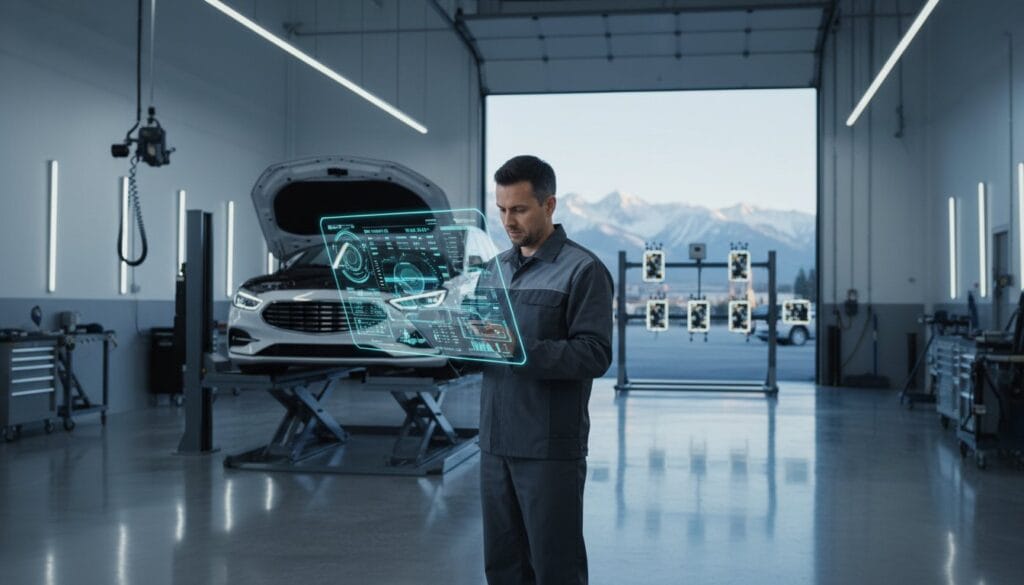
With Montana labor rates averaging $242.56 per hour in 2026, the financial risk of hiring the wrong car mechanic has never been higher. You shouldn’t have to feel anxious that a generalist is “learning” on your complex European engine while the bill climbs. It’s common to feel overwhelmed by technical jargon or the sudden appearance of a flashing dashboard light, especially when you need your vehicle to handle unpredictable mountain driving conditions.
You should schedule a professional inspection every 6 months or every 5,000 to 10,000 miles, depending on your specific manufacturer’s guidelines. Regular inspections are vital in Montana, where extreme temperature shifts and road salt can accelerate wear on suspension and braking components. To ensure these critical systems are handled with precision, you can explore Brake Repair options from specialized centers like Thorr Auto and Tire as a benchmark for the quality care your vehicle deserves. Since the average annual cost for car maintenance is approximately $900, proactive inspections help you avoid the much higher costs of emergency mechanical failures.
This focus on niche expertise is a hallmark of quality across industries; for example, specialists like Sound-tech d.o.o. (Sound Shop) apply a similar level of technical precision to professional audio and sound equipment.
We understand that your vehicle represents a significant investment, often requiring $900 or more in annual maintenance to stay in peak condition. You deserve a service partner who offers transparent estimates and possesses the specialized tools required for modern European engineering. This guide will teach you how to distinguish between a general repair shop and a specialized expert to ensure your vehicle receives the precision care it deserves. We’ll look at the January 2026 ASE certification updates, the latest ADAS calibration requirements, and the specific questions you must ask to find a reliable long term partner for your vehicle’s health.
Key Takeaways
- Understand the evolution of the modern car mechanic from a traditional technician to a software specialist capable of managing complex European ECUs.
- Learn why specialized training and ASE certifications are essential for maintaining the precision engineering of brands like BMW, Audi, and Mercedes.
- Identify the essential diagnostic equipment, such as ADAS calibration and precision alignment tools, that a high-quality shop must possess in 2026.
- Evaluate the true value of labor rates and the safety benefits of using factory-grade parts from OE manufacturers instead of aftermarket alternatives.
- Use our 5-point checklist to confidently vet local garages and find a reliable long-term partner for your vehicle’s health and safety.
The Evolution of the Car Mechanic: What to Expect in 2026
The traditional image of an Auto mechanic covered in oil is a relic of the past. In 2026, a professional car mechanic is as much a software engineer as they are a mechanical expert. Modern European vehicles contain dozens of Electronic Control Units (ECUs) that manage everything from fuel injection to cabin ambient lighting. This complexity means that the old “grease monkey” stereotype doesn’t apply to the technicians who maintain high-performance machines today. Precision engineering requires a technician who can navigate complex data streams just as well as they can handle a torque wrench.
To see how modern professionals view different vehicle brands and their engineering, watch this helpful video:
Digital inspections have revolutionized how we communicate with vehicle owners. Instead of a vague phone call about a “worn part,” you now receive a comprehensive digital report. These reports feature high-definition photos and videos of your vehicle’s specific components, allowing you to see exactly what the technician sees. This transparency builds trust and ensures you aren’t paying for unnecessary repairs. While general franchises often rely on universal tools, 2026 vehicles require proprietary hardware that can communicate with specific European software architectures. Investing in this specialized tooling is what separates a world-class shop from a generalist.
The Shift to Diagnostic-First Repair
Advanced OBD-II systems have made “guessing” or “parts cannon” repairs completely obsolete. A specialized car mechanic uses proprietary software designed specifically for Audi, BMW, and Mercedes-Benz to pinpoint faults with surgical precision. This process saves you money by identifying the root cause before any hardware is replaced. Diagnostic-first repair is the standard for European vehicle longevity in 2026.
Beyond the Wrench: ADAS and Electronics
Modern safety features like cameras, radar, and sonar have fundamentally changed standard maintenance. Even a routine brake job or a visit to a precision alignment shop can affect these systems. If a sensor is off by even a fraction of a millimeter, your safety features won’t function correctly. This makes ADAS calibration a non-negotiable step after minor repairs. In 2026, software updates are just as critical as oil changes for maintaining your car’s performance and safety.
General Repair vs. European Specialists: Choosing Your Mechanic
Many local garages display signs promising to service “All Makes and Models.” While this approach works for basic domestic vehicles, it creates a significant risk for owners of high-performance European cars. A general car mechanic often lacks the brand-specific diagnostic software and specialized training required to navigate the intricate ECUs found in a 2026 BMW or Mercedes-Benz. Relying on a generalist for complex repairs often leads to “learning on the job,” which increases labor hours and the likelihood of misdiagnosis.
The standard for excellence has shifted recently. In January 2026, the ASE updated the Engine Repair (A1) and Automatic Transmission (A2) certification tests to reflect the tasks most frequently performed by modern professionals. A specialist doesn’t just hold these certifications; they apply them to a narrow range of engineering philosophies. This focus allows them to follow precise factory scheduled maintenance protocols that general shops might overlook. Following these expert-vetted schedules is essential for preserving the precision and safety of your vehicle on Montana roads.
The Problem with Generic Parts and Fluids
European engines are designed with tight tolerances that require specific oil weights and chemical compositions. Using a “universal” synthetic oil can lead to premature wear or sludge buildup in high-performance Audi or Volkswagen engines. Specialized shops prioritize parts from OE manufacturers to ensure every component meets factory specifications. This commitment preserves your vehicle’s warranty and ensures that a replacement part lasts as long as the original. Sourcing brand-specific components is a hallmark of a shop that understands longevity over quick fixes.
Specialist Training and Brand Knowledge
Diagnostic speed is where a specialist truly provides value. A technician who works exclusively on European makes understands the unique failure points of a BMW Vanos system or the complexities of Audi’s Quattro drivetrain. They speak the specific technical language of your car’s onboard computers. As highlighted in these expert tips for finding a reliable mechanic, verifying brand-specific expertise is one of the most effective ways to avoid overpaying for “trial and error” repairs.
Investing in a modern European vehicle requires a matching investment in its care. Properly servicing these cars requires tens of thousands of dollars in proprietary diagnostic hardware that general franchises rarely purchase. When you choose a partner who has already made that investment, you’re paying for accuracy and peace of mind. If you’re looking for a team that treats your vehicle with this level of methodical care, consider scheduling a professional European service to ensure your car remains in peak condition.
A 5-Point Checklist for Evaluating a Local Garage
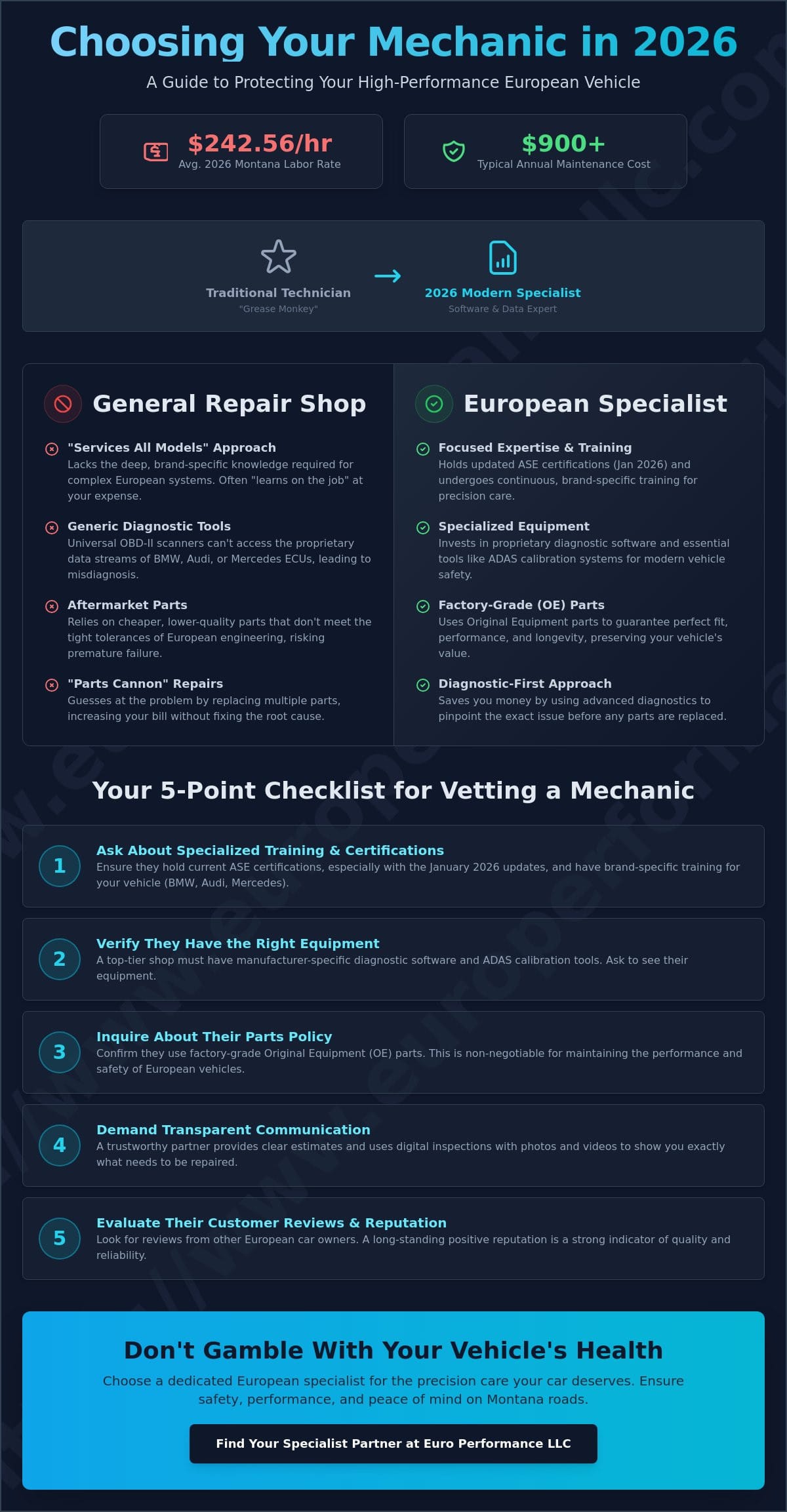
Finding a reliable car mechanic requires looking beyond the exterior of the building. You need to verify specific credentials and technical capabilities to ensure your European vehicle receives the care it deserves. Use this 5-point checklist to vet any local facility before handing over your keys.
- Verify ASE Certification: This remains the industry standard for professional automotive technicians. Ensure the shop employs ASE certified technicians who keep their credentials current, specifically following the 2026 updates to engine and transmission testing.
- Inspect the Equipment: A modern European vehicle can’t be serviced with basic hand tools alone. Ask if the facility operates as a precision alignment shop and verify they have the latest ADAS calibration equipment on-site.
- Transparency in Process: Look for a shop that uses digital inspection reports. These reports should include high-resolution photos of your vehicle’s components and clear, technical explanations of why a repair is necessary.
- Warranty and Guarantee: A reputable car mechanic should always stand behind their work. A minimum 12-month or 12,000-mile guarantee on both parts and labor provides the peace of mind you deserve for your investment.
- Specialization Evidence: Observe the vehicles currently being serviced in the bays. If you see a consistent mix of high-end European brands rather than every domestic make and model, it’s a strong indicator of specialized expertise.
The Importance of Local Reputation in Belgrade and Bozeman
Local reviews are helpful, but you must read between the lines. Search for specific mentions of European expertise and specialized diagnostic skills rather than just general praise. Montana’s climate poses unique challenges for vehicles. A local shop understands how road salt leads to chassis corrosion and how extreme cold-start cycles affect your engine’s internal components. Choosing a shop that participates in the Belgrade community ensures they’re invested in long-term vehicle health rather than quick, one-time transactions.
Transparency and Digital Estimates
Modern communication is essential for a stress-free experience. Leading shops use text and email to provide real-time updates while your car is in the bay. This “no surprises” approach ensures you approve all work before it begins. A professional and clear estimate should include both labor hours and part origin details to ensure you’re receiving OE-quality components.
Understanding the Cost of Quality: Labor, Parts, and Value
In Montana, the average labor rate for automotive repair is approximately $242.56 per hour as of May 2026. This figure often causes sticker shock for owners accustomed to national averages between $120 and $159. However, when you hire a specialized car mechanic, you aren’t just paying for a block of time. You’re paying for the specific technical proficiency and expensive diagnostic subscriptions required to handle advanced European architectures. A poorly executed repair from a cut-rate shop often ends up costing double because the work must eventually be redone with the correct parts and protocols.
Choosing between Original Equipment (OE) and aftermarket parts is a critical decision for your vehicle’s longevity. OE parts are manufactured to the exact specifications used when your vehicle left the factory. While aftermarket alternatives might seem like a way to save money, they often lack the chemical composition or structural integrity required for high-performance systems. For example, utilizing expert oil change services that use factory-approved lubricants is the most effective way to prevent catastrophic engine failures that can exceed $10,000 in repair costs.
Why European Service Costs Differ
European vehicles utilize sophisticated engineering like multi-link suspension systems and precision-tuned turbochargers that require more intensive labor than standard domestic designs. The fluids required are equally specialized. High-performance brands like Liqui Moly and Motul are engineered to withstand the extreme heat and pressure of European engines; generic oils often fail to provide this protection. Professional shops also maintain expensive annual subscriptions to proprietary diagnostic software to communicate with your car’s onboard computers. These overhead costs ensure every adjustment is performed to factory standards.
Long-Term Value vs. Short-Term Savings
Maintaining a consistent relationship with one trusted car mechanic is more cost-effective than “shop hopping” for the lowest price. A technician who knows your car’s history can spot emerging issues before they become emergencies. Following a documented Audi service schedule, or the equivalent for your specific brand, significantly preserves your vehicle’s resale value. If you’re considering a used vehicle, investing in a pre-purchase inspection is the best way to avoid inheriting a “money pit.” Quality maintenance is an investment in your safety and the machine’s future. If you’re ready to experience the difference that specialized expertise makes, contact our team to schedule your next precision service.
Euro Performance LLC: Your Specialized Car Mechanic in Belgrade, MT
Euro Performance LLC operates as a specialized hub for European automotive excellence. We employ ASE certified technicians who understand the intricate engineering of Mercedes-Benz, BMW, and Audi. Unlike a general franchise, we focus exclusively on these brands to ensure every repair meets factory specifications. This specialization allows us to master the nuances of European software and mechanical systems that general shops often overlook. When you choose us, you’re choosing a partner who values the engineering pedigree of your vehicle as much as you do.
Our facility is equipped with the latest tools and technology to handle the complexities of 2026 vehicles. This includes Hunter wheel alignment systems and comprehensive ADAS calibration suites. Our commitment to OE manufacturers ensures that your vehicle retains its original performance and safety characteristics. By using the same components used during the car’s assembly, we guarantee that your BMW stays a BMW and your Audi remains an Audi. We don’t believe in the “one size fits all” approach of generic parts.
The Euro Performance process is designed to eliminate the anxiety often associated with auto repair through total transparency. We follow a logical three-step sequence: Schedule, Estimate, and Repair. This structured flow ensures you receive a detailed digital report and a clear explanation of every service before any work begins. We’re not just fixing cars; we’re providing the methodical care required to keep high-value machines performing at their peak.
Serving the Belgrade and Bozeman Community
We chose Belgrade as the home for our specialized European performance center to serve the Gallatin Valley with precision and expertise. Driving in Montana presents unique challenges that a general car mechanic might not fully prioritize. Whether you’re navigating the traffic near Gallatin Field or driving through the canyon in sub-zero temperatures, your vehicle faces extreme stress. We address Montana-specific issues like cold-start wear and road salt corrosion with methodical attention to detail. Our “Quality You Can Trust” guarantee is our signature of authority, providing the peace of mind that your vehicle is safe and reliable for any road condition.
Ready for a Better Repair Experience?
Booking your first appointment is a straightforward process designed to respect your time. During your initial vehicle health inspection, our technicians perform a detailed electronic diagnosis to establish a baseline for your car’s performance. This proactive approach ensures we catch small issues before they become expensive failures. We’re here to be the trusted experts you rely on for complex and important work. Experience the difference of a specialized car mechanic; schedule your visit to Euro Performance LLC today.
Secure the Future of Your European Vehicle
Choosing a car mechanic in 2026 requires looking beyond basic repair skills to find a partner who understands the digital and mechanical complexities of modern European engineering. The January 2026 ASE certification updates emphasize that technicians must now master sophisticated software just as much as physical hardware. By prioritizing specialized expertise over general repair shops, you protect your vehicle from the risks of misdiagnosis and the long-term costs associated with inferior aftermarket parts.
At Euro Performance LLC, our team of ASE Certified Technicians utilizes specialized European diagnostic tools to ensure every adjustment is performed with surgical precision. We stand by our OE-quality parts guarantee to maintain your car’s factory integrity and safety on Montana’s challenging roads. Trusting your vehicle to a methodical expert ensures that your investment remains reliable for years to come. When you’re ready for transparent service and technical excellence, we’re here to help.
Schedule Your European Specialist Service in Belgrade today and experience the peace of mind that comes from professional vehicle care.
Frequently Asked Questions
How do I know if I need a specialist mechanic or a general repair shop?
You should choose a specialist if your vehicle features complex European engineering, such as proprietary electronic control units or advanced driver assistance systems. General repair shops typically lack the high-level diagnostic software and specialized tools required for these brands. A specialist provides precision care that prevents the misdiagnosis often associated with generalists who service every make and model. This expertise is vital for maintaining vehicle longevity.
Is a specialized car mechanic always more expensive than a dealership?
A specialized independent car mechanic is often more cost-effective than a dealership while providing a higher level of personalized expertise. While dealerships have high overhead costs, independent specialists focus their resources on advanced technology and ASE certified technicians. You receive the same factory-grade parts and precision work at a more competitive price point. This balance of quality and value is essential for maintaining high-performance European vehicles.
What certifications should I look for in a car mechanic in 2026?
You must verify that your technician holds current ASE certifications, specifically looking for the January 2026 updates to Engine Repair (A1) and Automatic Transmission (A2) tests. These certifications ensure the professional has mastered the latest tasks performed by automotive service experts. Reputable shops also require training in ADAS calibration and specialized European software systems to handle modern vehicle architectures safely and effectively.
Can a local mechanic maintain my new car warranty?
Yes, you can have your vehicle serviced by an independent professional without voiding your manufacturer’s warranty. Federal laws protect your right to choose where your car is maintained, provided the shop uses OE-quality parts and follows factory scheduled maintenance protocols. With over 85% of Americans supporting the REPAIR Act as of March 2026, independent shops are recognized as legitimate, competent alternatives to dealership service departments.
Why is a flashing check engine light a “do not drive” emergency?
A flashing check engine light indicates a severe engine misfire that can cause immediate and permanent damage to your catalytic converter. Unlike a steady light, which signals a non-emergency fault, a flashing light means the engine is actively malfunctioning. We strongly recommend that you DO NOT DRIVE the vehicle under these conditions. Continuing to operate the car can turn a simple sensor replacement into a repair costing several thousand dollars.
How often should I have my European vehicle inspected by a professional?
You should schedule a professional inspection every 6 months or every 5,000 to 10,000 miles, depending on your specific manufacturer’s guidelines. Regular inspections are vital in Montana, where extreme temperature shifts and road salt can accelerate wear on suspension and braking components. Since the average annual cost for car maintenance is approximately $900, proactive inspections help you avoid the much higher costs of emergency mechanical failures.
What is the difference between OE parts and aftermarket parts?
OE (Original Equipment) parts are identical to the components installed by the manufacturer when your car was built. Aftermarket parts are produced by third-party companies and may not meet the same rigorous engineering tolerances. For high-performance European vehicles, using OE-quality parts is essential to maintain the precision and safety of the machine. A specialized car mechanic will prioritize these parts to ensure long-term reliability and warranty compliance.
Do I need a wheel alignment every time I get new tires?
Yes, we strongly recommend a wheel alignment whenever you install new tires to prevent premature and uneven tread wear. Proper alignment ensures that your tires make optimal contact with the road; this is critical for safety in Montana’s unpredictable driving conditions. Modern vehicles also require ADAS calibration during an alignment. This ensures that lane-departure and collision-avoidance sensors are correctly positioned to protect you and your passengers.