A steady airbag warning is a safety fault, not a dashboard nuisance. A proper fix for a Mercedes airbag light that stays on steadily starts by diagnosing the SRS fault, not simply clearing the warning. While the light remains on, don’t assume the airbags or seat-belt pretensioners will work as intended.
It’s reasonable to wonder whether something as simple as an object on the passenger seat could be involved. Seat-occupancy sensors are one possible cause, but a persistent warning can also point to a fault elsewhere in the restraint system, including a sensor, connector, module, or seat-belt component.
This guide explains what a steady light means, what to do about items on the seat, and why a warning that returns needs proper diagnosis. It also explains why resetting the light alone won’t fix an underlying fault, and when professional scanning and repair are the safer next step.
Key Takeaways
- Learn how seat-belt pretensioners, occupant-classification sensors, and other SRS components can contribute to a warning.
- Understand why a diagnostic scan can help pinpoint the fault before any reset or repair is attempted.
- See how crash sensors and the airbag module work together to respond to a collision.
- Know when passenger-seat items may affect occupant detection and when persistent warnings call for professional attention.
Airbag system, seat belt pretensioner, and passenger occupant classification faults
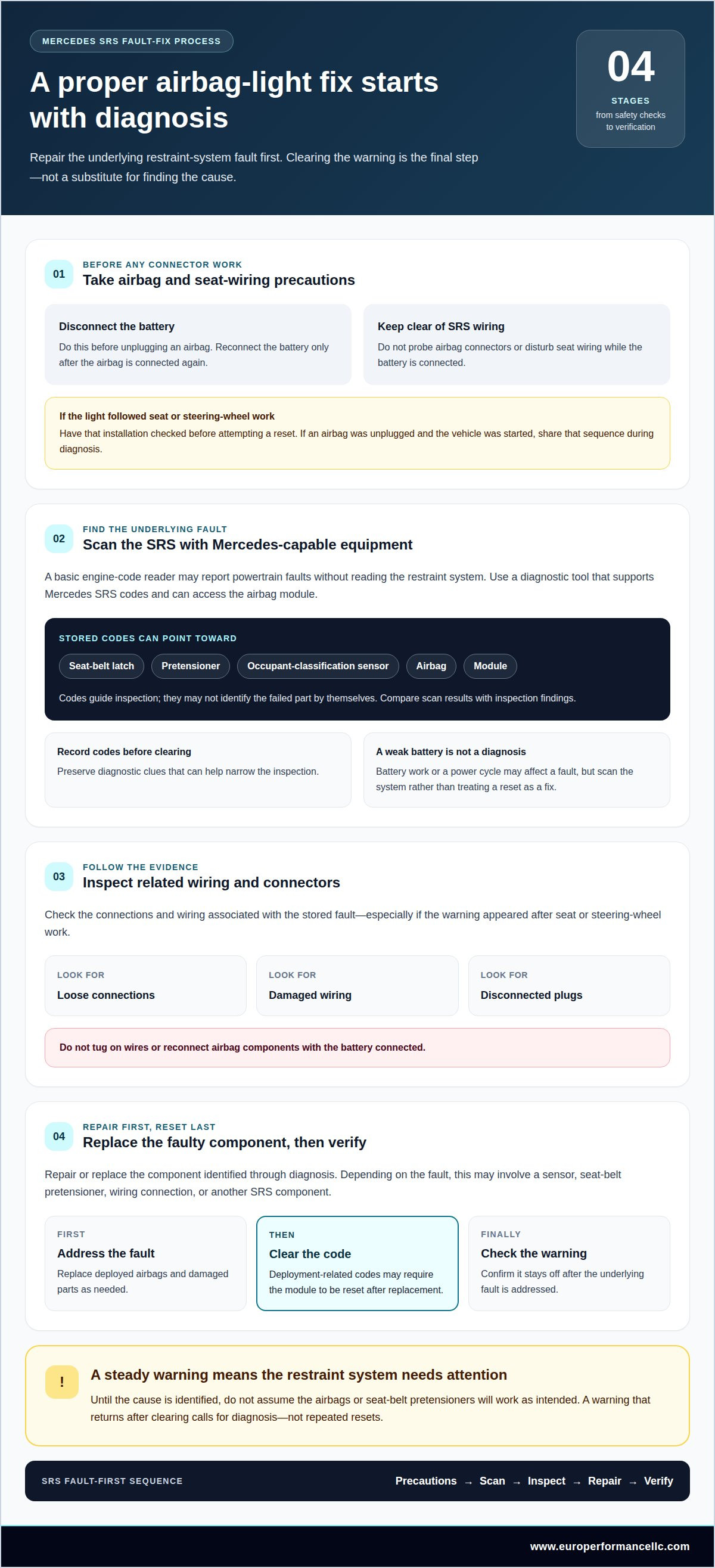
Follow a fault-first process: identify and repair the SRS issue, then clear the warning. A reset alone won’t repair a component that still isn’t working.
-
Take airbag and seat-wiring precautions
Disconnect the vehicle battery before unplugging an airbag, and reconnect it only after the airbag is connected again. Don’t probe airbag connectors or disturb seat wiring with the battery connected. If steering-wheel or seat-cover work preceded the warning, have that installation checked before attempting a reset.
A steady light doesn’t determine whether a Mercedes will pass a safety inspection. Inspection requirements vary by state, so the result depends on the rules where the vehicle is registered.
-
Diagnose underlying SRS faults
Have the SRS scanned with a tool that can read Mercedes airbag codes. Stored codes can point to a seat-belt latch, pretensioner, occupant-classification sensor, airbag, or module. A deployed pretensioner can trigger a warning, and an underlying sensor or tensioner fault can bring the light back after clearing.
A weak battery alone doesn’t identify the cause of an SRS warning. Battery disconnection or replacement can leave a fault, while a power cycle may clear a temporary fault. Scan the system rather than treating a reset as a diagnosis.
A steady airbag light doesn’t guarantee a vehicle will pass inspection. The applicable state inspection rules determine the outcome.
-
Check faulty wiring and connectors
Inspect the wiring and connectors related to the stored fault, especially if the warning appeared after seat or steering-wheel work. A loose, damaged, or disconnected connection can interrupt the SRS circuit and trigger a warning. Don’t tug on wires or reconnect airbag components with the battery connected.
If the warning began after an airbag was unplugged and the vehicle was started, share that sequence during diagnosis. Starting with an airbag disconnected can trigger a malfunction message and warning lamp.
-
Replace faulty components and reset the warning light
Repair or replace the component identified during diagnosis before clearing its code. Depending on the fault, that may involve a sensor, seat-belt pretensioner, wiring connection, or other SRS component. After deployed airbags and damaged parts are replaced, the module needs resetting to clear deployment-related codes.
Clearing the code is a final step, not proof of repair. Confirm that the warning stays off after the underlying fault is addressed. Diagnosis and repair costs depend on the fault, diagnostic work, labor, and required parts; pricing is provided after a quote request.
When to seek professional diagnosis and repair
Arrange diagnosis if the SRS warning stays illuminated, returns after clearing, or appears with an airbag malfunction message. A steady warning means the restraint system needs attention. Until the cause is identified, don’t assume the airbags or seat-belt pretensioners will work as intended.
- Use a Mercedes-compatible diagnostic tool if the warning persists. An OBD-II scanner must support Mercedes SRS codes and access the airbag module. A basic engine-code reader may only report powertrain faults, leaving the restraint-system issue unread. A diagnostic scan provides a starting point for identifying the circuit or component behind the warning.
- Record the stored codes before clearing them. They can guide inspection toward a component such as a pretensioner, passenger-seat sensor, or airbag module, but may not identify the failed part by themselves. For a Mercedes airbag light that stays on steadily, the right fix depends on comparing scan results with inspection findings.
- Seek professional diagnosis if the warning followed a collision, battery work, or steering-wheel or seat-cover repairs. A Mercedes Star-level tool may be needed for deeper system access, including some persistent faults after an airbag was disconnected. Share what work was done and when the light appeared; those details help narrow the diagnostic path.
- Address the underlying fault before resetting the warning. Clearing codes without repairing the cause can turn off the lamp temporarily while leaving the SRS issue unresolved. The repair process should link the code to the affected component, fix the fault, then clear the codes and check whether the warning returns. Whether handling routine servicing or resolving persistent dashboard warnings, dedicated automotive centers like Veloce Tuning emphasize pinpointing root causes rather than simply clearing codes. A reliable fix for a steady Mercedes airbag light starts with diagnosis, not repeated resets.
Airbag system components and operation
Understanding the system’s basic sequence helps explain why a warning can involve more than an airbag. Each component detects a collision, triggers a response, or reports a fault.
- Start with the crash sensors. They detect collision severity and signal the airbag module when deployment is necessary. A sensor fault can interrupt that information path, causing the module to store a fault and illuminate the SRS warning. The warning doesn’t identify the failed part by itself; diagnosis must connect the stored code to the affected circuit or component.
- The airbag module acts as the system’s control and record point. It receives signals from crash sensors and controls airbag deployment when conditions call for it. After airbags deploy, the module stores deployment information and activates the warning light. That stored information is why replacing deployed airbags alone may not clear the warning or restore normal operation.
- Include seat-belt pretensioners in the system check. A pretensioner works as part of the vehicle’s restraint system, and a deployed or faulty one can trigger an SRS warning. The seat-belt latch and its wiring matter too, because the system monitors restraint-related components. A fault in one part can keep the warning illuminated even if an airbag hasn’t deployed.
- Consider the passenger seat’s occupant-classification components. An occupancy or BabySmart sensor helps the vehicle identify passenger-seat conditions, and a fault there can register as an SRS problem. The module, sensors, airbags, latches, and pretensioners are connected parts, not isolated warning sources. Software can also contribute: outdated airbag-module software may cause a malfunction or warning light. A complete assessment considers the stored fault and the component it identifies.
Passenger-seat objects and occupant classification sensors
Use these steps to distinguish a seat-related clue from a fault that needs SRS diagnosis.
- Clear loose items from the passenger seat, including bags, then observe whether the warning changes at the next startup. The occupant-classification system monitors passenger-seat conditions, and an object may affect what it detects. A change in the indicator is useful information, but it doesn’t prove the SRS warning is repaired.
- Note exactly when the warning appears. Record whether it starts after placing an item on the seat, adjusting the seat, or doing seat-cover work. A warning that follows seat work may relate to the installation or a disturbed connection. This timing helps diagnosis focus on the passenger-seat circuit rather than assuming the airbag itself has failed.
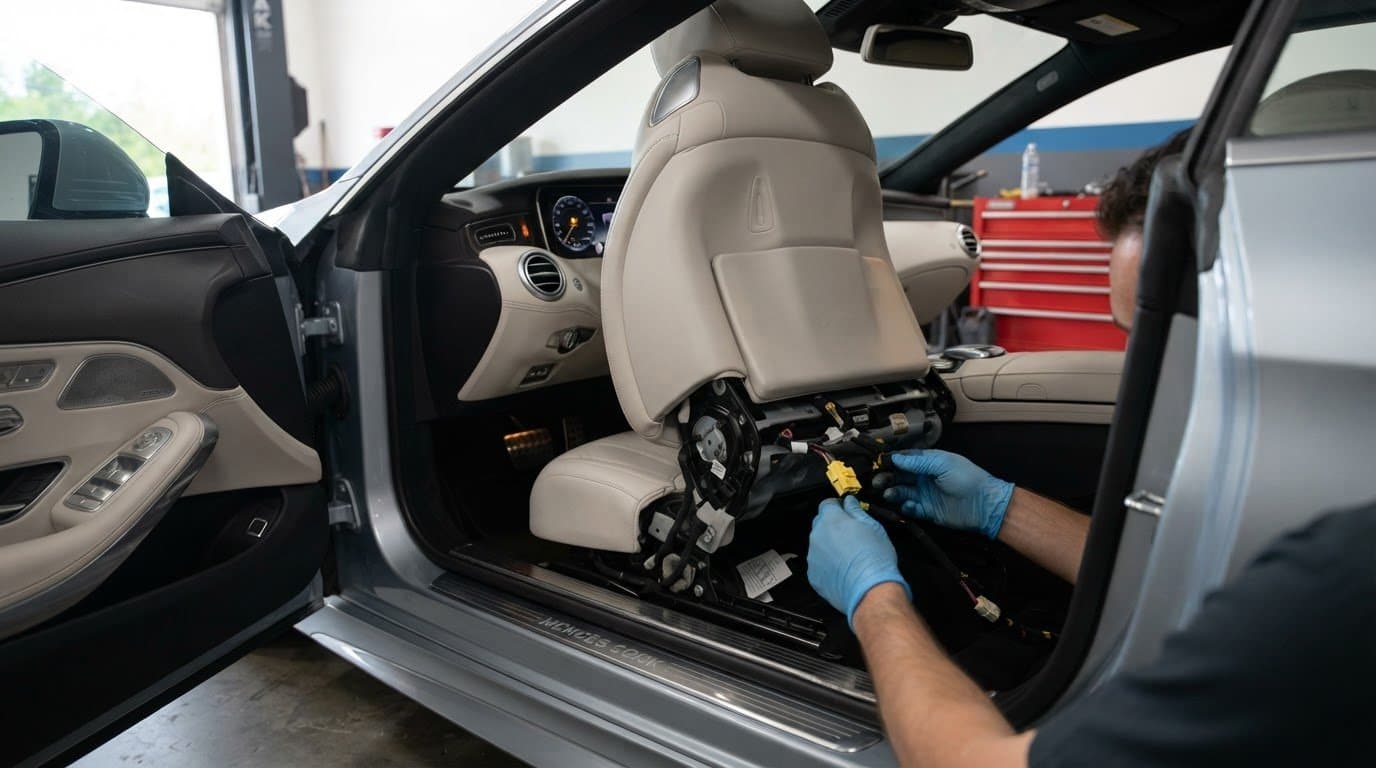
- Keep the seat area clear while observing the warning, but don’t reach under the seat to move wiring or unplug connectors. Seat wiring is part of the restraint system, and handling it without proper precautions can create another fault. If the warning remains after removing objects, treat it as a persistent SRS issue rather than repeatedly moving items to make the lamp change.
- Use the warning pattern and a Mercedes-compatible SRS scan together. Stored fault codes can help distinguish an occupant-classification circuit problem from a different restraint-system fault. A passenger-seat object is a possible clue, not a diagnosis; a sensor, connector, or wiring issue may still require attention. If the light stays on, have the passenger-seat SRS circuit professionally diagnosed rather than relying on a reset.
Euro Performance Auto Shop
Euro Performance Auto Shop LLC can diagnose a Mercedes airbag warning that stays on or returns after a reset. Its specialized European auto repair addresses the underlying fault rather than treating the illuminated warning as the repair itself. ASE-certified technicians use advanced technology to diagnose and repair European-made vehicles.
Share when the warning appeared and any recent seat, steering-wheel, or battery work. Contact Euro Performance Auto Shop LLC to discuss diagnosis and repair for your Mercedes.
Move from warning light to a clear next step
A steady SRS warning calls for a deliberate decision, not repeated resets. If you’ve removed passenger-seat items and the light remains on, or it returns after clearing, arrange diagnosis before treating the issue as resolved. A Mercedes airbag light fix should address the cause, not just the illuminated indicator.
Note when the warning first appeared and whether recent seat, steering-wheel, or battery work preceded it. Sharing those details gives diagnosis a useful starting point. Avoid disturbing airbag connectors or seat wiring yourself; restraint-system components require careful handling.
Euro Performance Auto Shop LLC can help with Mercedes diagnostic and repair needs through Specialized European Auto Repair. For a considered next step, contact Euro Performance Auto Shop LLC to discuss the warning and arrange a path toward diagnosis. Taking action now can help you move from uncertainty to a clearer understanding of the fault and its repair.
Frequently Asked Questions
What Does The Illuminated Airbag Light Mean?
An illuminated airbag light means the vehicle’s restraint system has recorded a warning or fault. It doesn’t necessarily mean an airbag has deployed, but the system needs attention. Don’t treat the lamp as a routine service reminder. Note whether it stays on or returns, and arrange diagnosis so the fault can be identified before relying on the restraint system.
What does a steady airbag light mean in a Mercedes-Benz?
A steady airbag light in a Mercedes-Benz indicates an SRS fault that needs correction. While the warning remains illuminated, the airbags may not work in a collision. The light alone doesn’t identify the affected component, so don’t assume the passenger seat or a recent battery change is the cause. Keep the warning in mind when deciding whether to drive, and arrange a prompt assessment.
What are common causes of a Mercedes airbag warning light staying on?
Possible causes include a seat-belt latch or pretensioner fault, a passenger occupancy sensor issue, damaged wiring, an airbag or module fault, or deployment-related information stored in the module. A warning may also follow work that disconnected an airbag, such as steering-wheel or seat-cover work. These are possibilities, not a replacement-parts list; the stored fault and inspection help narrow the cause.
How do you diagnose a Mercedes airbag light with an OBD-II scanner?
Use an OBD-II scanner that explicitly supports Mercedes SRS diagnostics, then select the airbag or restraint-system module rather than reading engine codes alone. Record the displayed fault codes before clearing anything. A code can direct further inspection toward a circuit or component, but it may not identify the failed part on its own. A scan that cannot access SRS data won’t provide a complete airbag diagnosis.
Which Mercedes-compatible diagnostic scanners can read SRS fault codes?
Choose a diagnostic scanner with Mercedes-specific SRS access and airbag fault-code capability. A basic OBD-II reader may only retrieve powertrain information, so confirm that the scanner supports the vehicle’s SRS. For faults requiring deeper Mercedes system access, a Mercedes Star-level diagnostic tool may be appropriate. The required coverage depends on the vehicle and fault; don’t choose a scanner based only on its ability to clear warning lights.
How do you reset a Mercedes airbag light after repairs?
After repairing the underlying SRS fault, use a scanner with Mercedes airbag-module access to clear the stored codes. Then check whether the warning stays off. If it returns, the system may still have an unresolved or recurring fault, and another reset won’t fix it. Don’t clear codes before recording them, since that information can help distinguish the original issue from a later fault.