
Blog

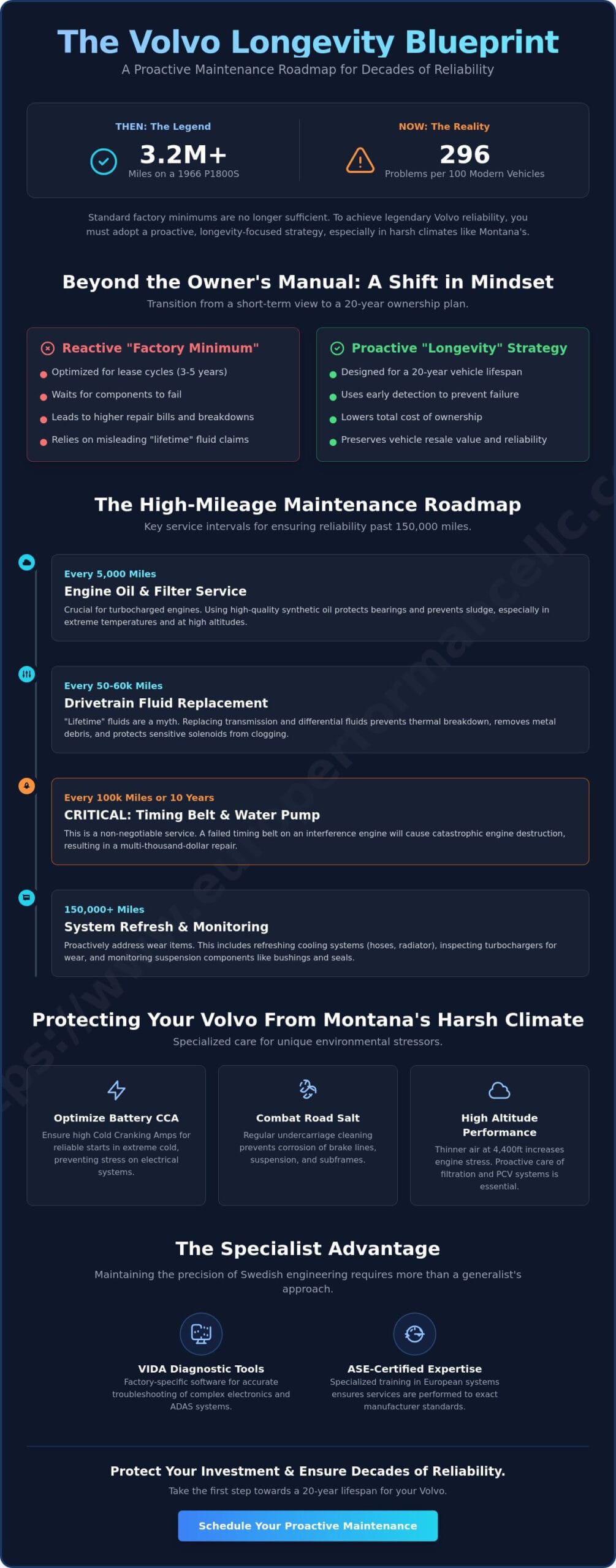
While a 1966 Volvo P1800S famously holds the world record with over 3.2 million miles, 2026 industry data shows modern models now report 296 problems per 100 vehicles. This shift suggests that standard factory minimums may not be enough to preserve your vehicle’s health in demanding environments. You likely chose a Volvo for its safety and Swedish engineering, but the reality of Montana’s corrosive road salt and the high cost of specialized European components can be daunting. If you’re searching for how to extend the life of my volvo, you need a strategy that accounts for both high-level engineering and local environmental stressors.
We understand that your vehicle is a significant investment that requires meticulous care to maintain its value and reliability. This guide provides a professional maintenance roadmap designed to lower your total cost of ownership and eliminate confusion over conflicting service intervals. You’ll learn about the technical precision required for factory scheduled maintenance and the specific protective measures needed to combat winter damage. We’ll also explore how specialized European auto repair standards and proactive ADAS calibration can keep your Volvo running reliably for decades.
Key Takeaways
- Move beyond standard factory minimums to adopt a proactive, longevity-focused maintenance schedule designed for a 20-year vehicle lifespan.
- Learn exactly how to extend the life of my volvo by implementing 5,000-mile oil service intervals and monitoring the critical PCV system.
- Protect your investment from Montana’s harsh climate by optimizing battery CCA and using synthetic oils engineered for extreme cold-start performance.
- Follow a structured high-mileage roadmap to refresh cooling systems and turbochargers, ensuring reliability well past the 150,000-mile mark.
- Understand why specialized VIDA diagnostic tools and ASE-certified European expertise are necessary for maintaining the precision of Swedish engineering.
The Foundation of Volvo Longevity: Beyond the Owner’s Manual
Volvos are engineered with a 20-year service life in mind, yet many modern units struggle to reach the 150,000-mile mark without significant repairs. The secret to bridging this gap often lies in looking beyond the standard recommendations provided in your glovebox. While Volvo’s reputation for safety and durability is well-earned, manufacturer suggested intervals are often optimized for lease cycles rather than long-term ownership. If you want to know how to extend the life of my volvo, you must transition from a “factory minimum” mindset to a longevity-focused strategy. This is especially true in Belgrade, where our 4,400-foot elevation means thinner air and more frequent engine cycles to maintain power, putting additional stress on combustion and filtration systems.
To better understand the core principles of high-mileage care, watch this helpful video:
The Myth of ‘Lifetime’ Fluids
The term “lifetime fluid” is one of the most misleading phrases in modern automotive marketing. For a manufacturer, “lifetime” typically refers to the duration of the original warranty, not the two decades of service you expect. Over time, transmission and differential fluids undergo thermal breakdown and oxidation. This process creates microscopic debris that can clog sensitive European solenoid packs and lead to erratic shifting or gear wear. We recommend replacing these fluids every 50,000 to 60,000 miles to ensure internal components remain properly lubricated. Similarly, coolant and brake fluid flushes are essential to prevent internal corrosion and moisture buildup, which can compromise your braking performance during a Montana winter.
Proactive vs. Reactive Maintenance
Reactive maintenance is a strategy of waiting for a component to fail before addressing it, which often leads to collateral damage and higher repair bills. In contrast, factory scheduled maintenance performed by specialists acts as an early warning system. By utilizing a comprehensive digital health inspection, we can establish a mechanical baseline for your vehicle. This allows us to track wear on items like bushings, belts, and seals before they cause a breakdown. Documenting these services does more than just keep the car running; it preserves the vehicle’s resale value and creates a clear mechanical history that proves the car has been cared for with professional precision. This proactive approach is the most effective way to ensure your Volvo remains a reliable asset for years to come.
Mastering the ‘Big Three’ Systems for Volvo Health
Maintaining a Volvo to 200,000 miles and beyond requires a deep understanding of the mechanical systems that define its performance. While basic maintenance keeps the car running, mastering the “Big Three” systems ensures it runs reliably without catastrophic failure. If you are researching how to extend the life of my volvo, you must prioritize lubrication, engine breathing, and the timing system. These components are the primary influencers of engine health and long-term viability.
Lubrication is the most debated topic in European car care. Many dealers suggest a 10,000-mile interval, but for those seeking maximum longevity, this is often too long. High-performance turbocharged engines generate significant heat, which can lead to oil shearing and sludge buildup. Implementing 5,000-mile oil change services in Bozeman ensures that the additives in your synthetic oil remain effective, protecting your turbocharger and internal bearings from premature wear.
The timing belt and water pump are equally critical, non-negotiable service items. Most Volvo engines require this service every 10 years or 100,000 miles. A failed belt results in immediate engine destruction due to the interference design of the cylinder head. Alongside this, replacing fuel filters every 60,000 miles maintains proper system pressure and protects your fuel injectors from debris-related damage.
The PCV System and Engine Breathing
The Positive Crankcase Ventilation (PCV) system is a critical factor in determining how to extend the life of my volvo. This system manages internal pressure by recycling crankcase gases. When the breather box or oil trap becomes clogged, pressure builds up until it finds the path of least resistance. This often results in blown cam seals or a failed rear main seal, leading to expensive oil leaks. Owners of T5 and T6 engines should consider a “Glove Test” to check for vacuum at the oil fill cap. If the system shows positive pressure, a PCV system refresh is mandatory. We recommend a full breather box replacement every 60,000 to 80,000 miles to prevent these high-cost seal failures.
Transmission and Haldex AWD Care
Reliable power delivery is essential when you need to prepare your vehicle for winter driving on Montana’s icy roads. The Haldex AWD system requires its own specific care, including pump cleaning and filter replacements every 40,000 miles. Neglecting this can lead to a loss of rear-wheel engagement when you need it most. Additionally, the Geartronic transmission benefits significantly from a fluid drain-and-fill every 50,000 miles to preserve shift quality. If you notice unusual driveline vibrations, it may indicate a need for driveshaft or driveline repair. Keeping these systems synchronized ensures your Volvo remains a capable all-weather machine. For a comprehensive check of these critical systems, consider scheduling a professional routine maintenance assessment to ensure every component meets factory standards.
Protecting Your Volvo from Montana’s Harsh Conditions
Montana’s climate presents a unique set of challenges that can accelerate vehicle aging far beyond what is typical in milder regions. To understand how to extend the life of my volvo in the Mountain West, you must account for more than just mileage. High-altitude UV rays in the Gallatin Valley degrade rubber door seals and plastic trim much faster than at sea level, leading to wind noise and potential water leaks. Meanwhile, the chemical de-icers used on our roads are notoriously aggressive. Magnesium chloride is hygroscopic, meaning it attracts moisture even after it dries. This keeps the corrosive process active against your chassis long after the snow has melted, making standard undercarriage washes insufficient for long-term preservation.
Sub-zero temperatures are the ultimate test for European engineering. A cold start at -20°F requires immense Cold Cranking Amps (CCA) and immediate oil flow to protect internal engine components. Using high-quality synthetic oil with the correct winter viscosity is essential to ensure lubrication reaches the cylinder head instantly. Without this rapid flow, every cold start contributes to microscopic engine wear that accumulates over the years. Taking these environmental factors seriously is a core part of any strategy focused on how to extend the life of my volvo while living in a high-alpine environment.
Winterization and Battery Management
Modern Volvos rely on sophisticated Power Management Systems that require precise electrical output. When you replace a battery, it must be “coded” to the vehicle’s charging system using specialized diagnostic tools. This process informs the alternator to adjust its charging profile based on the battery’s age and internal resistance. Skipping this step can lead to overcharging and premature battery failure. Additionally, extreme cold can impact the sensitive ADAS sensors and cameras located behind the windshield. Ensuring these areas are clear of ice and using winter-specific washer fluids prevents system malfunctions during hazardous driving conditions.
Chassis and Suspension Preservation
Pothole season in Montana is a significant threat to your vehicle’s structural integrity and safety. Impact with deep ruts can easily knock your suspension out of spec, requiring a professional wheel alignment to prevent rapid tire wear and steering instability. Beyond the alignment, salt-heavy slush can cause control arm bushings and ball joints to crack or seize prematurely. If any suspension components are replaced or adjusted, precise ADAS calibration is necessary to ensure safety features like lane-keeping assist remain accurate. Frequent travel on Montana’s gravel roads also accelerates wear on wheel bearings and CV axles, making regular chassis inspections a vital part of your long-term reliability plan.
The High-Mileage Roadmap: Reliability Past 100,000 Miles
Reaching the six-figure mark on the odometer is a significant milestone for any vehicle owner. For those wondering how to extend the life of my volvo, this is where the strategy shifts from routine care to targeted restoration. Many drivers believe these cars are indestructible; however, a structured high-mileage roadmap is essential for avoiding the mechanical decline that often plagues older European vehicles. Using Original Equipment (OE) parts during these phases is non-negotiable. Aftermarket components frequently lack the precise tolerances required for Swedish cooling and electrical systems, leading to premature failures and increased labor costs. Precision is paramount at this stage.
Phase 1 (100,000 to 125,000 miles) is the “Refresh” phase. This period focuses on restoring ride quality and thermal management. Shocks and struts degrade so slowly that many owners don’t realize their handling is compromised until a component fails. Phase 2 (150,000 to 175,000 miles) moves into “Deep Mechanical” territory. This is the time to evaluate fuel injector spray patterns and turbocharger health to prevent engine lean conditions. Finally, Phase 3 (200,000 miles and beyond) is the “Preservation” phase. Here, we meticulously check wiring harnesses for brittleness caused by decades of engine bay heat. This methodical approach ensures your vehicle remains a reliable asset rather than a liability. Maintaining such a high-value asset also opens up financial opportunities, such as secured vehicle loans from V8Loans, which can help you leverage your car’s equity if needed.
Refreshing the Cooling System
Plastic components are a known weak point in modern European cooling systems. After a decade of constant heat cycles, radiator end tanks and coolant hoses become brittle and prone to sudden failure. A microscopic crack in the expansion tank can lead to a slow leak that is difficult to detect but capable of causing catastrophic overheating. We recommend replacing the thermostat and coolant temperature sensor as a preventative measure during this phase. Maintaining thermal stability is the most effective way to protect your engine’s head gasket and internal seals from heat-related warping.
Turbocharger and Intake Longevity
Maintaining intake health is another pillar of how to extend the life of my volvo, particularly for turbocharged models. Modern Volvos utilize Gas Direct Injection (GDI), which can lead to carbon deposits on intake valves because fuel no longer “washes” the valves clean. These deposits restrict airflow and reduce fuel efficiency over time. Periodic professional cleaning is necessary to maintain original performance. Additionally, you should monitor for early signs of turbocharger seal failure or wastegate rattle. Keeping an eye on boost pressure and intercooler efficiency ensures your vehicle retains its original power delivery. If you are approaching these milestones, we invite you to schedule a specialized high-mileage evaluation with our technicians to ensure your vehicle is prepared for the next 100,000 miles.
Why Specialized European Expertise Beats the Generalist
Choosing the right technician is the final, most critical component of a long-term ownership strategy. While generalist shops are capable of handling basic tasks on domestic or Asian vehicles, they often lack the specialized training required for the nuances of Swedish engineering. Modern Volvos utilize complex multiplexed electrical systems and unique mechanical configurations that demand a high level of technical proficiency. If you are determined to learn how to extend the life of my volvo, the choice of service provider is as critical as the maintenance schedule itself. Entrusting your vehicle to ASE-certified technicians who specialize in European makes ensures that every adjustment meets factory-grade standards.
Precision troubleshooting is impossible without the correct equipment. We utilize VIDA (Vehicle Information and Diagnostics for Aftersales), the proprietary software designed specifically for Volvo vehicles. This tool allows us to communicate with every onboard module, perform software updates, and calibrate sensitive components like ADAS sensors with absolute accuracy. A general diagnostic scanner may provide a generic fault code, but VIDA offers the deep-system access necessary to identify the root cause of an issue before it leads to a breakdown. Transitioning from a dealership to a dedicated European auto repair partner provides the technical depth of a dealer with the personalized attention of a local specialist.
The Independent Advantage for Out-of-Warranty Volvos
Independent specialists offer a distinct advantage for vehicles that have surpassed their initial warranty period. Dealerships are often structured around high-volume service and new vehicle sales, which can lead to a “replace rather than repair” mentality. In contrast, an independent European specialist focuses on longevity-focused solutions. We understand the specific failure points of older T5 and T6 engines and can provide flexible repair options that prioritize safety and reliability. Working with a local shop in the Gallatin Valley also ensures that your technician knows your vehicle’s specific history and how it reacts to our local climate, providing a level of transparency that is often missing from larger franchises.
Planning Your Next Service in Belgrade
At Euro Performance Auto Shop LLC, we provide a comprehensive Volvo health check that goes far beyond a simple oil change. Our process includes a detailed digital inspection of the PCV system, drivetrain, and suspension components mentioned earlier in this guide. We believe in empowering owners with information, which is why we help you create a 12-month maintenance budget. This proactive planning allows you to address upcoming service needs, such as timing belts or cooling system refreshes, without the stress of surprise repair bills. Our goal is to provide the technical expertise and methodical care required to keep your vehicle performing at its peak for decades. Schedule your Volvo longevity inspection at Euro Performance Auto Shop LLC today to begin your journey toward 200,000 miles and beyond.
Securing Your Volvo’s Legacy for the Next Decade
Maintaining a high-value European vehicle requires more than just following a dashboard light. By shifting your perspective from basic maintenance to a proactive, longevity-focused strategy, you can overcome the challenges of Montana’s climate and high-mileage wear. We’ve explored the necessity of managing specialized systems and adhering to a structured roadmap past 100,000 miles. These steps are essential for ensuring that your vehicle remains a safe and reliable asset for your family.
Understanding how to extend the life of my volvo is the first step toward achieving the legendary reliability these vehicles are known for. At Euro Performance Auto Shop LLC, we combine technical precision with specialized European diagnostic technology to ensure every component performs at factory standards. Our ASE Certified Technicians use only top OE manufacturer parts to preserve the integrity of your engine and safety systems. You can Book Your Volvo Longevity Service at Euro Performance Auto Shop LLC to establish a professional care plan tailored to your driving needs. We look forward to helping you keep your Volvo on the road for years to come.
Frequently Asked Questions
How often should I really change the oil in my Volvo?
You should change your oil every 5,000 miles or every six months to ensure maximum engine longevity. While some manuals suggest a 10,000-mile interval, this is a minimum standard that doesn’t account for the high-heat cycles of turbocharged engines. If you’re looking for how to extend the life of my volvo, more frequent intervals prevent the oil from shearing and protect your internal bearings from premature wear.
Is it worth fixing a Volvo with over 150,000 miles?
Yes, it’s worth repairing a high-mileage Volvo if the vehicle has a documented service history and a rust-free chassis. These cars are engineered for a 20-year lifespan, and the cost of targeted mechanical refreshes is much lower than the annual depreciation of a new vehicle. Maintaining an older model allows you to leverage the safety of Swedish engineering without the burden of a modern car payment.
Why does my Volvo require specialized synthetic oil?
Volvo engines use tight tolerances and high-performance turbochargers that require specific synthetic oils to maintain thermal stability. These lubricants must meet manufacturer standards, such as VCC RBS0-2AE, which are designed to resist breaking down under extreme pressure. Using a generic oil can lead to carbon deposits on your intake valves and may eventually cause the turbocharger to fail due to inadequate lubrication.
What are the most common high-mileage problems for Volvo XC90s?
The XC90 frequently experiences air suspension leaks, wear on the Haldex AWD pump, and oil consumption issues in specific early-generation Drive-E engines. Owners may also notice lag in the infotainment system or wear on the front suspension bushings due to the vehicle’s weight. Regular inspections of the PCV system and cooling hoses are essential for preventing these common issues from turning into expensive, unscheduled repairs.
Can I use a local general mechanic for my Volvo’s software updates?
No, you shouldn’t use a general mechanic for software updates because they require the proprietary VIDA diagnostic system. General shops typically use multi-brand scanners that can’t access the deep-level coding required for Swedish modules. Specialized European technicians use factory-grade equipment to ensure your safety systems and engine management software are updated correctly, which is vital for maintaining the vehicle’s advanced ADAS features.
How does the Montana climate affect my Volvo’s air suspension?
Montana’s extreme cold causes the rubber air bellows in your suspension to become brittle and more likely to crack under pressure. Road salt and magnesium chloride also accelerate the corrosion of the aluminum fittings and air lines, which can lead to system leaks. Parking in a garage during sub-zero snaps and frequently rinsing the wheel wells can help protect these sensitive components from environmental degradation.
What is the ‘High Mileage Club’ and how do I join?
The Volvo Heritage Club recognizes owners who have reached 100,000 miles or 10 years of ownership with their vehicle. You can join by submitting your vehicle’s VIN and mileage through the official Volvo portal once you hit these milestones. Members receive commemorative medallions and certificates that celebrate the durability of their car, acting as a badge of honor for those committed to long-term ownership.
Does my Volvo have a timing belt or a timing chain?
Most modern Volvos, particularly the 2.0L Drive-E engines, are equipped with a timing belt that must be replaced every 100,000 miles or 10 years. Failure to replace this belt can result in catastrophic engine damage because the valves will collide with the pistons. While some older six-cylinder models utilized timing chains, it’s vital to have a specialist confirm your specific engine’s configuration to avoid a missed service.