
Blog
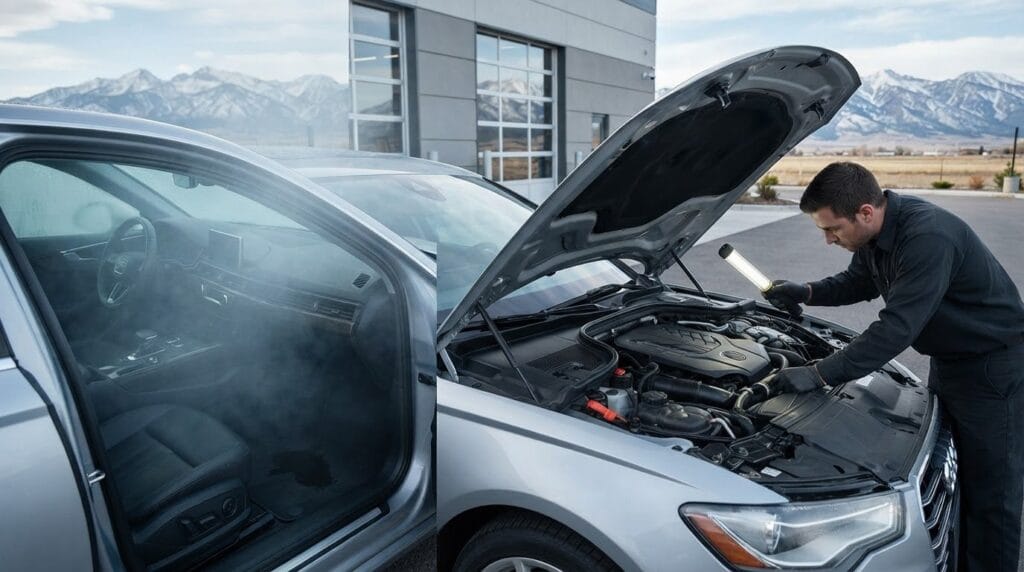
Could a sweet smell inside your Mercedes point to a heater core leak, or could another fault cause the same symptoms? The signs of a bad heater core in a mercedes can include persistent fog on the inside of the windshield, weak cabin heat, damp carpeting, or coolant loss without an obvious leak. These clues matter, but none confirms the heater core is at fault on its own.
If you’re concerned about visibility, falling coolant levels, or engine temperature, take the symptoms seriously. Heater core problems can resemble other HVAC or cooling-system faults, so replacing parts based on one clue may not fix the cause.
This guide explains common warning signs, how they compare with issues such as a thermostat fault or musty ventilation-system odor, and when to stop driving. You’ll also learn what details to note before arranging an inspection, so a technician can assess the system methodically and recommend an appropriate next step.
Key Takeaways
- The signs of a bad heater core in a mercedes are clues, not proof. Several symptoms together make professional testing especially important.
- Understand how engine coolant transfers heat to cabin air, and why faults elsewhere in the heating or cooling system can produce similar symptoms.
- Compare heater core, thermostat, blower, and low-coolant clues to describe what your Mercedes is doing more clearly.
- Note changes in cabin heat and coolant level, monitor the temperature gauge, and never open a hot cooling system or radiator cap.
- Learn what a careful diagnostic process can involve and how Euro Performance Auto Shop LLC’s ASE-certified technicians approach European vehicle repair in Belgrade, Montana.
What Are the Signs of a Bad Heater Core in a Mercedes?
Several cabin and coolant symptoms can suggest heater core trouble in a Mercedes: a sweet coolant-like odor, persistent windshield fog, damp carpeting, weak heat, or coolant loss. The signs of a bad heater core in a mercedes are diagnostic clues, not confirmation. A thermostat fault, a leak elsewhere in the cooling system, or an HVAC problem can cause some of the same symptoms.
The combination matters more than any single clue. A sweet smell alongside unexplained coolant loss and a greasy film on the inside of the windshield raises more concern than weak heat alone. The heater core is part of the engine cooling system, as outlined in Heater Core Function and Design, but inspection and testing are needed to identify the source.
This video provides an overview of common heater core symptoms:
Cabin symptoms that can point to a heater core leak
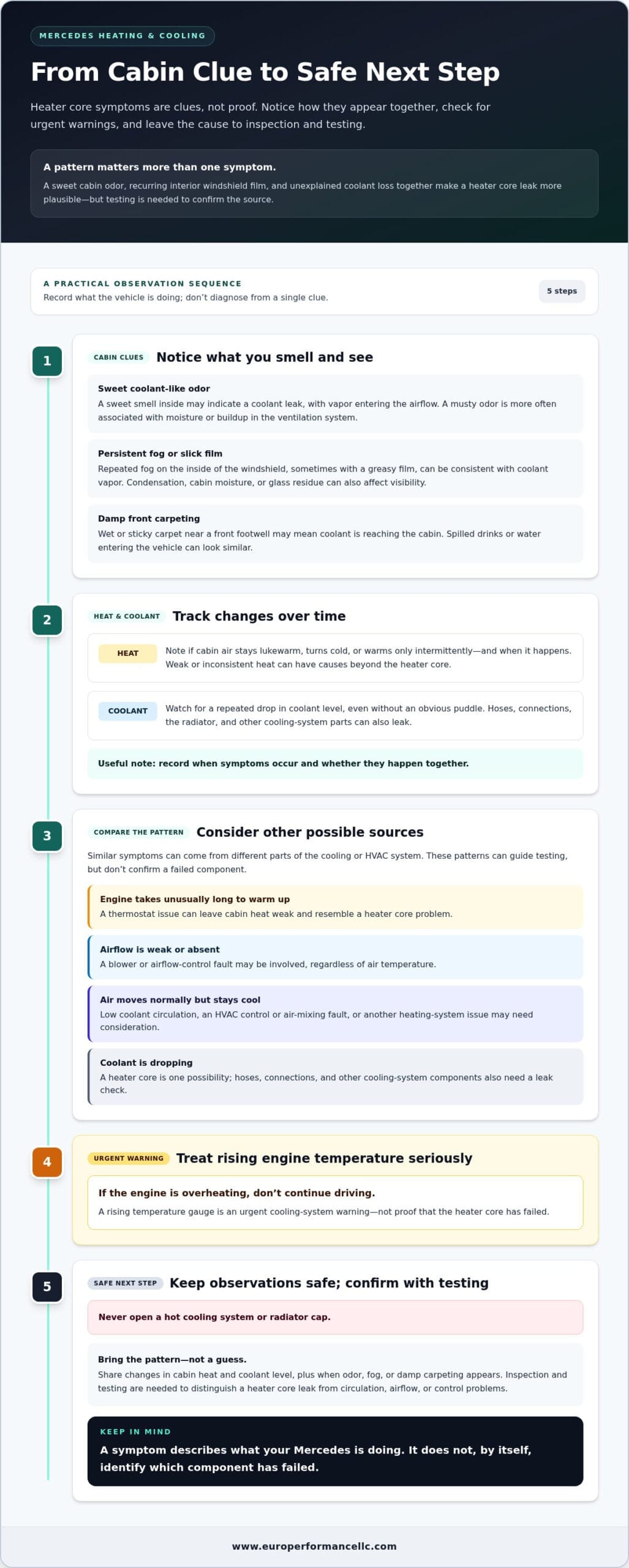
Look for changes inside the cabin, especially when the heater is running. Note when symptoms occur and whether they happen together. These observations help narrow the diagnosis, but they don’t identify the failed component by themselves.
- Sweet coolant-like odor: A sweet smell inside the cabin may indicate a coolant leak, with vapor entering the airflow. A musty odor is more often associated with moisture or buildup in the ventilation system.
- Persistent windshield fog: Fog that repeatedly forms on the inside of the glass, sometimes leaving a slick or greasy film, can be consistent with coolant vapor. Ordinary condensation, cabin moisture, or residue on the glass can also affect visibility.
- Damp front carpeting: Wet or sticky carpet near a front footwell may mean coolant is reaching the cabin. Check whether the moisture has a sweet odor, but remember that spilled drinks or water entering the vehicle can look similar.
Heating and coolant clues to watch
Pay attention to how the heat changes during normal driving and whether the coolant level continues to drop. Record what you observe instead of diagnosing the cause from one episode. Coolant can escape from other parts of the system, so a falling level needs a broader leak check.
- Weak or inconsistent heat: Air that stays lukewarm, turns cold, or warms only intermittently may point to a heater core issue. It can also result from low coolant circulation or another heating-system fault.
- Unexplained coolant loss: A repeated drop without an obvious puddle deserves prompt investigation. Hoses, connections, the radiator, and other cooling-system components can leak too.
- Engine overheating: Treat a rising temperature gauge as an urgent cooling-system warning, not proof of heater core failure. Don’t continue driving if the engine is overheating.
Quotable takeaway: A sweet cabin odor, recurring interior windshield film, and unexplained coolant loss together make a heater core leak more plausible, but testing is needed to confirm the source.
How a Mercedes Heater Core Works, and Why Symptoms Can Overlap
A heater core is a compact heat exchanger that uses hot engine coolant to warm air entering the cabin. It connects two systems: the engine’s cooling circuit supplies the heat, while the HVAC system controls airflow and directs warmed air through the vents. A problem in either system can reduce cabin heat, which is why the signs of a bad heater core in a mercedes aren’t conclusive without diagnosis.
How the heater core supplies cabin heat
As the engine runs, coolant warms and circulates through the heater core. The HVAC blower moves cabin air across the heated surfaces, and the system directs that air toward the vents. If coolant isn’t circulating properly, or airflow is restricted or misdirected, the cabin may feel cool even when the heater core is intact.
Mercedes-Benz layouts and diagnostic procedures can vary by model and year, so a general description can’t replace vehicle-specific inspection. The U.S. Environmental Protection Agency explains servicing considerations for the air-conditioning side of vehicle HVAC systems in its guide to Automotive HVAC System Regulations and Servicing. Air conditioning shares cabin airflow with heating, but A/C servicing information alone doesn’t diagnose a heater core.
Other faults that can resemble heater core trouble
Similar cabin symptoms can have different causes. The pattern can help guide what to test, but it doesn’t replace checking the vehicle’s cooling and HVAC systems.
- Thermostat issue: If the engine takes unusually long to warm up or doesn’t reach its normal operating temperature, cabin heat may be weak. That can resemble a heater core problem but points to a different part of the cooling system.
- Blower or airflow fault: A weak or absent stream of air, regardless of temperature, may indicate a blower or airflow-control issue. If air moves normally but stays cool, other causes need consideration.
- HVAC control problem: A control or air-mixing fault can prevent warm air from reaching the vents as expected, even when the engine is warm.
- Low coolant: Too little coolant can interfere with heat delivery and may signal a leak elsewhere. A heater core is one possibility, but hoses, connections, and other cooling-system components also need consideration.
Key distinction: A symptom describes what the vehicle is doing; it doesn’t confirm which component has failed. Careful diagnosis separates a heater core leak from a circulation, airflow, or control problem.
If weak heat or coolant loss persists, a methodical inspection can help identify the source before parts are replaced. Euro Performance LLC’s ASE-certified technicians specialize in European vehicle diagnostics and repair. Learn more about European vehicle diagnostics and repair.
Bad Heater Core or Another Mercedes HVAC Problem? Compare the Clues
Weak cabin heat doesn’t automatically mean a failed heater core. A heater core leak becomes more likely when heating trouble appears with signs such as a coolant-like odor or damp carpet, but thermostat, blower, HVAC-control, and low-coolant issues can produce overlapping clues. Use symptoms to describe what’s happening, not to decide which part needs replacement.
The comparison below can help organize what you notice. It isn’t a diagnostic test: the signs of a bad heater core in a mercedes must be assessed alongside the vehicle’s model, symptom history, and inspection findings.
| Possible cause | Clues that may fit | What the clue doesn’t prove |
|---|---|---|
| Heater core | Cabin coolant odor, damp front carpet, or recurring film on the inside of the windshield, sometimes alongside weak heat. | These clues can have other causes; testing is needed to verify a leak at the core. |
| Thermostat | Engine warm-up seems slower than usual, the temperature gauge behaves differently, and cabin heat remains weak. | Warm-up behavior alone doesn’t confirm a thermostat fault or rule out another cooling-system issue. |
| Blower or airflow fault | Airflow from the vents is weak or absent, even when the selected temperature is warm. | Low airflow points toward an air-delivery concern, but the cause still needs inspection. |
| Low coolant | Coolant level falls and cabin heat becomes inconsistent or weak. | Low coolant is a condition, not the root cause. A leak or another system problem must be identified. |
Which symptoms may help distinguish the likely cause?
Cabin clues and airflow clues tell different parts of the story. A sweet coolant-like odor or damp carpet may raise concern about a leak into the cabin. If the air stream itself is weak, a blower or airflow issue may also be involved. If air moves normally but stays cool, coolant circulation, engine warm-up, or temperature control may need attention. These patterns can overlap, so use them to describe the problem rather than settle on a diagnosis.
Warm-up behavior is useful context. If the engine takes longer than usual to reach its normal operating temperature and cabin heat is weak, a technician may investigate the thermostat alongside other possibilities. If coolant is low, don’t rely on repeated top-ups as a fix. Find the source of the loss, even when no obvious puddle is visible.
What a technician checks before recommending repair
A careful diagnosis starts with your report: when the heat changes, whether airflow is normal, how the temperature gauge behaves, and whether you’ve noticed coolant loss or cabin moisture. The technician can check the coolant level and look for visible leaks, then perform appropriate cooling-system tests based on the vehicle and findings. Mercedes procedures can vary by model and year.
A repair recommendation should follow evidence that supports the suspected fault. This helps distinguish a heater core problem from a thermostat, blower, control, or other cooling-system issue before parts are replaced.
What to Do If Your Mercedes Shows Heater Core Warning Signs
If you notice possible heater core symptoms, take a measured approach. The signs of a bad heater core in a mercedes can overlap with other cooling or HVAC faults, so record what’s happening and arrange diagnosis rather than assuming a particular part has failed.
- Note the symptoms. Record when the heat changes, whether you notice an odor or interior fogging, and whether the carpet feels damp.
- Watch the temperature gauge. Pay attention to rising temperature or an overheating warning. Don’t ignore a change in engine temperature while investigating cabin symptoms.
- Arrange professional diagnosis. Repeated coolant loss needs investigation to find the cause. Topping off again and again may conceal an active leak without resolving it.
Never open a hot cooling system or radiator cap. Hot coolant and steam can escape under pressure and cause serious burns. If the coolant level needs checking, wait until the engine is fully cool and follow the vehicle owner’s manual. Don’t add an unknown or incompatible coolant.
When it may be unsafe to continue driving
If the temperature gauge rises into an overheating range or the vehicle displays an overheating warning, pull over somewhere safe and stop the engine. Don’t continue driving to see whether the temperature settles. A cooling-system fault can worsen, and the appropriate next step depends on the vehicle’s condition.
Visibility matters too. If persistent windshield fog or a film prevents you from seeing clearly, slow down and pull over safely. Don’t continue until you can see well enough to drive. There’s no reliable distance to promise for a vehicle with coolant loss or overheating; the risk depends on the fault and conditions.
What information to share during diagnosis
Clear observations can help a technician narrow the inspection. Before arranging service, note when symptoms began and how they change, such as heat weakening at idle or after a longer drive. Include any warning messages and whether you’ve noticed a falling coolant level, visible dampness, or recent cooling-system work.
- Describe whether vent airflow is normal, weak, or absent, and whether the air temperature changes.
- Record when an odor or windshield fog appears, and whether it clears or returns.
- Note any coolant added, when it was added, and whether the level dropped again.
- Mention recent repairs or maintenance that involved the cooling system.
This history helps guide a model-appropriate inspection, but it doesn’t replace testing. Euro Performance LLC’s ASE-certified technicians handle European vehicle diagnostics and repair in Belgrade, Montana. Read about European vehicle repair in Belgrade and the shop’s European vehicle diagnosis and repair.
Mercedes Heater Core Diagnosis and Repair in Belgrade, Montana
Suspected heater core trouble calls for diagnosis based on the vehicle’s symptoms and inspection findings, not guesswork. Heating and cooling-system problems can share clues, so a careful process helps determine whether the heater core is involved or another fault better explains what you’re experiencing.
A careful diagnostic process for overlapping symptoms
The process starts with your account of what’s changed. Describe when the heat became weak or inconsistent, whether you’ve noticed an odor or dampness inside the cabin, and whether the coolant level has fallen. Model year and other vehicle details also matter because Mercedes layouts and diagnostic procedures can differ.
Next, the technician evaluates relevant cabin-heating and cooling-system clues. This may include checking coolant level and visible evidence of leakage, assessing heating and airflow concerns, and carrying out appropriate tests based on the symptoms and vehicle. No single clue should determine the repair. Weak heat alone, for example, doesn’t establish that a heater core has failed.
Once the inspection is complete, the findings guide the recommendation. If the evidence points to another fault, the next step should address that cause rather than replacing the heater core based on an assumption. If a repair is supported, the recommendation should explain how the findings relate to the reported symptoms. This methodical approach can reduce unnecessary parts replacement and help you understand the reason for the proposed work.
Choosing a European vehicle specialist in Belgrade
Mercedes vehicles have systems and components designed within a European engineering context. A European vehicle specialist brings relevant experience to investigating symptoms that may involve both cabin HVAC operation and engine cooling. At Euro Performance LLC in Belgrade, Montana, ASE-certified technicians handle complex diagnostics and repairs using modern technology. When parts are needed, the shop uses parts from top OE manufacturers.
Ongoing care also matters. Following the maintenance schedule for your specific vehicle helps keep its systems under appropriate review. Learn more about factory scheduled maintenance for European cars.
The signs of a bad heater core in a mercedes can point toward a problem, but a vehicle-specific inspection helps establish the cause. Bring your symptom history and any relevant maintenance information so the diagnostic process can start with useful context.
Schedule Mercedes diagnostic service with Euro Performance in Belgrade, Montana for an assessment and evidence-based next steps.
Move Forward with a Clear Diagnosis
Deciding what to do next doesn’t require guessing which component has failed. The signs of a bad heater core in a mercedes can alert you to a concern, but the right repair depends on what an inspection shows for your specific vehicle. A sound diagnosis helps turn uncertainty into a practical plan, whether that means addressing the heater core or investigating another system fault.
Before arranging service, consider what you need from the visit: a clear explanation of the findings and a recommendation tied to the cause of the problem. That keeps the focus on resolving the fault, not simply treating a symptom. If the engine is overheating or you can’t see clearly through the windshield, prioritize safety and stop driving when it’s safe to do so.
For a careful assessment of your Mercedes, schedule Mercedes diagnostic service with Euro Performance. A well-supported next step can help you move forward with greater confidence and protect your vehicle from avoidable complications.
Frequently Asked Questions
What are the most common signs of a bad heater core in a Mercedes?
Common warning signs include a sweet coolant-like smell in the cabin, recurring interior windshield film, damp carpet, weak heat, or coolant loss. The signs of a bad heater core in a mercedes are more concerning when several appear together, but they still don’t confirm the cause. Note which symptoms happen at the same time and whether they change with the heater on, then share that pattern during diagnosis.
Can a bad Mercedes heater core cause the windshield to fog up?
Yes. A leaking heater core can release coolant vapor into the cabin airflow, which may leave persistent fog or a slick film on the inside of the windshield. Ordinary condensation can also fog glass, so this clue alone isn’t conclusive. If the film interferes with your view, don’t try to drive through it. Pull over safely and clear the glass before continuing only if visibility is restored.
Why does my Mercedes smell like coolant inside the cabin?
A sweet, syrup-like odor inside the cabin may mean coolant is escaping from the heater core or another part of the cooling system and entering the air you breathe. A musty smell is more often associated with moisture or buildup in the ventilation system. Note whether the odor appears only after the heat is switched on, but avoid touching or tasting any fluid. Arrange an inspection to locate the source.
Can I drive my Mercedes with a suspected bad heater core?
It depends on the symptoms and the vehicle’s condition, so there’s no safe distance that applies to every case. If the engine temperature rises, an overheating alert appears, or windshield fog prevents a clear view, stop somewhere safe and don’t continue driving. If those urgent signs aren’t present, arrange diagnosis promptly and monitor the temperature gauge. Never open the coolant reservoir or radiator cap while the system is hot.
Will a bad heater core make my Mercedes overheat?
A heater core fault doesn’t automatically mean the engine will overheat. However, if coolant is escaping, the resulting loss may affect the wider cooling system and contribute to overheating. Other faults can also raise engine temperature, so don’t assume the heater core is responsible. Treat an overheating warning or rising temperature gauge as urgent: stop safely, shut off the engine, and arrange professional assessment rather than continuing your trip.
Can a thermostat or low coolant cause the same symptoms as a bad heater core?
Yes. A thermostat problem can affect engine warm-up and reduce cabin heat, while low coolant can interfere with heat delivery. Neither condition proves the heater core has failed. For example, weak heat alongside a changing temperature gauge may call for broader cooling-system checks. If coolant keeps dropping, don’t treat repeated top-ups as a solution. The underlying loss needs to be located and corrected.
How does a technician diagnose a Mercedes heater core problem?
A technician uses your symptom history and vehicle-specific information to guide the inspection. They can assess the coolant level, look for visible leaks, and evaluate whether the concern involves heat generation, coolant circulation, or cabin airflow. Appropriate tests depend on the Mercedes model and the findings. Before recommending parts, the technician should connect the evidence to the suspected fault, helping distinguish a heater core issue from another system problem.