
Blog
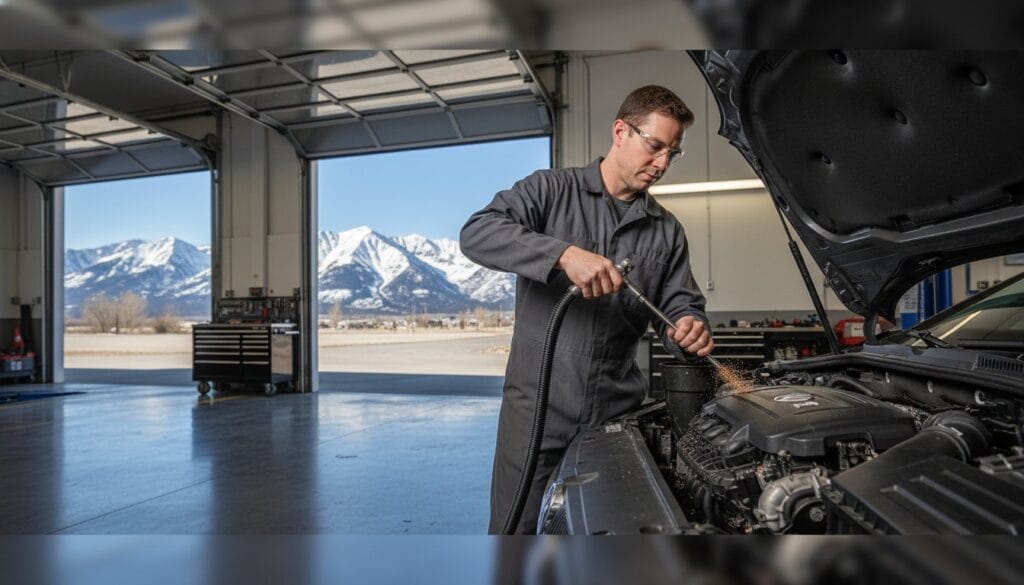
Imagine starting your GTI on a 20-degree Bozeman morning only to have the engine stumble and the check engine light flicker. You’ve likely noticed a 15% drop in throttle response or felt the frustration of a rough idle that disappears only after the oil warms up. It’s exhausting to sift through conflicting online forums about “miracle” fuel additives that never actually solve the underlying mechanical issue. You deserve the peace of mind that comes from knowing your high-value European vehicle is running exactly as the engineers intended without the fear of inflated dealership repair costs.
Scheduling a professional vw carbon cleaning service bozeman is the most effective way to eliminate these symptoms and restore your engine power. Our ASE certified technicians specialize in walnut blasting, a process that removes heavy carbon deposits from intake valves without the need for invasive engine teardowns. This guide details how this specialized service clears persistent check engine lights and improves your fuel economy by up to 12%, ensuring your Volkswagen remains reliable for the demanding Montana roads ahead.
Key Takeaways
- Understand why modern VW TSI and FSI direct injection engines are prone to carbon buildup and how it impacts your vehicle’s longevity.
- Learn to identify common warning signs like the “cold start stumble” and declining fuel economy before they lead to costly engine repairs.
- Discover why walnut blasting is the industry-standard vw carbon cleaning service bozeman drivers trust to safely restore intake valve performance.
- See how Montana’s cold winters and short-trip driving habits in the Gallatin Valley can accelerate carbon accumulation in your European vehicle.
- Explore the specialized equipment and technical expertise our ASE-certified technicians use to return your Volkswagen to its original factory efficiency.
Understanding Carbon Buildup in VW Direct Injection Engines
Modern Volkswagen engines use advanced TSI and FSI technology to maximize power and fuel economy. These systems rely on Gasoline direct injection, which delivers fuel at high pressure directly into the combustion chamber rather than the intake manifold. While this design increases efficiency and reduces emissions, it creates a technical side effect that eventually requires a professional vw carbon cleaning service bozeman owners trust to maintain long term reliability.
To better understand this concept, watch this helpful video:
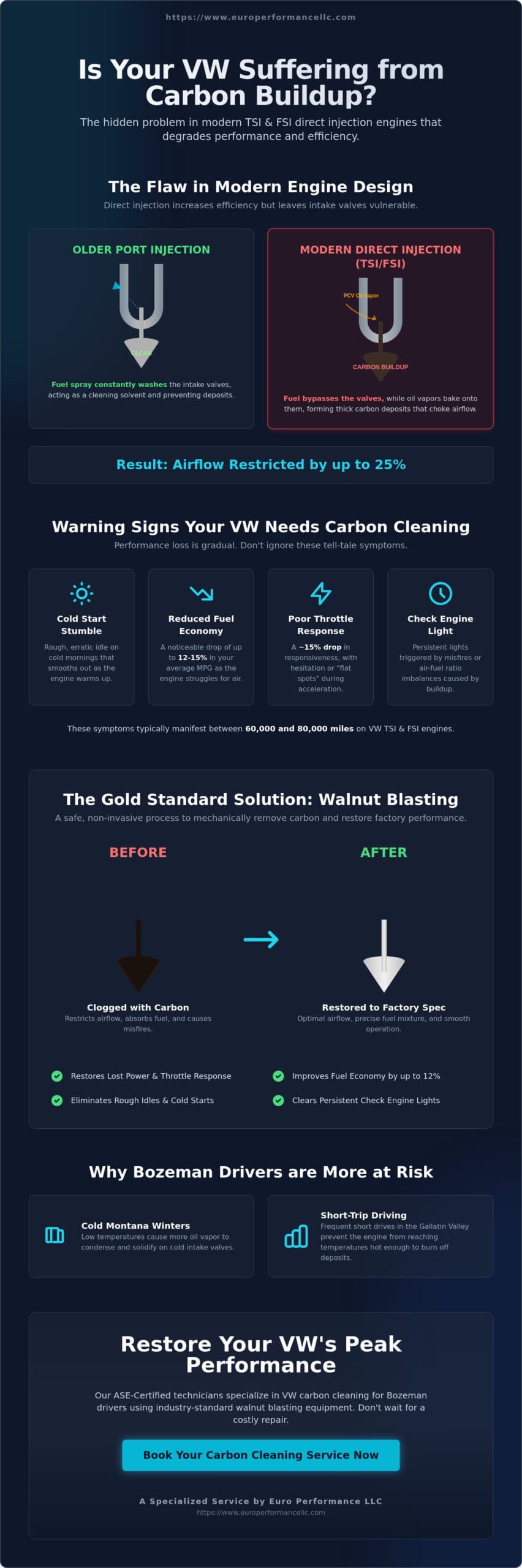
In older port-injection engines, fuel constantly washed over the intake valves, acting as a solvent to keep them clean. Modern VW engines lack this washing effect. The Positive Crankcase Ventilation (PCV) system redirects oil vapors back into the intake manifold to be burned off during combustion. These vapors hit the back of the relatively cool intake valves and harden into thick carbon deposits. Over time, this soot acts like a physical sponge, soaking up fuel and restricting airflow by up to 25%. This disruption to the air-fuel mixture leads to rough idles, cold-start misfires, and a significant loss in throttle response.
The Problem with TSI and FSI Engineering
The EA888 engine family, found in the majority of Volkswagens in Gallatin County, is particularly susceptible to this buildup. Whether you drive a GTI, Tiguan, or Jetta, these deposits create a physical restriction that engine management software cannot fix through timing or fuel adjustments. At Euro Performance LLC, our ASE certified technicians typically see these symptoms manifest between 60,000 and 80,000 miles. When the buildup reaches this level, the only way to restore the engine’s precision is through a manual cleaning process that our vw carbon cleaning service bozeman experts utilize to clear the intake ports.
Fuel Additives vs. Mechanical Cleaning
Many owners mistakenly believe that using 91 octane “premium” gasoline prevents this issue. Since the fuel never touches the back of the intake valves in a direct-injection engine, even the highest quality detergents won’t reach the carbon. Pour-in tank additives are equally ineffective for the same reason. They simply pass through the combustion chamber without impacting the valves. Mechanical removal using specialized media is the only permanent way to eliminate carbon and restore the engine to its original engineering specifications.
Signs Your Volkswagen Needs an Intake Manifold Cleaning
Identifying carbon buildup isn’t always immediate because the performance decline happens gradually over thousands of miles. One of the most telling indicators is the “Cold Start Stumble.” This manifests as a rough, erratic idle specifically when you first start the vehicle in the morning. As carbon deposits on the intake valves absorb a portion of the injected fuel during those initial seconds, the engine runs lean, causing a noticeable shake. Once the engine warms up and the valves become hot, the symptoms often dissipate, leading many owners to ignore the underlying issue until it worsens.
A drop in fuel economy is another red flag. If you’ve noticed your MPG has dipped by 10% or 15% despite consistent maintenance and driving habits, your engine is likely struggling to breathe. Restricted airflow forces the engine control unit to compensate by adjusting fuel trims, which leads to inefficient combustion. You might also feel “flat spots” or a distinct hesitation during hard acceleration. This occurs because the physical obstructions on the valves disrupt the tumble and swirl of air entering the combustion chamber. Scheduling a professional vw carbon cleaning service bozeman can effectively eliminate these obstructions and restore your engine’s original efficiency.
Performance Degradation You Can Feel
In turbocharged models like the GTI, GLI, or Tiguan, carbon buildup significantly hampers top-end power. Because these engines rely on high-velocity airflow to maximize boost, any restriction acts as a bottleneck. You’ll notice a loss of that signature Volkswagen “peppiness” and a lazy response when you step on the gas. Understanding the Symptoms and Preventative Measures associated with direct injection engines helps you catch these issues before they lead to permanent component wear. Beyond acceleration, poor idle quality even when the engine is warm can signal that the buildup has reached a critical thickness of 3 millimeters or more.
Diagnostic Codes and Warning Lights
When the intake restriction becomes severe enough to cause consistent combustion failures, the vehicle’s computer will trigger the Check Engine Light. Our ASE certified technicians frequently see the following OBD-II codes associated with this problem:
- P0300: Random or Multiple Cylinder Misfire Detected
- P0301 through P0304: Specific Cylinder Misfires
- P2015: Intake Manifold Runner Position Sensor Error
Carbon issues are often misdiagnosed as bad spark plugs or failing ignition coils because the symptoms are nearly identical. However, if new plugs don’t solve the misfire, the problem is almost certainly physical buildup. Our expert European auto repair in Belgrade utilizes specialized borescope cameras to inspect the intake tract directly. This ensures we provide an accurate diagnosis rather than simply replacing functional ignition components. Most Volkswagen engines with direct injection require this service every 60,000 to 80,000 miles to maintain peak performance.
Walnut Blasting: The Gold Standard for VW Carbon Cleaning
Walnut blasting serves as the industry benchmark for maintaining direct injection engines. This process involves using specialized equipment to blast crushed walnut shells into the intake ports at high pressure. We use walnut shells because they possess a specific Mohs hardness of 3.5 to 4. This rating makes them aggressive enough to pulverize hardened carbon deposits while remaining soft enough to leave the metal intake valves and cylinder heads completely unscathed. It’s a non-destructive method that restores performance without the risks associated with metal brushes or harsh abrasives.
Our technicians follow a methodical sequence to ensure engine safety. First, we remove the intake manifold to gain direct access to the ports. Before any blasting begins, we rotate the engine to ensure the valves for the specific cylinder being cleaned are at top-dead-center. This ensures the intake valves are fully closed, preventing any debris from entering the combustion chamber. If you’re looking for a reliable vw carbon cleaning service bozeman, this level of technical precision is what separates professional results from DIY attempts.
Walnut Blasting vs. Chemical Soaking
Chemical “soak” methods often fail to remove heavy buildup and carry significant risks. If liquid cleaner isn’t fully evacuated, it can cause hydro-locking, which may lead to bent connecting rods or engine failure. Our ASE certified technicians prefer walnut blasting because it provides 100% surface restoration. We manually verify each port is clean, ensuring the metal looks like it just left the factory. This precision prevents the recurrence of misfires and ensures the engine breathes correctly.
What to Expect During the Service
A standard vw carbon cleaning service bozeman for a 4-cylinder engine typically requires 4 to 6 hours of shop time. During this window, we don’t just clean the valves; we also replace critical single-use components. This includes the intake manifold gasket and the high-pressure fuel injector seals using OE manufacturer parts. After the service, drivers typically experience a 15% to 20% improvement in idle stability and a noticeable increase in low-end torque. The engine runs smoother, and the “stumbling” sensation at stoplights disappears.
- Precision Cleaning: Every valve is inspected with a borescope to ensure total carbon removal.
- Safety First: Top-dead-center positioning prevents engine contamination.
- Quality Parts: We only use OE gaskets and seals to prevent vacuum leaks after reassembly.
Why Bozeman Drivers Experience Faster Carbon Accumulation
Living in the Gallatin Valley offers incredible views, but the local environment is particularly demanding on Volkswagen engines. Our ASE certified technicians have observed that vehicles in Belgrade and Bozeman often require a vw carbon cleaning service bozeman earlier than cars in more temperate regions. While a VW driven in California might reach 80,000 miles before performance drops, local cars frequently show significant intake restriction by the 40,000-mile mark. This accelerated buildup is directly tied to our specific climate and common driving patterns.
The Impact of Montana’s Climate
Montana winters are a primary catalyst for carbon buildup. When temperatures drop below 0°F, your engine takes significantly longer to reach its optimal operating temperature of roughly 200°F. During these extended warm-up periods, the engine management system runs a rich fuel mixture. This increases the production of soot and unburned hydrocarbons. These vapors pass through the Positive Crankcase Ventilation (PCV) system and, because the intake valves are still relatively cool, the oil mist adheres to the metal surfaces and hardens quickly.
- Cold starts increase oil blow-by, pushing more contaminants into the intake tract.
- Short commutes don’t allow the engine to sustain high enough temperatures to shed soft deposits.
- High-quality synthetic oil is vital. It has a higher flash point and lower volatility, which limits the amount of vapor entering the PCV system.
Utilizing expert oil change services in Bozeman is one of the most effective ways to slow this process. Fresh, high-grade oil resists breaking down into the sticky vapors that eventually choke your engine’s airflow.
Maintaining Your VW Between Cleanings
Many drivers ask about the “Italian Tune-up,” which involves driving at high RPMs to “blow out” carbon. In modern Gasoline Direct Injection (GDI) engines, this is largely a myth. Because fuel is sprayed directly into the combustion chamber, it never touches the back of the intake valves. No amount of high-speed driving or fuel additives will wash away the baked-on crust. Instead, proactive mechanical maintenance is the only solution. For performance models like the GTI or Golf R, we often recommend installing a catch can system. This device acts as a filter, capturing oil and moisture before they can reach the intake valves.
Sticking to your factory scheduled maintenance is critical for monitoring this buildup. We suggest a borescope inspection of the intake every 20,000 miles to track accumulation levels. This data-driven approach allows you to plan your vw carbon cleaning service bozeman before the car begins to misfire or lose fuel economy. Simple steps like ensuring your thermostat is functioning correctly can also help. If your engine stays too cool, carbon accumulates twice as fast.
Euro Performance LLC: Your Bozeman VW Specialist
At Euro Performance LLC, we provide a specialized vw carbon cleaning service bozeman drivers rely on to maintain the longevity of their European engines. Our shop utilizes industry leading walnut blasting equipment specifically designed for the intricate intake tracts of European vehicles. This method is the gold standard for removing carbon buildup without damaging the delicate aluminum components of your engine. It’s a far more effective solution than the generic chemical sprays often used by general repair shops.
Our ASE certified technicians possess deep expertise in the TSI and FSI direct injection engines found in most Volkswagen and Audi models. These engines are prone to carbon accumulation on intake valves after 50,000 to 75,000 miles. We follow a methodical process that includes:
- Removing the intake manifold with precision to access the valve ports.
- Visual verification and documentation of carbon levels.
- Media blasting with crushed walnut shells to restore airflow.
- Replacing all one-time-use hardware and seals.
We refuse to cut corners with low quality aftermarket parts. Every vw carbon cleaning service bozeman we perform includes new gaskets and seals sourced strictly from OE manufacturers. Our transparent approach means you receive a clear, line-item estimate before work begins. This process eliminates the pricing ambiguity often found at local franchise dealerships while providing a higher level of technical focus.
The Independent Specialist Advantage
Our team consists of specialists who own and drive European cars daily. This personal connection drives our commitment to precision. We provide a comprehensive digital inspection with every service, sending photos and videos of your engine’s condition directly to your phone. Belgrade and Bozeman drivers trust us because we prioritize technical accuracy over high volume turnover. You get the expertise of a master craftsman with the personalized attention of a local independent shop.
Schedule Your Carbon Cleaning in Belgrade
Restoring your engine’s efficiency starts with a professional diagnostic evaluation. Our facility is conveniently located in Belgrade, just 3.4 miles from the Bozeman Yellowstone International Airport, making vehicle drop-offs easy for busy commuters. Don’t wait for a flashing check engine light or a 10% drop in fuel economy to take action. Contact Euro Performance LLC today to schedule your service and experience the difference that specialized European care makes for your Volkswagen.
Restore Your Volkswagen’s Power and Efficiency
Carbon buildup doesn’t just rob your VW of horsepower; it compromises the fuel economy and long-term health of your direct injection engine. Because Bozeman drivers often face short commutes and cold temperatures, these deposits accumulate faster than in warmer climates. Our team utilizes specialized walnut blasting equipment to safely strip away these hardened deposits without damaging sensitive engine components. Every service is performed by ASE Certified Technicians using OE quality gaskets and seals to ensure a factory-grade fit. Investing in a professional vw carbon cleaning service bozeman restores the smooth idle and responsive acceleration you expect from your European vehicle. You shouldn’t let restricted airflow lead to costly manifold failures or persistent misfires. Our methodical approach ensures your car leaves the shop performing exactly as the engineers intended. We provide a transparent process that prioritizes your vehicle’s longevity and your peace of mind on the road.
Schedule Your VW Carbon Cleaning at Euro Performance Today
We look forward to helping you get the most out of your driving experience.
Frequently Asked Questions
Is carbon cleaning really necessary for my Volkswagen?
Yes, carbon cleaning is essential for maintaining the health of your Volkswagen’s direct-injection engine. Because FSI and TSI engines spray fuel directly into the combustion chamber, the intake valves don’t benefit from the cleaning properties of gasoline. Over 40,000 to 60,000 miles, this leads to significant buildup. Our ASE certified technicians recommend this service to prevent power loss and rough idling.
How much does VW carbon cleaning cost in Bozeman?
The cost of a vw carbon cleaning service bozeman depends on your specific engine configuration and the level of buildup present. A 2.0T four-cylinder engine requires less labor time than a 3.6L VR6 or a 4.2L V8 engine found in larger models. We provide detailed estimates after a physical inspection or based on your VIN. This ensures you receive an accurate price for your specific European vehicle.
Can I clean the carbon off my intake valves myself?
We don’t recommend attempting this service at home because it requires removing the entire intake manifold and using specialized walnut blasting equipment. One small piece of debris falling into the open combustion chamber can cause catastrophic engine failure. Professional technicians use specific vacuum adapters and high-pressure media to ensure the valves are 100 percent clean without damaging the cylinder head. It’s a technical job best left to experts.
Will carbon cleaning improve my gas mileage?
Restoring your engine’s airflow will improve your gas mileage by allowing the engine to breathe efficiently again. Heavy carbon deposits restrict the intake ports, forcing the ECU to adjust fuel trims and often resulting in a 5 percent to 10 percent drop in MPG. Once the valves are clear, the air-fuel mixture stabilizes. You’ll notice smoother acceleration and fewer trips to the gas station in Belgrade and Bozeman.
How often should I have my VW carbon cleaned?
Most Volkswagen owners should schedule a vw carbon cleaning service bozeman every 40,000 to 60,000 miles. While driving habits influence the rate of buildup, our technicians typically see performance degradation starting around the 50,000 mile mark. Regular intervals prevent the buildup from becoming so hard that it requires more aggressive removal methods. Keeping to this schedule ensures your European-made vehicle maintains its factory performance levels.
What happens if I ignore carbon buildup in my VW?
Ignoring buildup leads to cold-start misfires, poor throttle response, and eventually a Check Engine light with P0300 codes. As the deposits grow, they can prevent the intake valves from seating properly. This causes a loss of compression and can lead to expensive internal engine damage. In extreme cases, the vehicle may enter limp mode, limiting your speed to protect the drivetrain from further harm.
Does walnut blasting damage the engine valves?
Walnut blasting is a safe, non-abrasive method that won’t damage your engine’s steel valves or aluminum cylinder head. The crushed walnut shells are hard enough to break up carbon but soft enough to leave the metal surfaces untouched. Our ASE certified technicians use precision nozzles and vacuum systems to contain the media. This process is the industry standard recommended by OE manufacturers for cleaning direct-injection systems.
Is carbon cleaning covered under my VW warranty?
Carbon cleaning is typically classified as a preventative maintenance service and isn’t covered under the standard Volkswagen factory warranty. Most warranties only cover parts failures due to manufacturing defects, not the natural accumulation of carbon deposits. However, we suggest checking your specific extended warranty or service contract details. Our team can help you review your documentation to see if any specialized coverage applies to your repair.