
Blog
Imagine it’s 6:45 AM on a Tuesday in January, the temperature is holding steady at -12 degrees, and your dashboard suddenly glows with a cryptic amber symbol. When you see a vw check engine light bozeman drivers often feel an immediate sense of dread. You know that ignoring that light could lead to a stalled car on I-90 or a repair bill that exceeds 2,500 dollars. We agree that a dashboard warning shouldn’t feel like a financial ambush or a total mystery. You deserve clarity and reliability, especially when Montana winters put your vehicle to the test.
In this guide, you’ll learn exactly why your Volkswagen is signaling for help and how specialists at Euro Performance Auto Shop LLC in Belgrade provide dealership-level diagnostics for the Gallatin Valley. We’ll preview the most common VW fault codes, explain our transparent repair process, and show you how to avoid catastrophic engine damage before the next snowstorm hits. Our ASE certified technicians use the same OE manufacturer tools as the dealer to ensure your precision German engineering remains dependable in the harshest conditions.
Key Takeaways
- Understand the critical difference between minor emissions-related faults and serious mechanical failures within your Volkswagen’s advanced on-board diagnostic system.
- Identify common regional failure points, such as PCV system issues and carbon buildup, that frequently trigger a warning light for drivers in the Gallatin Valley.
- Learn why a professional diagnostic for a vw check engine light bozeman is necessary to interpret manufacturer-specific P1xxx fault codes that generic scanners often miss.
- Master the immediate troubleshooting steps to take when a light appears, including how to inspect your gas cap seal and which vehicle behaviors signal a need for an immediate stop.
- Discover how our Belgrade-based ASE-certified technicians deliver dealership-quality repairs using high-quality OE parts to maintain your vehicle’s precision engineering.
What Does a VW Check Engine Light Actually Mean?
When that amber icon glows on your dashboard, it’s not a generic “broken car” signal. It’s the visual output of the On-board diagnostics system, a standardized computer network mandated for all vehicles since 1996. For local drivers seeking a vw check engine light bozeman specialist, understanding this system is the first step toward a proper repair. Your Volkswagen’s Engine Control Unit (ECU) acts as a high-speed processor, monitoring over 100 different sensor inputs every second to ensure peak performance and safety.
European engineering differs significantly from domestic or Asian standards because of tighter tolerance levels. While a domestic truck might ignore a 3% deviation in fuel trim, a Volkswagen ECU often triggers a fault code the moment performance drifts by as little as 0.7% from factory specifications. This sensitivity isn’t a flaw. It’s a deliberate design choice intended to maintain the high efficiency and low emissions these German engines are known for. Our ASE certified technicians understand that these precision instruments require a methodical approach to diagnosis rather than simple parts swapping.
The light often distinguishes between two distinct categories: emissions faults and mechanical failures. An emissions fault, such as a failing oxygen sensor or a cracked vacuum hose, occurs when the ECU detects pollutants exceeding 1.5 times the legal limit set by the EPA. A mechanical failure involves physical components like timing chain tensioners or high-pressure fuel pumps. Because VW electronics are integrated so tightly, a small electrical hiccup in one module can trigger a cascade of warnings across the dashboard. We use factory-grade diagnostic software to isolate the root cause among thousands of possible data points.
Steady vs. Flashing: Identifying the Urgency
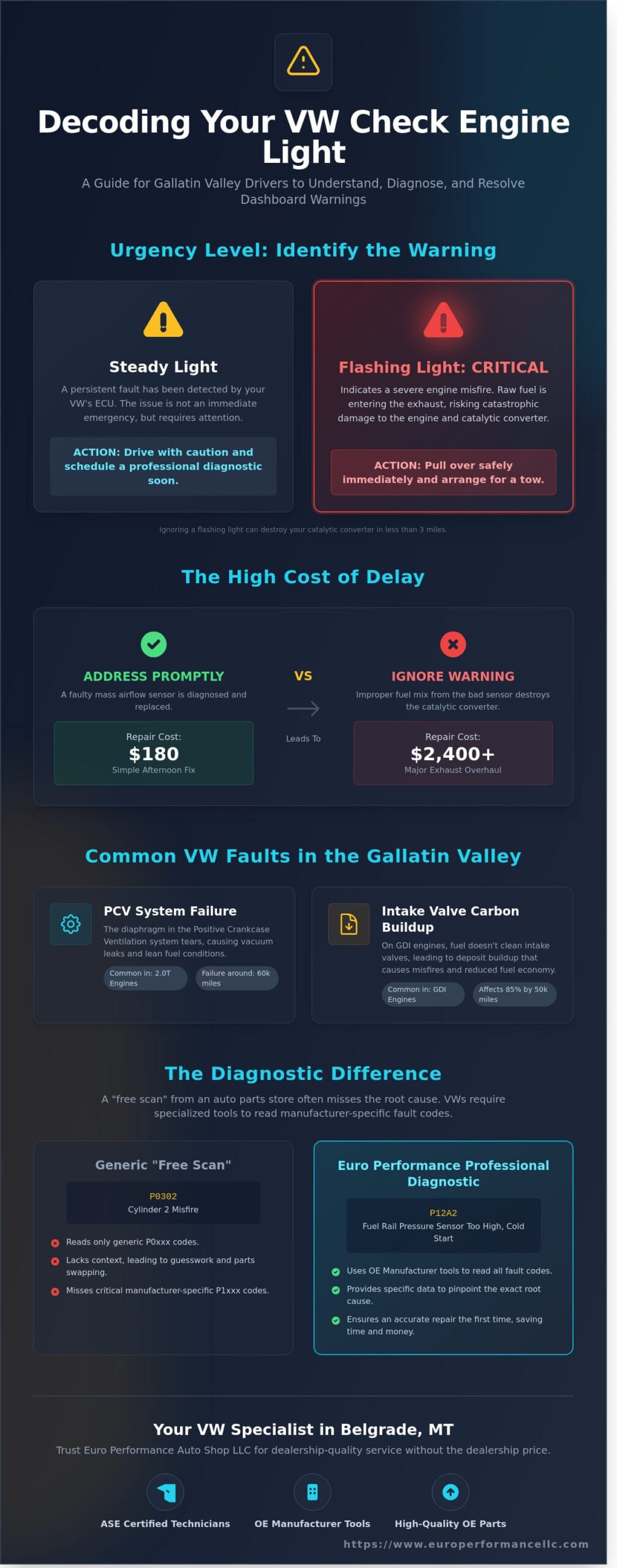
A steady yellow light means the ECU has detected a persistent fault that needs professional attention. You can usually drive the vehicle to a shop, but don’t wait weeks to schedule an appointment. A flashing light is a critical emergency. This indicates a severe engine misfire where raw fuel is entering the exhaust system. This condition can reach temperatures high enough to melt internal components in less than 3 miles of driving. If the light begins to flash, pull over immediately and arrange for a tow to avoid catastrophic engine damage.
The Psychology of the Dashboard Light
Modern Volkswagens often utilize “limp mode” when a vw check engine light bozeman issue is detected. This software-limited state reduces engine power and caps RPMs to protect internal components from harm. It’s a protective measure, not a sign that the engine is destroyed. However, ignoring a minor $180 sensor issue can quickly lead to expensive consequences. For instance, a faulty mass airflow sensor can cause an improper fuel mix that eventually destroys the catalytic converter, turning a simple afternoon fix into a $2,400 exhaust overhaul. Most issues we diagnose at Euro Performance LLC are simple, non-catastrophic repairs that simply require the right technical expertise to resolve.
Common Causes for a VW Check Engine Light in Montana
Identifying the root cause of a vw check engine light bozeman requires a deep understanding of German engineering and how it interacts with our local climate. One of the most frequent failure points we see at Euro Performance LLC involves the Positive Crankcase Ventilation (PCV) system. In the 2.0T engines found in many Jettas and GTIs, the internal PCV diaphragm often tears after 60,000 miles of operation. This leads to vacuum leaks and lean run conditions. When this happens, your car might exhibit a rough idle or a distinct whistling sound from the engine bay. Our ASE certified technicians use specialized pressure testing to confirm these failures before recommending a replacement.
Carbon buildup on intake valves is another persistent issue for Gasoline Direct Injection (GDI) engines. Since fuel is sprayed directly into the combustion chamber, it doesn’t wash the intake valves like older port-injection systems did. By the 50,000-mile mark, 85% of Volkswagen owners with GDI engines notice a decrease in fuel economy and cold-start misfires. If left unaddressed, this carbon can trigger multiple cylinder misfire codes that won’t disappear with a simple tune-up. Understanding your rights in auto repair ensures you can choose a specialist who performs a proper mechanical cleaning rather than a temporary chemical soak.
- Ignition Components: Spark plugs and ignition coils often fail prematurely in the Gallatin Valley due to extreme temperature swings. A single failing coil pack can cause a flashing check engine light, which indicates an active engine misfire that can damage your catalytic converter.
- EVAP System: The N80 purge valve is a common culprit for evaporative emission codes. While a loose gas cap is the simplest fix, failing seals within the charcoal canister often trigger the light immediately after a fuel fill-up.
Volkswagen-Specific Engineering Quirks
The 2.0T engine platform has specific diagnostic patterns that differ from domestic vehicles. For instance, a failing Mass Airflow (MAF) sensor might not trigger a dedicated MAF code; instead, it often shows up as a system-wide lean fault. We also frequently diagnose turbocharger boost pressure faults. These are often caused by a failing diverter valve or a sticking wastegate actuator, common on models produced between 2010 and 2018. If you notice a sudden loss of power, it’s wise to schedule a professional diagnostic session to prevent total turbocharger failure.
The Montana Cold Factor: Sensors and Batteries
Bozeman winters are notoriously hard on automotive electronics. When temperatures drop below -10°F, older batteries often struggle to maintain the 12.6 volts required for stable sensor communication. This voltage drop can trigger “ghost codes” in the ABS or engine control modules that aren’t actually hardware failures. Additionally, frozen moisture in the intake tract can lead to ice formation on the throttle body plate, causing the vehicle to enter limp mode. Road salt and magnesium chloride used on local roads also take a toll on exterior wheel speed sensors, leading to intermittent traction control and vw check engine light bozeman warnings. Our team uses specialized diagnostic tools to differentiate between these environmental glitches and genuine mechanical failures.
The Diagnostic Process: Why a “Free Scan” Isn’t Enough
A free scan at a local auto parts store usually takes about 60 seconds. While it provides a code, it rarely provides a solution. This is the primary hurdle for drivers seeking a reliable vw check engine light bozeman solution. A fault code is merely a starting point; it’s a symptom, not a final prescription. Pulling a code tells you which system is reporting a problem, but it doesn’t explain why that problem exists. For example, a code for a lean fuel mixture could be caused by a failing oxygen sensor, a vacuum leak, or a clogged fuel injector. Without a professional diagnostic process, you’re simply guessing.
Generic scanners used by most big-box retailers rely on basic OBD-II protocols. These tools typically pull P0xxx codes, which are universal across all vehicle makes. However, Volkswagen engineering utilizes proprietary manufacturer-specific codes, often starting with P1xxx or P3xxx. Generic tools miss these deeper data points 85% of the time. At Euro Performance LLC, we utilize ODIS (Offboard Diagnostic Information System) and VAG-COM software. These specialized tools communicate directly with every control module in your car. This level of access is necessary to understand exactly why the Malfunction Indicator Lamp (MIL) is illuminated on your dashboard.
The biggest risk of a “free scan” is the “parts cannon” approach. This happens when a shop or DIYer replaces components based on a code alone. If a scanner reports an “O2 Sensor Circuit High” fault, a generic shop might replace the $250 sensor immediately. If the actual issue is a frayed wire or a blown fuse, the light will return within 10 miles. Our diagnostic process eliminates this waste. We’ve found that proper testing saves customers an average of 30% on repair costs by avoiding the replacement of perfectly functional parts.
What Happens During a Professional VW Diagnostic?
Our process is methodical and transparent. We start with a full system vehicle scan to identify stored, pending, and permanent fault codes. Next, our technicians analyze “freeze frame” data. This shows us exactly what was happening with your engine speed, load, and temperature the moment the light triggered. We also check for any of the 150+ Technical Service Bulletins (TSBs) that might apply to your specific VW model year. Finally, we perform physical component testing, such as smoke testing for vacuum leaks or using a multimeter to check electrical continuity. You’ll receive a clear, documented estimate of the required repairs before we ever turn a wrench.
The Value of ASE Certified Expertise
European electrical systems are notoriously complex. A single fault in the comfort module can sometimes trigger a cascading failure that looks like an engine problem. Our ASE certified technicians undergo 100+ hours of specialized training annually to stay current with these evolving systems. We don’t just look at the engine; we look at how the entire vehicle interacts. This expertise allows us to provide a 2026-standard diagnostic that accounts for modern Advanced Driver Assistance Systems (ADAS) and integrated sensor networks. When you bring your vehicle to us for a vw check engine light bozeman, you’re getting the peace of mind that comes from a master craftsman’s touch.
What to Do When Your VW Light Comes On in Bozeman
If your dashboard illuminates while you’re driving down Frontage Road, your first step is a simple mechanical check. A loose gas cap causes roughly 15% of all check engine light activations in modern European vehicles. Inspect the rubber gasket for cracks, tears, or dry rot. If that seal isn’t airtight, the evaporative emission system detects a leak and triggers a fault code. Tighten it until it clicks once. If the vw check engine light bozeman remains on after three full drive cycles, the issue is likely more complex than a loose seal. You should also avoid any long-distance trips over 50 miles until you’ve identified the specific fault code to prevent secondary damage to the exhaust system.
Next, observe the car’s behavior with a technical ear. Does the engine stumble during a cold start when it’s 20 degrees Fahrenheit outside? Does the steering wheel vibrate when you’re accelerating onto I-90 under heavy load? These specific conditions help our technicians isolate the fault. Note any unusual smells. A scent like raw gasoline suggests a fuel system leak, while a sulfur smell often indicates a failing catalytic converter. Our ASE certified technicians use these observations to complement our digital diagnostic tools. This data ensures we don’t just clear the code, but actually solve the underlying mechanical failure that caused it in the first place.
Immediate Safety Checks
Check your gauges immediately. If the engine temperature exceeds the 190-degree midpoint or the oil pressure light flickers, pull over and shut off the engine. Listen for “knocking” or “pinging” sounds; these signal timing issues or a lean condition. If the light is solid, it’s typically safe to drive the 10 miles to our Belgrade shop. However, if the light is flashing, it indicates a catalyst-damaging misfire. Call a tow truck to prevent a $2,500 repair bill for a melted converter.
Preparing for Your Appointment
Your data makes the diagnostic process faster. Write down the exact mileage when the light first appeared. Review your service records from the last 12 months to see if you’ve recently replaced ignition coils, oxygen sensors, or filters. Euro Performance simplifies the journey from schedule to repair using a transparent three-step process. We use OE manufacturer parts to ensure your Volkswagen maintains its factory standards while resolving your vw check engine light bozeman concerns correctly the first time.
Don’t let a small sensor issue turn into a major engine overhaul. Schedule your professional VW diagnostic appointment with our expert team today.
Why Euro Performance is Your VW Specialist in Belgrade, MT
Choosing the right shop for your European vehicle shouldn’t feel like a gamble. Many drivers in the Gallatin Valley believe they must choose between the high costs of a corporate dealership or the generalized knowledge of a standard repair shop. Euro Performance offers a superior alternative. We provide the same precision diagnostics you expect from a dealer but without the inflated price tag. In fact, our clients often see a 25% to 30% reduction in total repair costs compared to regional franchise service centers. We combine this value with a level of specialized care that general shops simply can’t match.
Our commitment to quality starts with the components we install. We use OE (Original Equipment) manufacturers for every VW part, ensuring your vehicle maintains its factory performance standards. Whether it’s a specialized sensor or a complex timing chain kit, we won’t compromise your car’s integrity with generic, “white box” alternatives. This dedication is vital when addressing a vw check engine light bozeman, as German sensors are calibrated to exact tolerances that aftermarket parts frequently fail to meet.
Located conveniently in Belgrade, we serve the entire Bozeman area with a focus on total transparency. We’ve simplified the customer journey into a clear three-step process: Schedule, Estimate, Repair. You’ll never be surprised by hidden fees or unauthorized work. We provide a digital inspection report that includes photos and technician notes, so you see exactly what we see before any wrenches turn. This methodical approach ensures you’re always in control of your vehicle’s maintenance budget.
Advanced Tools and Technology
Precision repair requires more than just a scan tool. We’ve invested over $50,000 in the latest VW-specific diagnostic hardware to communicate with every module in your Jetta, Tiguan, or Touareg. This technology allows us to handle complex Advanced Driver Assistance Systems (ADAS) calibration alongside traditional engine repairs. If a repair requires removing the front fascia, we ensure your radar and camera systems are perfectly aligned to factory specifications. Every diagnostic is performed by ASE-certified technicians who understand the nuances of the vw check engine light bozeman drivers encounter during our harsh Montana winters.
Building Trust in the Gallatin Valley
Euro Performance operates as a local, independent alternative to the impersonal experience of corporate dealerships. We live and work in this community, and we stand behind our reputation with a satisfaction guarantee on all European auto repairs. Our team treats every vehicle with the meticulous care of a master craftsman, focusing on longevity and safety rather than just a quick fix. We’ve built our business on the belief that expert service should be accessible and honest. Don’t let a warning light on your dashboard cause unnecessary stress. Schedule your VW diagnostic at Euro Performance today! and experience the difference that specialized expertise makes for your Volkswagen.
Restore Your Volkswagen’s Precision Performance
Ignoring a dashboard warning often leads to preventable and costly engine damage. When your vw check engine light bozeman illuminates, it signals that your vehicle’s computer has logged a specific fault code. A generic scan only provides a starting point; it doesn’t offer a solution. Our team utilizes specialized VW diagnostic tools to identify the root cause of issues like vacuum leaks or sensor failures common in Montana’s climate. We rely on the expertise of ASE Certified Technicians who follow a methodical three step process to get you back on the road. Every repair we perform comes with an OE quality parts guarantee, so you know your vehicle remains 100% compliant with factory specifications. Precision engineering requires a professional touch to maintain its longevity. We’re here to provide the technical proficiency your car deserves. Take the first step toward a healthy engine and total peace of mind today.
Schedule Your Precision VW Diagnostic in Belgrade
We look forward to helping you keep your Volkswagen running at its peak for years to come.
Frequently Asked Questions
Can I drive my VW with the check engine light on?
You can usually drive your vehicle if the light is solid, but you should limit your travel to under 50 miles before seeking professional help. A steady light indicates a non-critical fault that still requires attention to prevent long-term damage. If the light flashes, pull over immediately because this indicates severe engine damage is occurring. Our ASE certified technicians recommend addressing any vw check engine light bozeman issues within 48 hours to maintain vehicle health.
How much does a VW diagnostic cost in Bozeman?
A professional VW diagnostic in Bozeman typically costs between $125 and $195 depending on the complexity of the electronic system. This fee covers the use of factory-grade scanners and the labor time for our technicians to pinpoint the exact fault code. We provide a detailed digital estimate after the scan. This ensures you aren’t paying for unnecessary parts or “guesswork” repairs. Our pricing is transparent and reflects the specialized training required for European systems.
Will my VW check engine light reset itself after a repair?
Your light won’t always turn off immediately after a repair is completed. While some emissions monitors reset after 3 consecutive trips without a fault, most European vehicles require a technician to clear the permanent code manually. We use specialized OE software to ensure the system is fully calibrated. This process verifies that the repair fixed the root cause and prevents the light from returning 10 miles down the road. Proper resets also ensure your car passes local emissions tests.
Why is my VW check engine light on but the car runs fine?
The light often signals an emissions failure or a sensor reading that hasn’t yet affected drivability. Your car might feel normal because the Engine Control Unit (ECU) has entered a “limp home” mode or adjusted fuel trims to compensate for a failing part. Even if the car runs well today, ignoring the light can reduce your fuel economy by 15 percent or more. Getting a professional vw check engine light bozeman inspection identifies these hidden issues before they lead to a breakdown.
Does a loose gas cap really trigger the check engine light?
A loose or damaged gas cap causes approximately 5 percent of all check engine light illuminations in European cars. The gas cap allows fuel vapors to escape, which the Evaporative Emission (EVAP) system detects as a leak. If the seal is cracked or the cap isn’t clicked into place, the computer triggers a P0440 or P0455 code. You should check the cap’s rubber gasket for cracks first. If tightening the cap doesn’t clear the light after 3 days, the leak is likely elsewhere.
What is the most common reason for a VW check engine light?
Faulty oxygen sensors and ignition coil failures are the two most frequent triggers for VW dashboard warnings. Oxygen sensor failures account for nearly 25 percent of the diagnostic appointments we see in the shop. These sensors monitor exhaust gases and help the engine manage fuel consumption. Ignition coils are another frequent issue, especially in models over 5 years old. Replacing these components according to the factory maintenance schedule prevents sudden misfires. Our team uses OE manufacturer parts to ensure these sensors last.
How long does a VW diagnostic take at Euro Performance?
A standard diagnostic appointment takes between 60 and 90 minutes. Our ASE certified technicians spend this time connecting specialized hardware, retrieving fault codes, and performing a physical inspection of the related components. We don’t just read codes; we verify the failure through electrical testing. Once the test is complete, you’ll receive a full report and a prioritized repair estimate within 15 minutes of the technician finishing their work. This methodical approach ensures we solve the problem correctly the first time.
Is a flashing check engine light always an engine misfire?
A flashing light almost always indicates a severe engine misfire that’s currently damaging your catalytic converter. If your light is blinking, it means the engine is misfiring at a rate that can melt internal components within minutes. This condition usually results from a failed ignition coil or a fouled spark plug. You should stop driving immediately and call for a tow to avoid a $2,000 catalytic converter replacement bill. Our team treats flashing lights as high-priority emergencies to protect your engine’s long-term viability.