
Blog
Replacing a turbocharger simply because a fault code appeared is often a costly mistake that ignores the root cause of the issue. When you’re searching for a reliable vw turbo replacement bozeman specialist, you’re likely facing a mix of performance loss and the anxiety of a significant repair bill. You’ve probably felt that sinking feeling when your Tiguan or GTI loses power during a steep mountain climb. It’s frustrating to face a major repair when you aren’t certain if the turbo is actually dead or if a smaller sensor is to blame.
You deserve a repair that addresses why the failure happened, not just the symptoms. We’ll show you how a forensic diagnostic process ensures a lasting fix and why local drivers trust our specialized expertise over the high premiums of a dealership. You’ll learn about the critical differences between OEM and aftermarket parts, how we restore factory-level performance, and why our warranty-backed solutions provide the peace of mind you need for the Gallatin Valley roads ahead.
Key Takeaways
- Identify critical warning signs like “Limp Mode” and specific mechanical noises to distinguish between minor boost leaks and total turbocharger failure.
- Understand why a professional vw turbo replacement bozeman involves a forensic diagnostic process to identify the root cause of failure, such as oil coking or debris.
- Evaluate the performance and reliability differences between OE manufacturers like BorgWarner and budget aftermarket alternatives to protect your investment.
- Learn why Montana’s severe driving conditions require specialized oil standards and more frequent maintenance intervals than the standard factory recommendations.
- Discover how specialized European automotive expertise and advanced diagnostic tools provide a precise, high-standard alternative to traditional dealership service.
Recognizing VW Turbocharger Failure Symptoms
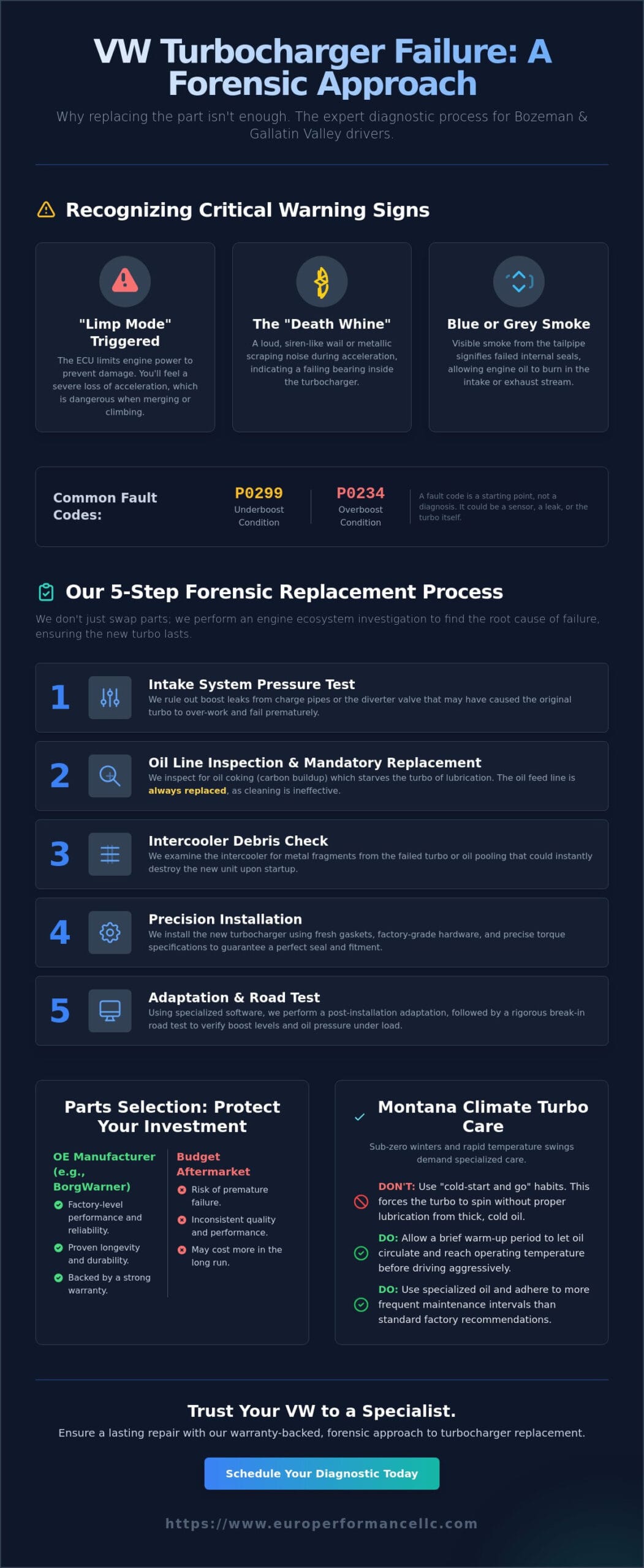
Identifying a failing component requires a methodical approach. When your Volkswagen suddenly loses power, the Engine Control Unit (ECU) often triggers “Limp Mode.” This is a protective software state that limits engine RPM and boost to prevent catastrophic internal damage. You’ll notice a significant drop in throttle response, which can be particularly dangerous when merging onto I-90. Understanding what a turbocharger is and how it functions helps clarify why these symptoms occur and why they cannot be ignored.
The “Death Whine” is another unmistakable indicator of trouble. While a healthy turbo produces a faint, high-pitched whistle during acceleration, a failing bearing creates a louder, siren-like wail or a metallic scraping sound. If you notice blue or grey smoke from the tailpipe, it usually indicates that the internal seals have failed, allowing oil to leak into the intake or exhaust stream. If you are facing these symptoms, seeking a professional vw turbo replacement bozeman specialist is the only way to determine if the unit is salvageable or requires a full exchange.
Sluggishness isn’t just an inconvenience; it’s a sign of inefficiency that can lead to increased fuel consumption and carbon buildup. In the high-altitude environment of Bozeman, where air density is lower, a compromised turbocharger becomes even more apparent through increased lag. If your GTI or Passat feels like it’s struggling to find its breath on the way up to Big Sky, the turbocharger assembly is likely the culprit. Addressing these issues early can prevent oil starvation from damaging other critical engine components.
Common Fault Codes for VW Turbos
A diagnostic scan often reveals specific codes that point toward the forced induction system. P0299 indicates an underboost condition, which often stems from a failing wastegate or a leak in the charge pipes. Conversely, P0234 signifies an overboost condition, frequently caused by a sticking N75 boost control valve. It’s vital to remember that a fault code doesn’t always necessitate a full vw turbo replacement bozeman; sometimes, a faulty sensor or a torn vacuum line is the true culprit. We perform a complete system analysis to ensure we aren’t just replacing parts unnecessarily.
Montana Climate and Your Turbo
The local environment in the Gallatin Valley presents unique challenges for European engines. During sub-zero Belgrade winters, engine oil thickens significantly, making it harder to reach the turbo’s high-speed bearings during the first few seconds of operation. “Cold-start and go” habits are particularly damaging here, as they force the turbo to spin at high speeds before the oil has reached its optimal operating temperature. Additionally, the rapid temperature swings in Bozeman can cause condensation to build up inside the intercooler. In extreme cases, this moisture can freeze or be ingested by the engine, leading to misfires or physical damage to the compressor wheel.
Our Forensic Replacement Process: Beyond the Part Swap
Replacing a turbocharger without identifying the root cause of its failure is a temporary fix at best. If the underlying condition that killed the original unit isn’t corrected, the new part is likely to suffer the same fate. Our approach to vw turbo replacement bozeman follows a rigorous forensic protocol. We don’t just swap components; we investigate the entire ecosystem of the engine to ensure a permanent repair.
Our five-step process begins with a comprehensive pressure test of the intake system. This allows us to rule out boost leaks in the charge pipes or diverter valve that might have caused the original turbo to overwork. Next, we perform a detailed inspection of the oil feed and return lines to check for carbon coking. The third step involves examining the intercooler for metal debris or oil pooling that could damage the new unit. Once the system is cleared, we proceed with the precision installation of the new turbocharger using fresh gaskets and factory-grade hardware. Finally, we perform a post-installation adaptation using specialized diagnostic software followed by a break-in road test to verify boost levels and oil pressure.
Why We Check the Oil Feed Lines
Restricted oil flow is the primary reason for repeat turbocharger failure in Volkswagen engines. Over time, high operating temperatures cause oil to break down and form hard carbon deposits inside the small-diameter feed lines. This restriction starves the turbo bearings of lubrication in seconds. Because these lines are nearly impossible to clean effectively, our policy includes mandatory replacement of the oil feed line during every service. This standard of care is why local drivers choose our specialized European auto repair services for complex mechanical work.
Intercooler Inspection and Cleaning
When a turbocharger’s internal seals or compressor wheels fail, they often discharge oil or metal shavings into the intake tract. These contaminants accumulate in the intercooler, which sits at the lowest point of the air system. If left uncleaned, oil pooling can lead to hydro-lock, a condition where the engine ingests liquid oil instead of air, causing catastrophic internal damage. We meticulously flush the intercooler to ensure no residual debris reaches your cylinders. This process also restores cooling efficiency, which is vital when your VW is under heavy load climbing mountain passes like Bozeman Pass or the canyon to Big Sky.
Parts Selection: OEM vs. Performance Upgrades
Choosing the right hardware is just as vital as the forensic diagnostic process mentioned earlier. For a high-precision vw turbo replacement bozeman owners must decide between factory reliability and cost-effectiveness. We bridge this gap by sourcing components from Original Equipment (OE) manufacturers like BorgWarner and IHI. These are the same companies that design and build the turbos found in new Volkswagens. By bypassing the branded dealership box, we provide identical quality and engineering standards without the unnecessary retail markup.
We strictly avoid “no-name” or budget-brand turbochargers. These low-cost alternatives often utilize inferior alloys that cannot withstand the extreme heat generated by a modern TSI or TDI engine. A turbocharger spins at over 150,000 RPM; any imbalance in a budget unit leads to immediate bearing failure. Our repairs are backed by a commitment to labor excellence and high-grade hardware, ensuring that every stud, nut, and gasket meets the original European manufacturer’s specifications.
The Truth About ‘Genuine’ VW Boxes
Sourcing the correct part is only half the battle. We ensure that every ancillary component, from the oil return gaskets to the manifold studs, is replaced with new, high-spec hardware. This attention to detail prevents exhaust leaks and oil seeps that often plague lower-quality repairs. Following your factory scheduled maintenance plan after the replacement is the most effective way to protect this investment and ensure the new unit reaches its maximum lifespan.
Performance Turbo Upgrades
If you own a GTI or Golf R, a failed turbo might be the perfect time to consider a performance upgrade. Moving to an IS38 turbocharger can transform your vehicle’s power delivery, making it much more capable for spirited drives through local mountain passes. However, this transition requires a methodical approach. You’ll need a specific ECU remap to calibrate the engine for the increased airflow and boost profile. We also recommend supporting modifications, such as high-flow downpipes or larger intercoolers, to manage the additional thermal load and ensure your VW remains reliable for daily use in the Gallatin Valley.
Preventing Future Turbo Failure: Maintenance Tips
Maintenance is the primary factor determining whether your new component reaches its full service life. While a professional vw turbo replacement bozeman restores your vehicle’s factory performance, rigorous upkeep is what prevents a repeat of the failure. Montana driving is officially classified as “severe” by most manufacturers due to extreme temperature fluctuations and high-altitude operation. These factors accelerate the breakdown of even the highest-quality lubricants.
Standard 10,000-mile oil change intervals are often too long for turbocharged engines in the Gallatin Valley. We recommend a more conservative 5,000-mile schedule to combat oil dilution and thermal breakdown. Your operating habits also play a major role in bearing health. Allowing the engine to idle for 30 to 60 seconds after a long highway drive or a climb over Bozeman Pass allows oil to circulate and cool the turbocharger’s center housing. This prevents “coking,” where stagnant oil bakes into hard carbon deposits that eventually block lubrication pathways.
Monitoring for vacuum leaks is equally important for the longevity of your system. Even a small leak in a vacuum line forces the wastegate actuator to work harder to maintain boost levels, which increases mechanical wear. Catching these minor issues during routine inspections can save you from the cost of an early vw turbo replacement bozeman in the future. We utilize advanced diagnostic equipment to identify these leaks before they lead to component failure.
The Importance of Specialized Oil
Turbocharged European engines operate at significantly higher temperatures than naturally aspirated ones. Using a generic 5W-30 oil is insufficient; your Volkswagen requires lubricants that meet specific VW 502.00, 504.00, or 508.00 standards. These oils are engineered to resist “shear,” a process where the mechanical action of the turbocharger breaks down the oil’s molecular structure. We provide specialized oil change services in Bozeman that utilize these exact specifications to ensure your bearings remain protected under high load.
Air Filter and Intake Health
A restricted air filter creates a vacuum effect that can pull oil past the turbocharger’s internal seals, leading to premature wear and smoke. We also pay close attention to the Positive Crankcase Ventilation (PCV) system during our inspections. A failing PCV valve causes improper pressure regulation within the engine block, which often leads to oil leaks at the turbocharger’s compressor side. Ensuring your intake tract remains clean and your PCV system is functioning correctly is vital for long-term engine health. To stay ahead of these issues, you can schedule your next Specialized European Auto Repair appointment with our methodical technicians.
Why Euro Performance Auto Shop LLC is Bozeman’s VW Specialist
Choosing a repair facility for a complex forced-induction system requires more than just looking for the lowest price. It demands a partnership with technicians who understand the specific engineering nuances of the Volkswagen Group. Located in Belgrade, Euro Performance Auto Shop LLC serves as a central hub for the entire Gallatin Valley, providing a level of precision that generalist shops simply cannot match. When you require a vw turbo replacement bozeman drivers trust us because we combine deep technical expertise with a commitment to the local community.
Our facility is staffed by ASE Certified technicians who have spent decades mastering European automotive systems. We’ve invested in state-of-the-art diagnostic equipment that rivals, and often exceeds, the capabilities found at the dealership. This technology allows us to interface directly with your VW’s specialized modules to ensure every software adaptation is performed correctly. We believe in transparent communication; we’ll show you the physical evidence of a component failure rather than just reading you a list of codes. This methodical approach ensures you understand exactly why a repair is necessary and how it will be executed.
Precision Engineering Meets Local Service
We treat every Volkswagen that enters our bays as a high-precision machine rather than a simple commuter vehicle. Our shop exclusively handles European brands, which allows us to maintain a focused inventory of specialized tools and factory-grade fluids. This dedication to European performance standards means we don’t cut corners on gaskets, hardware, or calibration steps. Whether you’re driving a vintage Beetle or a brand-new Golf R, your vehicle receives the same meticulous attention to detail from a master craftsman who respects the engineering behind the badge.
Schedule Your Turbo Diagnostic Today
Ignoring the early warning signs of a failing turbocharger can lead to catastrophic engine damage if metal debris enters the combustion chamber. Early detection is the most effective way to save your engine and manage your repair costs. If you’ve noticed a loss of power, unusual noises, or a sudden drop in fuel efficiency, it’s time for a professional consultation. We offer easy appointment scheduling for residents throughout Belgrade and Bozeman, ensuring your car is back on the road with its performance fully restored. Contact us today to discuss your VW’s boost issues and experience the peace of mind that comes with a specialized vw turbo replacement bozeman solution.
Restore Your Volkswagen’s Performance and Reliability
A successful vw turbo replacement bozeman depends on a commitment to precision and a deep understanding of European engineering. We’ve explored how a forensic diagnostic process identifies the underlying cause of failure, ensuring that your new unit is protected from the same issues that compromised the original. By utilizing Original Equipment components and adhering to strict Montana-specific maintenance intervals, you can preserve the longevity of your engine and enjoy the responsive power your Volkswagen was designed to deliver.
Our team of ASE Certified Master Technicians utilizes specialized European diagnostic tools to provide a level of service that rivals the dealership while maintaining the transparency of a local Belgrade business. We treat every vehicle with the meticulous care of a master craftsman, ensuring that all software adaptations and mechanical clearances meet factory specifications. Don’t let boost issues or warning lights compromise your driving experience in the Gallatin Valley. Trust your high-value asset to specialists who prioritize reliability and technical excellence.
Schedule Your Expert VW Turbo Diagnostic in Belgrade
We look forward to helping you get back on the road with total confidence in your vehicle’s performance.
Frequently Asked Questions
How much does it cost to replace a VW turbo in Bozeman?
The total investment for a turbocharger replacement varies based on your specific Volkswagen model and whether you choose an OE replacement or a performance upgrade. Independent European specialists typically offer more competitive rates than dealerships, which often apply a significant premium to both parts and labor. We recommend a comprehensive diagnostic to receive a precise estimate, and you may also want to explore Vehicle Service Contract Premiums to see how extended coverage can help offset the cost of major mechanical repairs.
Can I drive my Volkswagen with a failing turbo?
You should not drive your vehicle if you suspect the turbocharger is failing. Operating a compromised unit can lead to catastrophic engine damage if metal fragments from the compressor wheel are ingested into the combustion chamber. In some cases, a failed seal can cause an engine “runaway” condition where the engine consumes its own oil as fuel. It’s safer to have the vehicle towed to a specialized facility for an immediate inspection.
How long does a VW turbo replacement typically take?
A professional turbocharger replacement usually takes between one and two business days to complete once parts are on-site. The duration depends on the complexity of your engine’s layout and the time required for our forensic cleaning of the intercooler and intake tract. We also prioritize a thorough post-installation “break-in” road test to verify that boost pressures and oil flow meet factory specifications before returning the vehicle to you.
Does a new turbocharger come with a warranty?
Yes, professional installations at a specialized European shop typically include a comprehensive warranty that covers both the replacement unit and the labor. Sourcing parts from reputable OE manufacturers like BorgWarner or IHI ensures that you receive a component built to the same standards as the original factory part. This provides peace of mind that your investment is protected against manufacturing defects and premature mechanical failure.
Is it better to rebuild a VW turbo or replace it with new?
Replacing the unit with a new OE turbocharger is almost always the superior option for modern Volkswagens. Modern turbos spin at extremely high speeds, sometimes exceeding 150,000 RPM, which requires precision balancing that is difficult to replicate in a standard rebuild. A new unit ensures that all internal components, including the housing and wastegate actuator, meet the latest manufacturer revisions for improved reliability and performance.
What is the most common reason for VW turbo failure?
Oil starvation caused by carbon “coking” in the feed lines is the most frequent cause of failure we see. When you schedule a vw turbo replacement bozeman technicians often find that restricted lubrication has caused the bearings to overheat and seize. This is why we insist on replacing the oil feed lines and using specialized synthetic oils that can withstand the high thermal loads of a forced-induction system.
Do I need to change my oil after replacing the turbo?
Yes, a fresh oil change using the correct VW-spec synthetic oil is a mandatory part of the replacement process. Old oil can contain microscopic metal debris or carbon deposits from the failed unit that would immediately damage the bearings of your new turbocharger. We also replace the oil filter and verify that the oil pressure remains within the factory-specified range during the initial start-up and testing phase.
Will a turbo failure trigger a ‘Check Engine’ light?
A failing turbocharger will almost always trigger a “Check Engine” light because the ECU constantly monitors boost pressure. When the actual boost levels deviate from the target values, the computer logs fault codes such as P0299 for underboost or P0234 for overboost. These codes are often accompanied by a “Limp Mode” activation, which significantly reduces engine power to protect the internal components from further damage.