
Blog
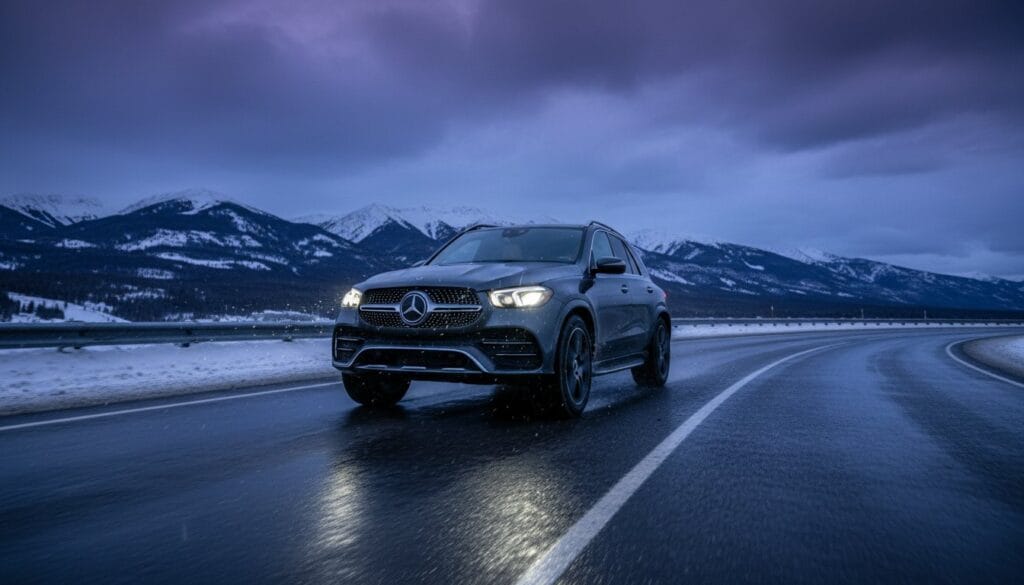
Will your Mercedes-Benz’s advanced safety systems actually save you on a sheet of black ice on I-90, or are they just waiting for the right rubber to do their job? It’s a common misconception that all-wheel drive is a substitute for dedicated cold-weather traction. While your 4MATIC system is brilliant, it relies on the physical grip of your tires to execute those split-second corrections. Finding the right winter tires for mercedes bozeman is about more than just avoiding a slide. It’s about maintaining the precision handling you expect from a European-engineered machine.
We understand the anxiety of navigating Bridger Canyon in a blizzard or the fear of damaging expensive rims in corrosive winter slush. You deserve the peace of mind that comes from knowing your vehicle is prepared for Montana’s legal studded tire window, which runs from October 1st through May 31st. In this 2026 guide, you’ll discover the best tire strategies to protect your performance systems and ensure your ADAS technology remains accurate. Our ASE certified technicians have outlined everything from chain law compliance to the technical calibration required after a tire swap so you can drive with total confidence this season.
Key Takeaways
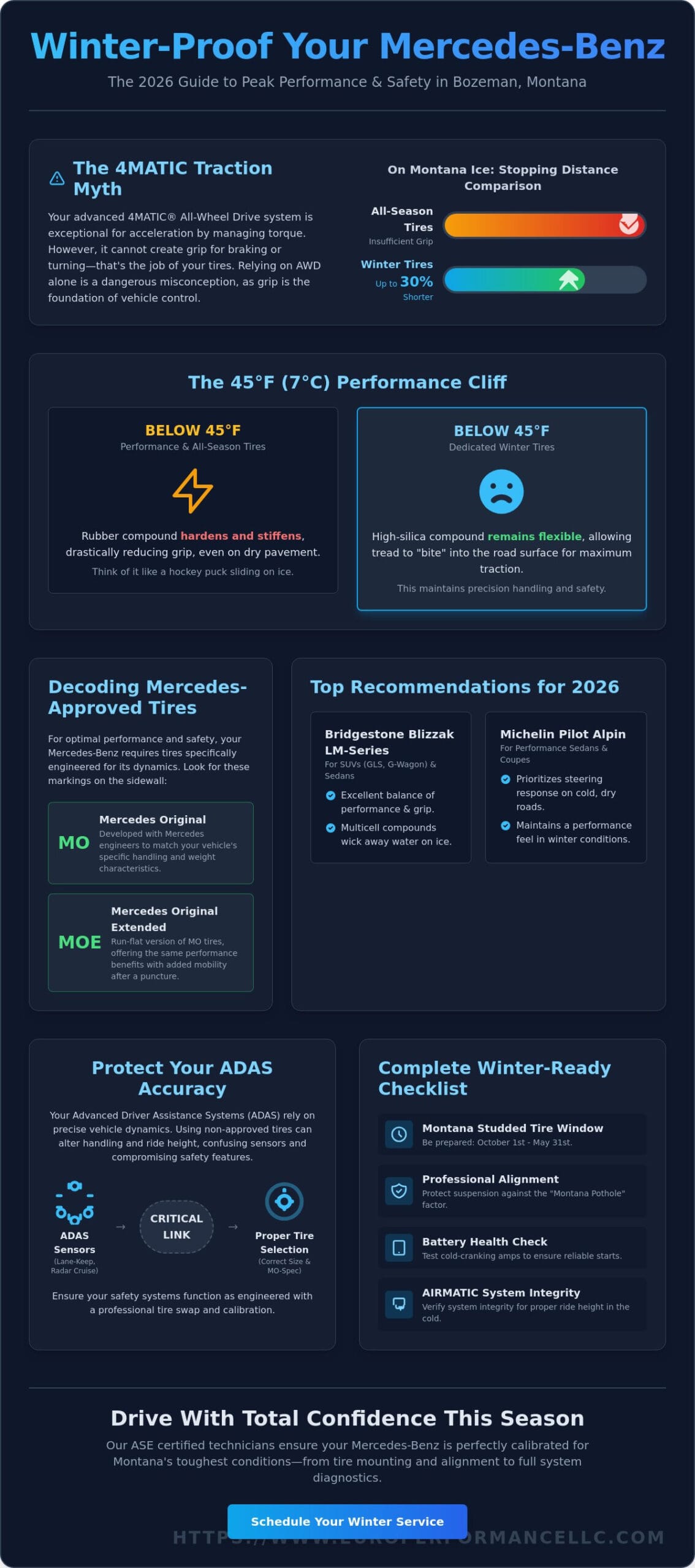
- Learn why the 45-degree rule makes specialized rubber essential even on dry roads and how tires, not just 4MATIC, dictate your stopping distance.
- Identify the specific MO and MOE markings needed for winter tires for mercedes bozeman to ensure your vehicle handles exactly as the engineers intended.
- Understand the critical link between tire selection and your Advanced Driver Assistance Systems (ADAS) to keep safety features like lane-keep assist functioning correctly.
- Discover why a professional alignment is vital for protecting your suspension against the “Montana Pothole” factor and preventing premature tire wear.
- Get a checklist for comprehensive winter inspections, from testing your battery’s cold-cranking amps to verifying the integrity of your AIRMATIC system.
Why Winter Tires are Essential for Mercedes Performance in Bozeman
Montana winters don’t wait for your schedule. By the time November arrives in the Gallatin Valley, temperatures frequently hover well below the 45-degree mark. This is the specific temperature where standard Mercedes performance rubber loses its effectiveness. When the rubber hardens, your car loses its ability to grip the pavement, even if the road appears dry. The chemistry of the tire simply isn’t designed for the cold.
Investing in winter tires for mercedes bozeman is a technical necessity for maintaining the vehicle’s precision. Whether you are navigating the heavy slush of Huffine Lane or the treacherous packed ice of Bridger Canyon, the right tire choice changes everything. On Montana ice, a dedicated winter tire can reduce your stopping distance by a full 30%. In emergency situations, those extra feet are vital for protecting your vehicle and your passengers.
To better understand this concept, watch this helpful video:
Thermal Dynamics of Mercedes Tires
The engineering behind how winter tires work centers on high-silica rubber compounds. These materials remain flexible in sub-zero temperatures, allowing the tread to “bite” into the road surface. In contrast, all-season tires are often a compromise that fails to perform at either extreme of Montana’s weather. They are essentially “no-season” tires in our climate. We often see Mercedes owners struggle with Tire Pressure Monitoring System (TPMS) alerts during the first cold snap. This happens because air density drops with the temperature. Without the proper flexible sidewall of a winter tire, your ride quality and safety systems suffer.
4MATIC AWD and the Traction Myth
Many drivers believe that the 4MATIC all-wheel-drive system provides all the protection they need. This is a dangerous misconception. While 4MATIC is excellent at managing torque distribution to help you accelerate, it doesn’t provide additional grip for braking or turning. If your tires can’t find traction, the most advanced AWD system in the world can’t stop you from sliding. We frequently see vehicles equipped with AWD in the ditches along I-90 because the drivers had a false sense of security. Mechanical grip is the foundation of vehicle control. Without dedicated winter tires for mercedes bozeman, your vehicle’s safety systems simply don’t have the friction necessary to function as designed.
Choosing the Right Winter Tires for Your Mercedes Model
Selecting the right set of winter tires for mercedes bozeman requires looking beyond the tire size printed on your door jamb. Mercedes-Benz vehicles are precision instruments. The tires are a fundamental component of the suspension system. When shopping, you must look for the “MO” (Mercedes Original) or “MOE” (Mercedes Original Extended) markings on the sidewall. These tires are developed by OE manufacturers in collaboration with Mercedes engineers to match the specific weight, speed, and handling characteristics of your car. Using a generic tire can lead to increased road noise or even compromise the feedback of your steering.
SUV owners driving a GLS or a G-Wagon must pay extra attention to load indices. These heavy vehicles put immense pressure on tire sidewalls during cornering and braking on frozen surfaces. For 2026, we recommend the Bridgestone Blizzak LM-Series for those seeking a balance of performance and grip. The Michelin Pilot Alpin remains an excellent choice for drivers who prioritize steering response on cold, dry pavement. Ensuring your vehicle is equipped with the correct load-rated rubber is a cornerstone of Montana winter driving safety.
The Case for Studless Performance Tires
Modern studless technology has advanced significantly. Tires like the Blizzak utilize multicell compounds that act like microscopic sponges to wick away the thin layer of water that forms on top of ice. For most Bozeman city driving, studless tires are the superior choice. They preserve the quiet, refined cabin experience of your Mercedes. These tires also offer better traction on the cold, clear asphalt we often see between storms. If you primarily drive on plowed roads, a high-quality studless tire provides the most consistent performance.
When to Consider Studded Tires
If your daily commute involves the Bozeman Pass or frequent trips into Big Sky, studded tires might be necessary. Metal studs provide mechanical “bite” into hard-packed snow and thick ice that studless tires can’t always match. Montana law allows studded tires from October 1st through May 31st. However, be aware of the trade-offs. Studs are significantly louder and can reduce grip on dry, paved surfaces. For those unsure which traction profile fits their lifestyle, consulting with a specialist can help clarify the best option for your specific model and driving habits.
Beyond the Tread: Mercedes-Specific Winter Tech and Maintenance
Preparing a Mercedes-Benz for a Montana winter involves more than just a physical tire swap. While the tread handles the ice, the vehicle’s electronic architecture must be tuned to account for these changes. Choosing the right tires is only the first step; the technical maintenance that follows ensures your safety systems don’t work against you during a blizzard. Modern European engineering integrates the tire’s performance directly into the car’s stability and braking logic.
Montana road crews frequently use magnesium chloride and salt to clear I-90. These chemicals are highly corrosive to European aluminum components and sensitive electrical connectors. A thorough undercarriage wash and the application of a seasonal protectant can prevent long-term rust. Additionally, using European-spec coolant and washer fluid is non-negotiable. Standard blue washer fluid often freezes at -20°F, a temperature we regularly hit in Belgrade. Mercedes-specific fluids contain higher concentrations of alcohol and specific lubricants to prevent pump failure and nozzle clogs when the thermometer drops.
ADAS Calibration After Tire Changes
Modern Mercedes models rely on a complex network of cameras and radar. When you install winter tires for mercedes bozeman, the slight change in rolling diameter or tread depth can alter how the car perceives its position on the road. This makes professional ADAS calibration essential for total winter safety. If the sensors are off by even a fraction of a degree, features like Distronic Plus or Active Lane Keeping Assist may provide erratic feedback or fail entirely during a snowstorm. Most standard tire shops lack the specialized diagnostic equipment required to reset these sensitive European systems.
AIRMATIC Suspension and Sub-Zero Temps
Sub-zero temperatures are the primary enemy of the AIRMATIC suspension system. Rubber seals in the air struts become brittle when the thermometer drops below zero, leading to slow leaks. If you notice your car “sagging” after sitting overnight in a Bozeman parking lot, the compressor is likely working overtime to compensate. This eventually leads to a total compressor burnout. Our ASE certified technicians recommend a preventative inspection of the seals and compressors before the first deep freeze. Ensuring the air lines are free of moisture prevents ice blockages that can leave your vehicle immobilized on its bump stops in the middle of January.
Professional Alignment and Mounting in the Gallatin Valley
Installing winter tires for mercedes bozeman is only half the battle. How those tires are mounted and balanced determines whether you enjoy a smooth ride or suffer through steering wheel vibrations all season. High-value Mercedes alloy rims are particularly vulnerable to salt-induced corrosion if the finish is scratched during a careless tire swap. Our technicians use specialized, touchless mounting equipment and OE-grade wheel weights to ensure the protective coating on your wheels remains intact. This precision prevents magnesium chloride from seating into the metal and causing long-term structural damage.
Precision is equally vital when it comes to alignment. Winter tires feature softer rubber compounds that provide excellent grip but are highly susceptible to “feathering” or uneven wear if the vehicle’s geometry is slightly off. In the Gallatin Valley, the “Montana Pothole” factor becomes a major threat in late winter. As the ground thaws and freezes throughout February and March, the roads around Belgrade can shift your suspension out of factory specifications. Without a visit to a specialized alignment shop, you may find your expensive winter tread completely worn out before the spring runoff begins.
Why Mercedes Alignment Specs are Different
Mercedes-Benz engineers utilize specific camber and toe-in settings to create the brand’s signature stability and cornering feel. These aren’t just suggestions; they’re integral to how the Electronic Stability Program (ESP) calculates vehicle trajectory. If your alignment is out of spec, the ESP may receive conflicting data during a slide, leading to delayed or incorrect braking interventions. European performance requires tighter alignment tolerances than domestic vehicles because the sophisticated multi-link suspension systems are designed to operate within extremely narrow geometric windows.
The Post-Installation Checklist
Our commitment to your safety extends beyond the initial service. We recommend a strict post-installation protocol to ensure your winter tires for mercedes bozeman perform reliably throughout the season:
- Retorque Wheel Bolts: Metal expands and contracts with Montana’s extreme temperature swings. Always have your wheel bolts retorqued after the first 50 miles of driving to ensure they remain seated at factory specifications.
- Sync TPMS Sensors: Cold air is denser, often triggering false tire pressure alerts. We verify that your sensors are correctly calibrated to the new tire set to prevent annoying dashboard warnings.
- System Testing: After a swap, we recommend testing your ABS and traction control systems on a safe, snowy surface to familiarize yourself with the slightly different feedback of winter rubber.
To keep your vehicle handling with factory precision through the harshest months, you should book a professional alignment and tire inspection with our expert team before the next major snow event.
Preparing Your Mercedes for a Montana Winter with Euro Performance
Securing the right winter tires for mercedes bozeman is the foundation of your safety, but it’s only the first step in a comprehensive seasonal strategy. A Mercedes-Benz is a complex ecosystem of interconnected parts. If your battery fails or your heater malfunctions, the best traction in the world won’t help you when you’re stranded on a sub-zero morning. Our team specializes in the meticulous care these European machines require, ensuring that every component is ready to withstand the unique stresses of a Gallatin Valley winter.
We recommend coordinating your winter tire installation with your factory scheduled maintenance. This proactive approach allows our technicians to identify potential issues before they become emergency repairs. While national tire chains focus on high-volume turnover, our Belgrade-based shop prioritizes technical accuracy and personalized service. We understand that a Mercedes requires specific diagnostic tools and a deep understanding of OE manufacturer standards that generic shops simply cannot provide.
The Euro Performance Winter Inspection
The most critical part of our winterization process is the battery load test. A Mercedes battery that performs perfectly in a mild September can easily fail on a -20°F January morning because the chemical reaction required to start the engine slows down significantly in the cold. We also perform a deep-system check of your auxiliary heater and seat heating elements. These aren’t just luxury features; they’re essential for maintaining cabin visibility and driver comfort during long commutes. Finally, we review your vehicle’s computer for any pending ‘Service A’ or ‘Service B’ requirements, ensuring your oil viscosity and fluid levels are optimized for low-temperature operation.
Your Trusted Local Partner in Belgrade
Our ASE certified technicians utilize the latest technology to interface with your vehicle’s complex electronics. We exclusively use OE parts for all repairs, which is vital for maintaining the integrity of your Mercedes-Benz warranty and performance. National chains often struggle with the sophisticated sensors and modules found in European-made vehicles, but our team handles these systems daily. By choosing a specialized local partner, you’re ensuring that your car receives the precision it was engineered for.
- Expertise: Our technicians have years of experience specifically with European brands.
- Transparency: We provide clear estimates and explain the technical “why” behind every recommendation.
- Reliability: We back our work with a satisfaction guarantee, giving you peace of mind on the iciest roads.
Don’t wait for the first major snowfall to find out your vehicle isn’t ready. Schedule your Mercedes winter prep at Euro Performance today!
Drive with Precision Through the Montana Winter
Navigating the Gallatin Valley’s unpredictable weather requires more than just high-quality rubber. The total effectiveness of your 4MATIC system depends entirely on the mechanical grip provided by your tires. By choosing the correct winter tires for mercedes bozeman and ensuring your ADAS sensors are properly calibrated, you preserve the safety and performance that define the Mercedes-Benz brand. These technical steps prevent safety systems from providing erratic feedback when you need them most during a sudden whiteout.
Our ASE Certified Technicians understand the meticulous requirements of European engineering. We utilize Specialized ADAS Calibration Equipment to ensure your vehicle’s safety logic remains accurate after every tire swap. As experts in Mercedes-Benz 4MATIC systems, we provide the technical proficiency needed for total peace of mind. Don’t leave your vehicle’s precision to chance when the thermometer drops below zero.
Book Your Mercedes Winter Performance Inspection at Euro Performance today. We are ready to help you drive with confidence until the May 31st studded tire deadline passes and the mountain passes finally clear.
Frequently Asked Questions
Can I use all-season tires on my Mercedes in Bozeman?
You shouldn’t rely on all-season tires for a Montana winter. While they’re labeled for all conditions, the rubber compound becomes brittle when temperatures drop below 45 degrees. This loss of flexibility significantly increases your stopping distance on icy surfaces. For a vehicle with the performance capabilities of a Mercedes-Benz, dedicated winter rubber is the only way to ensure the traction needed for the Gallatin Valley’s frequent sub-zero stretches.
Do I need to recalibrate my Mercedes sensors after changing to winter tires?
Yes, professional recalibration is necessary to maintain the accuracy of your Advanced Driver Assistance Systems (ADAS). Installing winter tires for mercedes bozeman often involves a change in tread depth or rolling diameter. Even a minor discrepancy can cause your lane-keep assist or adaptive cruise control to provide erratic interventions. Our technicians use specialized diagnostic tools to reset these sensors, ensuring your safety tech works in harmony with your new traction profile.
What is the best tire pressure for Mercedes winter tires in Montana?
You should follow the specific PSI listed on your driver-side door placard, but you must adjust for Montana’s temperature swings. Tire pressure typically drops by 1 PSI for every 10-degree decrease in ambient temperature. If you set your pressure in a 60-degree garage and drive into a -10-degree morning, your tires will be significantly under-inflated. We recommend checking pressures weekly during January and February to ensure optimal contact with the road.
How long do winter tires typically last in the Gallatin Valley?
Winter tires in the Gallatin Valley typically last between three and four seasons, or approximately 12,000 to 15,000 miles. Their lifespan depends heavily on when you swap them off in the spring. Driving on winter rubber when temperatures rise above 45 degrees causes the soft compound to wear prematurely. To maximize your investment, we suggest switching back to performance tires as soon as the consistent overnight freezes end in late May.
Is 4MATIC sufficient for driving to Big Sky without snow tires?
4MATIC is not a substitute for winter tires on the road to Big Sky. While all-wheel drive helps with acceleration and climbing steep grades, it provides zero assistance when you need to brake or turn on hard-packed snow. The canyon road features several high-consequence curves where mechanical grip is the only thing keeping you in your lane. Without dedicated winter rubber, your AWD system won’t have the friction required to execute stability corrections.
What happens if my Mercedes AIRMATIC suspension freezes?
If your AIRMATIC suspension freezes, the vehicle will likely sag to its bump stops and become unsafe to drive. This usually happens when moisture in the air lines turns to ice, blocking the valves. We strongly recommend not driving if you see a “Vehicle Rising” message that doesn’t clear within 30 seconds. Continued operation can lead to a total compressor failure, which is a significantly more expensive repair than a simple system thaw and moisture purge.
Where can I get a precision Mercedes alignment in Belgrade or Bozeman?
Euro Performance in Belgrade provides precision alignment services specifically tailored for European vehicles. We use factory-grade alignment technology to meet the tight tolerances required by Mercedes-Benz suspension systems. Our shop is located at 658 Jetway Dr Unit A, Belgrade, MT 59714. Because we specialize in European makes, we understand how to correctly adjust the complex multi-link setups that standard domestic-focused shops often struggle to calibrate correctly.
Should I get a second set of rims for my winter tires?
Investing in a second set of rims is a highly recommended strategy for Mercedes owners. Frequent mounting and balancing can stress the tire beads and risk scratching your expensive factory alloys. A dedicated winter wheel set allows for faster seasonal transitions and protects your primary rims from the corrosive magnesium chloride used on Montana highways. Over a four-year period, the savings on labor costs for tire swaps often offset the initial price of the extra wheels.