
Blog
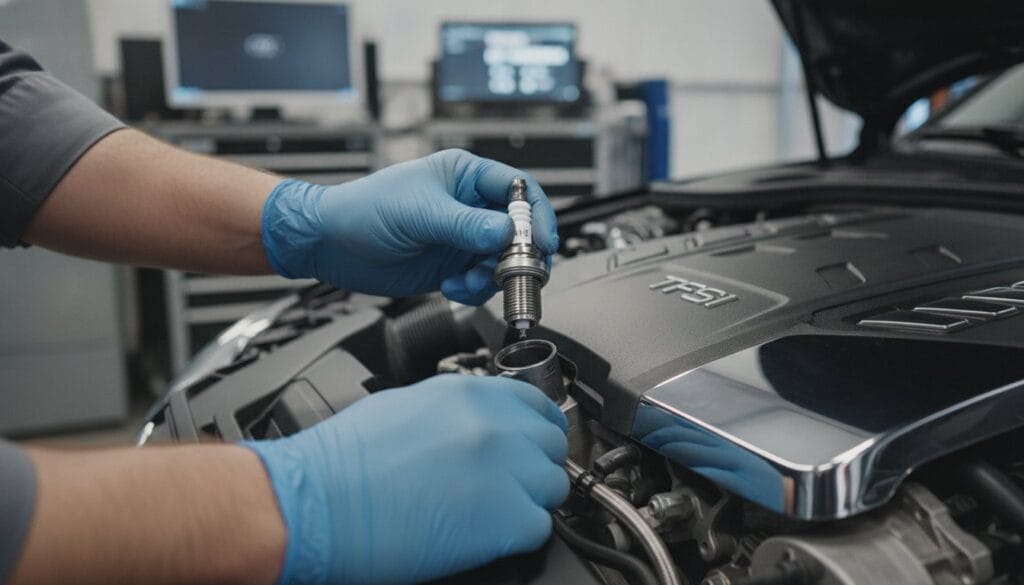
What if your Audi’s spark plugs are more than just simple ignition parts? In high-performance German engines, these components act as precision fuses that protect expensive catalytic converters and ignition coils from failure. It’s completely understandable if you feel confused by the conflicting service schedules found online. Determining the correct audi spark plug replacement interval is critical for maintaining engine longevity and fuel efficiency, especially when navigating the temperature extremes of Montana.
You deserve a clear, technical breakdown of whether your vehicle requires service at 30,000, 40,000, or even 80,000 miles. This guide provides the exact 2026 maintenance standards for every major Audi model, from the commuter-friendly A4 to the high-output RS series. You’ll learn to identify the subtle symptoms of failing plugs and understand why the 40k versus 60k mile debate matters for your specific engine. We also provide a reliable, expert alternative for specialized European auto repair in Belgrade and Bozeman, ensuring your vehicle receives factory-level care without the typical dealership overhead.
Key Takeaways
- Identify the specific 40,000-mile or 6-year service baseline for most modern models to ensure you never miss a critical maintenance milestone.
- Understand the technical reasons why advanced TFSI and FSI engineering require a more frequent audi spark plug replacement interval to protect your engine.
- Learn to recognize the subtle symptoms of ignition wear, such as steering wheel vibrations at stoplights, before they lead to expensive component failure.
- Discover how the high altitude and sub-zero winters of Belgrade and Bozeman place unique mechanical stress on your vehicle’s ignition health and cold-start reliability.
- Gain peace of mind by learning the importance of utilizing ASE-certified technicians and Original Equipment (OE) parts for all factory-scheduled maintenance.
Understanding the Standard Audi Spark Plug Replacement Interval
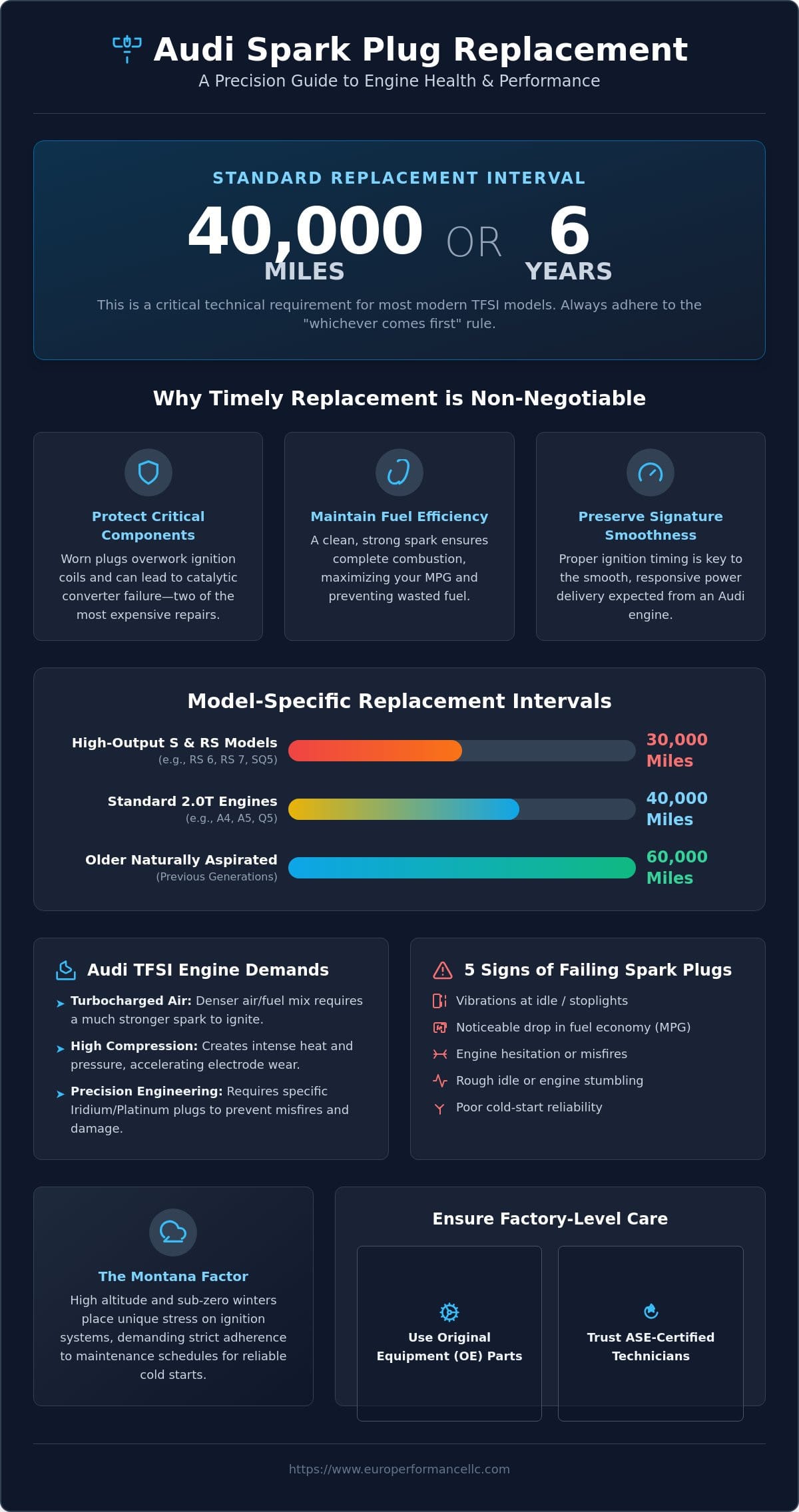
Maintaining a precise audi spark plug replacement interval is essential for the health of your German-engineered engine. For the majority of modern Audi models, the factory baseline for replacement is 40,000 miles or 6 years. This cycle isn’t a suggestion; it’s a technical requirement based on the wear characteristics of iridium and platinum electrodes. Understanding How a Spark Plug Works reveals that as the gap between electrodes grows through use, the ignition coil must work harder to jump that gap, eventually leading to coil failure.
Low-mileage drivers often overlook the “whichever comes first” rule. Even if you only drive 3,000 miles a year in Belgrade, the 6-year limit remains critical. Chemical degradation and carbon buildup occur over time, regardless of the odometer reading. While older, naturally aspirated Audi engines from previous generations might stretch this interval to 60,000 miles, nearly every current TFSI engine requires more frequent attention. Following a structured factory scheduled maintenance plan is the only way to ensure these components are replaced before they cause collateral damage.
Model-Specific Interval Variances
High-output engines demand more from their ignition systems. Performance-oriented S and RS models, such as the RS 6, RS 7, or SQ5, typically require a 30,000-mile audi spark plug replacement interval. These engines operate under higher boost pressures and generate significantly more internal heat. For the ubiquitous 2.0T engine found in the A4, A5, and Q5, the 40,000-mile mark is considered the “sweet spot” for maintaining peak efficiency. Larger V6 and V8 Turbo engines in the Q7 and A8 face unique “heat soak” challenges. In these configurations, the plugs are subjected to extreme temperatures long after the engine is turned off, making strict adherence to the schedule vital for long-term reliability.
Audi Care and the 40k Service Milestone
The 40,000-mile service is often cited by technicians as the most critical “minor” service in the Audi lifecycle. Beyond just the plugs, this milestone involves a comprehensive inspection of the entire ignition system and plenum drains. It’s a proactive approach to reliability. Technical proficiency is required here, as modern Audi engines use specific torque values and indexed plug positions to ensure optimal combustion. You can find more details on how these tasks fit into the broader ownership experience in our guide to Audi service schedules. Neglecting this milestone often leads to a noticeable drop in fuel economy and a loss of that signature Audi smoothness.
Why Audi Intervals Are Shorter Than Other Brands
Audi engines are high-performance machines. Unlike standard commuter cars, most Audis utilize Turbocharged Fuel Stratified Injection (TFSI). This technology provides impressive power from smaller displacements, but it places extreme stress on the ignition system. The dense air-fuel mixture inside a turbocharged cylinder requires a much stronger spark to ignite. This higher demand accelerates electrode wear, which is why the audi spark plug replacement interval is significantly shorter than the 100,000-mile “lifetime” claims seen in other market segments.
High-compression ratios further complicate the environment. Audi’s engineering focuses on precision and efficiency, which generates intense combustion temperatures. “Long Life” plugs designed for standard engines often lack the specific thermal properties required to withstand these conditions. Using a generic 100k-mile plug in a performance European engine can lead to electrode melting or ceramic cracking. These failures often result in catastrophic engine damage if a piece of the plug falls into the cylinder.
The Physics of High-Performance Ignition
When turbo boost pressure increases, it creates a “quench” effect. This phenomenon can literally blow out a weak spark or make it difficult for the arc to form across the gap. To combat this, Audi specifies plugs with precious metal tips like Iridium and Platinum. These materials have high melting points and excellent conductivity. However, even these resilient metals succumb to electrode erosion over time due to the high-heat European engine bay environment. If you notice any symptoms of failing spark plugs, it’s likely because the gap has widened beyond the point where the ignition coil can reliably compensate.
Fuel Quality and Carbon Buildup
The transition to Direct Injection (FSI) changed the maintenance landscape. Because fuel is sprayed directly into the combustion chamber rather than over the intake valves, the traditional “cleaning” effect of gasoline is lost on certain components. This often leads to carbon deposits that can foul plugs prematurely. Using Top Tier gasoline is helpful, but it doesn’t eliminate the need for regular service. Worn plugs cause incomplete combustion, which creates a negative feedback loop of even more carbon buildup. If you are concerned about your vehicle’s performance, consulting a specialist in specialized European auto repair can help determine if your driving style requires a more aggressive maintenance schedule.
5 Signs Your Audi Spark Plugs Need Immediate Replacement
While the 40,000-mile audi spark plug replacement interval serves as a reliable baseline, your vehicle often provides physical warnings when components fail prematurely. Ignoring these signals can lead to a cascading series of mechanical issues. Recognizing the symptoms early allows you to address the problem during a routine maintenance visit rather than an emergency repair. If you notice any of the following five signs, your ignition system requires professional evaluation.
- Rough Idling: When you are stopped at a light in Belgrade, the engine should feel nearly imperceptible. If you notice a rhythmic vibration through the steering wheel or a “hunting” tachometer needle, the plugs are likely struggling to maintain a consistent spark.
- Engine Misfires: This is often felt as a sharp stutter or hesitation during hard acceleration. It is particularly noticeable when merging onto the highway. A misfire occurs when the spark fails to ignite the fuel-air mixture in a specific cylinder.
- Decreased Fuel Economy: A weak or inconsistent spark leads to incomplete combustion. This means unburnt fuel is pushed out through the exhaust rather than being used for power. If your MPG drops significantly without a change in driving habits, your plugs are a primary suspect.
- Hard Starts: Montana autumn mornings put extra strain on your battery and ignition system. If the engine cranks for several seconds before finally firing, the spark plug gap has likely widened beyond the point of efficiency.
- Sluggish Acceleration: That signature Audi “pep” relies on precise ignition timing. Worn plugs cause the engine control unit to retard timing to prevent knock, which results in a noticeable loss of power when you need it most.
The Check Engine Light and Misfire Codes
Modern Audis are equipped with sophisticated onboard diagnostics that monitor every combustion cycle. When a plug fails to fire, the computer stores a specific OBD-II code. Codes ranging from P0300 (random misfire) to P0306 (misfire in cylinder six) provide a technical roadmap for our technicians. If your Check Engine Light begins to flash, it indicates a “catalyst-damaging” misfire. In this scenario, you must pull over immediately. Driving with a flashing light allows raw fuel to enter the exhaust system. This can destroy your catalytic converter in minutes, turning a simple plug replacement into a multi-thousand dollar exhaust repair.
The Ignition Coil Connection
There is a critical synergy between your spark plugs and ignition coils. As a plug wears, the gap between the electrodes grows. To jump this larger gap, the ignition coil must generate a much higher voltage. This extra effort creates internal heat that eventually melts the coil’s delicate windings. This is why we often recommend a “while you’re in there” philosophy. Replacing coils alongside the plugs during the standard audi spark plug replacement interval can prevent a second trip to the shop. At Euro Performance LLC, we use specialized equipment to test coil resistance during routine inspections to ensure every component of your ignition system meets factory standards.
The Montana Factor: Cold Weather and Ignition Health
Living in Belgrade or Bozeman presents unique challenges for German engineering. While Audi designs vehicles for the Autobahn, the sub-zero winters of the Gallatin Valley put extreme strain on the ignition system. Cold starts require a robust spark to overcome thickened oil and sluggish battery output. Additionally, driving at altitudes exceeding 4,000 feet alters the air-fuel mixture. Thinner air requires the engine management system to adjust constantly. This environment can accelerate the wear of your ignition components, making the audi spark plug replacement interval a more urgent concern than it might be at sea level.
Navigating these specific mountain conditions requires European performance expertise. A technician who understands how high-altitude combustion affects plug longevity is essential for maintaining your vehicle’s reliability. Precision in the ignition system is your best defense against being stranded during a Montana winter storm.
Preparing Your Audi for a Montana Winter
We recommend a comprehensive ignition check every autumn. Battery health and spark plug efficiency are inextricably linked. A weak battery cannot provide the amperage needed for a worn plug to fire in -20°F weather. If the plug is already fouled or the gap is too wide, the engine simply won’t start. Using specialized European synthetic oils also plays a role. These oils maintain lower viscosity in extreme cold, reducing the rotational resistance the starter must overcome, which indirectly preserves your ignition components by ensuring faster, cleaner starts.
Severe Service vs. Normal Service
Most Montana drivers unknowingly operate under “Severe Service” conditions. This category isn’t reserved for track days; it includes everyday mountain driving habits. Your Audi is likely in this category if your routine involves:
- Frequent short trips where the engine never reaches full operating temperature.
- Extended idling during winter warm-ups.
- Driving in temperatures that frequently drop below freezing.
- Towing or carrying heavy loads through mountain passes.
For these reasons, we often suggest adjusting your audi spark plug replacement interval to 30,000 miles rather than the standard 40,000. This proactive approach ensures your Audi remains reliable when the temperature drops. If you haven’t had your ignition system inspected recently, it’s time to schedule your factory scheduled maintenance with a specialist who understands Montana’s climate.
Professional Audi Spark Plug Service in Belgrade, MT
When your vehicle reaches its designated audi spark plug replacement interval, the technical execution of the service is just as important as the timing. Modern Audi engines utilize sensitive aluminum cylinder heads that require a methodical approach. Our ASE-certified technicians recognize that “hand-tight” is an outdated concept for these high-precision machines. We utilize calibrated torque wrenches to meet exact factory specifications, which prevents the risk of stripped threads or combustion leaks. This meticulous attention to detail ensures that the thermal transfer between the plug and the head remains within the engineered parameters.
Maintaining the integrity of your ignition system involves more than just a quick swap of parts. Our commitment to reliability means we utilize only Original Equipment (OE) components. These parts are designed to handle the specific heat ranges and voltage requirements of your engine’s control module. By adhering to these professional standards, we help you avoid the common pitfalls of generic aftermarket components that often lead to premature failure or reduced performance in extreme Montana temperatures.
Our Specialized Diagnostic Process
We employ a process-oriented approach to every ignition service. Before the old plugs are removed, we use advanced scan tools to check for “silent” misfires. These are minute ignition failures that occur under specific loads but may not yet be frequent enough to trigger a Check Engine Light. Once the plugs are removed, we perform a visual analysis of the electrodes. “Reading” a spark plug allows us to identify potential issues such as oil blow-by, coolant leaks, or fuel system imbalances. We also verify the gap settings on every new plug with precision gauges, ensuring optimal combustion efficiency from the moment you leave our facility.
The Euro Performance LLC Advantage
Euro Performance LLC serves as a specialized alternative to the dealership for Audi owners in Belgrade and the greater Bozeman area. We focus on transparency and technical proficiency to reduce the anxiety often associated with high-end vehicle maintenance. Our team provides clear, declarative explanations of your vehicle’s health, ensuring you understand exactly what is required to keep your engine running smoothly. By choosing local expertise, you ensure your Audi receives the specialized care it needs to handle mountain passes and sub-zero winters with confidence. If you’ve reached your next maintenance milestone, Contact Euro Performance LLC to schedule your professional ignition service today.
Secure Your Audi’s Performance for the Road Ahead
Adhering to the correct audi spark plug replacement interval is the single most effective way to prevent costly ignition coil or catalytic converter failures. You now understand how the unique demands of TFSI engineering and Montana’s high-altitude climate require a proactive approach to factory scheduled maintenance. By recognizing the early signs of wear, such as rough idling or sluggish acceleration, you can address ignition health before it impacts your vehicle’s reliability.
Precision engineering deserves precision care. Our team at Euro Performance LLC utilizes specialized European diagnostic tools and top-tier OE parts to ensure your vehicle meets factory standards. With ASE Certified Technicians located right here in Belgrade, MT, we provide the technical expertise necessary to keep your Audi performing at its peak. Don’t wait for a misfire to compromise your commute. Schedule Your Audi Ignition Service at Euro Performance LLC today.
We look forward to helping you maintain the signature smoothness and power of your Audi for many miles to come.
Frequently Asked Questions
Can I change Audi spark plugs myself?
You can change them yourself if you possess the proper technical knowledge and specialized tools. Modern Audi engines require thin-walled sockets and precise torque application to avoid damaging the delicate aluminum cylinder heads. If a plug is over-tightened or cross-threaded, it can lead to a multi-thousand dollar repair. Professional technicians also check for indexing and gap accuracy that most home mechanics might overlook.
What brand of spark plugs does Audi use from the factory?
Audi typically utilizes NGK or Bosch as their primary Original Equipment (OE) suppliers. Most high-performance models come factory-equipped with NGK Laser Platinum or Iridium plugs. These specific components are engineered to withstand the high combustion pressures and temperatures found in TFSI engines. Using these exact brands during your audi spark plug replacement interval ensures the ignition system operates within its designed electrical parameters.
Is it necessary to replace ignition coils at the same time as spark plugs?
It isn’t strictly necessary to replace ignition coils with every spark plug change, but it’s often a wise preventative measure. Ignition coils are subjected to increased thermal stress when they must fire through worn, high-resistance plugs. If your vehicle has surpassed 80,000 miles, replacing the coils during a plug service can prevent a second visit to the shop for a failed coil shortly after.
Will skipping a spark plug change void my Audi warranty?
Skipping a scheduled maintenance service can potentially void your engine warranty if a related failure occurs. If a neglected spark plug causes a misfire that destroys a catalytic converter, the manufacturer may deny the warranty claim due to improper maintenance. However, federal law allows you to use independent specialized shops for your audi spark plug replacement interval without voiding your coverage, provided you maintain detailed service records.
How much does an Audi spark plug replacement cost in Montana?
The cost for this service varies significantly based on your specific Audi model and the number of cylinders in the engine. Four-cylinder A4 models are generally more affordable than V8 or V10 performance variants. Factors such as current labor rates in Belgrade and the price of premium OE parts will influence the final total. We recommend requesting a detailed estimate from a local specialist to understand the specific requirements for your vehicle.
Why does my Audi misfire only when the engine is cold?
Cold misfires often occur because the ignition system must work harder to ignite the rich fuel mixture required for a cold start. If a spark plug has a widened gap or a hairline crack in its ceramic insulator, the spark may fail to jump under these high-load conditions. As the engine warms up and the fuel mixture leans out, the weakened plug might temporarily regain its ability to fire, masking the underlying issue.
Do Audi e-tron models have spark plugs?
Fully electric Audi e-tron models don’t have spark plugs because they don’t utilize internal combustion engines. These vehicles rely on electric motors and battery packs for propulsion. However, if you own a plug-in hybrid model, such as the Q5 TFSI e, your vehicle still contains a gasoline engine that requires regular ignition maintenance according to the factory schedule.
What happens if a spark plug breaks inside the engine?
If a spark plug breaks during removal or installation, it’s a critical mechanical failure. Metal fragments can fall into the combustion chamber and cause catastrophic damage to the cylinder walls, pistons, and valves. This situation requires specialized extraction tools and technical expertise to resolve safely. You should never attempt to start the engine if you suspect a plug has been compromised or broken inside the head.