
Blog
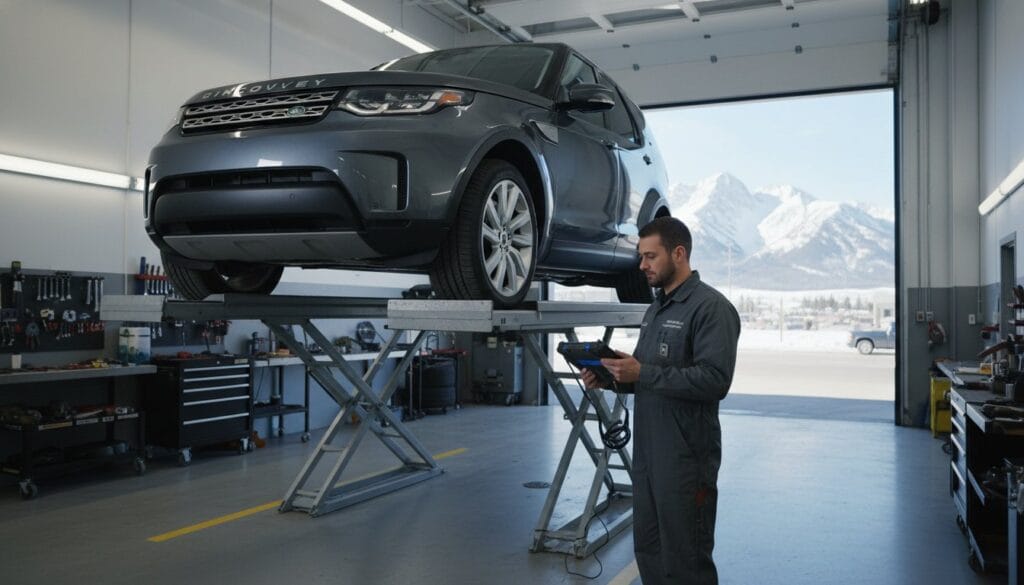
Seeing your Land Rover Discovery dashboard light up like a Christmas tree during a Montana cold snap isn’t just a nuisance; it’s a predictable symptom of specific engineering choices rather than a random failure. For many owners in Belgrade, the luxury of these vehicles is often shadowed by concerns over air suspension sagging or the high cost of specialized European parts. You’ve likely felt that spike of anxiety when a warning light appears, wondering if a major repair is looming.
This “Christmas tree” effect is typically triggered by a single fault in a shared sensor or a drop in battery voltage. Because the traction control, air suspension, and braking systems are all interconnected, one failing wheel speed sensor can disable multiple systems simultaneously. A professional diagnostic scan is required to isolate the specific module or sensor causing the communication breakdown. For owners in the San Francisco area who need immediate help with these complex errors, you can visit their website to request mobile service.
We understand that owning a high-value asset requires confidence in its mechanical integrity. This specialist’s guide identifies the most common land rover discovery problems, from emerging electrical system concerns, such as DC-DC converter reliability, to persistent air suspension issues that plague vehicles in extreme temperatures. By addressing these design quirks with master-level preventative maintenance, you can transform a reputational gamble into a reliable driving experience.
In the following sections, we’ll break down which model years offer the best reliability and highlight the critical warning signs of engine or drivetrain failure. You’ll learn how specialized factory scheduled maintenance in Belgrade helps you stay ahead of the curve, ensuring your Discovery remains a capable companion on the road.
Key Takeaways
- Understand the mechanical differences between the L319 and L462 platforms to determine which model years provide the best foundation for long-term reliability.
- Identify the early warning signs of critical engine issues, including Ingenium oil dilution and V6 diesel crankshaft failure, to prevent catastrophic damage.
- Learn how to diagnose common land rover discovery problems like air suspension leaks and electrical “Christmas tree” errors before they lead to costly roadside failures.
- Discover how the sub-zero winters in Belgrade, MT accelerate the degradation of suspension seals and undercarriage components.
- Establish a specialized maintenance schedule that utilizes high-tech diagnostics to catch minor leaks and faults before they escalate into major repairs.
Land Rover Discovery Reliability: An Evolution of Common Faults
The Land Rover Discovery occupies a unique space in automotive engineering, blending world-class luxury with extreme off-road capability. While this versatility is its greatest strength, it also introduces a level of mechanical complexity that requires precise attention. Reviewing the Land Rover Discovery history reveals a lineage of vehicles that moved from rugged utility to high-tech sophistication. This evolution changed the nature of common land rover discovery problems, shifting from traditional mechanical leaks to intricate sensor and software failures.
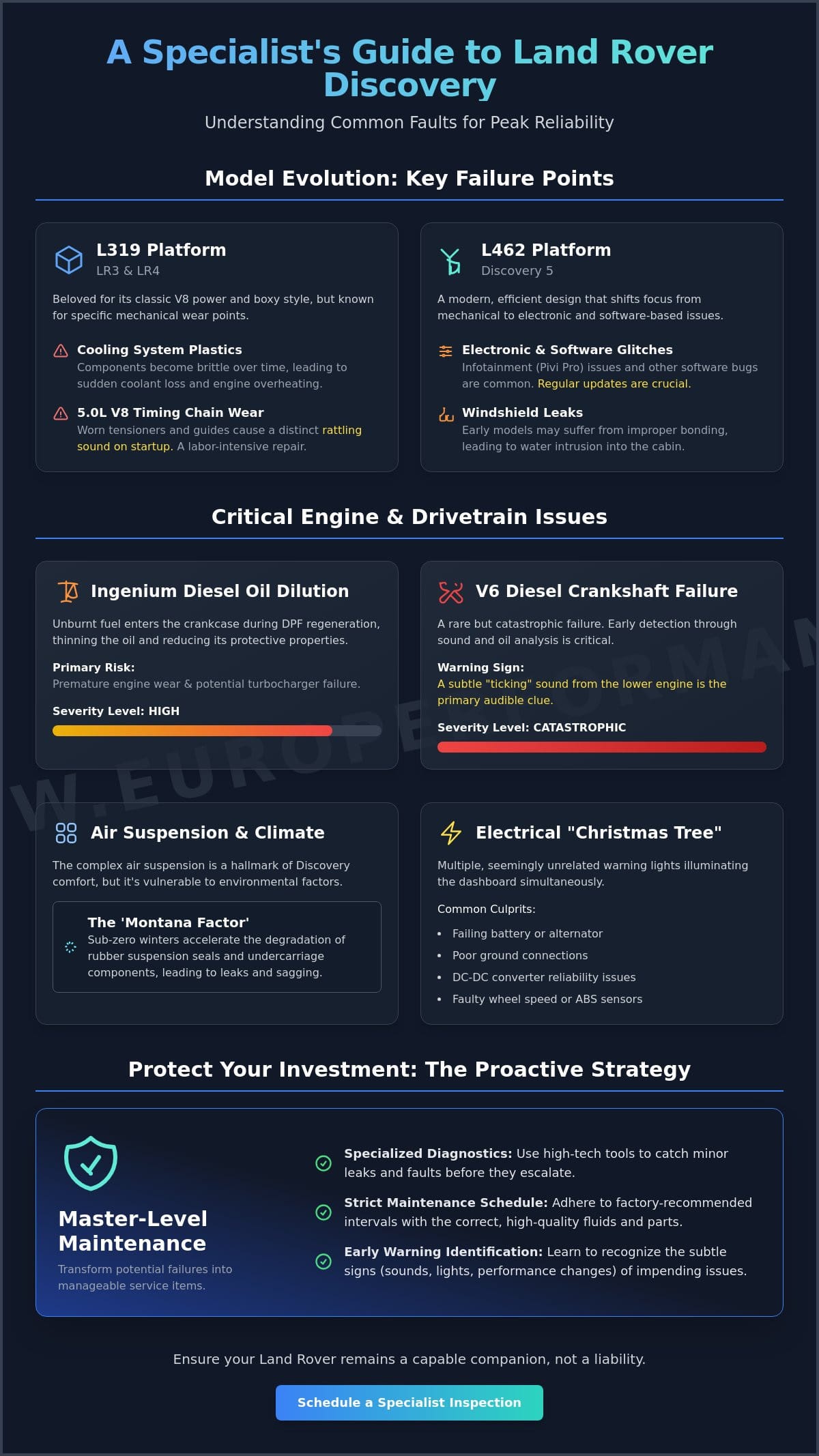
Distinguishing between the L319 platform (marketed as the LR3 and LR4) and the newer L462 (Discovery 5) is essential for any owner. While both share the same DNA, their failure points are distinct. It’s vital to remember that most “common” issues aren’t inherently catastrophic. When caught through a Master Craftsman approach to diagnostics, these faults are manageable maintenance items rather than engine-ending events.
To better understand how these systems can fail, watch this helpful video regarding air conditioning faults:
The L319 Legacy: LR3 and LR4 Challenges
The LR3 and LR4 models are beloved for their boxy styling and V8 power, but they possess notorious weak spots. The most frequent issue involves the cooling system plastics. Over time, these components become brittle, often leading to sudden coolant loss and subsequent engine overheating. Additionally, the 5.0L V8 engines in later L319 models frequently suffer from timing chain tensioner wear. If you hear a rattling sound upon startup, it’s a signal that the guides are failing. Because these repairs are labor-intensive, a specialized used car pre-purchase inspection is non-negotiable for anyone looking to buy into this legacy.
The Modern Era: Discovery 5 (L462) Expectations
The transition to the L462 platform brought a shift to lightweight aluminum architecture and the introduction of Ingenium engines. While these updates improved fuel efficiency and handling, they introduced new common land rover discovery problems for owners to monitor. Early Discovery 5 models have seen reports of windshield leaks due to bonding issues and glitches in the Pivi Pro infotainment system. Unlike the mechanical fixes of the past, maintaining a Discovery 5 requires a digital-first mindset. Consistent software updates are now just as critical for vehicle health as a physical oil change.
Critical Engine and Drivetrain Issues: Beyond the Oil Change
Land Rover powerplants are precision instruments. They require more than just a quick lube service. Using generic oils or extending drain intervals can lead to significant mechanical failures. For owners of the Ingenium 2.0L diesel, oil dilution is a primary concern. This occurs during Diesel Particulate Filter (DPF) regeneration cycles when unburnt fuel enters the crankcase. If left unchecked, this fuel-thinned oil loses its lubricating properties, potentially leading to premature engine wear or turbocharger failure.
Owners of the V6 diesel variants face a different risk: crankshaft failure. While relatively rare, the consequences are severe. Early warning signs include a subtle “ticking” sound from the lower engine or metal debris found during an oil analysis. Adhering to a strict factory scheduled maintenance plan is the best defense against these common land rover discovery problems. Precision care at the correct intervals preserves the internal components of these complex machines.
Turbocharger and Oil Dilution Risks
In Montana, short driving cycles in cold weather prevent engines from reaching optimal operating temperatures. This stops the DPF from completing its cleaning cycle, which accelerates oil dilution. You might notice a rising oil level on the dipstick or a “service required” message appearing much earlier than expected. If your turbocharger begins to whine or you experience a sudden loss of power, the lubrication system has likely been compromised. We recommend using only OE-specification filters and specialized lubricants designed to handle high-temperature turbo environments.
Transmission and Driveline Maintenance
Many manufacturers claim their transmissions are “sealed for life.” In the reality of heavy 4WD use, this is a myth. The ZF gearboxes found in the Discovery require fluid and filter changes every 50,000 to 60,000 miles to maintain smooth shifting. Neglecting this leads to shuddering or delayed gear engagement.
Driveline vibrations are another area of concern. These often stem from worn drive shaft center bearings or universal joints. If you feel a rhythmic shaking at highway speeds, it’s often a signal that your 4WD system needs attention. Seeking specialized drive shaft repair ensures these vibrations don’t damage the transfer case or differentials. If you are concerned about your vehicle’s current performance, a comprehensive mechanical evaluation can provide the clarity you need.
Air Suspension Failures and Electronic ‘Christmas Trees’
The Land Rover air suspension system is a cornerstone of the vehicle’s legendary ride quality and off-road prowess. This system relies on a network of air struts (bags), high-pressure lines, and an electric compressor to manage ride height dynamically. While it provides unparalleled comfort, it is also a source of common land rover discovery problems as the vehicle ages. When a rubber air bag develops a microscopic leak, the compressor must work overtime to maintain pressure. This constant cycling eventually leads to a burnt-out compressor, turning a simple seal replacement into a much more expensive repair.
Owners often describe the “Christmas Tree” effect, where the dashboard suddenly illuminates with multiple warning lights. In a Discovery, the electronic modules are highly interdependent. A single fault in a height sensor or an ABS wheel speed sensor can trigger a cascade of errors, disabling the Stability Control, Hill Descent Control, and the Terrain Response system simultaneously. This safety-first programming can be alarming, but it often points to a singular root cause that requires precise diagnostic equipment to isolate.
Precision is especially critical after any suspension work is performed. Because the vehicle’s safety systems rely on an exact ride height to calculate trajectory and traction, ADAS calibration is essential. If the suspension geometry is even slightly off, the cameras and radar sensors used for Lane Keep Assist and Emergency Braking may not function correctly. Ensuring these systems are synchronized is a standard part of a professional repair process.
The Air Suspension Diagnostic Process
Identifying the difference between a physical air leak and a faulty height sensor is the first step in a professional evaluation. A vehicle that sags overnight usually has a leaking strut or valve block, while a vehicle that refuses to change height despite being level often has a sensor or module issue. A failing compressor doesn’t just affect ride height; it places an immense strain on the battery and alternator as it draws excessive current to stay running. It’s important to note that independent specialists use the same factory-level diagnostic software as the dealership to perform these complex calibrations and tests.
Electrical Gremlins and Module Communication
Many “ghost” electronic errors are actually symptoms of poor battery health. Land Rovers are incredibly sensitive to voltage fluctuations; if a battery is even slightly below its optimal charge, modules will fail to communicate, triggering random warning lights. Another frequent culprit is water ingress affecting the Central Junction Box (CJB). Moisture can seep into the footwell and corrode the delicate pins in the electrical connectors, leading to erratic behavior in the lighting or security systems. Resolving these issues requires specialized European auto repair expertise, as replacing these modules necessitates advanced coding to match the vehicle’s central configuration.
The ‘Montana Factor’: Climate-Specific Discovery Faults
Montana drivers face a unique set of environmental variables that turn standard maintenance into a survival strategy for their vehicles. In Belgrade, sub-zero temperatures are more than just uncomfortable; they are a primary catalyst for common land rover discovery problems. Specifically, the extreme cold causes the rubber compounds in air suspension struts to lose their elasticity. When these seals harden and shrink in negative temperatures, air escapes, forcing the compressor to run in conditions it wasn’t designed to handle. This cycle often results in a total suspension failure exactly when you need the vehicle’s ground clearance the most.
The impact of road salt and magnesium chloride is equally significant. These de-icing agents are essential for safety on the I-90 corridor, but they are incredibly corrosive to the Discovery’s undercarriage. Regular inspections are the only way to catch corroded brake lines or seized suspension components before they require major intervention. Before the summer heat hits the Gallatin Valley, a cooling system pressure test is vital. The plastic cooling pipes mentioned in previous sections undergo intense thermal stress during the transition from winter to summer, often failing just as temperatures rise. Catching a hairline crack in May prevents a roadside boil-over in July.
Winter-Proofing Your Discovery in Belgrade
Preparing for a Montana winter involves more than just swapping tires. We recommend specific coolant mixtures that provide a higher threshold against freezing and prevent the premature fatigue of plastic housings. Extreme temperature swings also cause significant fluctuations in tire pressure, which can trigger confusing TPMS warnings. Partnering with a local shop that understands Bozeman-area driving conditions ensures your vehicle is calibrated for the specific demands of our high-elevation environment. Cold-weather battery testing is also a priority. European electronic modules require consistent voltage to prevent the “ghost” errors that often appear during the first deep freeze of the year.
Corrosion and Suspension Geometry
One of the most frustrating side effects of winter driving is the seizing of adjustment bolts. When magnesium chloride penetrates the suspension bushings, it often fuses the bolts to the sleeves. This prevents a technician from performing a proper wheel alignment, which is necessary for even tire wear and stable handling. Beyond the chassis, Montana drivers should consider more frequent cabin air filter changes. Our region’s high levels of road dust in winter and heavy pollen in spring can quickly clog filters, straining the HVAC system. This is another example of how common land rover discovery problems are often exacerbated by our local geography. If you want to ensure your vehicle is prepared for the next season, you can schedule a specialized inspection with our Belgrade team today.
Preventative Strategy: Protecting Your Discovery Investment
Owning a Land Rover Discovery is a commitment to a high-performance lifestyle, but maintaining that performance requires moving beyond a reactive mindset. A generic factory maintenance plan often suggests extended service intervals that don’t account for the heavy-duty cycles or environmental extremes found in Montana. We advocate for a “Master Craftsman” approach. This strategy prioritizes shorter oil change intervals and proactive component replacement based on wear patterns rather than waiting for a failure. By addressing common land rover discovery problems before they manifest as a breakdown, you preserve the vehicle’s sophisticated engineering and ensure its reliability for the long haul.
High-tech diagnostics play a pivotal role in this preventative strategy. Specialized scanning tools allow technicians to monitor live data from the vehicle’s modules, catching microscopic coolant leaks or slight deviations in sensor voltage that a general shop might overlook. Entrusting your vehicle to ASE certified technicians is essential. These professionals possess the specific training required to navigate the complex overlap between mechanical systems and electronic control modules. The long-term ROI of specialized care is significant. While general shops may attempt “part-swapping” to resolve a fault, a specialist identifies the root cause, preventing the same issue from recurring and saving you from redundant repair costs.
The Euro Performance Auto Shop LLC Approach
Our service model is built on technical precision and transparency. We utilize top-tier OE manufacturer parts for every repair, ensuring that the components we install meet or exceed the original engineering standards. Our facility is equipped with advanced technology for ADAS calibration and precision wheel alignment, which are critical for maintaining the safety systems and handling characteristics of the Discovery 5. We provide a personalized service experience for Belgrade and Bozeman residents, treating every vehicle as a high-value asset that requires meticulous attention to detail. This commitment to quality ensures that your Land Rover remains a capable and dependable tool for your Montana adventures.
Next Steps for Discovery Owners
If you’ve recently purchased a new or pre-owned Discovery, we encourage you to schedule a baseline inspection. This comprehensive evaluation provides a clear picture of your vehicle’s current health and allows us to establish a tailored maintenance roadmap. Keeping detailed service records is also vital; a well-documented history with a specialized shop significantly enhances the resale value of European vehicles. Taking these proactive steps today protects your investment and provides the peace of mind that comes from professional oversight. Schedule your Land Rover Discovery service at Euro Performance Auto Shop LLC today.
Restoring Confidence in Your Discovery’s Performance
Understanding the engineering behind your vehicle is the first step toward long-term reliability. We’ve explored how Belgrade’s sub-zero winters accelerate air suspension wear and why the complex Ingenium engine requires specific, proactive maintenance protocols. Effectively managing common land rover discovery problems is a matter of technical precision and specialized knowledge rather than guesswork. By choosing a service model that prioritizes preventative care over reactive repairs, you ensure your vehicle remains as capable as the day it left the showroom.
Our ASE Certified Technicians utilize specialized European diagnostic equipment and top-tier OE manufacturer parts to maintain your vehicle’s integrity. Whether you require precise ADAS calibration after a suspension repair or routine factory scheduled maintenance, we provide the technical mastery necessary for these sophisticated machines. We invite you to Schedule Your Land Rover Specialist Service in Belgrade and experience the peace of mind that comes from professional, transparent automotive care. Your next journey through the Gallatin Valley should be defined by the Discovery’s legendary capability, not the anxiety of a dashboard warning light.
Frequently Asked Questions
Is the Land Rover Discovery expensive to maintain compared to other SUVs?
Ownership costs for a Discovery are generally higher than domestic or Asian SUVs due to the complexity of its advanced 4WD systems and the requirement for specialized European components. Industry data suggests that a Discovery can cost approximately $17,665 for maintenance and repairs over its first 10 years of service. Investing in a specialist who uses OE parts helps manage these costs by preventing the repetitive failures often associated with inferior components.
How often should I change the oil in my Discovery to avoid engine problems?
We recommend changing your oil every 5,000 to 7,500 miles, especially when driving in the extreme temperature fluctuations of Montana. While some factory schedules suggest longer intervals, shorter cycles are essential to combat oil dilution in Ingenium engines and prevent premature timing chain wear. Consistent oil analysis during these services can also act as an early warning system for internal engine health.
What are the early warning signs of Land Rover air suspension failure?
The most frequent sign is finding one corner of the vehicle sagging after it has been parked overnight. You might also notice the air compressor running louder or more frequently than usual, or receive a “Normal Ride Height Only” message on the instrument cluster. Addressing these symptoms immediately prevents the compressor from burning out, which significantly reduces the total cost of the repair.
Can an independent shop in Belgrade handle Land Rover software updates?
Yes, an independent specialist equipped with factory-level diagnostic tools can perform software updates and module coding. Modern Land Rovers rely heavily on their digital architecture for everything from infotainment to engine management. A specialized shop in Belgrade provides the same technical capabilities as a dealership, ensuring your vehicle’s Pivi Pro system and control modules stay current.
Will using an independent specialist void my Land Rover factory warranty?
Using an independent repair facility does not void your factory warranty as long as the maintenance meets the manufacturer’s standards. The Magnuson-Moss Warranty Act protects your right to choose where your vehicle is serviced. By keeping detailed records of your factory scheduled maintenance at a specialized shop, you maintain your warranty coverage while benefiting from personalized, expert care.
Are Land Rover Discovery models reliable for Montana winters?
The Discovery is exceptionally capable in snow, but its reliability in sub-zero temperatures depends on proactive winter-proofing. The “Montana Factor” means air suspension seals and batteries are under much higher stress here than in milder climates. If you prioritize cold-weather testing and cooling system inspections, the Discovery is one of the most capable winter vehicles on the road.
What is the most common engine problem in the Discovery 5?
Oil dilution in the 2.0L Ingenium diesel and cooling system leaks in gasoline models are the most common land rover discovery problems for the L462 platform. Fuel entering the oil supply during DPF regeneration can compromise lubrication if not monitored closely. Regular pressure tests of the cooling system are also vital to ensure the plastic coolant housings haven’t developed hairline fractures.
Why is my Land Rover showing multiple dashboard warning lights at once?
This “Christmas tree” effect is typically triggered by a single fault in a shared sensor or a drop in battery voltage. Because the traction control, air suspension, and braking systems are all interconnected, one failing wheel speed sensor can disable multiple systems simultaneously. A professional diagnostic scan is required to isolate the specific module or sensor causing the communication breakdown.