
Blog

Can a precision-engineered German machine actually survive 200,000 miles of Montana’s punishing winters and gravel-strewn backroads? Many owners believe that high mileage in the Big Sky Country is reserved only for heavy-duty trucks; however, your BMW is more capable than you might think. You’ve likely felt the anxiety of a -30°F cold start or worried about road salt eating away at your chassis during a long Gallatin County winter. These concerns are valid. Our environment presents mechanical challenges that standard factory maintenance manuals simply don’t account for.
We understand that you want the peace of mind that comes with a reliable, high-performing vehicle. This guide reveals exactly how to make a bmw last 200k miles in montana by using proactive, region-specific strategies. You’ll discover how to protect your cooling system from remote failures, combat corrosive de-icing agents, and implement a maintenance roadmap designed for extreme longevity. We’ll also explain why partnering with a specialized Belgrade technician who utilizes OE-standard components and advanced diagnostics is the most effective way to keep your vehicle performing at its peak for years to come.
Key Takeaways
- Master the environmental protections and mechanical strategies involved in how to make a bmw last 200k miles in montana.
- Learn why ignoring “lifetime” fluid claims and sticking to 5,000-mile oil changes is vital for protecting your drivetrain in extreme temperatures.
- Identify how to safeguard your chassis against corrosive de-icing agents and maintain safety through precision wheel alignment after tackling Montana’s winter roads.
- Discover the importance of addressing the “Big Three” BMW oil leaks proactively to prevent unexpected repairs in remote areas.
- Understand the benefits of using ASE certified technicians and original equipment parts to maintain the precision engineering of your European vehicle.
The Montana Challenge: Why 200,000 Miles Requires a Specific Strategy
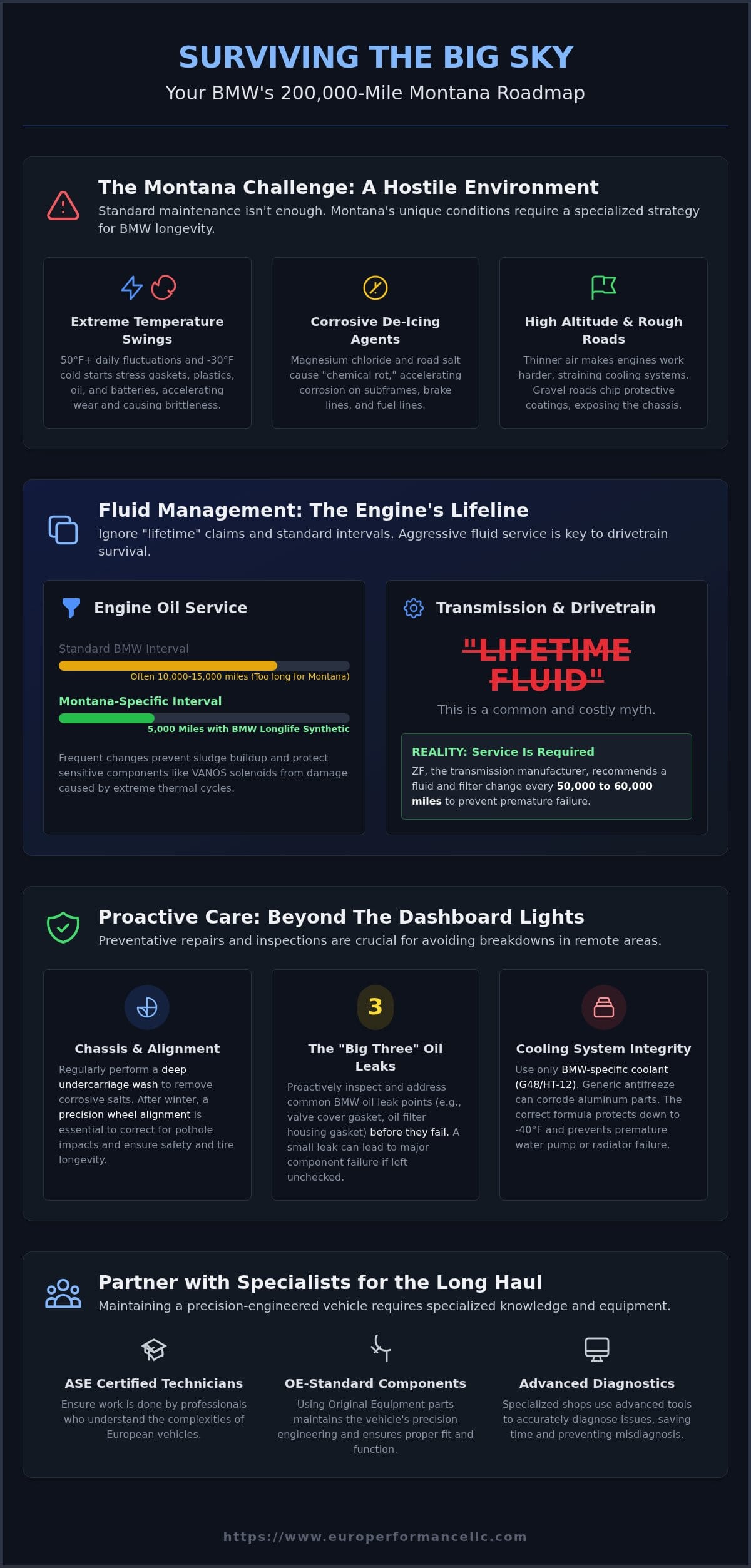
Achieving high mileage in a performance vehicle isn’t a matter of luck. In Belgrade and the surrounding Gallatin Valley, it’s a deliberate engineering challenge. A “200k Montana BMW” is the result of an owner who understands that our local environment is fundamentally different from the Autobahn or the California coast. High-altitude driving in our region means your engine works harder to compensate for thinner air. This increased workload places unique demands on oxygen sensors and cooling systems that aren’t typically seen at sea level. If you want to know how to make a bmw last 200k miles in montana, you must start by acknowledging that the environment is your primary opponent.
Beyond the atmosphere, we face physical threats. Gravel from mountain passes chips away at protective coatings, while local wildlife and unpredictable road debris require a vehicle that is mechanically sound and responsive. Understanding routine vehicle maintenance as a baseline is helpful, but pushing past the 200,000-mile mark requires a more rigorous, localized approach. Extreme temperature fluctuations, often swinging 50 degrees in a single day, cause rubber gaskets and plastic cooling components to expand and contract rapidly. This cycle leads to premature brittleness and eventual failure if not monitored closely.
The Impact of Extreme Cold on BMW Engineering
When temperatures drop to -30°F, engine oil consistency changes significantly. It becomes thick and resistant to flow, which increases internal friction during those critical first seconds after ignition. This is when the most engine wear occurs. While many drivers think “letting it warm up” at idle for twenty minutes is helpful, it actually prolongs the period of low oil pressure and can cause fuel dilution in the oil. It’s better to drive gently after a short initial circulation period. Additionally, extreme cold puts immense stress on your battery and the complex electrical modules that manage your BMW’s performance.
Road Salt and Magnesium Chloride: The Silent Killers
Montana road treatments are necessary for safety, but they are devastating to European engineering. Magnesium chloride and traditional road salt are hygroscopic; they pull moisture from the air and hold it against your car’s undercarriage. This accelerates corrosion on aluminum subframes and can lead to “chemical rot” in vital brake and fuel lines. A standard car wash often misses the crevices where these chemicals hide. Success requires moving beyond surface-level cleaning. You must prioritize deep undercarriage protection and regular inspections of the chassis to ensure these treatments don’t compromise your vehicle’s structural integrity over the long haul.
Fluid Management: The Lifeline of Your BMW’s Engine and Drivetrain
To understand how to make a bmw last 200k miles in montana, you must move beyond the manufacturer’s standard service lights. While modern BMWs utilize Condition Based Service (CBS) indicators, these intervals often prioritize low cost of ownership during the initial lease period rather than two decades of durability. In Belgrade’s climate, engine oil faces extreme thermal cycles. We recommend a 5,000-mile oil change interval using specialized European synthetic oils that meet BMW Longlife standards. These lubricants maintain their viscosity during sub-zero starts and high-altitude climbs, preventing sludge buildup and protecting delicate VANOS solenoids and timing chain components.
Antifreeze is more than just a winter safeguard; it’s a chemical protector for your engine’s internal surfaces. BMW-specific coolants, such as BMW Blue (G48) or the newer HT-12, are formulated to protect the aluminum and plastic components within your cooling system. Using generic, all-purpose coolant can lead to premature water pump failure or radiator leaks due to chemical incompatibility. Preparing your car for emergencies in Montana includes ensuring your cooling system is filled with the correct chemical balance to withstand -40°F without crystallizing or corroding internal seals.
Transmission and Differential Service Intervals
The “Lifetime Fluid” claim made by many manufacturers is a frequent cause of drivetrain failure as vehicles approach 100,000 miles. ZF, the manufacturer of many BMW transmissions, recommends fluid and filter changes every 50,000 to 60,000 miles to ensure longevity. Neglecting this service leads to shift lag, increased friction, and eventual torque converter shudder. For xDrive models, the transfer case fluid is equally critical. Fluid degradation in the transfer case often manifests as a slight hesitation during acceleration or low-speed turns long before a warning light appears on the dashboard.
Brake Fluid and Power Steering Maintenance
Brake fluid is naturally hygroscopic, meaning it absorbs moisture from the atmosphere over time. During long mountain descents in the Gallatin Range, this moisture can turn to steam under high heat, causing a spongy pedal or dangerous brake fade. Regular flushes every two years are essential to prevent internal corrosion within the expensive ABS and DSC modules. Additionally, your steering system requires specific hydraulic fluids like Pentosin or BMW-branded steering oil to ensure the pump survives Belgrade’s coldest winter mornings. Prioritizing these services through specialized European auto repair ensures your BMW remains safe and responsive throughout its life.
Protecting the Chassis: Fighting Rust and Road Grit in Belgrade
High-mileage goals depend on the structural integrity of the chassis. In Belgrade, suspension bushings are often the first components to fail because extreme cold makes rubber brittle. This loss of elasticity leads to cracks that allow road grit and moisture to penetrate the joint. When considering how to make a bmw last 200k miles in montana, you must account for the physical toll of frost heaves and gravel roads. Regular inspections of CV boots and drive shafts are mandatory. A single tear in a rubber boot allows abrasive grit to enter the joint, leading to a costly replacement that could have been avoided with a simple visual check during routine maintenance. Protecting the undercarriage with specialized coatings or frequent professional cleaning removes the magnesium chloride that accelerates aluminum oxidation.
Alignment and ADAS Calibration for Safety
Montana’s spring thaw creates significant potholes that can instantly knock a BMW’s precision suspension out of spec. A slight misalignment does more than just wear down expensive tires; it compromises your stability on icy Bozeman roads. Modern BMWs rely on integrated safety systems that require precise sensor positioning. This is why a professional wheel alignment is often linked to ADAS calibration. Generic shops often lack the specialized European alignment tools required to calibrate these complex systems accurately. Maintaining this alignment ensures your vehicle’s safety features function exactly as the engineers intended during a critical moment.
Rubber and Plastic Component Longevity
Longevity also requires a proactive approach to the “Cooling System Refresh” every 80,000 to 100,000 miles. BMW uses high-quality plastics and rubber, but the thermal stress of sub-zero starts followed by high operating temperatures causes these parts to degrade over time. Belt tensioners and pulleys are particularly vulnerable in Montana’s dusty air, which can act as an abrasive on the bearings. To reach the 200,000-mile milestone, your maintenance checklist must include replacing control arm bushings and ball joints before they cause secondary damage to the steering rack or subframe. These steps preserve the vehicle’s structural foundation and ensure that how to make a bmw last 200k miles in montana becomes a reality rather than an aspiration. Focusing on these high-wear items before they fail prevents the cascading mechanical issues that often sideline high-mileage European vehicles.
Proactive Maintenance: Beyond the Dashboard Service Lights
Reaching high mileage requires a shift from reactive repairs to a philosophy of Factory Scheduled Maintenance. This approach is central to how to make a bmw last 200k miles in montana. You must address the “Big Three” BMW leaks: the oil filter housing, valve cover, and oil pan gaskets. These components often fail due to the thermal cycling mentioned earlier. If left unchecked, an oil filter housing leak can drip onto the serpentine belt. This causes the belt to slip or shred; it can then be ingested through the front main seal, causing catastrophic engine damage that often totals a high-mileage vehicle.
Modern Gasoline Direct Injection (GDI) engines also face internal challenges. Carbon buildup on intake valves is a byproduct of this design. It requires professional walnut blasting every 100,000 miles to maintain engine efficiency and throttle response. Additionally, specific engines require a close watch on timing chain guides. Replacing these plastic guides before they shatter is a critical investment for long-term engine reliability. These steps ensure your engine remains healthy enough to handle the demands of mountain driving.
The 100k-Mile Refresh Strategy
The transition from 100,000 to 200,000 miles is the most difficult phase of ownership. During this period, the fuel pump and ignition coils should be treated as wear items rather than lifetime components. Replacing these proactively prevents being stranded on a remote mountain pass during a winter storm. Scheduling a pre-purchase inspection is a wise move for current owners too. It provides a comprehensive health report that identifies hidden issues before they escalate into major repairs, giving you a clear roadmap for the next 100,000 miles.
Electrical System Integrity
Montana’s extreme cold demands a perfect electrical system. BMWs require battery registration; this software process tells the Intelligent Battery Sensor (IBS) how to charge a new battery based on its age and capacity. Skipping this step shortens the life of your new battery and puts undue stress on the alternator. Ground strap corrosion is another silent issue in our region. Salt and moisture can rot these cables, leading to mysterious no-start conditions or electronic glitches. Maintaining these connections is a vital part of how to make a bmw last 200k miles in montana. To ensure your vehicle is ready for the long haul, schedule your next service with Specialized European Auto Repair in Belgrade.
Partnering with a Specialized Belgrade Shop for the Long Haul
Navigating the path to 200,000 miles requires more than just general maintenance; it demands a partnership with a facility that understands the nuance of German engineering. ASE certified technicians are essential for this journey because they possess the technical proficiency to manage complex BMW diagnostics that general shops often overlook. This expertise is a cornerstone of how to make a bmw last 200k miles in montana. Furthermore, the quality of components used during service cannot be compromised. Euro Performance Auto Shop LLC prioritizes Original Equipment (OE) parts because they are manufactured to the precise tolerances required by your vehicle. Cheap aftermarket alternatives frequently fail to withstand the extreme thermal cycles and road vibration common in the Gallatin Valley, leading to premature failures that can derail your longevity goals.
Building a comprehensive service history is about more than just record-keeping; it’s about maintaining the structural and mechanical integrity of a high-value asset. A consistent relationship with a specialized shop allows for a longitudinal view of your vehicle’s health. Even a routine specialized oil change in Bozeman serves as a professional baseline inspection, allowing technicians to monitor the “Big Three” leaks and chassis health discussed earlier. This level of oversight provides the peace of mind that your BMW is prepared for long-distance travel across Montana’s vast landscape.
The Benefit of Specialized European Tools
Using specialized European diagnostic tools is non-negotiable for high-mileage success. These systems allow for deep-level coding and adaptations, such as battery registration or resetting transmission adaptions, which are vital for system longevity. By identifying a failing sensor or a slight deviation in engine performance early, advanced diagnostics can prevent a minor issue from escalating into a catastrophic engine failure. Belgrade residents benefit from having this level of master-craftsman expertise locally, eliminating the need for a long drive to out-of-town dealerships while maintaining a superior standard of care.
Your 200k Mile Roadmap Starts Here
Your individual roadmap to the 200,000-mile mark begins with a comprehensive health evaluation. This assessment goes beyond a basic checklist to analyze your BMW’s specific needs based on your driving habits and the unique environmental stressors of our region. This structured, process-oriented approach is the most effective method for how to make a bmw last 200k miles in montana. By developing a personalized plan today, you ensure your vehicle remains a high-performance machine for years to come. Schedule your high-mileage BMW consultation with Euro Performance Auto Shop LLC today!
Secure the Future of Your High-Performance BMW
Achieving high mileage in the Big Sky Country isn’t a matter of chance; it’s the result of a disciplined, technical strategy. By prioritizing 5,000-mile oil changes and protecting your chassis from the corrosive de-icing agents used in Gallatin County, you’re already ahead of the curve. You’ve learned that understanding how to make a bmw last 200k miles in montana requires moving beyond standard dashboard alerts and embracing a proactive refresh of vital cooling and electrical components. This methodical approach ensures your vehicle remains a reliable asset rather than a liability.
This level of precision is best handled by experts who share your commitment to excellence. Our team utilizes ASE Certified Technicians and specialized BMW diagnostic equipment to ensure every adjustment meets factory standards. We exclusively use premium OE manufacturer parts to maintain the integrity of your engine’s design and survive our extreme thermal cycles. Keep Your BMW on the Road for the Long Haul-Schedule Your Service at Euro Performance Auto Shop LLC today. With the right roadmap and a dedicated partner in Belgrade, your vehicle can continue to perform at its peak for many years to come.
Frequently Asked Questions
Is it worth fixing a BMW with over 150,000 miles?
Fixing a BMW with 150,000 miles is often a sound investment if the vehicle’s structural foundation is healthy. By this mileage, most major wear items have either failed or been replaced. If you follow a proactive maintenance plan using OE parts, the engine and drivetrain are capable of significant longevity. Maintaining a well-cared-for vehicle is typically more economical than the depreciation and insurance costs associated with a newer replacement.
What is the most common reason BMWs fail to reach 200k miles?
The most frequent cause of failure is reactive maintenance. Many owners wait for a catastrophic failure or a dashboard warning light before seeking service. In reality, issues like brittle cooling system plastics or oil filter housing leaks develop slowly. If these aren’t addressed during routine inspections, they can lead to engine overheating or belt ingestion. Proactive care is the only reliable way to prevent repairs that exceed the vehicle’s market value.
How often should I change my BMW oil in Montana?
Montana’s extreme temperature swings and high-altitude environment demand more frequent service. We recommend changing your oil every 5,000 miles using high-quality European synthetic lubricants. The factory-recommended intervals of 10,000 miles or more don’t account for the fuel dilution and moisture buildup caused by -30°F starts. This more frequent schedule is a fundamental step in how to make a bmw last 200k miles in montana while protecting internal engine components.
Can I use regular antifreeze in my BMW?
You should never use generic, all-purpose antifreeze in a BMW. These engines require specific formulations like BMW Blue or HT-12 to protect aluminum components and internal seals. Standard coolants often contain additives that can cause scaling or chemical erosion within the cooling passages. Using the incorrect fluid can lead to premature water pump failure or clogged heater cores. Always stick to OE-specification fluids to ensure the chemical integrity of your system.
Does Montana road salt really ruin BMW subframes?
Road treatments used in Gallatin County are exceptionally aggressive toward European chassis designs. Magnesium chloride is hygroscopic, meaning it attracts moisture and holds it against metal surfaces. This accelerates oxidation on aluminum subframes and can cause brake lines to fail prematurely. We recommend regular undercarriage cleaning and professional inspections. Catching surface corrosion early is vital for preserving the vehicle’s structural safety as you push toward high-mileage milestones.
What is the “BMW Cooling System Refresh” and when do I need it?
A cooling system refresh is a proactive replacement of the water pump, thermostat, expansion tank, and various plastic hoses. This service is typically required every 80,000 to 100,000 miles. Because BMW uses plastic cooling components that become brittle over time, waiting for a leak often results in a dangerous overheat. Replacing these items as a complete kit ensures your cooling system remains pressurized and reliable during long summer drives or extreme winter idling.
How do I know if my BMW needs a specialized alignment?
If you notice your steering wheel is off-center or your tires are wearing unevenly, an alignment is necessary. However, specialized alignment is crucial for BMWs equipped with Advanced Driver Assistance Systems. When the physical alignment changes, sensors for adaptive cruise control and lane-departure warnings must be recalibrated. Choosing a shop with specialized European alignment tools ensures that your mechanical adjustments and electronic safety features are perfectly synchronized for the safest possible driving experience.
Why do European cars need specific batteries and registration?
Modern European vehicles use sophisticated power management modules that adjust the alternator’s output based on the battery’s age. When a new battery is installed, it must be registered through the vehicle’s software. This tells the computer to reset its charging strategy for a fresh battery. If you skip this step, the system will overcharge the new battery as if it were the old, failing one. This leads to premature battery failure and electronic glitches.