
Blog
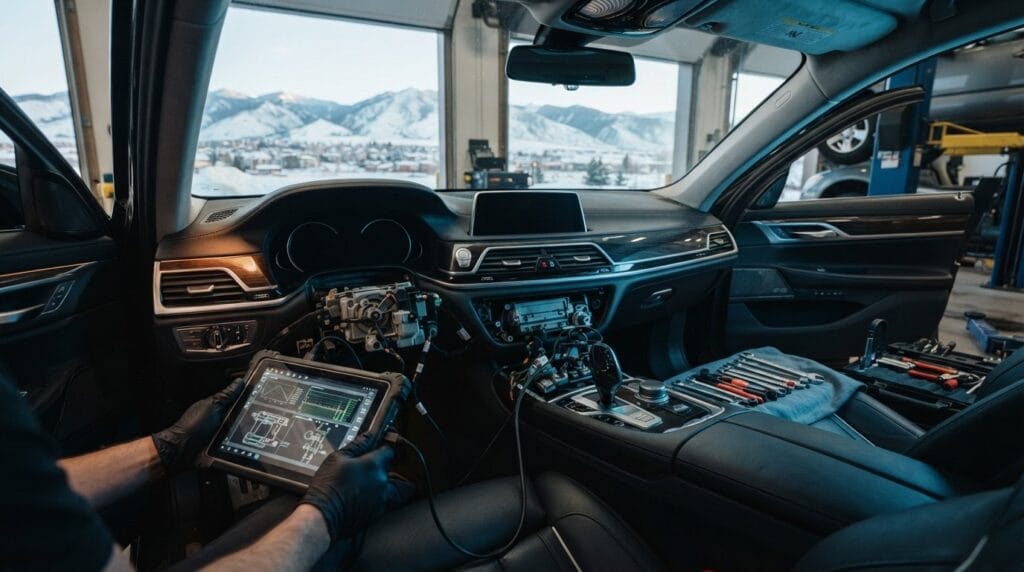
What if the most sophisticated climate control system in the world is currently working against you, leaving your passenger shivering while you are blasted with unwanted heat? You expect your Mercedes-Benz to provide a sanctuary from the harsh Montana elements, yet inconsistent cabin temperatures often turn a luxury drive into a frustrating guessing game. It’s common to feel overwhelmed by conflicting forum advice or the looming threat of an expensive dealership visit when facing mercedes dual zone climate control problems. We understand that your vehicle is a high-value asset that requires precision engineering rather than guesswork.
You don’t have to settle for a compromised cabin or blind part-swapping. Discover why your Mercedes-Benz climate control is failing and how specialized diagnostics can restore your cabin comfort. This guide examines the mechanical differences between traditional Duo Valve failures and modern blend door motor issues. We will break down the symptoms of failed stepper actuators and explain how professional tools like the XENTRY system identify faults that generic scanners miss. By the end of this article, you’ll have a clear diagnostic plan to present to a specialist and a thorough understanding of the steps required to restore perfect dual-zone functionality for every passenger.
Key Takeaways
- Identify the root cause of the “one side hot, one side cold” phenomenon and how it relates to common mercedes dual zone climate control problems.
- Differentiate between Duo Valve solenoid failures and internal blend door actuator issues to avoid misdiagnosing your vehicle’s complex HVAC system.
- Learn why a “low Freon” recharge is often a temporary mask for deeper component failures or sensor inaccuracies rather than a permanent fix.
- Understand the critical role of specialized diagnostic software in calibrating the Climate Control Unit and reading evaporator temperature sensors.
- Discover how utilizing a specialist equipped with factory-grade tools in the Gallatin Valley ensures your cabin comfort is restored using methodical, OE-standard procedures.
Mercedes Dual Zone Climate Control Problems: Identifying the Symptoms
Mercedes-Benz owners expect a seamless, “set and forget” cabin experience. The dual-zone architecture relies on a complex network of sensors and actuators to maintain independent passenger comfort. When mercedes dual zone climate control problems emerge, the symptoms are often distinct and frustrating. These issues disrupt the meticulous engineering designed to keep you comfortable during Montana’s seasonal extremes.
Understanding these failures requires looking beyond basic automotive air conditioning systems found in domestic vehicles. While a standard car might simply lose cooling capacity, a Mercedes often exhibits asymmetrical temperature delivery. This precision engineering means that a failure in one small component can throw the entire cabin thermoregulation out of balance.
To better understand this concept, watch this helpful video:
The One-Side-Hot Failure
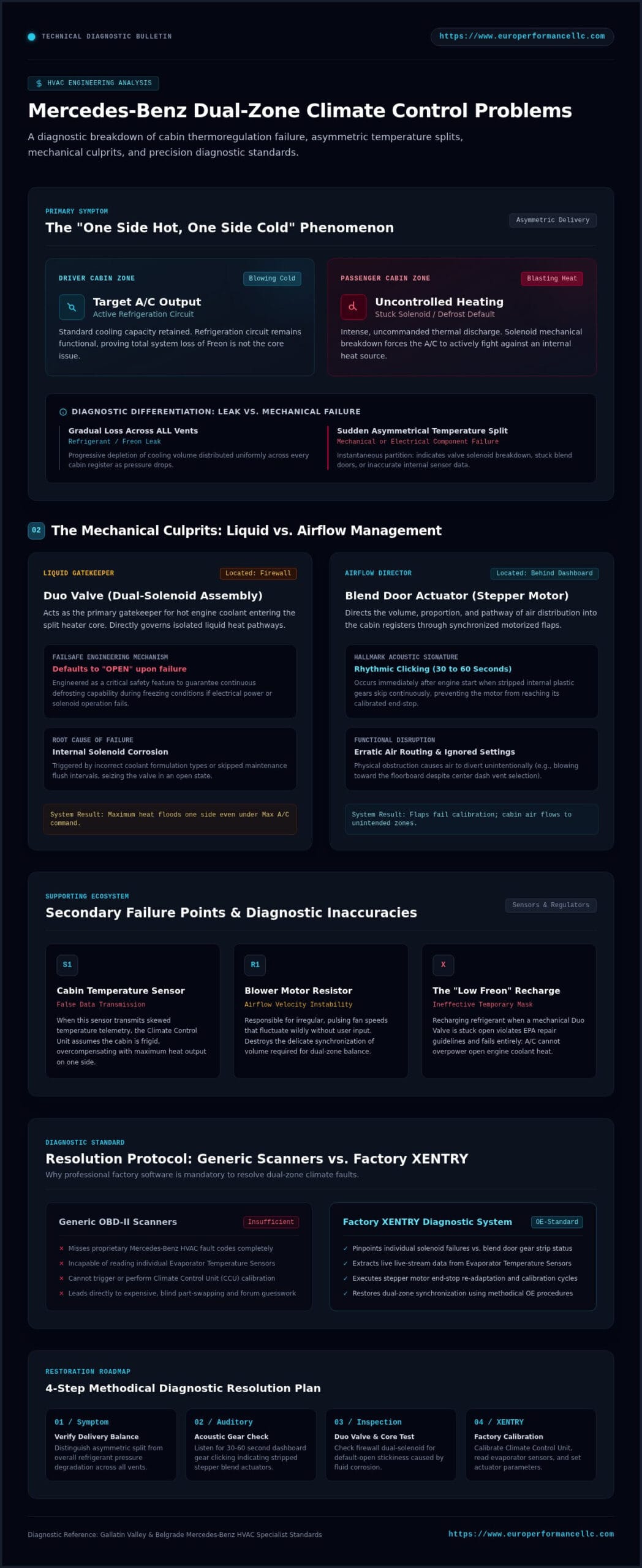
One of the most frequent complaints involves the driver side blowing cold air while the passenger side emits intense heat. This usually points to a failing Duo Valve. In Mercedes engineering, these valves are designed to default to the “open” position if they lose electrical power or the solenoid fails. This serves as a critical safety feature to ensure defrosting capability in freezing conditions. Unlike a refrigerant leak, which typically results in a gradual loss of cooling across all vents, a sudden temperature split is almost always a mechanical or electrical component failure. A malfunctioning cabin temperature sensor can also trigger this symptom by sending false data to the control unit, causing it to overcompensate with maximum heat on one side.
Clicking Noises and Airflow Issues
A rhythmic clicking or ticking sound behind the dashboard is a hallmark sign of a failing blend door actuator. This sound typically occurs for 30 to 60 seconds after you start the engine. It happens when the plastic gears inside the stepper motor strip, preventing the motor from reaching its calibrated end-stop. You might also notice erratic airflow where the system ignores your manual settings. For instance, the system may blow air toward the floor even when you’ve selected the center vents. If you experience inconsistent fan speeds that pulse or fluctuate wildly without input, the blower motor resistor is likely the culprit. These components must work in perfect synchronization to manage the delicate balance of air distribution and volume your Mercedes requires.
The Mechanical Culprits: Duo Valves and Blend Door Actuators
While symptoms like temperature splits are obvious, the mechanical root causes of mercedes dual zone climate control problems usually reside in two specific components: the duo valve and the blend door actuators. These parts act as the physical hands of the climate control computer. One manages the flow of hot liquid while the other directs the flow of air. When they fail, the system loses its ability to isolate temperatures, leading to the cabin discomfort described in the previous section.
The duo valve, often located near the firewall, is a dual-solenoid assembly. It functions as the gatekeeper for hot engine coolant entering the split heater core. Mechanical failures often stem from internal corrosion. This happens when owners use incorrect coolant types or skip scheduled maintenance flushes. If the valve sticks open, hot coolant flows into the heater core even when you’ve set the A/C to max. This forces the air conditioning to fight against a massive internal heat source. Following EPA vehicle A/C recharging and leak repair guidelines is essential because “topping off” a system with a mechanical valve failure is ineffective and environmentally irresponsible.
Anatomy of the Mercedes Duo Valve
This component uses two electromagnetic plungers to independently control the left and right heater core segments. An electrical solenoid failure means the valve can’t receive instructions from the control module. Because these are normally open valves, a loss of power or a burnt-out coil results in maximum heat delivery to that zone. This fail-safe ensures you have a defroster in winter, but it makes summer driving unbearable.
Blend door actuators are small stepper motors that physically move the internal flaps within the HVAC box. Mercedes engineers utilize precision plastic gears inside these motors to manage weight and noise. Over time, heat cycles and age make this plastic brittle. Eventually, a tooth on the gear snaps. This leads to the rhythmic clicking sound mentioned earlier as the motor tries to find its home position.
The Complexity of Blend Door Replacement
Replacing these actuators is often labor-intensive. Many motors are buried deep behind the dashboard, requiring hours of careful disassembly. A professional diagnostic plan always begins with a software re-sync through the control module. This process attempts to recalibrate the flap positions. If software fails, physical replacement with OE-quality parts is the only reliable solution. Using high-quality components ensures the gears can withstand the high-torque demands of the system for another decade. If you’re experiencing these issues in the Gallatin Valley, consulting a specialized European technician can prevent unnecessary part-swapping and ensure the job is done right the first time.
Precision Sensors and Control Modules: The Brain of the System
The Climate Control Unit (CCU) is the central hub for all HVAC data processing, acting as the sophisticated computer that manages cabin thermoregulation. It doesn’t just respond to your dial turns; it constantly interprets a stream of data from across the vehicle. When you encounter mercedes dual zone climate control problems, the issue is often a “brain” failure rather than a “muscle” failure. These electronic glitches can cause the system to behave erratically, even if the mechanical valves and motors are in perfect condition.
The CCU relies on a network of sensors to understand the environment. Sun sensors on the dashboard measure solar radiation, while internal thermistors monitor the actual air temperature in different zones. If these sensors provide inaccurate data, the CCU might blast cold air on a sunny winter day or fail to provide enough heat when the sun goes down. This level of complexity requires a methodical diagnostic approach to separate sensor inaccuracies from mechanical blockages.
The Role of the Evaporator Temp Sensor
The evaporator temperature sensor is a critical safety and performance component. Its primary job is to monitor the temperature of the evaporator core to prevent it from icing over. If this sensor fails, it often sends a false reading suggesting the core is freezing. The CCU then shuts down the compressor to protect the system. This creates a “phantom” problem where the A/C works perfectly for 10 to 15 minutes and then abruptly blows warm air. It’s a frequent issue in Mercedes E-Class and S-Class models that often leads owners to believe they have a mechanical leak. Adhering to EPA motor vehicle air conditioning servicing guidelines ensures that technicians look for these sensor faults before performing unnecessary refrigerant recharges.
Software Calibrations and Module Coding
Modern Mercedes-Benz HVAC systems are deeply integrated into the vehicle’s electronic architecture. If a CCU fails, a simple replacement isn’t possible. The new unit requires specialized coding to match the vehicle’s specific VIN and option list. Technicians must also perform a “Normalization” process. This teaches the various actuators their specific range of motion, ensuring the flaps close tightly and open fully. Without this calibration, the system may never achieve the precision comfort the brand is known for. Regular factory scheduled maintenance provides an opportunity for specialists to scan for stored HVAC fault codes. These “silent” codes often appear long before you notice a change in cabin temperature, allowing for proactive repairs that prevent mercedes dual zone climate control problems from escalating into total system failure.
Diagnostics: Differentiating Refrigerant Issues from Component Failure
Many owners assume that warm air from the vents simply requires a quick trip to the auto parts store for a refrigerant canister. However, mercedes dual zone climate control problems are rarely solved by a simple recharge. In a precision-engineered European HVAC system, a temperature split where one side is cold and the other is hot almost always indicates a component failure rather than a lack of gas. While low refrigerant can occasionally cause one side of the evaporator to cool more than the other, this symptom is usually accompanied by a distinct hissing sound from the dashboard as the expansion valve struggles with a low charge.
Professional diagnostics begin with reading high-side and low-side pressure gauges. A technician uses these readings to rule out the compressor or a restricted expansion valve. For example, if the low-side pressure is unusually high and the high-side is low, the compressor’s internal control valve has likely failed. A general OBD-II scan tool often misses these nuances because it cannot access the proprietary Mercedes HVAC sub-codes. To truly see what is happening, a specialist uses the Star Diagnosis System (SDS) or XENTRY platform to monitor real-time data from every actuator and sensor in the cabin.
Low Refrigerant vs. Mechanical Failure
When refrigerant is low, the entire system’s cooling capacity drops. You might notice that the air is “cool” but not “cold” across all vents. In contrast, a mechanical failure like a stuck duo valve or a broken blend door gear results in one zone being significantly hotter than the other. This happens because the heater core is actively fighting the air conditioning. Attempting to fix this with a “DIY recharge kit” is risky for several reasons:
- Pressure Sensor Damage: Overcharging the system can blow out delicate electronic pressure sensors.
- Sealant Contamination: Many DIY kits contain “stop-leak” chemicals that gum up the variable displacement compressor.
- Inaccurate Filling: Without a professional recovery machine, it is impossible to know the exact weight of the refrigerant currently in the system.
The Professional Diagnostic Path
Restoring your cabin comfort requires a methodical approach that mirrors the engineering of the vehicle itself. A specialist follows a structured process to isolate the fault without wasting time on unnecessary part replacements. This precision ensures that the high-value components of your Mercedes-Benz are handled with care.
Step 1: Visual and Thermal Inspection. Technicians check the duo valve for external leaks and use thermal imaging or probes to verify the temperature of the coolant lines entering the cabin.
Step 2: Electronic Module Scan. Using factory-grade tools, the specialist checks for stored faults in the Climate Control Unit. This includes looking for “normalization” errors that indicate a flap motor has lost its position.
Step 3: Component Activation Tests. The diagnostic computer can manually override the system to cycle the duo valve or move specific blend doors. If the computer commands a door to open but the temperature doesn’t change, the mechanical failure is confirmed.
If you are tired of inconsistent temperatures and want a definitive answer, schedule a specialized diagnostic session with our ASE-certified team to restore your Mercedes-Benz to factory standards.
Specialist Repair in Belgrade: Restoring Your Mercedes Comfort
Addressing mercedes dual zone climate control problems requires more than just basic mechanical skill. It demands a deep understanding of German engineering and the specific communication protocols used by your vehicle’s onboard computers. In the Gallatin Valley, your luxury vehicle deserves a level of attention that generalist shops aren’t equipped to provide. Domestic-focused repair centers often lack the proprietary software necessary to calibrate a new Climate Control Unit or perform the critical normalization procedures required for flap actuators. Taking a precision instrument to a generalist can lead to incomplete repairs and recurring issues.
At Euro Performance Auto Shop LLC, we prioritize the integrity of your vehicle’s HVAC system by using only OE parts. While aftermarket components might offer a lower initial cost, they often fail to meet the tight tolerances required by Mercedes-Benz actuators and solenoid valves. Using inferior parts in a labor-intensive dashboard repair is a false economy. Our precision diagnostics ensure we identify the exact failure point, leading to a cost-effective solution that fixes the problem right the first time. We treat your car as a high-value asset, ensuring every repair mirrors the quality of the original manufacturing.
Why Specialized European Diagnostics Matter
Our ASE-certified technicians treat every repair with a master craftsman approach. We understand the meticulous nature of Mercedes dashboard work, where dozens of delicate plastic clips and hidden fasteners must be handled with extreme care. This methodical process prevents the rattles and squeaks often associated with amateur interior repairs. By utilizing factory-grade tools, we can see deep into the HVAC sub-codes that generic scanners miss. We stand behind our expertise with a 24-month, 24,000-mile warranty on specialized repairs, providing you with the peace of mind that your investment is in capable hands.
Schedule Your Mercedes Service at Euro Performance Auto Shop
Don’t let Montana’s extreme temperature swings compromise your driving experience. Whether you’re local to Belgrade or traveling from Bozeman, our shop is conveniently located to provide the high-level European performance service your vehicle requires. We invite you to visit us for a comprehensive HVAC evaluation to ensure your cabin remains a sanctuary of comfort regardless of the weather outside. Contact us today to ensure your Mercedes-Benz is ready for the road ahead by trusting the specialists who truly understand its complexity.
Restore Your Mercedes-Benz Cabin Comfort Today
You deserve a cabin that responds precisely to your settings. Resolving mercedes dual zone climate control problems requires a methodical approach that looks beyond simple refrigerant levels to address the complex interplay of Duo Valves, blend door actuators, and precision sensors. We have explored how identifying the specific “one-side-hot” symptom or rhythmic dashboard clicking sounds can prevent unnecessary repairs and protect your vehicle’s long-term integrity.
Our ASE-certified European specialists use dealership-grade diagnostic technology to pinpoint faults with surgical precision. We are proud to serve the Belgrade and Bozeman communities with the master craftsman standards your high-value asset demands. By choosing specialized care and OE-quality components, you ensure that your climate system functions exactly as the engineers intended, even during Montana’s harshest winters or hottest summer afternoons.
Don’t settle for inconsistent temperatures or confusing forum advice. Schedule Your Mercedes Climate Control Diagnostic at Euro Performance LLC to restore your peace of mind and cabin comfort. Let us help you return to the luxury driving experience you expect.
Frequently Asked Questions
Why is my Mercedes blowing hot air on the driver side and cold on the passenger side?
This asymmetrical temperature delivery typically indicates a failed duo valve or a malfunctioning blend door actuator. In Mercedes-Benz engineering, the heater control valve defaults to the open position when it loses electrical power or fails mechanically. This ensures you have heat for defrosting in cold weather, but it causes one zone to blow hot air even when the A/C is engaged. A professional diagnostic scan can confirm if the solenoid has failed electronically.
How much does it cost to fix a Mercedes duo valve?
The total cost for this repair varies based on your specific chassis and whether the solenoid coils or the entire valve assembly require replacement. While the physical part is accessible on many models, the labor involves cooling system bleeding and electrical testing to ensure the Climate Control Unit is sending the correct signal. Using high-quality OE components is essential for longevity, as internal corrosion is a frequent cause of repeat failures in these units.
Can I reset my Mercedes climate control system myself?
You can often perform a basic flap normalization by holding the “Defrost” and “Recirculate” buttons simultaneously until the lights flash. This forces the system to cycle the actuators to their end stops. While this might temporarily resolve minor software glitches, it cannot fix stripped plastic gears or burnt-out solenoids. If the clicking persists after a reset, the system has detected a mechanical limit error that requires a specialized technician’s intervention.
What is the “clicking” sound in my Mercedes dashboard?
A rhythmic clicking or ticking sound behind the dash usually signifies a failing blend door actuator. These small stepper motors use nylon gears to move the internal flaps. Over time, the plastic becomes brittle and a tooth breaks, causing the motor to slip as it attempts to find its home position. This noise is most prominent for 30 to 60 seconds after starting the vehicle as the system performs its initial self-calibration.
Does a low refrigerant level cause dual-zone temperature differences?
Low refrigerant can occasionally cause one side of the evaporator to be colder than the other, but it’s rarely the cause of a dramatic “hot vs. cold” split. Most mercedes dual zone climate control problems involving extreme temperature differences are mechanical. If the refrigerant is low, you’ll typically hear a hissing sound from the vents and notice a gradual decline in cooling performance across the entire cabin rather than a sharp zone-specific failure.
Is the Mercedes duo valve repair a common issue?
Duo valve failures are a well-documented issue across several Mercedes-Benz generations, particularly the E-Class and S-Class platforms. The solenoids are constantly cycling to maintain precise temperatures, which leads to eventual electrical wear. Additionally, using incorrect coolant types or neglecting cooling system flushes can cause internal seals to swell or corrode. Regular maintenance is the most effective way to prolong the life of these specialized heater control components and ensure consistent cabin comfort.
Why does my Mercedes A/C work for 10 minutes then stop blowing cold?
This specific symptom almost always points to a faulty evaporator temperature sensor. When this sensor fails, it sends a false reading to the Climate Control Unit suggesting the evaporator is freezing. To protect the system, the computer shuts down the compressor. Once the “phantom” ice melts or the sensor resets, the system may work again briefly. This cycle repeats, making it difficult to diagnose without factory-grade tools capable of reading live sensor data.
Should I use a DIY recharge kit on my Mercedes-Benz?
We strongly advise against using DIY recharge kits on your Mercedes-Benz. These canisters often contain stop-leak sealants that can gum up the variable displacement compressor and expansion valve. Furthermore, they lack the precision to measure refrigerant by weight, which is the only manufacturer-approved method for filling these systems. Overcharging even slightly can damage delicate electronic pressure sensors and lead to much more expensive repairs than a professional evacuation and recharge.