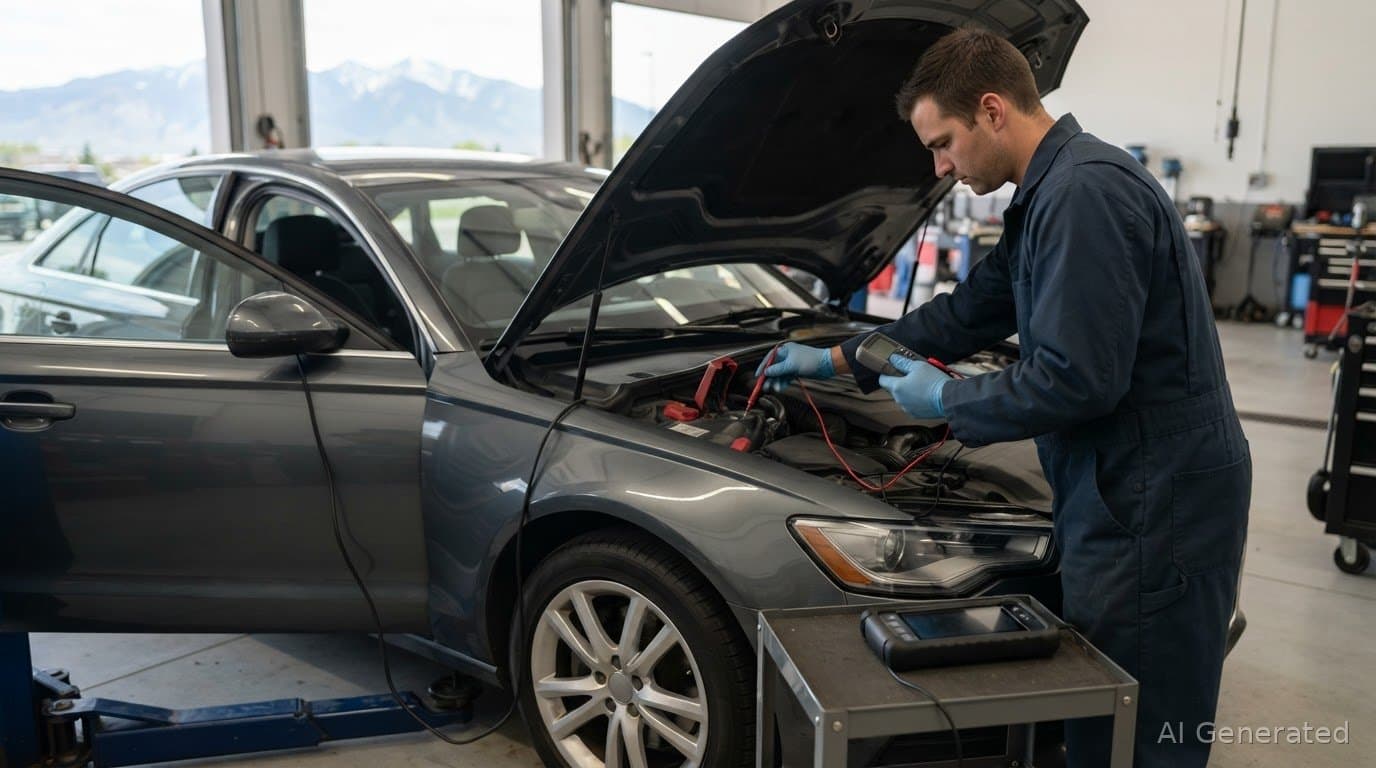
A weak battery can trigger a Mercedes-Benz PRE-SAFE inoperative warning, but it isn’t the only possible cause. For a Mercedes PRE-SAFE inoperative message fix in Belgrade, begin by checking the battery and charging system, then scan the vehicle for stored faults. The results can help distinguish a voltage issue from a problem in another system.
It’s reasonable to suspect the battery, especially if the warning appeared after a difficult start. But replacing it without diagnosis may not clear the message. Because PRE-SAFE is connected to vehicle safety systems, a persistent warning deserves careful attention, not just a reset.
This guide explains how low voltage can contribute, what a diagnostic scan may reveal, and why fault codes should be considered alongside a physical inspection. You’ll also learn when specialist diagnosis and repair are the sensible next step for your Mercedes-Benz in Belgrade, Bozeman, or the Gallatin Valley.
Key Takeaways
- A weak battery can contribute to a PRE-SAFE warning, but don’t assume it’s the cause without checking the vehicle’s electrical system.
- A diagnostic scan can help identify which system stored a fault and guide the next inspection steps.
- Treat a persistent PRE-SAFE or restraint-system warning as a reason to seek specialist diagnosis.
- Clear stored faults only after addressing the underlying problem, then confirm whether the warning returns.
Diagnostic software and fault-code scanning
Yes, a Mercedes-Benz can still be driven with PRE-SAFE inoperative, but its pre-crash preparation may not work. PRE-SAFE’s pre-crash preparation may not work, so arrange diagnosis promptly and don’t rely on those functions.
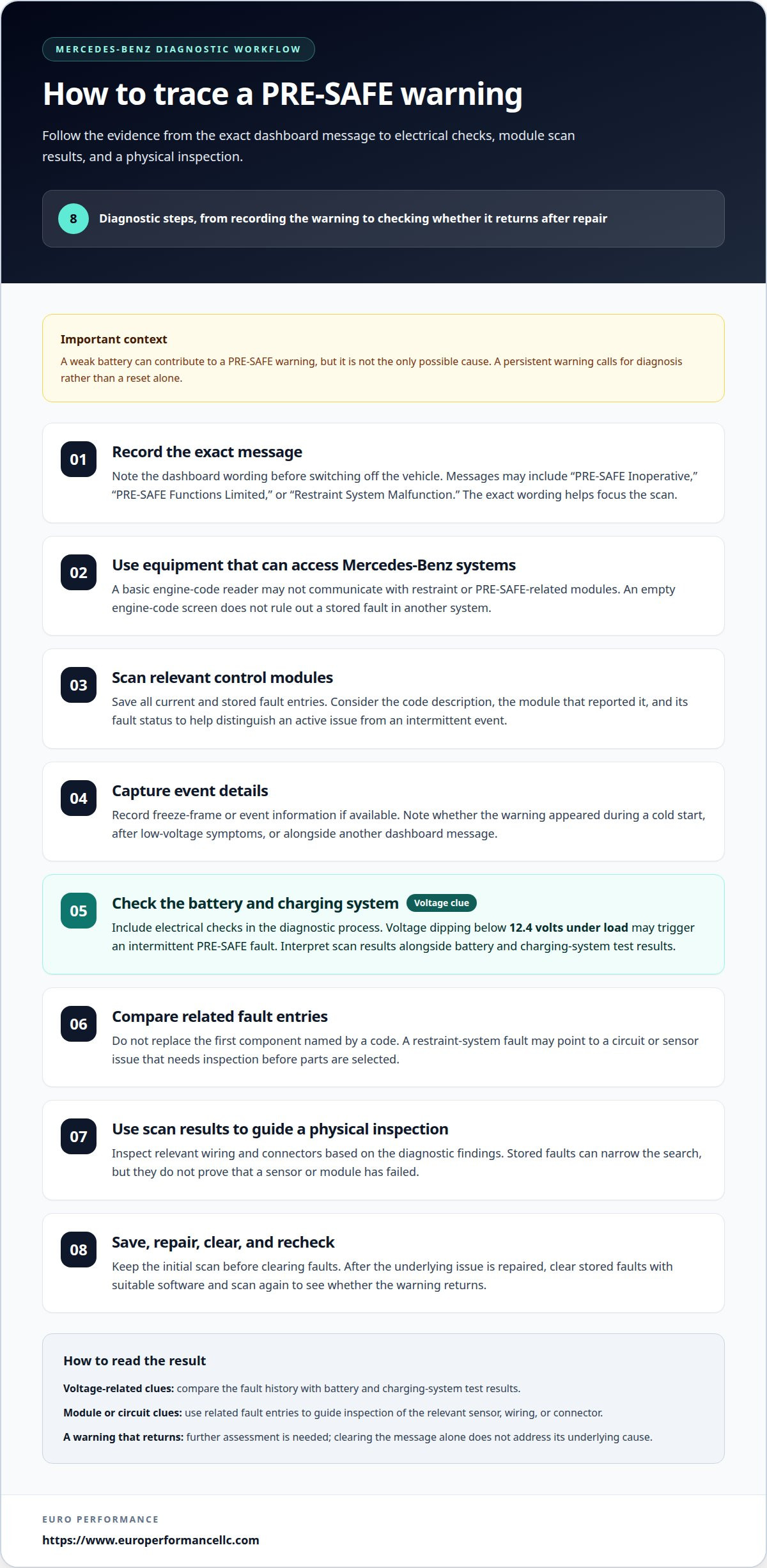
- Record the exact dashboard message before switching off the vehicle. Mercedes-Benz warnings can include “PRE-SAFE Inoperative,” “PRE-SAFE Functions Limited,” or “Restraint System Malfunction.” The precise wording helps focus the diagnostic scan on the affected system.
- Use diagnostic equipment that can communicate with Mercedes-Benz vehicle systems. A basic engine-code reader may not access restraint or PRE-SAFE-related modules, so an empty engine-code screen doesn’t rule out a stored fault.
- Scan the relevant control modules and save all current and stored fault entries. The code description, reporting module, and fault status help distinguish an active problem from an intermittent event.
- Record freeze-frame or event details if the scan provides them. Note whether the warning appeared during a cold start, after low-voltage symptoms, or alongside another dashboard message.
- Include battery and charging-system checks in the diagnostic process. Vehicle voltage dipping below 12.4 volts under load may trigger an intermittent PRE-SAFE fault, so a scan should be interpreted alongside electrical test results.
- Compare related fault entries instead of replacing the first component named. For example, a restraint-system code may point to a circuit or sensor issue that needs inspection before selecting parts.
- Use scan results to guide a physical inspection of relevant wiring and connectors. Stored faults can narrow the search, but they don’t prove that a sensor or module has failed.
- Save the initial scan before clearing any faults. After repairing the underlying issue, clear stored faults with suitable software and scan again to see whether the warning returns.
When to consult a specialist
- Arrange an inspection if the PRE-SAFE warning remains after the next vehicle start. A continuing message calls for diagnosis, even if the Mercedes-Benz drives normally and no other alert appears.
- Treat a restraint-system warning as a priority, especially when it appears alongside the PRE-SAFE message. These systems are related, and the additional alert may point to a concern beyond a temporary limitation.
- Note whether the warning began after seat, interior, or electrical work. That timing gives the technician useful context when checking connectors, seat occupancy sensing, or wiring that may have been disturbed.
- Arrange an inspection if the warning follows a collision or bumper damage. A vehicle may look intact even when a sensor, connector, or nearby wiring has been affected.
- Return for diagnosis if a previous repair or code reset didn’t keep the warning away. A recurring message calls for further assessment, not another reset alone.
- Ask about calibration after a seat occupancy sensor or seat belt component is replaced. Some PRE-SAFE components may need calibration to communicate correctly with the restraint system and airbag control unit.
- Don’t remove seat trim or probe airbag wiring to investigate the warning. Restraint-system circuits require careful handling, and disturbing connections can complicate diagnosis.
- Share useful observations during the inspection, including the exact message, any other dashboard alerts, and whether the warning appears at startup or while driving. These details help connect the alert to the vehicle’s history and current symptoms.
Potential component failures
- Test the battery and charging system before suspecting PRE-SAFE hardware. Low voltage can contribute to intermittent faults, including voltage below 12.4 volts under load. A weak battery may be more noticeable after a cold start, but that symptom alone doesn’t confirm the cause.
- Check accessible sensor and camera areas for obstruction or damage. Dirt, snow, or poor visibility can limit some PRE-SAFE functions and produce a warning. Safely clean accessible exterior surfaces, then note whether the message remains.
- Have radar sensors and related wiring inspected if scan results point to a sensor fault. A sensor may be damaged or disconnected, or the wiring may be affected. The warning alone can’t identify which part has failed.
- Inspect seat belt pretensioners and their electrical connections when restraint-system faults are present. A pretensioner problem can affect PRE-SAFE operation. Don’t remove trim or probe safety-system connectors yourself.
- Consider seat occupancy sensors when faults relate to passenger-seat detection. These sensors provide information used by restraint systems. Match any stored fault with inspection findings before replacing a sensor.
- Look for damaged wiring or corroded connectors where diagnostic results indicate a circuit issue. Some Mercedes-Benz models have sensors near the rear bumper, where moisture or impact damage can affect connections.
- Ask whether software or coding issues could apply if hardware checks don’t explain the warning. Software faults can affect system operation, but updates or coding changes should follow vehicle-specific diagnosis.
- Don’t replace an SRS module or another expensive component based only on a dashboard message. A specialist can compare fault data with wiring, sensor, and restraint-system checks to identify a repair that addresses the actual failure.
Repairing and clearing stored faults
- A Mercedes-Benz dealer can diagnose and repair PRE-SAFE faults, and an independent specialist can do the same. The key is to match the repair to the vehicle’s diagnostic findings, not simply erase the warning.
- Preserve the initial scan results before repairs begin. Fault records show which control unit reported the issue and whether it was current or stored, giving the repair process a useful reference.
- Repair the identified fault using a method suited to the affected component. For example, a damaged connector requires attention to the connection and circuit, while a failed component may need replacement.
- Address related electrical or wiring concerns as part of the repair. Replacing a component without correcting a damaged connection can leave the fault unresolved or allow it to return.
- Complete any required calibration after replacing a PRE-SAFE component that needs it. Seat occupancy sensors and seat belt modules are examples of components that may require calibration after replacement.
- Consider software diagnosis when physical inspection and component testing don’t explain the warning. In a reported 2015 Mercedes E350 case, reflashing the computer resolved PRE-SAFE and SOS warnings. That outcome is an example, not a repair rule for every model.
- After repairs and any needed calibration, use suitable diagnostic software to clear stored faults. Clearing codes before repairs can erase useful information without addressing the cause.
- Rescan the relevant systems after clearing the faults and check the instrument cluster for returning alerts. A clean result after repair helps confirm the warning has cleared; a returning message calls for further diagnosis.
European Auto Repair in Belgrade, MT | Euro Performance
Euro Performance LLC provides European auto repair in Belgrade, MT. If a Mercedes-Benz PRE-SAFE warning persists or returns, have the vehicle inspected to help determine the appropriate next steps.
For this warning, a clear repair plan should be based on diagnostic results and inspection. That helps avoid choosing parts based on the dashboard message alone, particularly when restraint-system components are involved.
Bring the exact warning wording and any previous scan or repair records to your appointment. These details provide helpful context as the vehicle’s issue is assessed.
Take the Next Step Toward a Reliable Repair
A returning dashboard warning is a reason to move from troubleshooting to a repair plan based on your Mercedes-Benz’s specific findings. Track when the message appears and whether other alerts show up at the same time. That context can help focus the diagnostic visit.
If you need a fix for a Mercedes PRE-SAFE inoperative message in Belgrade, choose a repair process that identifies the cause before replacing components. Euro Performance LLC provides specialized European auto diagnosis and repair in Belgrade. Schedule an appointment to have your Mercedes-Benz assessed and discuss repair options, especially when restraint-system components are involved.
European Auto Repair in Belgrade, MT | Euro Performance provides specialized European auto repair for drivers seeking help with complex Mercedes-Benz concerns. Contact European Auto Repair in Belgrade, MT | Euro Performance to discuss the warning and arrange the next step. With a careful diagnosis, you can move forward with a repair plan that fits your vehicle.
Frequently Asked Questions
Can a dead or weak battery cause Pre-Safe Inoperative?
Yes. Low battery voltage can interfere with Mercedes-Benz electronic systems and trigger a PRE-SAFE warning. A battery-related warning may appear alongside slow cranking or other electrical symptoms, but those clues don’t prove the battery is responsible. Testing the battery and charging system helps distinguish a voltage problem from a fault in a restraint component or its wiring.
What Does "Pre-Safe Inoperative" Mean on a Mercedes-Benz?
It means the vehicle has detected a fault that limits or disables PRE-SAFE functions. PRE-SAFE is designed to prepare occupants before a possible collision, with specific actions varying by vehicle and equipment. The message identifies a system concern, not the failed part. Note any additional dashboard alerts, since a restraint-system message can help clarify the issue.
Will the Pre-Safe Inoperative warning clear on its own?
The warning may disappear if a temporary condition, such as poor sensor visibility, clears. However, a warning that goes away doesn’t prove the underlying issue is fixed. If it returns during another drive or startup, note when it happens and arrange a diagnostic scan. Don’t assume PRE-SAFE is functioning normally just because the message has disappeared.
What does the Mercedes PRE-SAFE inoperative warning mean?
The warning indicates that the vehicle has detected a problem affecting PRE-SAFE operation. It doesn’t necessarily identify whether the issue involves a sensor, electrical connection, or another component. It also differs from a setting notification: on some Mercedes-Benz models, a display symbol can indicate that PRE-SAFE Brake isn’t activated. Check the exact wording and vehicle manual for model-specific context.
What are the common causes of PRE-SAFE inoperative on Mercedes-Benz vehicles?
Possible causes include low voltage, a sensor or camera problem, damaged wiring, corroded connections, seat occupancy sensor faults, seat belt pretensioner faults, or an SRS-related issue. Software or coding problems can also affect system operation. The likely cause depends on the vehicle and stored diagnostic information, so replacing a component based only on the dashboard message can lead to unnecessary work.
How do you reset or troubleshoot the Mercedes PRE-SAFE inoperative message?
Start by noting the exact warning and any other alerts. Don’t disconnect the battery or handle airbag wiring as a reset attempt. A Mercedes-capable scan can identify relevant stored faults and guide inspection and repair. After addressing the cause, suitable diagnostic software can clear stored codes and confirm whether the warning returns. For a Mercedes PRE-SAFE inoperative message fix in Belgrade, diagnosis should come before parts replacement.