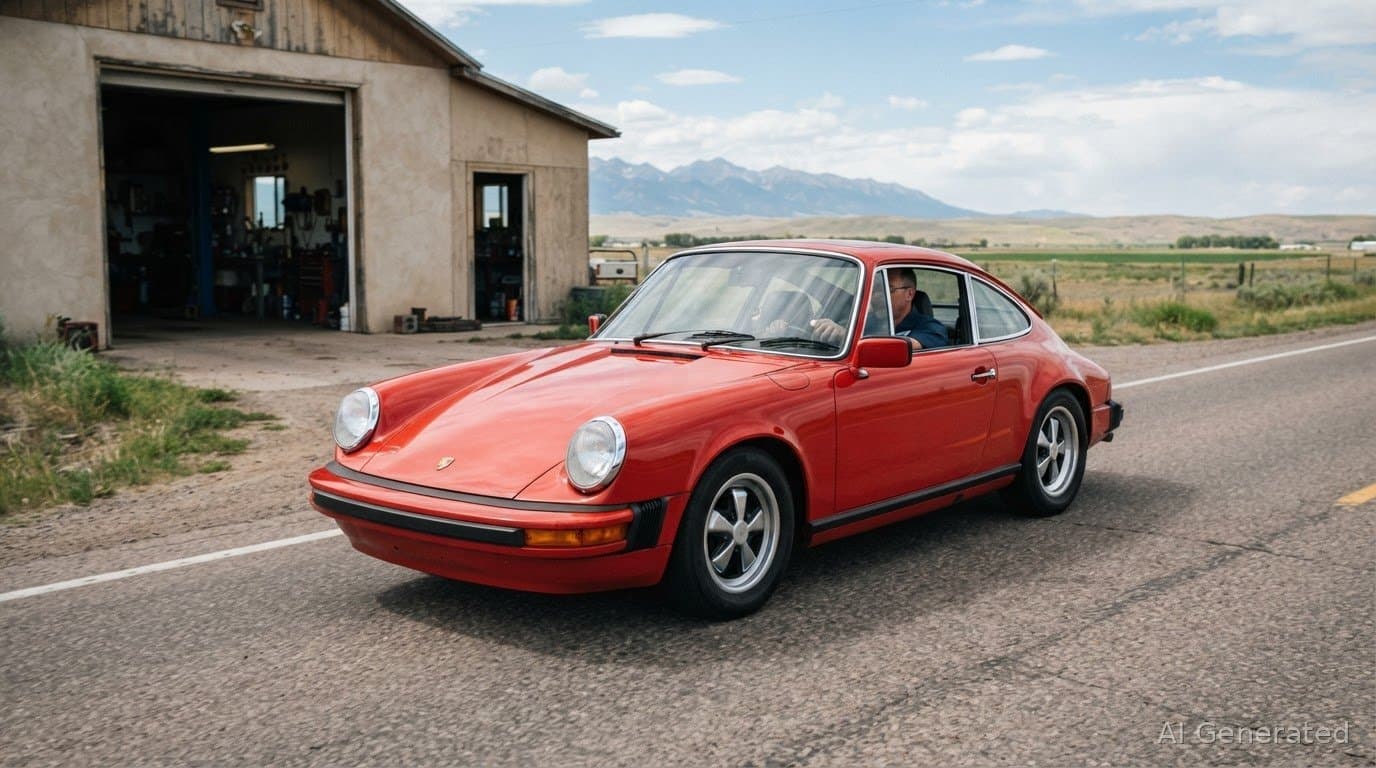
The most revealing pre-trip check may be a real drive, not another glance under the hood. Preparing a classic Porsche for a Montana road trip means checking key systems, then road-testing the car on city streets, highways, and terrain similar to your route. A short local drive can miss concerns that emerge over longer distances, so pay attention to how the car performs in varied conditions.
It’s reasonable to want confidence in the engine, brakes, and tires before covering long distances. Make a measured plan: set daily drives the car can comfortably handle, leave room for breaks, and stay flexible when Montana weather or road conditions change.
This guide covers route planning, pre-trip checks, weather considerations, and a practical road test. You’ll learn what to look for and when a concern calls for professional attention before departure.
Key Takeaways
- Set daily driving plans around the Porsche’s condition and comfort, with breaks and a route that accounts for road conditions and fuel stops.
- Check the engine, brakes, tires, and air conditioning before departure, and address leaks, wear, or other concerns before they become trip problems.
- Build flexibility into the route so changing Montana weather or difficult terrain doesn’t force you to press on in unsuitable conditions.
- Road-test the car on city streets, highways, and terrain similar to the trip, and note any symptoms that appear during longer driving.
1. Planning daily driving distances and breaks
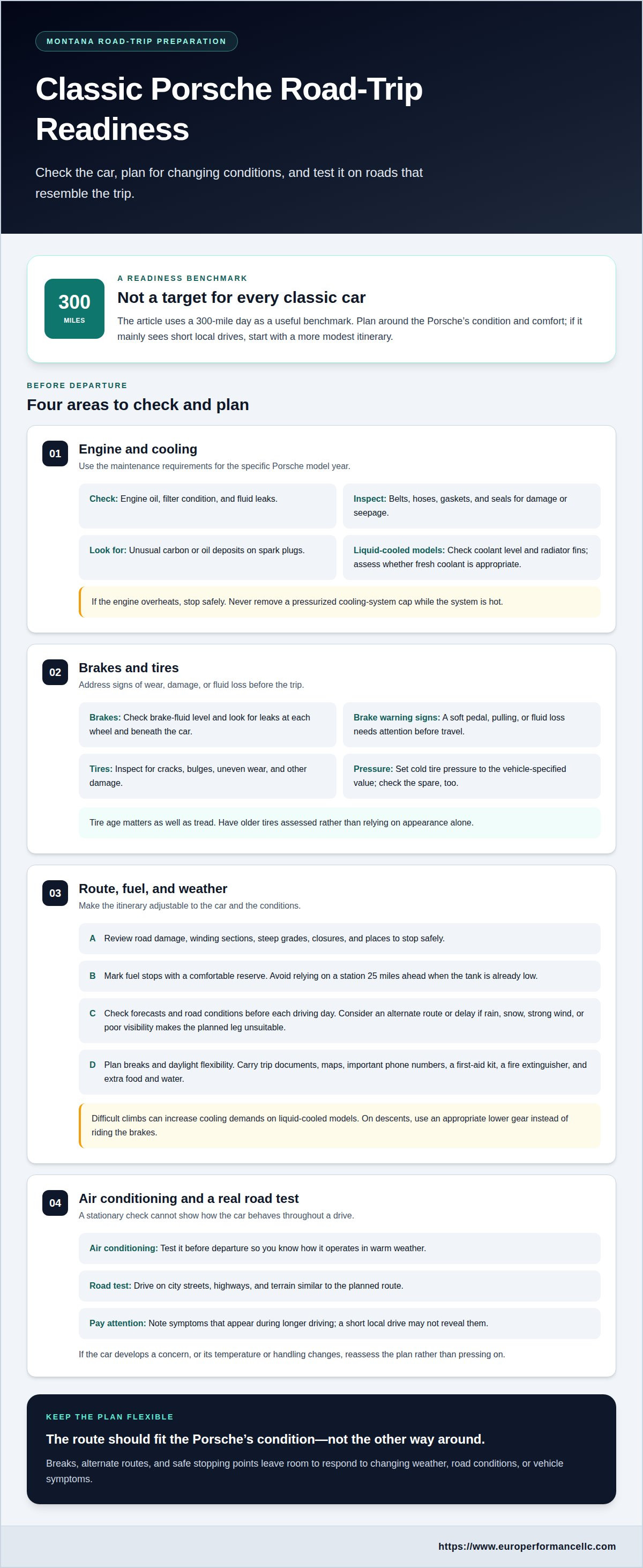
Plan each day around the Porsche’s condition, comfort, and route, not just the map. A 300-mile driving day is a useful readiness benchmark, not a target every classic car should meet. If the car has mainly been used for short local drives, begin with a more modest itinerary and build in time for breaks. A drive that feels comfortable for 45 minutes may become tiring over a longer stretch, especially when noise, heat, or seat comfort take their toll.
Review the route before setting the day’s distance. Look for road damage, winding sections, steep grades, and places where stopping safely may be difficult. Montana routes can include long stretches between services, so don’t plan to reach a fuel station 25 miles away with the tank already low. Mark fuel stops with a comfortable reserve and identify alternatives in case a stop is closed or the route changes. Keep registration and insurance documents with your trip papers, and pack practical emergency supplies such as a first-aid kit and fire extinguisher.
Allow enough daylight and flexibility to pause rather than push through fatigue or unfamiliar conditions. A classic-car emergency plan should include important phone numbers, maps, and extra food and water. These supplies can help if a road closure or mechanical problem delays your schedule.
Bring a toolkit suited to the Porsche and spare parts selected for its known needs. A tire plug kit may help with a suitable puncture, but use it only when the tire can be safely repaired that way. Don’t attempt a roadside fix that compromises safety. Planning daily drives around the car’s current condition, with realistic stops and backup supplies, makes unexpected delays easier to manage.
2. Pre-trip checks of the engine, brakes, tires, and air conditioning
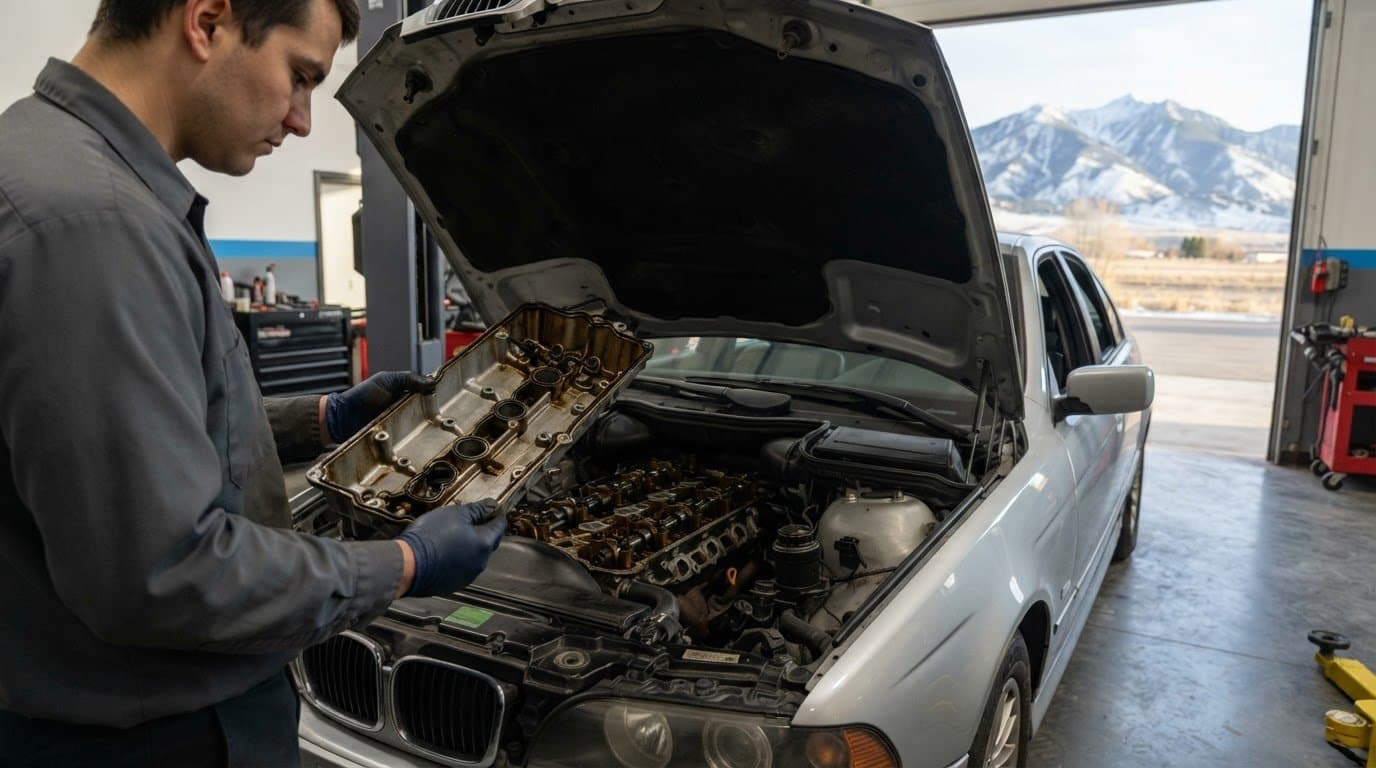
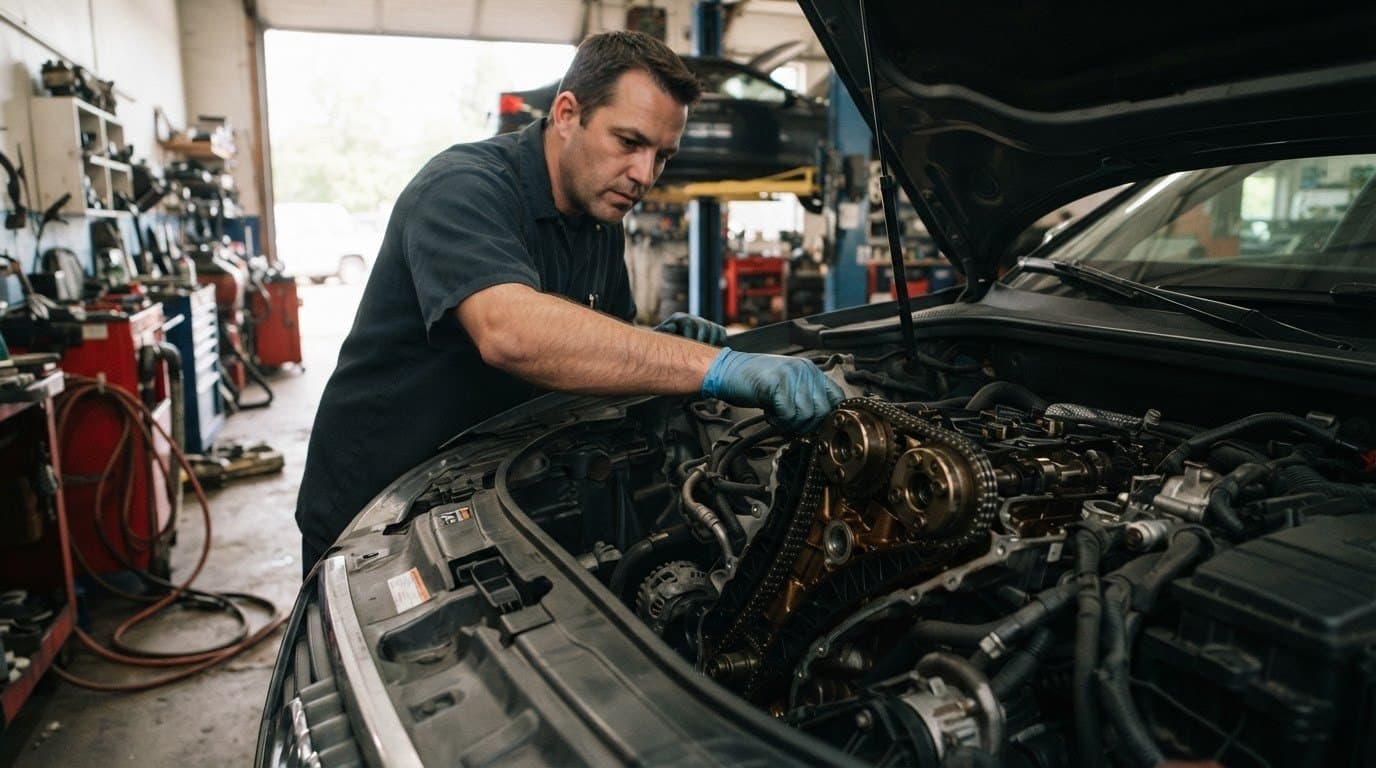
Start with the Porsche’s maintenance records and requirements for its specific model year. Check the engine oil and filter condition, coolant level on liquid-cooled models, and look for fluid leaks. Inspect belts, hoses, gaskets, and seals for cracks, deterioration, or seepage. Look for unusual carbon or oil deposits on the spark plugs, and address concerning findings before departure. A clogged air filter or fuel-system problem can also affect engine performance.
Check the brake-fluid level in the master cylinder and look closely for leaks at each wheel and beneath the car. A soft pedal, pulling, or fluid loss needs attention before a trip. On liquid-cooled Porsches, clear debris from the radiator fins, check that the cap fits securely, and assess whether fresh coolant is appropriate for the car. Test the air conditioning so you know how it operates in warm weather.
Inspect each tire for cracks, bulges, uneven wear, and damage. Confirm the tires suit the Porsche and planned route, and set their pressure to the vehicle’s specified value when cold. Check the spare’s condition and pressure, too. Tire age matters as much as tread: have older tires assessed rather than relying on appearance alone, or schedule a visit from Mobile Tyre Service to have fresh rubber fitted conveniently at home before you set out.
Choose destinations and travel times to suit the car’s condition and the route’s demands. Before setting out, review current road conditions for closures, damage, steep grades, and winding sections. Difficult climbs and repeated descents can place extra demands on the cooling system of liquid-cooled models and on the brakes. Drive at a pace that leaves room to respond, and use an appropriate lower gear on descents instead of riding the brakes. Watch the temperature gauge and stop safely if the engine overheats. For a vintage Porsche road trip, check fluids, belts, hoses, tires, and ignition parts against the car’s needs, and replace worn or damaged components before departure.
3. Allowing flexibility for changing weather
Montana weather can change between valleys, mountain passes, and open stretches of highway. Build alternate routes into your itinerary instead of treating a planned pass or backroad as fixed. Before each driving day, review the forecast and current road conditions ahead. If rain, snow, strong wind, or poor visibility develops, choose a safer route or delay that leg. A classic Porsche may have less stability and weather protection than a modern car, so don’t let the schedule dictate unsafe driving.
Elevation changes affect how a drive feels and how hard the car works. A steep climb can increase engine load, while a long descent calls for careful speed and brake control. Avoid difficult hills or demanding elevation changes when conditions are poor or the Porsche shows signs of cooling or braking trouble. Plan safe stopping points where you can reassess the route and let the car cool if needed. For vehicles with a pressurized liquid-cooling system, never remove the radiator cap while the system is hot.
Temperature swings make fluid condition an important part of weather planning. Check the engine oil level using the procedure for your Porsche’s specific model, and carry the correct oil for that engine. If an oil and filter change is due before departure, follow the vehicle’s maintenance requirements rather than stretching the interval for the trip. Oil grade varies by engine and operating conditions, so don’t choose a viscosity based on a general rule. Watch for new leaks or changes in oil pressure during the drive.
Keep the day’s plan adjustable. If morning conditions make a mountain route unsuitable, choose a lower-elevation alternative or postpone the drive. In warm weather, traffic and slow climbs can increase cooling demands; in cold or wet conditions, traction and visibility may be the main concerns. Check forecasts again before leaving, carry suitable clothing and water, and don’t continue if the temperature gauge rises abnormally or the car’s handling changes. Flexibility helps protect both the vehicle and its occupants.
4. Pre-trip road testing
A road test shows how the Porsche behaves in real driving conditions, beyond what a stationary inspection can reveal. Start on a familiar route through city streets, where stop-and-go driving tests the car’s response at low speeds. Note difficult starting, hesitation, unusual noises, warning lights, or a temperature gauge behaving unexpectedly. Check how the clutch, transmission, steering, and brakes feel in normal operation. A road test is an important part of preparing a classic Porsche for a Montana road trip, but don’t use it to push a car with a serious symptom.
Next, take the car onto a highway when it’s safe. Observe whether the engine runs smoothly as speed and load change, and whether the car tracks steadily. Pay attention to new vibration, misfiring, fuel odor, rising temperature, or changes in oil pressure. If a warning light appears or braking feels inconsistent, end the test safely and arrange an inspection before driving farther. Record what happened and the driving conditions rather than relying on memory.
Include terrain similar to your planned Montana route. Level streets won’t show how the Porsche responds to a sustained climb or descent. Choose a familiar, safe road with comparable grades, turns, and surfaces. Watch for rising engine temperature uphill and changes in braking or handling downhill. Don’t seek extreme conditions; the goal is to assess the car without creating unnecessary risk.
A Porsche used only for local trips needs assessment for longer-distance driving. A fuel-delivery issue may appear after more than a short test drive, including around 15 minutes into driving. Plan a route that allows a safe return, and note when symptoms occur. For example, record whether the engine stumbles during acceleration or steady cruising. Those observations can support diagnosis. If repairs are made, repeat the test under similar conditions. This final step helps ensure that preparing a classic Porsche for a Montana road trip includes evaluating how the car responds after the work, not just confirming it starts.
European Auto Repair in Belgrade, MT | Euro Performance
Euro Performance LLC in Belgrade, MT, can prepare a classic Porsche when maintenance is due or a road test reveals a concern. Factory Scheduled Maintenance follows the vehicle’s requirements, while Specialized European Auto Repair can address drivability, cooling, braking, or other mechanical issues that need diagnosis.
Share symptoms noticed during testing, such as a temperature change, unusual noise, hesitation, or inconsistent braking. These details help guide an accurate assessment. If the Porsche pulls or handles unevenly, a wheel alignment may also be relevant after its condition is evaluated.
Contact Euro Performance LLC in Belgrade, MT, to discuss your Porsche’s maintenance or repair needs before the trip.
Make the next step a clear one
A classic Porsche road trip starts with an honest assessment of the car’s condition, not its appearance. If a symptom returns during testing, treat the pattern as useful information and don’t assume it will disappear on a longer drive.
Preparing a classic Porsche for a Montana road trip also means being willing to adjust the itinerary. A sound plan leaves room to delay departure or choose a different route when the car or conditions call for it. That flexibility lets you make decisions based on the Porsche’s behavior rather than pressure to keep to a schedule.
With the preparation complete, focus on attentive driving and measured decisions along the way. A thoughtful plan helps you enjoy the journey while staying ready to respond if conditions change.
Frequently Asked Questions
What pre-trip mechanical inspection should a classic Porsche get before a long road trip?
Ask for an inspection that considers the Porsche’s model year, configuration, and service history rather than relying on a generic checklist. Bring maintenance records and note recent repairs or changes in how the car operates. This helps distinguish overdue maintenance from a new symptom and gives the technician useful context. If the car has been stored, mention that as well, since long periods off the road can affect its performance.
What tire pressure and spare-tire equipment should a classic Porsche carry for highway and mountain driving?
Use the pressure specified for the Porsche’s tire and load configuration, not the maximum pressure printed on the sidewall. A compact tire inflator can help address gradual pressure loss, while a wheel-lock key is useful if the car has locking lug hardware. Secure equipment in the car so it cannot shift into the cabin during sudden braking or a sharp maneuver.
How should a classic Porsche be prepared for Montana's high elevations, steep grades, and changing weather?
Account for differences between Porsche generations and engine designs; carbureted and fuel-injected cars may respond differently as elevation changes. Don’t assume one adjustment or preparation method applies to every classic model. Use the owner’s manual and service history to guide model-specific decisions, and note changes in starting or engine response during gradual elevation changes. This information can help a technician assess the car’s behavior.
What are Montana's road conditions, seasonal closures, and construction risks for a road trip?
Check current route information shortly before each leg, since conditions can change after you plan the itinerary. Save your intended route and an alternate in an offline map in case mobile data drops. Follow temporary traffic controls and posted directions through work areas. If a closure redirects you onto unfamiliar roads, stop somewhere safe to reassess rather than making route decisions while driving.
How can a driver plan fuel stops for a classic Porsche's range on remote Montana highways?
Estimate usable range from the car’s actual fuel use, not just the tank’s advertised capacity. Keep a simple log of fuel added and distance traveled in different driving conditions, then plan stops conservatively. Older fuel gauges can be imprecise, so don’t treat a particular needle position as a dependable reserve. A passenger can monitor the plan and identify the next stop without distracting the driver.
What tools and essential spare parts should be packed for a vintage Porsche road trip?
Pack a toolkit suited to the Porsche and spare parts selected for its known needs. A tire plug kit may help with a suitable puncture. Also carry practical emergency supplies, such as a first-aid kit, fire extinguisher, maps, important phone numbers, and extra food and water.