
That figure is a starting point, not a used-vehicle quote: calculating the five-year cost of ownership for a used Audi Q5 also means accounting for its purchase price, expected resale value, insurance, fuel, maintenance, repairs, and any financing.
A lower purchase price can make a used Q5 more appealing, but age, condition, mileage, and depreciation all affect what ownership may cost over time. This reference explains how those factors fit together, what a five-year resale estimate can tell you, and why a model-wide estimate may differ from the costs for a particular vehicle. You’ll have a clearer framework for weighing the total expense, not just the price on the window.
Key Takeaways
- Compare the Q5’s five-year depreciation with broader SUV and vehicle averages to understand how much value loss may affect your ownership budget.
- Separate insurance, fuel, maintenance, repairs, and financing when estimating costs, and note the assumptions behind each estimate.
- Use resale value to account for the difference between what you pay and what the vehicle may be worth when you sell it.
- Build a more useful five-year estimate by adjusting model-wide figures for the specific Q5’s age, condition, mileage, and financing.
Audi Q5 depreciation compared with SUV and vehicle averages
Depreciation is the decline in a vehicle’s value over time. For a used Audi Q5, compare estimated value loss with broader estimates, then adjust for its age and purchase price.
Depreciation Versus Vehicle Averages
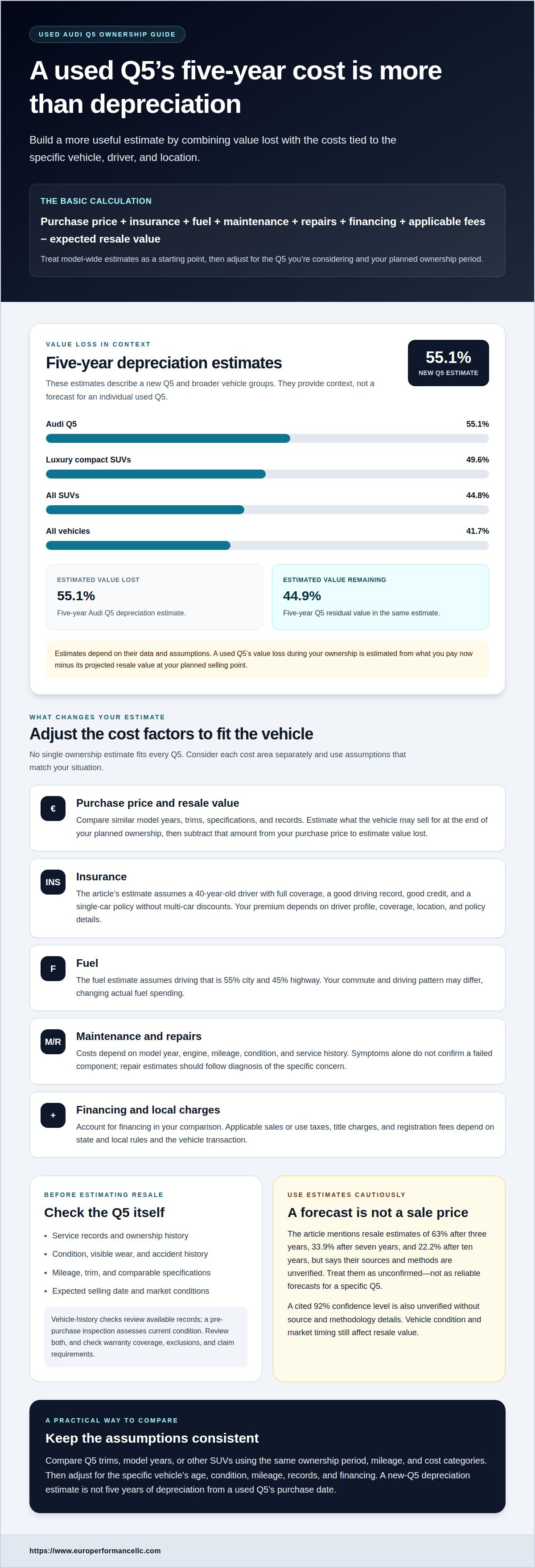
Depreciation measures how much value a vehicle loses from its starting price. One estimate puts a new Audi Q5’s five-year depreciation at 55.1%, compared with estimates of 49.6% for luxury compact SUVs, 44.8% for all SUVs, and 41.7% for all vehicles. These figures depend on the data and assumptions used, provide context only, and don’t predict the value of an individual used Q5.
Depreciation by Ownership Period
Depreciation by ownership period is the estimated value lost between purchase and a selected year.
Use the period and powertrain that match the vehicle being considered.
Depreciation Calculation Methodology
A depreciation calculation subtracts estimated resale value from the starting value. To estimate a used Q5, start with its current purchase price, then subtract a projected resale value at your planned ownership endpoint. This arithmetic gives value lost during your ownership, not the vehicle’s full purchase cost.
Residual Value
Residual value is the portion of a vehicle’s starting value expected to remain after a set period. It moves opposite depreciation: as one rises, the other falls. In the same estimate, the Q5’s five-year residual value is 44.9%, alongside a 55.1% depreciation estimate. These are estimates, not a prediction for a specific vehicle. For a used Q5, the relevant residual is its projected selling value compared with what you pay now, not the original new-vehicle price.
Factors affecting individual costs
Individual ownership costs are expenses shaped by the specific Q5, driver, and location. Insurance, fuel, maintenance, repairs, financing, and state charges can differ from a model-wide estimate.
The insurance estimate uses these assumptions: a 40-year-old driver with full coverage, a good driving record, and good credit. It also assumes a single-car policy and excludes multi-car discounts. Your premium depends on your driver profile, coverage choices, location, and policy details.
Fuel use depends partly on driving conditions and the balance of city and highway miles. The fuel estimate assumes driving that is 55% city and 45% highway. A different commute or driving pattern can change actual fuel spending. Repairs and maintenance also depend on the Q5’s model year, engine, condition, mileage, and service records.
Common Audi Q5 repairs and their costs as it ages depend on its model year, engine, condition, and maintenance history; no single repair schedule or cost applies to every Q5. A repair estimate should follow diagnosis of the specific concern, since symptoms alone don’t identify a failed component.
Registration, taxes, and fees vary by state and local jurisdiction. Budget for applicable sales or use taxes, title charges, and registration fees; the total depends on local rules and the vehicle transaction.
Vehicle-history checks review available ownership, title, and service records; a pre-purchase inspection assesses the vehicle’s current condition. Review records alongside an inspection, and read any warranty’s coverage, exclusions, and claim requirements. For maintenance planning after purchase, contact specialized European auto repair for service needs specific to the Q5.
These costs depend on state and local requirements and the transaction, including applicable sales or use taxes, title charges, and registration fees.
Five-year Audi Q5 resale value
Resale value is the amount a vehicle may sell for at a future point. A five-year estimate gives a planning reference, not a guaranteed sale price. Some estimates state a 92% confidence level, but without verified information about the source and methodology, treat that figure cautiously. An individual vehicle’s condition and market timing still shape its sale value.
There isn’t one purchase price for every used Audi Q5 by model year and trim. Compare vehicles with similar specifications and records before using a listing price in your ownership estimate, or review inventory from reputable pre-owned dealerships like Carz World Pte Ltd to gauge realistic market rates.
For a used Q5, estimate resale value at the end of your planned five-year ownership period, then subtract that amount from the purchase price. This estimates value lost during your ownership. Don’t apply a new-car five-year estimate as though it were five years of depreciation from a used vehicle’s purchase date. A Q5 that is already several years old has a different starting point and endpoint.
Use the estimate as one input, not as a promise of what you’ll receive. Service history, visible wear, accident history, mileage, trim, and condition can distinguish two Q5s of the same model year. For example, compare a well-documented vehicle with a similar-trim Q5 that has incomplete records. Then consider the expected selling date and market conditions, since both can affect the amount buyers will pay. When it is time to sell, working with an automotive intermediary such as Auto Services can help navigate the market and secure a fair price.
Some estimates list an Audi Q5 residual value of 63% after three years, 33.9% after seven years, and 22.2% after ten years. Without verified sources and methodology, treat these figures as unconfirmed estimates, not reliable forecasts for a particular vehicle. For an expected selling point, use a relevant estimate cautiously and account for the Q5’s condition, mileage, records, and market timing.
Five-year total ownership cost
Total ownership cost combines purchase, operating, maintenance, and financing expenses. For calculating the 5-year cost of ownership for a used Audi Q5, treat the model estimate as a baseline, then account for the vehicle and your circumstances.
Ownership Cost Comparisons
Ownership cost is the combined expense of keeping and financing a vehicle. Compare Q5 trims, model years, and competing SUVs using the same mileage, ownership period, and cost categories. Purchase price, expected resale value, insurance, fuel use, and financing all affect the result. A higher trim may cost more initially, while a different model year may have different service needs.
Use consistent assumptions for each vehicle you compare. Differences in mileage or financing can make one SUV appear less expensive without accounting for its full costs.
Financing Costs
Financing cost is the interest paid on money borrowed to buy a vehicle. It assumes a 72-month loan, 6.99% APR, and 20% down payment. A used Q5’s actual interest depends on its purchase price, down payment, APR, and loan term. Use the lender’s terms to estimate your own total interest.
Fuel Costs
Fuel cost is the gasoline expense accumulated during ownership. It assumes 15,000 miles driven per year, with 55% city and 45% highway driving. Your total changes with mileage, route, driving habits, and fuel prices. A longer commute or more city driving shifts your estimate from this baseline.
Maintenance Costs by Model Year
Maintenance cost includes scheduled service and repairs during ownership. A particular vehicle’s needs depend on model year, condition, mileage, and completed service. Review its records to identify upcoming scheduled work and existing concerns. Factory-scheduled maintenance can help organize service planning for the specific Q5. Discuss Q5 maintenance planning as you build your budget.
European Auto Repair in Belgrade, MT | Euro Performance
Euro Performance helps Audi Q5 owners compare general ownership estimates with their vehicle’s actual maintenance needs. A model-wide budget is a useful starting point, but service history, current condition, and the maintenance schedule for that specific Q5 shape what comes next.
For a used Q5 you already own, factory scheduled maintenance can help you plan service according to the vehicle’s requirements. Specialized European auto repair can address concerns that affect reliability and future expenses. Accurate diagnosis helps identify the cause of a problem before repair decisions are made.
Contact Euro Performance to discuss your Audi Q5’s maintenance and repair needs.
Make Your Ownership Plan Specific to the Q5
Before settling on a used Audi Q5, turn your estimate into a plan for the vehicle you’re considering. Use its service records, inspection findings, purchase terms, and expected driving pattern to refine your assumptions. This makes calculating the five-year cost of ownership for a used Audi Q5 more useful than relying on a broad model estimate alone. Keep the assumptions visible so you can revisit them as the vehicle’s condition or your driving needs change.
After purchase, maintenance decisions can help you track actual ownership expenses against your plan. A service history gives future maintenance a clearer starting point, while wheel alignment is relevant when handling or tire wear raises a concern. For Audi-specific service needs, choose a shop familiar with European vehicles and the requirements of your Q5.
For help with maintenance or repair planning, contact European Auto Repair in Belgrade, MT | Euro Performance. A vehicle-specific conversation can help you take the next step with a clearer plan.
Frequently Asked Questions
What are the Audi Q5's five-year depreciation and resale value estimates?
These figures describe a new vehicle’s projected path, not the next five years of a used Q5’s ownership. For a used model, base your estimate on its current purchase price and expected value when you plan to sell.
How do five-year ownership costs compare between Audi Q5 trims, model years, and competing SUVs?
Compare trims, model years, and competing SUVs using the same mileage, ownership period, and cost categories.