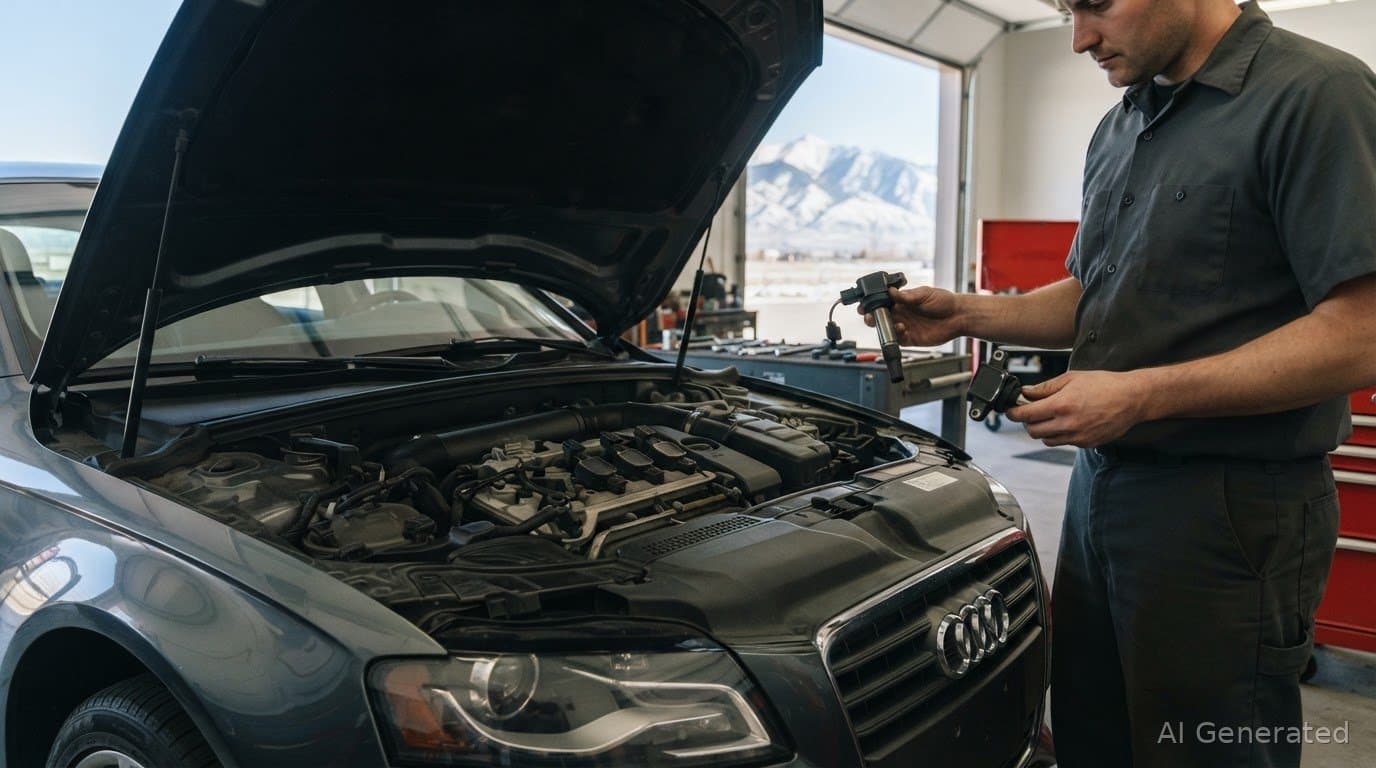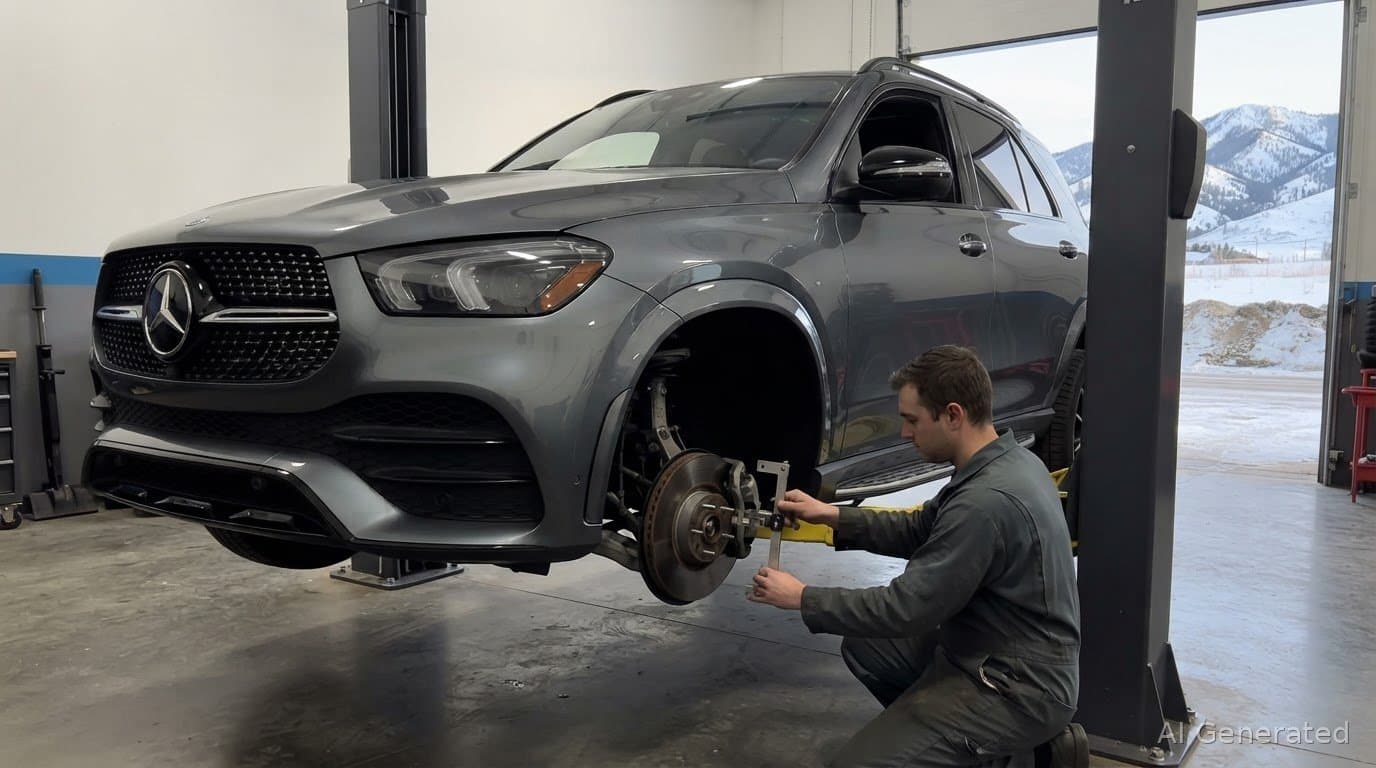
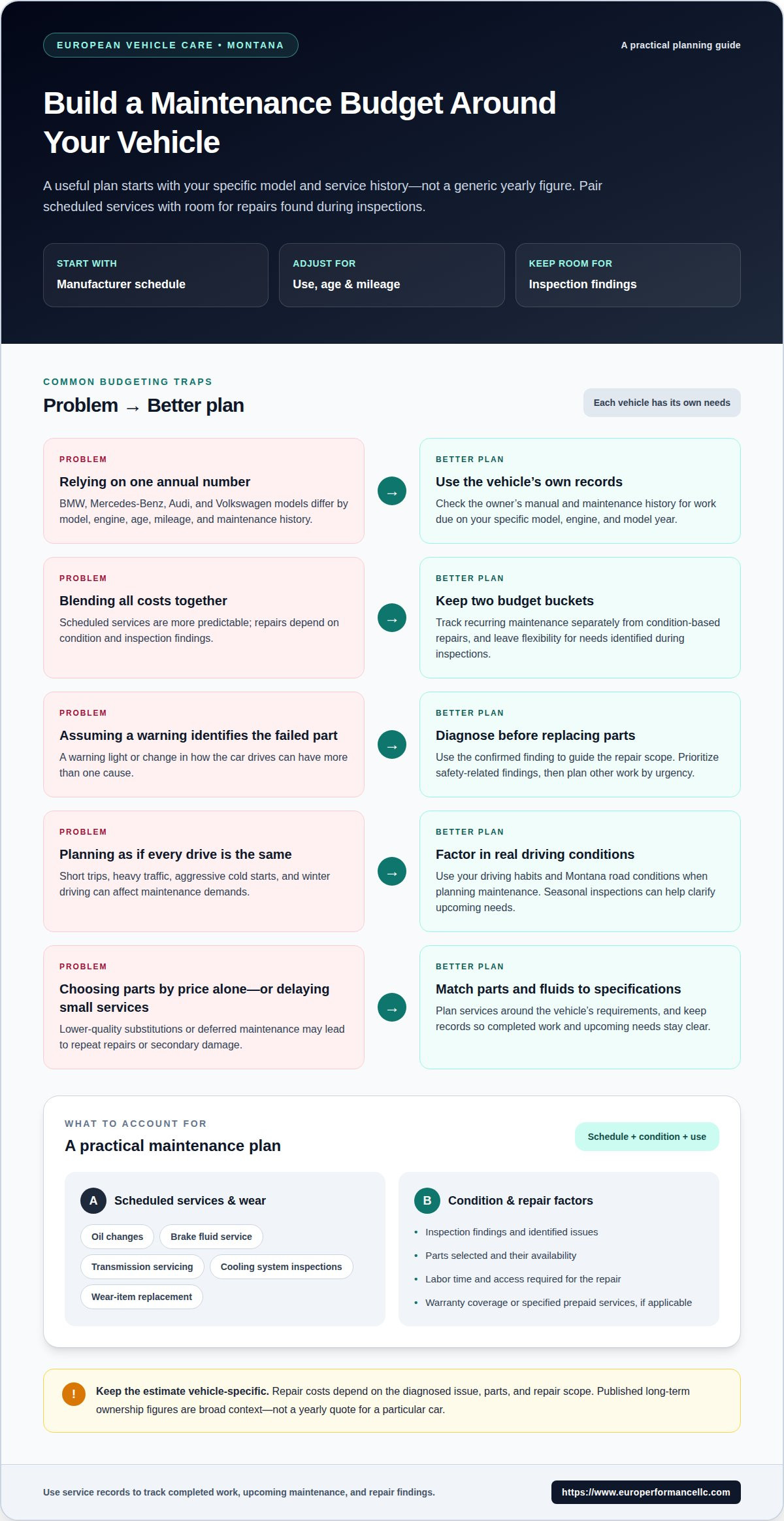
A maintenance budget works best when it reflects the vehicle, not a generic estimate. To decide how to budget for European car maintenance in Montana, start with the manufacturer’s schedule for your specific model, then factor in its age, mileage, driving habits, and condition. Set aside funds for scheduled services and wear items, with room for repairs identified during inspections.
Parts quality and service needs should also shape your plan. Short trips, cold starts, and winter driving can affect maintenance needs, while quality parts and accurate diagnosis help keep decisions focused on the vehicle’s requirements. This guide covers routine services to include, how Montana driving can influence your plan, and how to weigh parts quality and maintenance priorities.
Key Takeaways
- Build a maintenance plan around your vehicle’s model, age, mileage, driving habits, and manufacturer schedule rather than a one-size-fits-all estimate.
- Annual ownership costs vary, so separate routine services from unexpected repairs when planning your budget.
- Repair costs depend on the vehicle’s specific issue, parts, and diagnostic findings; an accurate diagnosis helps guide the repair plan.
- Account for winter driving and road conditions, which can influence wear and make seasonal inspections and maintenance planning especially useful.
European vehicle maintenance and service
Start with the schedule for your vehicle’s model, engine, and model year. To determine how to budget for European car maintenance in Montana, separate recurring services from repairs, taking into account age, mileage, driving habits, and inspection findings.
Annual Maintenance Costs
There isn’t one annual figure that fits every European car in the United States. BMW, Mercedes-Benz, Audi, and Volkswagen models differ in service needs based on their history, age, engine, mileage, and required parts. Build your plan around upcoming scheduled work, such as oil changes, brake fluid service, transmission servicing, cooling system inspections, and wear-item replacement. The owner’s manual and maintenance records help identify what’s due.
Warranty coverage can reduce out-of-pocket costs for eligible repairs, subject to its terms. Prepaid maintenance plans cover specified scheduled services and can make expenses more predictable, but they don’t necessarily lower total ownership costs. Review the included services and confirm that the plan fits your vehicle’s schedule.
Cost Reduction Without Sacrificing Reliability
Start with the manufacturer’s schedule, then account for how you use the car. Short trips, heavy traffic, and aggressive cold starts typically increase maintenance demands compared with steady driving in stable conditions. Keep service records so completed work and upcoming needs are clear. This helps you budget for actual use rather than rely on a generic estimate.
Use fluids and parts that meet the vehicle’s specifications. Lower-quality substitutions or delays in smaller services may lead to repeat repairs or secondary damage. Get a diagnosis before replacing a component, since a warning light or change in how the car drives can have more than one cause. Prioritize safety-related findings, then plan other recommended work by urgency. This ties service decisions to the vehicle’s needs and supports reliability.
What is the average annual maintenance cost for European cars in the United States?
There isn’t one annual maintenance figure that fits every European car in the United States. A BMW, Mercedes-Benz, Audi, or Volkswagen has different service needs depending on its model, engine, age, mileage, and maintenance history. Start your estimate with the vehicle’s upcoming scheduled services, then separate routine work from repairs prompted by inspection findings.
Published long-term figures offer context, but they aren’t a yearly quote. That total doesn’t show what you’ll spend in any particular year: scheduled services and repair needs can vary as the vehicle ages. Use it as a broad ownership benchmark, not a promise about a particular BMW or a substitute for its service records.
To build an annual plan, review the owner’s manual and service history for upcoming work. Note the timing of services such as oil changes, brake fluid service, transmission servicing, and cooling system inspections. Then account for wear-item replacement and issues already identified during an inspection. This separates predictable maintenance from repairs that depend on the vehicle’s condition.
Driving patterns matter, too. A car used mainly for short trips, heavy traffic, or aggressive cold starts may need more frequent maintenance than one driven consistently in stable conditions. For example, a turbocharged Audi used for frequent short trips may have different service demands from a similar model driven mostly on steady highway trips. The vehicle and how you use it both shape the yearly plan.
Keep the budget flexible across the vehicle’s ownership years. A year with scheduled maintenance may look different from one that includes a repair or replacement of a worn component. Track completed work, upcoming schedule items, and inspection findings separately. That record gives a clearer basis for planning than dividing BMW’s 10-year average into a fixed annual amount for every European car.
How much do common BMW, Mercedes-Benz, Audi, and Volkswagen repairs cost?
A dependable repair budget starts with a vehicle-specific estimate, not a brand-wide dollar figure. Costs for BMW, Mercedes-Benz, Audi, and Volkswagen vary with the model, engine, model year, failed component, and parts selected. A brake concern on one vehicle, for example, doesn’t establish the repair scope for another model from the same manufacturer.
Repair needs can involve brake components, cooling-system parts, suspension wear items, oil leaks, and electrical faults. These are possibilities, not confirmed problems common to every BMW, Mercedes-Benz, Audi, or Volkswagen. A warning light or unusual noise needs diagnosis before the failed part and repair scope can be identified.
Parts and labor both affect an estimate. The component, its availability, and the time needed to access and replace it all play a role. Replacing an easily reached wear item differs from a repair that requires substantial disassembly. Parts quality matters, too: a lower-cost component may not meet the vehicle’s requirements and could lead to repeat work.
Before approving a repair, ask for an estimate that separates diagnostic work, parts, labor, and related services. Confirm which finding supports the proposed repair and whether the estimate covers one component or additional work. For example, if testing identifies a cooling-system leak, the source matters. Replacing an unrelated component won’t address it.
For budgeting, record completed repairs by date and component, and keep upcoming scheduled maintenance separate from condition-based repairs. This makes patterns easier to track without assuming every Audi or Volkswagen needs the same work. An estimate for a specific vehicle depends on its diagnosis, repair scope, labor, and parts; requesting an estimate is the first step toward case-specific pricing.
Choosing lower-quality parts or delaying smaller services may increase total ownership costs through repeat repairs or secondary damage. Volkswagon ranks #22 among the vehicle makes listed for 10-year maintenance costs.
How do Montana winters and road conditions affect European car maintenance costs?
Montana driving patterns can change how often a European vehicle needs attention. Frequent short trips, heavy traffic, and aggressive cold starts typically call for more frequent maintenance than steady driving in stable conditions. A BMW used for repeated brief trips, for example, may follow a different maintenance pattern from the same model driven consistently on longer routes.
Factor cold starts into your seasonal budget because they are associated with increased maintenance needs. Track how you use the vehicle through winter, then compare that pattern with its model-specific schedule and service history. This helps organize planned work without assuming every Mercedes-Benz, Audi, or Volkswagen needs identical service.
Road conditions matter, too. Potholes and rough pavement can affect tires, suspension components, and wheel alignment. After a hard impact, watch for an off-center steering wheel, new vibration, or a change in handling. Those symptoms don’t identify a failed part by themselves, but they give a technician useful information for an inspection.
Build seasonal checks into your budget instead of waiting for a noticeable change. Review tire condition, listen for new noises, and note changes in steering or ride quality. Record when a symptom began and the driving conditions that bring it on. This information can help distinguish a developing issue from routine wear.
Delaying a smaller maintenance need can allow a developing problem to become a more involved repair. A European vehicle may compensate for developing wear, so a noticeable change in how it drives can appear after an issue has advanced. Addressing inspection findings early and using parts that meet vehicle requirements can help avoid repeat repairs or secondary damage.
For Montana owners, a practical plan accounts for winter use, rough-road impacts, the specific vehicle schedule, and observed symptoms. If winter driving or road impacts have changed how your car handles, schedule a maintenance assessment to identify the appropriate next steps.
European Auto Repair in Belgrade, MT | Euro Performance
Euro Performance Auto Shop helps owners plan maintenance around their vehicle’s schedule, condition, and driving needs. Factory Scheduled Maintenance and Specialized European Auto Repair are practical options when you need service records reviewed, upcoming maintenance addressed, or a repair concern diagnosed.
For Montana driving, a clear service plan can help distinguish scheduled work from repairs prompted by inspection findings. Wheel Alignment can address alignment needs after road impacts or changes in handling, while ADAS Calibration supports vehicles requiring calibration after relevant service or repairs. The appropriate work depends on the vehicle and the issue identified.
Contact Euro Performance Auto Shop to discuss your European vehicle’s maintenance needs.
Make Your Next Maintenance Decision With Confidence
A useful budget is a working plan, not a fixed prediction. As your vehicle’s mileage, condition, and driving needs change, update the plan to reflect upcoming service and new inspection findings. This keeps future decisions connected to the vehicle rather than assumptions about its brand.
Planning how to budget for European car maintenance in Montana also means choosing a specialist who can relate service recommendations to your specific vehicle. Euro Performance Auto Shop in Belgrade offers European auto repair and factory-scheduled maintenance. Wheel alignment can also address alignment needs when road impacts or handling changes make it relevant.
Bring your maintenance history and current concerns to the conversation. That context makes the next service discussion more useful, whether you’re planning scheduled work or responding to a new symptom.
Contact Euro Performance to discuss your vehicle’s maintenance needs.
Frequently Asked Questions
How much does European car maintenance cost in Montana?
There isn’t a single Montana-wide amount that applies to every European vehicle. Request an itemized estimate based on your car’s model, year, engine, and required work. Separate scheduled services from repairs, and review which parts and labor the estimate covers. This makes it easier to compare proposed work with your maintenance records and decide what belongs in your current budget.
What routine maintenance intervals and costs apply to popular European car brands?
BMW, Mercedes-Benz, Audi, and Volkswagen maintenance intervals depend on the specific model, engine, and model year. Use the service information for your vehicle rather than assuming a brand-wide interval. Ask the shop to explain how upcoming work relates to your vehicle’s service schedule. An itemized estimate connects upcoming work to the vehicle’s actual schedule.
How much should owners budget annually for unexpected European car repairs?
No fixed annual reserve fits every European car. Set aside a separate repair allowance based on the vehicle’s age, service history, condition, and inspection findings. A car with documented recent repairs may need a different plan from one with an unknown history. Revisit the allowance after each inspection, and keep repair funds separate from scheduled maintenance so neither obscures the other.