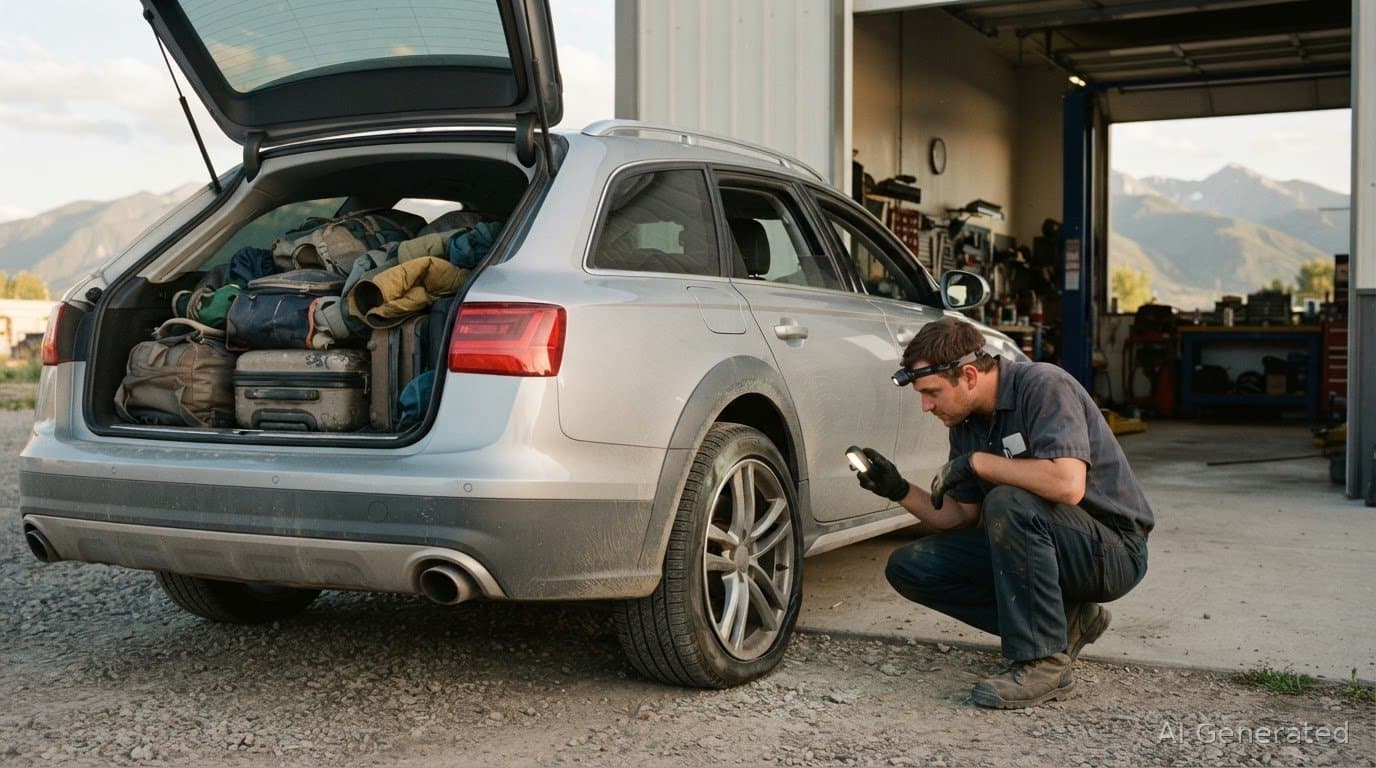
Rough roads can affect more than ride comfort: potholes and frost heaves may damage tires or suspension components, while soft shoulders can make an unexpected stop risky. Cold weather can also expose a weak battery or another existing issue. Vacation car trouble help for European cars near Yellowstone starts with identifying the symptoms and deciding whether it’s safe to keep driving.
When a warning light appears or the ride suddenly feels different, it helps to know what to do next. This article explains how local road and weather conditions can affect European vehicles, which symptoms need prompt attention, and what a repair professional assesses before recommending service. You’ll also learn when to stop driving and arrange help to avoid further damage.
Key Takeaways
- Learn how potholes, frost heaves, and soft shoulders can affect tires, wheels, and suspension, and which changes in handling deserve attention.
- Recognize signs that a European car may need to stop driving and be assessed rather than continue the trip.
- Understand what information can help roadside professionals respond when trouble occurs near or inside Yellowstone National Park.
- See when a European-focused repair shop can help assess road-related damage or address cold-weather concerns after the immediate breakdown.
24-Hour towing and roadside assistance near Yellowstone
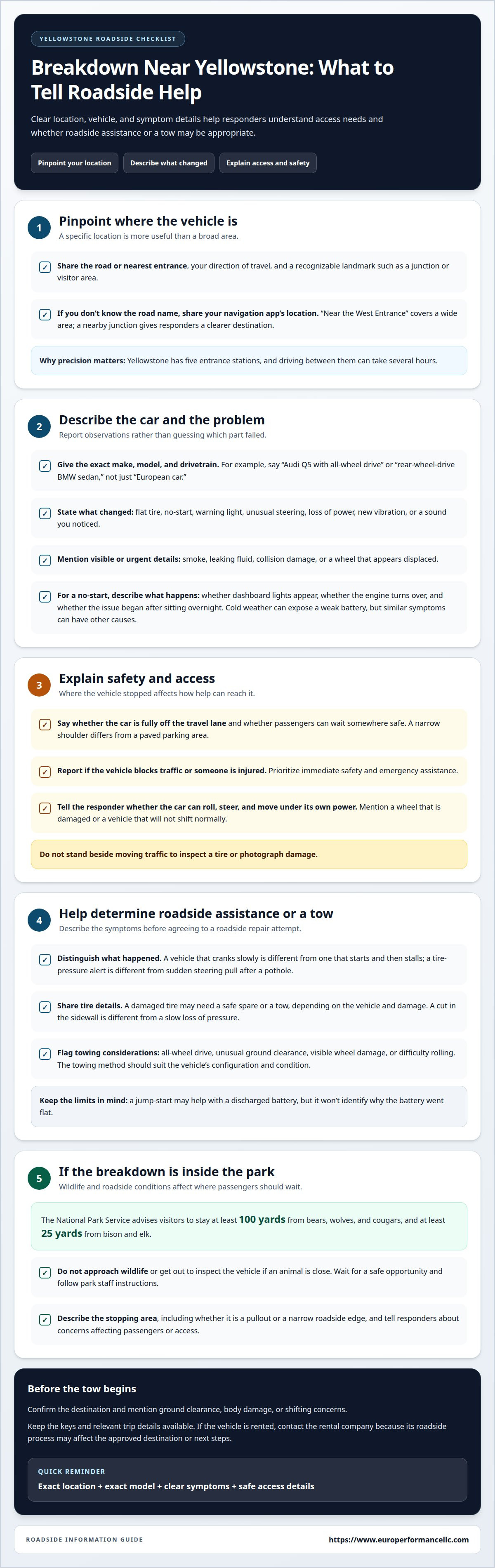
A breakdown near Yellowstone can leave your vehicle far from the nearest town or repair facility. The National Park Service notes that Yellowstone has five entrance stations, and driving between them can take several hours. Share your precise location so roadside assistance can identify the route, understand access needs, and send appropriate help.
When requesting help, describe the vehicle’s location as clearly as possible. Give the road name or nearest entrance, direction of travel, and a recognizable landmark such as a junction or visitor area. If you don’t know the road name, share your navigation app’s location. “Near the West Entrance” covers a wide area; a nearby junction gives responders a clearer destination.
What to tell the dispatcher
Share the vehicle’s make, model, and drivetrain, such as an Audi Q5 with all-wheel drive or a rear-wheel-drive BMW sedan. Report what changed: a flat tire, a no-start, a warning light, unusual steering, or a loss of power. Mention smoke, leaking fluid, collision damage, or a wheel that appears displaced. These details help the dispatcher distinguish a roadside issue from a vehicle that needs a tow.
Explain whether the vehicle is fully off the travel lane and whether passengers can wait somewhere safe. A car stopped on a narrow shoulder presents a different access challenge from one in a paved parking area. If the vehicle blocks traffic or someone is injured, prioritize immediate safety and emergency assistance. Don’t stand beside moving traffic to inspect a tire or photograph damage.
Roadside assistance may address a limited problem, while towing takes the vehicle for further inspection. A jump-start may help with a discharged battery, but it won’t identify why the battery went flat. A damaged tire may need a safe spare or a tow, depending on the vehicle and damage. For example, a cut in the tire’s sidewall is different from a slow loss of pressure.
Choosing the right response
Describe the symptoms before agreeing to a roadside repair attempt. A vehicle that cranks slowly is different from one that starts and then stalls. A tire-pressure alert is different from a steering wheel that suddenly pulls after a pothole. Accurate details help the responding professional decide whether roadside assistance or transport is appropriate.
For a tow, tell the dispatcher whether the vehicle has all-wheel drive, unusual ground clearance, or visible wheel damage. European models vary by year and drivetrain, so give the exact model rather than only the badge. The towing method should suit the vehicle’s configuration and condition. If a wheel is bent or the car cannot roll freely, mention it before equipment is sent.
- Provide the exact model and drivetrain, not just “European car.”
- Describe warning lights, sounds, leaks, and changes in handling.
- Give a specific location, nearby landmark, and safe access point.
- State whether the vehicle can roll, steer, and move under its own power.
Cold weather can make a no-start harder to assess. A weak battery may struggle during a cold start, but electrical faults and other mechanical issues can cause similar symptoms. Tell the responder whether dashboard lights appear, whether the engine turns over, and whether the problem began after the vehicle sat overnight. These observations are more useful than guessing which part failed.
Before the tow begins, confirm the destination and mention concerns about ground clearance, body damage, or a vehicle that won’t shift normally. Keep the keys and relevant trip details available. If the car is rented, contact the rental company too, since its roadside process may affect the approved destination or next steps.
For vacation car trouble help for European cars near Yellowstone, the key decision is whether the vehicle can be moved safely or needs to be towed. A flat tire, warning light, or new vibration can indicate different levels of risk. Clear location details, accurate symptoms, and the vehicle’s drivetrain help roadside professionals choose an appropriate response.
Travel times can help set expectations when choosing a destination for towing. The drive from Mammoth, Gardiner, or the North Entrance to Yellowstone’s Northeast Entrance takes about 1h45m to 2 hours. Driving from Big Sky, Montana, to Yellowstone takes 1 hour. Driving from Cody, Wyoming, to Yellowstone takes 1 hour. Driving from Jackson, Wyoming, to Yellowstone takes 1 hour.
Professional help if a car breaks down inside Yellowstone National Park
A disabled car inside Yellowstone calls for attention beyond the mechanical fault. Wildlife, passing traffic, and the vehicle’s location can affect where passengers wait for help. Don’t walk toward an animal, even if it appears calm or blocks the route to a safer spot. Keep a respectful distance and follow park staff instructions.
Give wildlife room and avoid roadside exposure
The National Park Service advises visitors to stay at least 100 yards from bears, wolves, and cougars, and at least 25 yards from bison and elk. Those distances matter during a breakdown, when people may feel tempted to leave the vehicle to look for help or inspect damage. Don’t approach wildlife for a photo or try to move an animal away from the road.
If wildlife is close to the vehicle, don’t get out just to check a tire or retrieve something from the trunk. Wait for a safe opportunity and follow park staff directions. A roadside repair can wait if reaching the car would bring passengers too close to an animal. Keep children together and remind everyone not to approach wildlife.
The stopping area also affects how help can reach you. A pullout with room for vehicles to pass differs from a narrow roadside edge, especially if visitors have gathered nearby. Avoid drawing a crowd around the disabled car. If park staff arrive, let them manage the scene and explain any concern that could affect passengers or responders.
For a breakdown without an immediate threat, describe what happened before the car stopped without trying to diagnose it at the roadside. Note, for example, whether a warning appeared before the engine lost power or whether the problem began after a loud impact. A clear sequence can help the technician understand what happened, even if the original warning has disappeared.
- Keep passengers together and away from wildlife and passing traffic.
- Do not approach animals or attempt to clear them from the road.
- Follow directions from park staff if they reach the scene.
- Preserve warning messages and describe the sequence of symptoms to the technician.
Once the vehicle is out of immediate danger, a professional assessment should focus on its actual condition, not assumptions based on a single warning or sound. A warning light can accompany several different faults, and an impact alone doesn’t identify which component was affected. The technician can consider your account alongside the vehicle’s condition and diagnostic results.
That distinction matters for European vehicles, since systems and repair needs vary by model and configuration. A dashboard alert on a Mercedes-Benz may call for a different inspection than a similar-looking alert on a Volkswagen. The model, year, and system involved guide the diagnostic process; the warning alone doesn’t establish which part needs replacement.
After an incident inside Yellowstone, keep service paperwork and roadside notes with the vehicle’s records. If you’re driving a rental, retain the rental company’s instructions and any incident documentation. These details can help the repair professional understand what has already been assessed and what happened before the vehicle reached a shop.
European Auto Repair in Belgrade, MT | Euro Performance
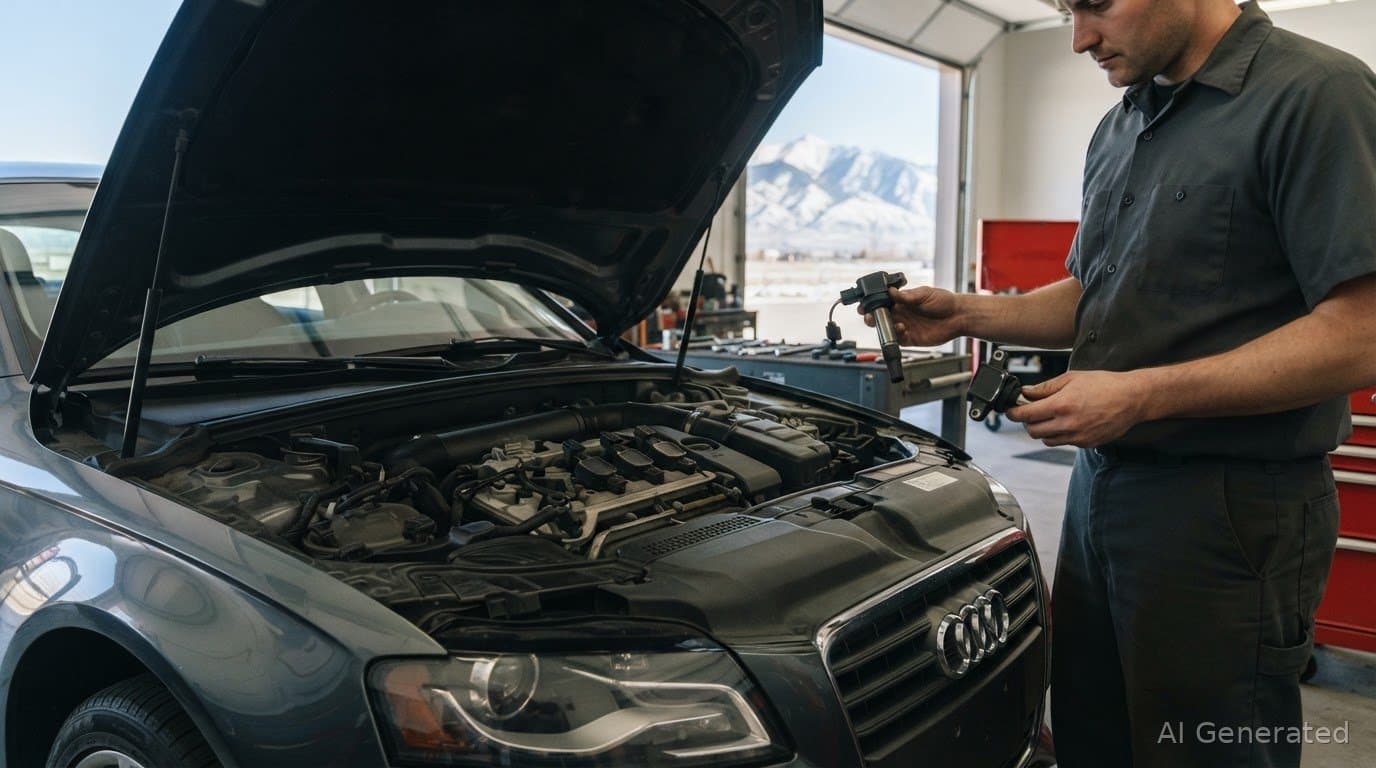
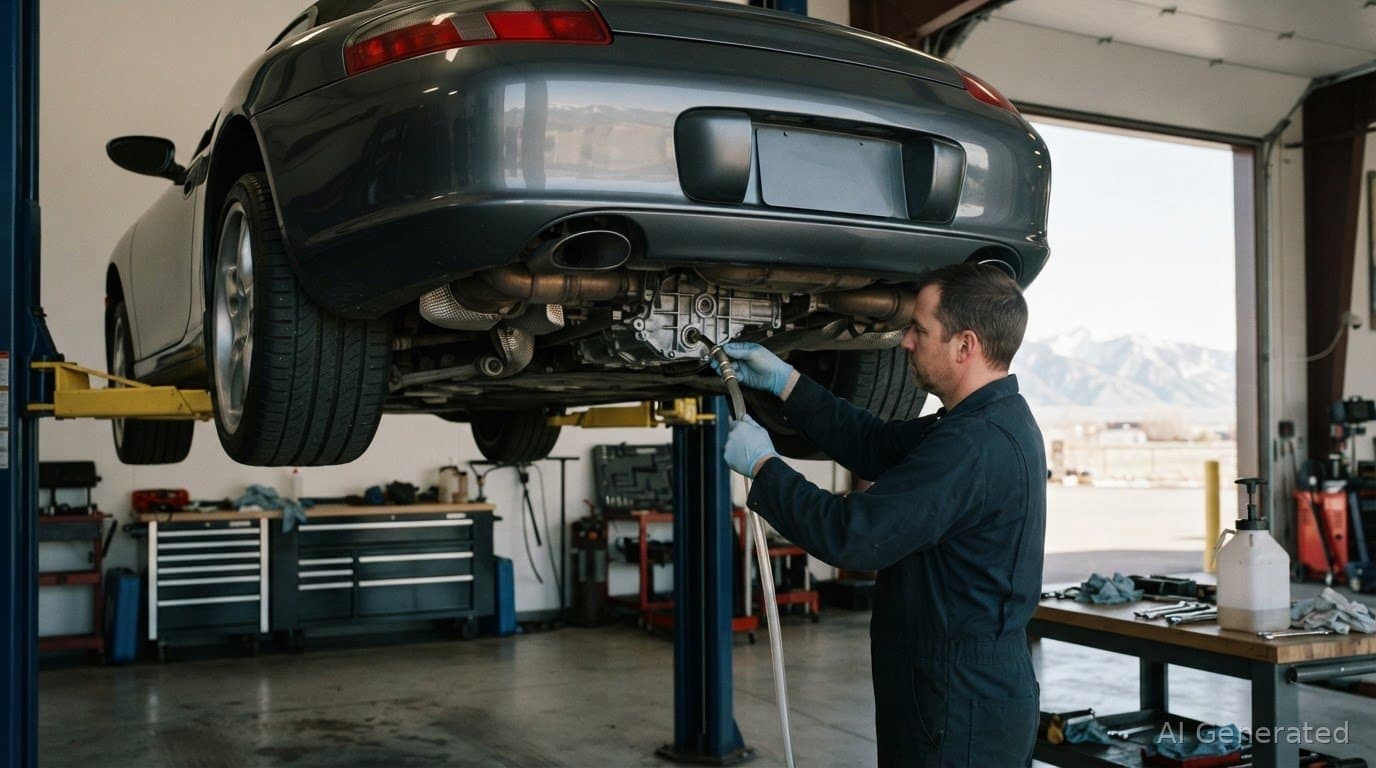
Euro Performance in Belgrade, MT, can assess European vehicles after a Yellowstone-area breakdown or rough-road incident. Once the vehicle is safely transported, an inspection can help distinguish visible damage from an underlying mechanical or electronic problem. A new vibration after hitting a pothole, for example, may warrant checking wheel alignment and related components before you resume a long drive.
Euro Performance provides specialized repairs for European brands such as BMW, Mercedes-Benz, Audi, Volkswagen, and Porsche. Factory Scheduled Maintenance can also help travelers keep up with their vehicle’s requirements. If handling changed after an impact, wheel alignment may be relevant; inspection findings determine the right next step.
For help assessing a European vehicle after travel-related trouble, contact European Auto Repair in Belgrade, MT | Euro Performance.
Plan Your Next Step With Confidence
Before setting out again, make room in your plans for a professional assessment if your vehicle’s behavior has changed. The results can help you decide whether to address a concern before continuing or schedule service based on the inspection findings. Don’t treat a warning or new noise as a diagnosis on its own.
Keep the vehicle’s maintenance records and service paperwork together. A complete history can help the technician understand previous work and evaluate what the vehicle needs next. This is especially useful when maintenance requirements vary by model.
Clear records and a professional assessment can help you make a more informed plan for the road ahead.
Frequently Asked Questions
Are there European car repair shops near Yellowstone National Park?
Euro Performance Auto Shop in Belgrade can help with European vehicle repairs related to a Yellowstone trip, though the shop is not inside the park. After a breakdown, the vehicle may need diagnosis before you continue traveling. A professional assessment can help distinguish a maintenance need from damage or a fault that affects safe operation.
Can I find European auto mechanics in West Yellowstone, MT?
Euro Performance is based in Belgrade, not West Yellowstone. If your vehicle has a brand-specific warning or unusual behavior, its model year and service history can help identify the relevant systems and maintenance requirements. Keep that information handy so the technician has useful context beyond the warning message.
Where can I get European car repair in Gardiner or Bozeman, Montana?
The repair facility is in Belgrade and serves Bozeman and the surrounding Gallatin Valley, but it is not located in Gardiner. European vehicles can differ substantially by model year and configuration, so an assessment should consider the specific vehicle rather than assume a fault based only on its brand. Service records can help clarify its maintenance history.
Are there European auto repair shops near Jackson Hole, Wyoming?
Euro Performance’s shop is in Belgrade, Montana, not Jackson Hole, Wyoming. If an issue began during a trip, keep roadside or rental-company paperwork with the vehicle’s records. These documents can provide context about earlier assessments or instructions, helping the repair professional understand what has already been addressed without treating an earlier assumption as a confirmed diagnosis.