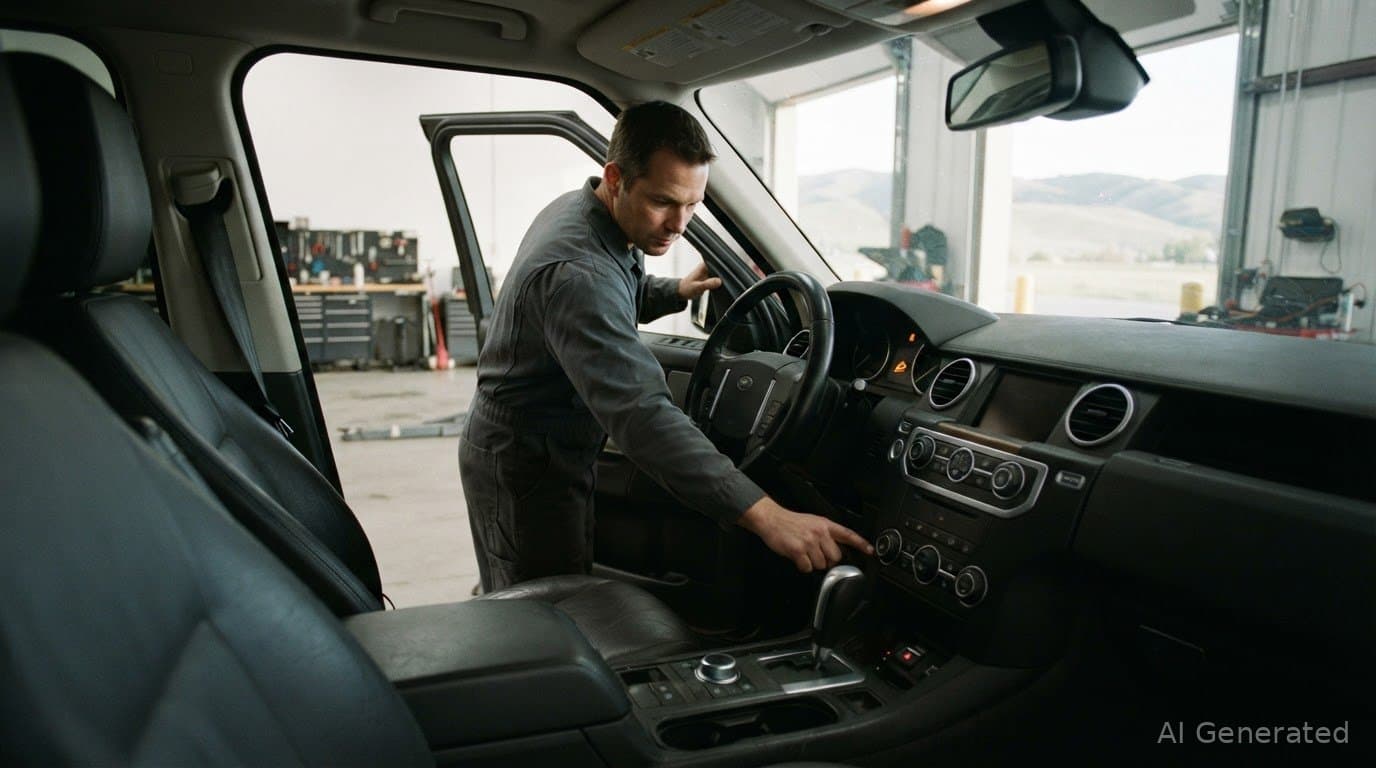
A Land Rover HDC warning means Hill Descent Control may not be available, so don’t rely on it to manage a steep descent. Resetting a Land Rover HDC fault message may clear the warning temporarily: the reset attempt involves switching the vehicle off for at least 30 seconds before restarting it. If the message returns, the reset hasn’t identified or fixed the underlying cause.
It’s understandable to hope a restart will clear a Land Rover HDC fault message, especially if the warning appeared suddenly. A software glitch may be involved, but low battery voltage, brake-system faults, or a wheel-speed sensor issue can also trigger an HDC warning. The message alone doesn’t reveal the cause.
This guide explains what the warning means, what to do next, and when a reset or software issue may be part of the diagnosis. It also explains why a warning that returns calls for professional diagnostics before you rely on the system again.
Key Takeaways
- Treat an HDC warning as a sign that Hill Descent Control may not be available, especially before driving on steep terrain.
- Low battery voltage can trigger the warning, but the message alone doesn’t identify the cause.
- Switching the vehicle off for at least 30 seconds and restarting it may clear the warning temporarily; a returning message needs further diagnosis.
- Professional diagnostics can help distinguish a software issue from a battery, brake-system, or wheel-speed sensor fault.
What Should You Do When You Get the HDC Fault Warning?
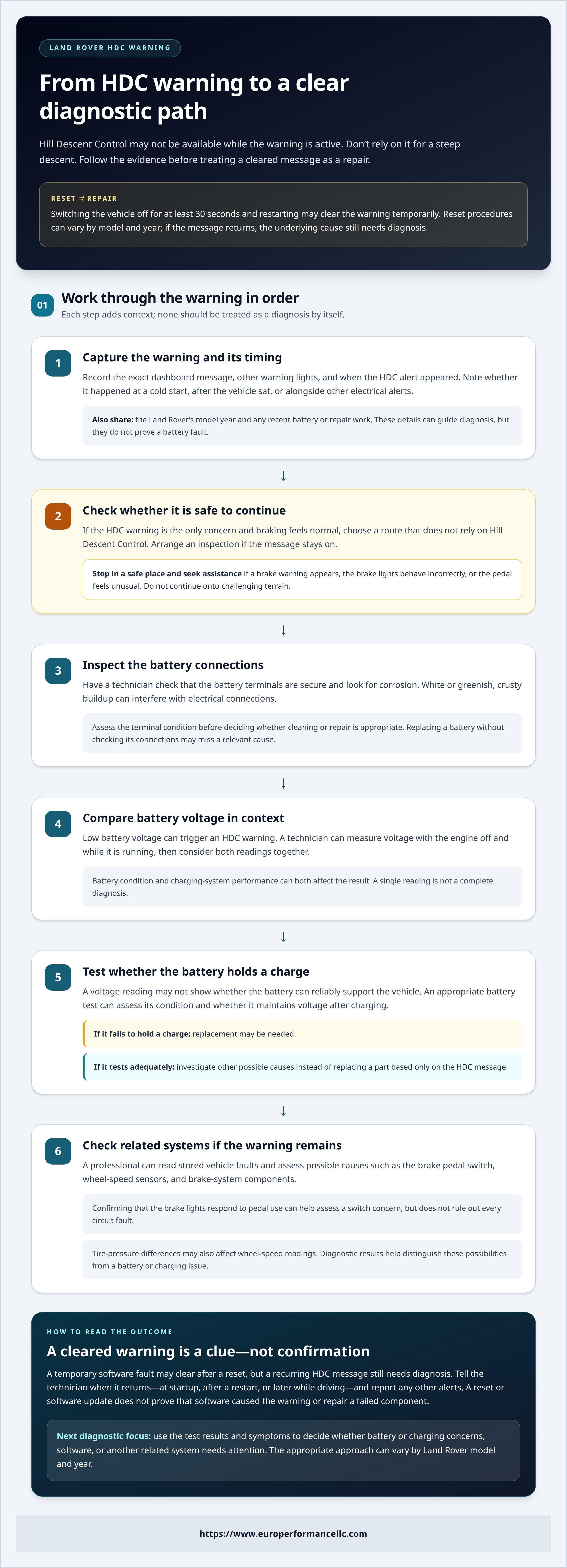
Follow a diagnostic sequence rather than treating a cleared warning as a repair. Hill Descent Control may be unavailable while the HDC fault is active, so don’t rely on it on steep terrain.
- Record the warning and driving conditions. Note the exact dashboard message, any other warning lights, and when the HDC alert appeared. Whether it came on during a cold start, after the vehicle sat, or alongside other electrical alerts can help a technician assess whether low battery voltage is involved. Share the Land Rover’s model year and any recent battery or repair work, too. These details guide diagnosis, but the message alone doesn’t prove a battery fault.
- Assess whether the vehicle can be driven safely. If the HDC warning is the only concern and braking feels normal, remember that Hill Descent Control may not assist on a steep decline. Choose a route that doesn’t rely on the system, and arrange an inspection if the message stays on. If a brake warning appears, the brake lights behave incorrectly, or the pedal feels unusual, stop in a safe place and seek assistance instead of continuing onto challenging terrain.
- Have the battery connections inspected first. A technician can check that the battery terminals are secure and look for corrosion. White or greenish, crusty buildup can interfere with electrical connections. The technician assesses the terminal condition and connections before deciding whether cleaning or repair is appropriate. A loose connection can contribute to an HDC warning, so replacing a battery without inspecting its connections may miss a relevant cause.
- Compare battery voltage under different conditions. Low battery voltage can trigger a Range Rover HDC fault. A technician can measure voltage with the engine off and while it’s running, then assess the readings in context. Comparing readings is more useful than treating one as a complete diagnosis, because both charging-system performance and battery condition can affect the result.
- Test the battery’s ability to hold a charge. A voltage reading doesn’t always show whether a battery can reliably support the vehicle. A technician can use an appropriate battery test to assess its condition and determine whether it maintains voltage after charging. If it fails to hold a charge, replacement may be needed. If it tests adequately, attention can shift to other causes instead of replacing a part based only on the HDC message.
- Check related systems if the warning remains. A professional can read stored vehicle faults and assess likely causes, including the brake pedal switch, wheel-speed sensors, and brake-system components. Confirming that the brake lights respond to pedal use can help assess a switch concern, but it doesn’t rule out every circuit fault. Tire-pressure differences may also affect wheel-speed readings. Diagnostic results help distinguish these possibilities from a battery or charging issue.
If the warning remains after the battery and brake lights are checked, consult a professional mechanic or Land Rover technician. Charging or replacing a weak Land Rover battery may address an HDC fault warning, but only if testing shows the battery is the cause.
Software glitches and system resets
A temporary software fault can trigger an HDC warning, and a reset may clear it. Treat a reset as a diagnostic clue, not proof that the underlying issue is fixed.
- Note when the warning appears and what follows it. Record whether the HDC message appears at startup or while driving, and note any other dashboard alerts. For example, an HDC warning followed by a “Special Programs Off” message gives a technician useful context about the sequence. Note whether restarting the vehicle changes the warnings, but don’t assume a temporary change confirms a software cause.
-
Consider Software Glitches
Ask a technician to consider a software issue if the warning appears intermittently or clears after restarting. A computer fault can trigger an HDC warning, and a system reset or software update may clear it. Neither outcome proves that software caused the alert. A recurring message still needs diagnosis, since an electrical or mechanical fault can produce similar symptoms.
- Describe the pattern before any fault memory is cleared. Tell the technician whether the warning returns immediately, after a restart, or during a later drive. Include related messages and any changes in vehicle behavior. These details help distinguish a one-time alert from a recurring fault. If a warning appeared alongside a suspension message, report both, but don’t assume the alerts share one cause.
-
How a Technician Resets the HDC System
Reset procedures can vary by Land Rover model and year, so follow the vehicle-specific guidance or have a technician assess the warning rather than relying on a general 30-second shutdown. A reset may clear a temporary warning, but it doesn’t repair a failed component or confirm a software glitch. The technician should note the original symptoms and check whether the HDC warning remains afterward.
- Check whether the warning returns under similar conditions. If the message clears, note whether it comes back at startup or later while driving. As a hypothetical example, a warning on a 2006 Range Rover HSE might return after approximately 10 miles. This illustrates why a cleared alert isn’t a confirmed repair; it doesn’t establish a standard distance or pattern for other Land Rover vehicles.
- Use diagnostic results to decide whether software needs attention. A technician can review stored fault information alongside the vehicle’s symptoms before recommending a reset or software update. The right approach can vary by Land Rover model and year. An update may address a software-related warning, but it shouldn’t replace checks for faults in systems that interact with HDC.
- Don’t keep resetting a persistent warning. Repeated restarts can make the alert disappear temporarily without resolving its cause. If HDC remains unavailable, avoid relying on it to control the vehicle on a steep descent. A returning warning or related brake alert calls for professional assessment, not another reset alone.
- Confirm the result after the diagnostic work. Ask the technician to explain whether the warning returned and what findings support the next step. If a software update or reset was performed, assess the result by the vehicle’s behavior and warning status afterward. A returning message calls for further diagnosis, not repeated clearing.
European Auto Repair in Belgrade, MT | Euro Performance
Euro Performance provides specialized European auto repair in Belgrade, MT, and can help when a Land Rover HDC warning returns after a restart or appears alongside other alerts. Electronic diagnosis can help investigate possible battery-voltage, brake-system, wheel-speed-sensor, or software issues. The warning alone doesn’t identify the cause, so diagnostic results should guide any repair rather than guesswork.
Share when the warning appears, any related dashboard messages, and whether restarting changed the alert. These details help explain the concern and guide the inspection. If the vehicle also shows a brake warning or has abnormal braking behavior, don’t rely on Hill Descent Control; arrange professional attention promptly.
For a recurring HDC warning or help determining the next diagnostic step, contact European Auto Repair in Belgrade, MT | Euro Performance.
Make the Next Drive a Confident One
A Land Rover HDC fault message reset should be one part of restoring confidence in the vehicle, not the only measure of success. The useful next step is a clear explanation of the inspection findings, recommended work, and how it relates to your Land Rover’s symptoms. Euro Performance provides a detailed estimate before work begins, and we only begin work on your car once you say yes.
Before arranging service, consider how you use the vehicle and the conditions it needs to handle. That context helps make the conversation about the warning relevant to your driving needs. A clear diagnostic plan can turn an uncertain alert into an informed maintenance decision.
For help with your Land Rover, contact European Auto Repair in Belgrade, MT | Euro Performance to discuss the next step. A clear diagnosis can help you move forward with greater confidence.
Frequently Asked Questions
What Does the HDC Warning Light in Your Land Rover Mean?
The warning means Hill Descent Control may not be available, so plan to descend without assistance from that feature. It doesn’t, by itself, indicate that the regular brakes have failed. Pay attention to any separate brake warning or change in braking, and avoid steep terrain where you would depend on HDC until the issue is assessed.
What does the Land Rover HDC fault message mean?
The message reports a problem affecting the HDC system, not a specific failed part. The exact wording and sequence of dashboard alerts can help narrow the diagnosis. Note whether another message appeared before or after it, and tell the technician what the vehicle was doing. Don’t interpret a related suspension or stability alert as proof of one shared fault.
How Does a Technician Reset a Land Rover HDC Fault Message?
A technician uses vehicle-specific diagnostic information to assess the warning and determine whether clearing it is appropriate after checks or repairs. Land Rover models and years can differ, so there isn’t one universal reset procedure for every vehicle. Share the model year and exact dashboard wording so the technician can choose an appropriate diagnostic approach instead of relying on a generic reset.
Can a Technician Clear a Land Rover HDC Fault by Restarting the Vehicle or Disconnecting the Battery?
A restart may make the warning disappear temporarily, but that doesn’t establish that the system is working correctly. Disconnecting the battery is not a dependable substitute for diagnosis, and the appropriate procedure can vary by vehicle. Before attempting a reset, record the exact warning and when it appeared so useful details aren’t lost.
What are the common causes of a Land Rover HDC fault?
Possible causes extend beyond the battery and wheel-speed sensors. A brake-pad wear sensor, steering-angle sensor, brake-pressure concern, or fault in the brake-switch circuit may also be involved in some cases. These are possibilities to investigate, not parts to replace preemptively. The technician weighs the vehicle’s symptoms and test results before identifying the cause.
Can low battery voltage trigger a Land Rover HDC fault message?
Yes, low voltage can trigger an HDC alert. Tell the technician whether other electrical warnings appeared at the same time, since that context can guide the assessment. A technician can distinguish a battery that isn’t maintaining its charge from a broader charging-system concern. The HDC message alone doesn’t establish that the battery needs replacement.