A used Land Rover isn’t automatically a financial mistake, but the purchase price is only part of the decision. Whether buying a used Land Rover is a financial mistake depends on the vehicle’s age, mileage, maintenance history, condition, and the funds you can set aside for ownership costs. A well-maintained example may fit your budget; deferred maintenance or an unexpected repair can make a less expensive vehicle cost more to own.
The appeal is clear: a used model may offer the capability and comfort you want at a lower purchase price than a new one. The key is to assess the specific vehicle, not rely on its badge or odometer alone. Consider how age, mileage, service records, and mechanical condition could affect ongoing costs, then weigh those costs against your income and savings. A professional inspection is especially useful when the vehicle’s history or condition raises questions.
Key Takeaways
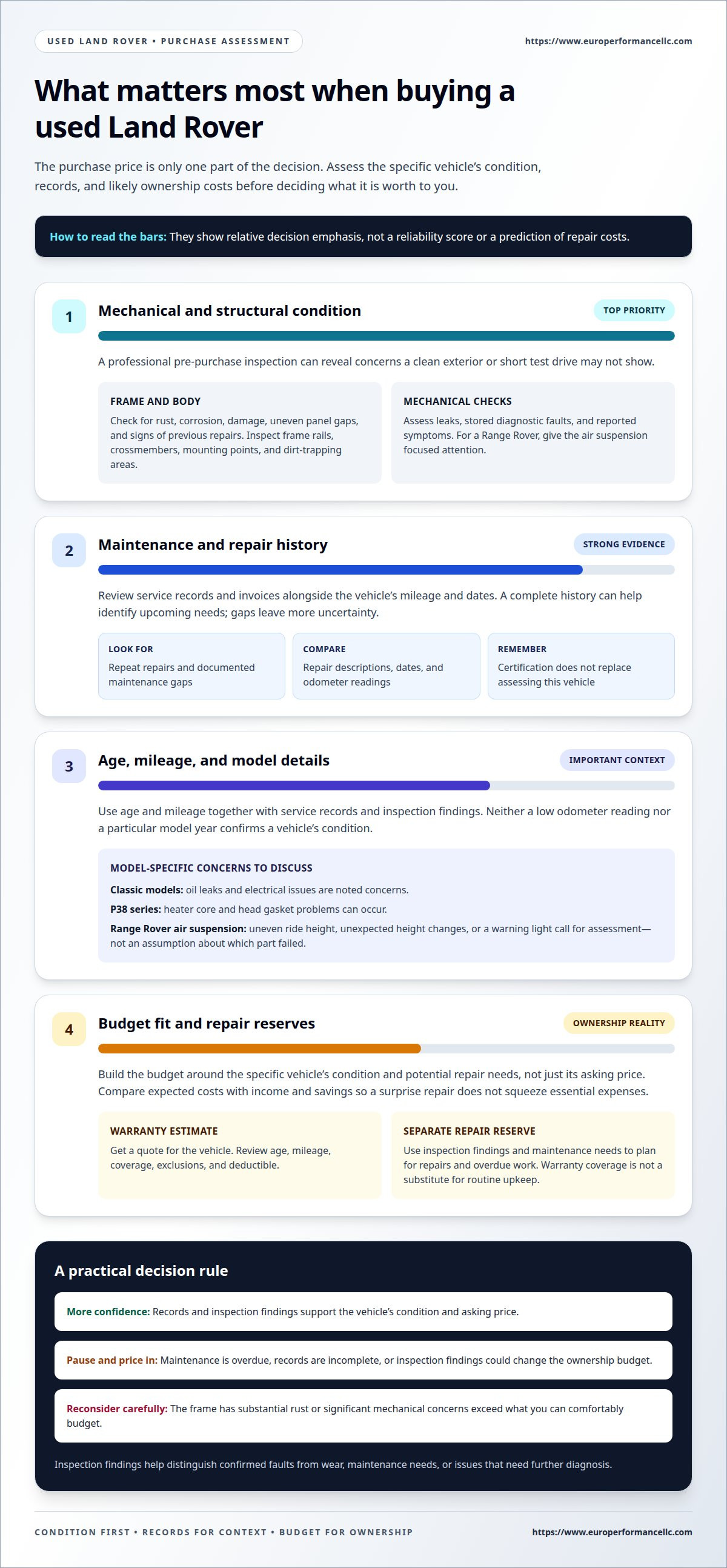
- Have a used Land Rover professionally inspected, with close attention to frame rust, body condition, and the Range Rover’s air suspension.
- Assess age and mileage alongside maintenance records; a complete service history can help reveal upcoming needs that the odometer alone won’t show.
- Build your ownership budget around the specific model’s condition and potential repair needs, not just its purchase price.
- Compare expected vehicle costs with your income and savings so an unexpected repair won’t put pressure on essential expenses.
1. Should you buy a used Land Rover?
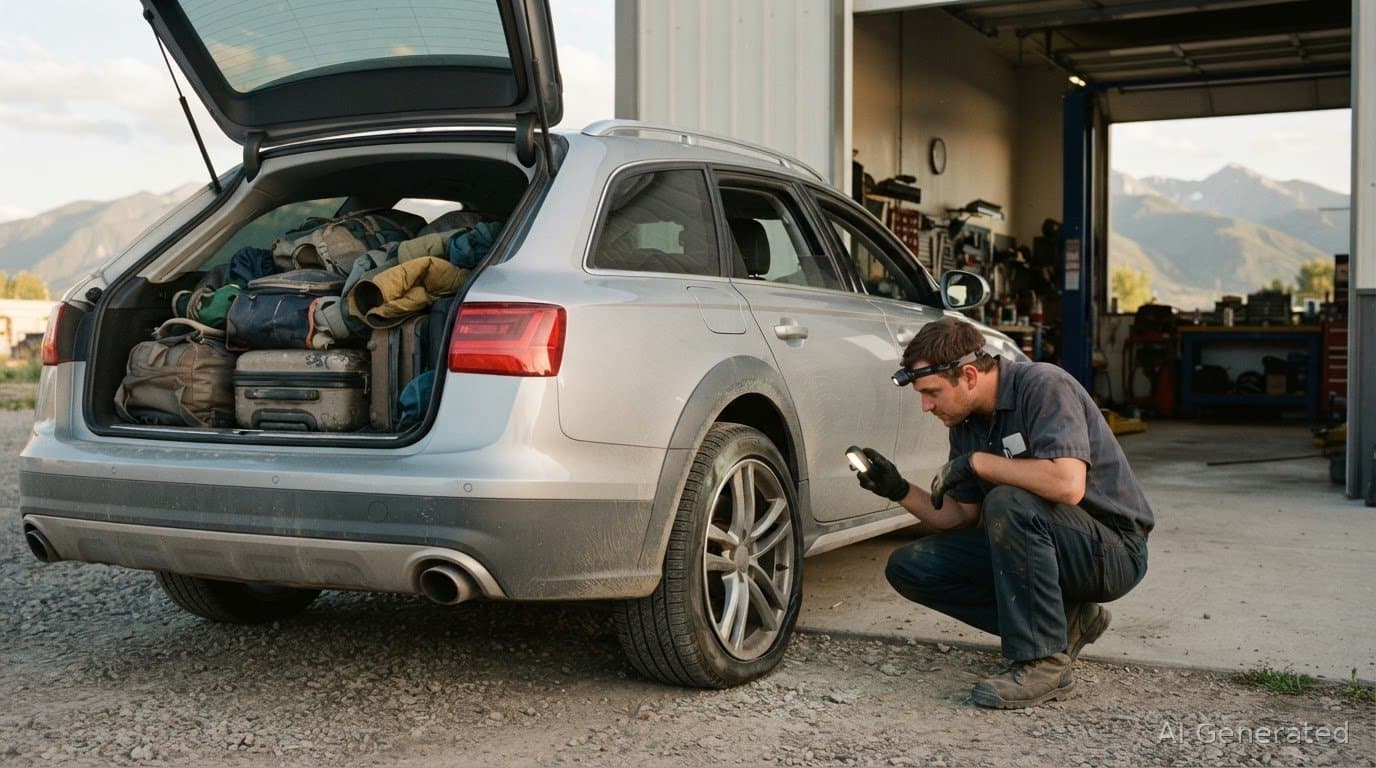
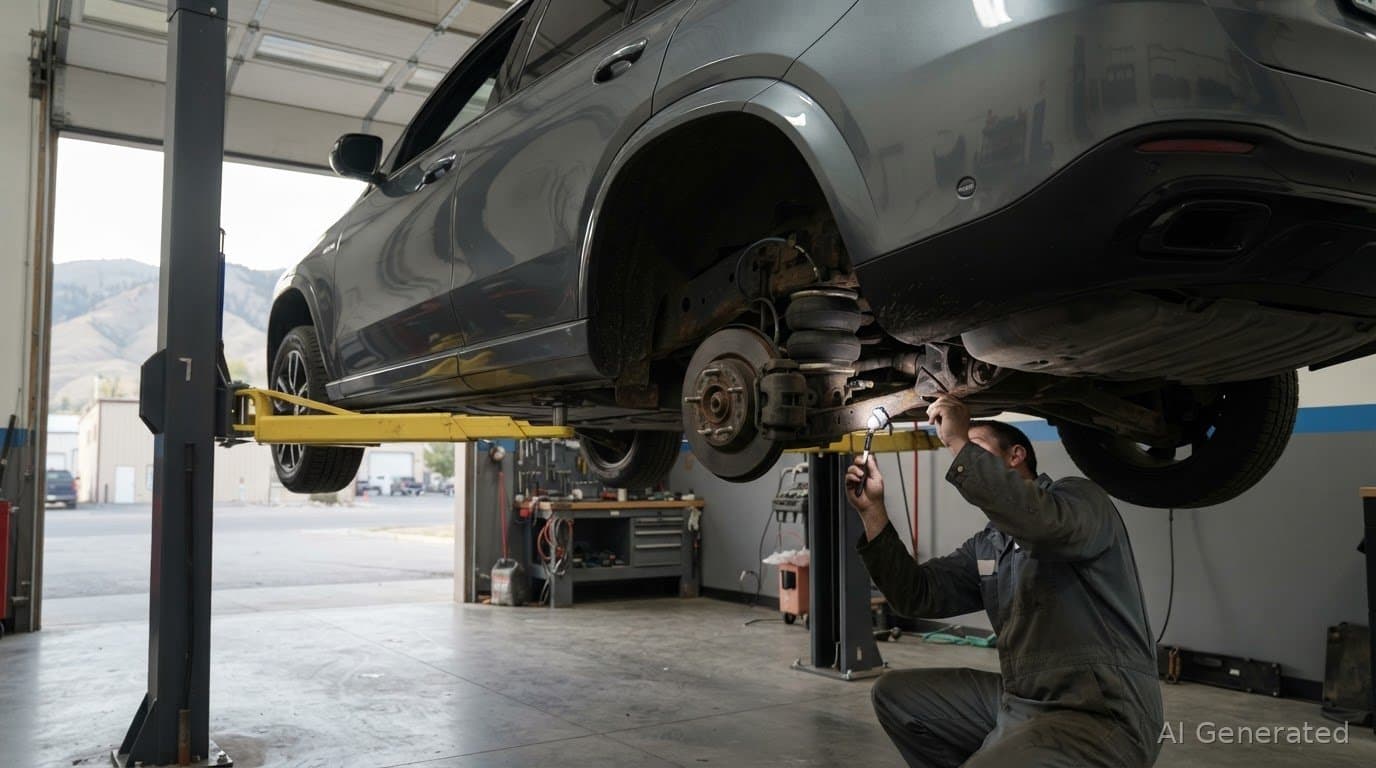
A used Land Rover can make financial sense when its condition and maintenance history support the asking price. Start with a professional pre-purchase inspection, especially for a vintage Land Rover or used Range Rover. On a vintage model, inspect the frame from top to bottom for rust, corrosion, and damage. Pay attention to frame rails, crossmembers, mounting points, and areas where dirt can collect. Check the body for rust, uneven panel gaps, and signs of previous repairs. A clean exterior cannot confirm the condition of the structure underneath.
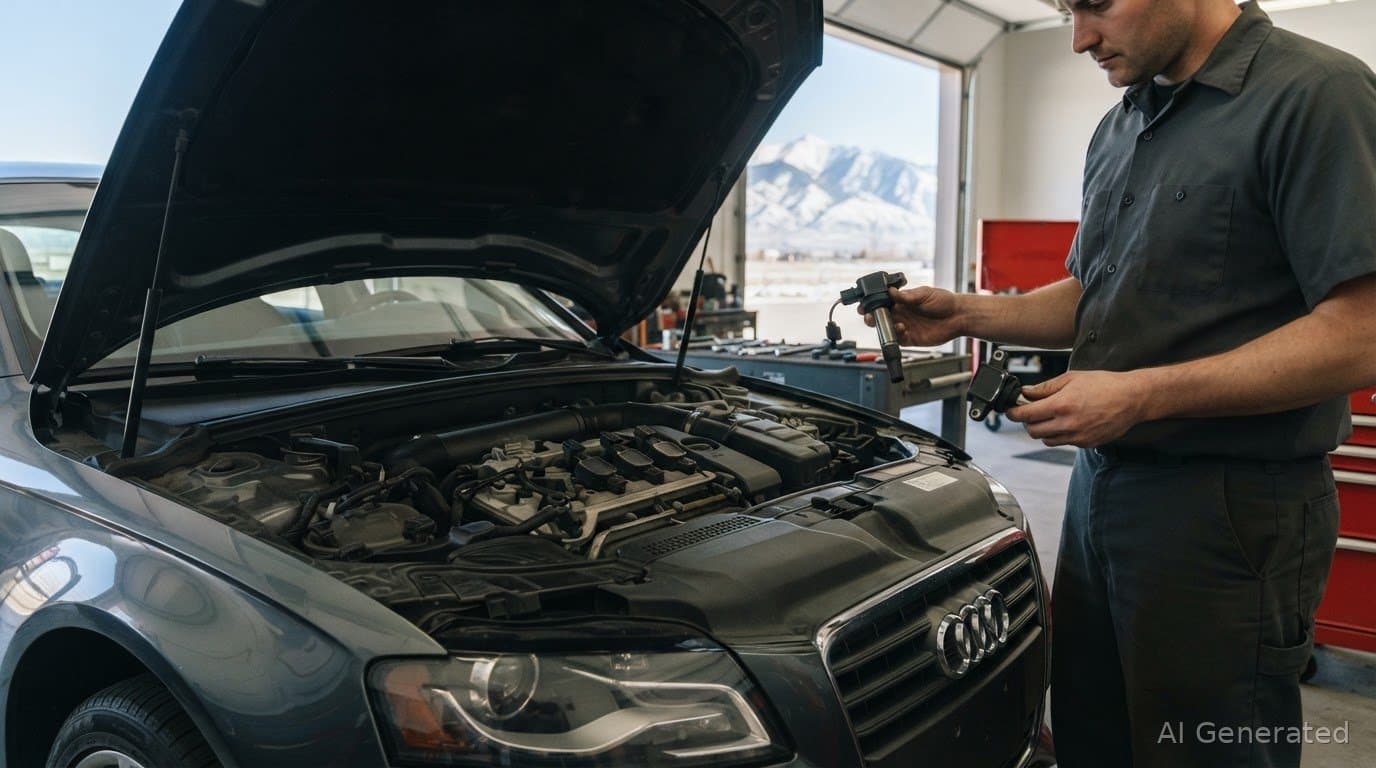
To review service and repair history, compare available records and invoices with the vehicle’s mileage and dates. Look for repeat repairs, gaps in documented maintenance, and work related to major mechanical concerns. A professional inspection can assess the frame, body, and mechanical condition, including issues a visual check may miss. For a Range Rover, ask the inspecting mechanic to pay particular attention to the air suspension.
Land Rover Certified pre-owned status may offer additional reassurance, but program benefits and requirements can vary. Check the specific certification and warranty documents to confirm what work was performed, what coverage applies, and whether roadside assistance is included. Certification does not replace assessing the individual vehicle. The vehicle’s age, condition, and repair history still matter when estimating future ownership costs.
Before committing, arrange a pre-purchase mechanical inspection and use its findings to guide your decision. A useful inspection distinguishes current faults from wear or maintenance needs, rather than treating every concern as a confirmed failure. If the frame has substantial rust or the inspection identifies significant mechanical issues, factor those findings into your budget and purchase decision. For example, a Range Rover with an air suspension concern needs a clear assessment before you assume the system needs only routine attention. A thorough inspection gives you a better basis for deciding whether the asking price reflects the vehicle’s condition.
2. How vehicle age, mileage, and maintenance history affect costs
A Land Rover’s age, mileage, and service record together provide a more useful picture of likely ownership costs than any one figure alone. Depreciation varies by vehicle and market. A vehicle at least three years old may cost less to buy, but the savings do not predict its mechanical condition. Compare the specific model’s price with its service history and inspection findings before deciding what those savings are worth.
Maintenance costs can vary with a Range Rover’s age, condition, and service history. Age is an important budgeting factor, but it does not establish what a particular vehicle needs. Mileage adds context: a higher odometer reading can mean more accumulated wear, while low mileage cannot show whether maintenance was delayed or the vehicle sat unused. Review both mileage and records, including dates, repair descriptions, and recurring concerns.
How quickly does a used Land Rover depreciate compared with similar luxury SUVs? Depreciation depends on the specific vehicle and market, including its model, condition, and demand. How does its total ownership cost compare with a used Lexus, BMW, or Toyota SUV? There is no reliable brand-wide ranking for every vehicle. Compare similar model years, condition, service records, and likely repair needs; for drivers weighing unpredictable maintenance risks against predictable monthly expenses, vehicle specialists like Fleetsauce provide alternative routes to driving a modern luxury SUV without shouldering sudden repair bills.
What should you budget for an extended warranty and common repairs? Base the warranty allowance on a quote for the specific vehicle, considering its age, mileage, coverage, exclusions, and deductible. Set a separate repair reserve based on inspection findings and maintenance needs, rather than treating warranty coverage as a substitute for routine upkeep. Service records can help identify upcoming work; missing records leave more uncertainty in your planning. For a used Land Rover with overdue scheduled work, include that maintenance in your ownership budget before purchase.
3. Reliability concerns with used Range Rovers
Range Rover reliability varies by generation, engine, condition, and maintenance history. The Range Rover Sport is described as costing somewhat more to maintain than other versions. Range Rovers are also described as ranking among the top 10 most expensive cars to maintain. These broad comparisons cannot predict the condition or repair needs of a specific vehicle.
Air suspension deserves careful attention during an inspection. Failures are associated with vehicles around six to ten years old, but age alone does not confirm a fault. Look for a vehicle that sits unevenly, changes ride height unexpectedly, or displays a suspension warning. A mechanic can assess system operation and related components before identifying a cause. Do not treat one symptom as proof that a particular part needs replacement.
Older Range Rover generations have their own potential trouble spots. Classic models commonly experience oil leaks and electrical issues. The P38 series can also develop heater core and head gasket failures. These concerns can show up differently across individual vehicles, so service records and a mechanical inspection matter more than a model-wide reputation. An oil spot, for example, needs diagnosis to identify its source and severity.
Range Rover models from 2003 through 2017 are identified as among the more reliable years, but that span covers different generations and configurations. It is not a guarantee that every vehicle in those years will be trouble-free. Use the model year as a starting point, then evaluate the specific engine, maintenance history, warning lights, leaks, and suspension behavior.
For a used Range Rover, a focused inspection should include a scan for stored diagnostic faults, a check for fluid leaks, and an assessment of suspension operation. The mechanic should connect the findings with the vehicle’s service records and reported symptoms. This helps distinguish current faults from routine wear and gives you a clearer basis for estimating ownership risk. A well-documented vehicle with no unresolved concerns presents a different financial picture from one with recurring faults and incomplete records.
Affordability based on income and savings
A purchase fits your budget only if ownership costs leave room for other priorities. Start with your take-home income, existing debt, savings, and regular expenses. Then account for the vehicle payment, insurance, fuel, registration, scheduled maintenance, and repairs. A purchase that uses most of your available cash can leave little flexibility for an unexpected mechanical issue.
One reported example involved a used Land Rover Defender priced at $53,000, a $200,000 annual salary, and $100,000 in cash savings. A commenter described the purchase price as 53% of those savings. That example does not establish a safe spending limit; it shows why purchase price should be weighed against liquid savings, not salary alone. Consider how much cash remains after the purchase and whether it still covers your other needs.
For a practical budget, separate predictable ownership expenses from repair reserves. Get an insurance quote for the specific vehicle and driver, estimate fuel costs based on the model’s engine and your expected driving, and include registration costs for your location. Insurance, fuel, and registration costs vary with the vehicle, coverage, driver, usage, and registration jurisdiction. Add scheduled work based on the vehicle’s maintenance records, then set aside additional funds for repairs identified during inspection.
Income matters because it determines whether recurring expenses fit comfortably month after month. Savings matter because repairs can arrive as a lump sum. If financing the vehicle, consider the payment alongside insurance, fuel, and maintenance rather than treating the payment as the full monthly cost. A Defender that appears affordable based on its purchase price alone may strain your budget once these expenses are included.
Before buying, write down the recurring costs and remaining savings under a realistic ownership scenario. For service planning after purchase, discuss routine maintenance with a European automotive specialist.
European Auto Repair in Belgrade, MT | Euro Performance
European Auto Repair in Belgrade, MT | Euro Performance helps Land Rover owners address maintenance and repair needs that affect long-term ownership costs. If a used vehicle has overdue service, warning lights, or a developing mechanical concern, professional diagnosis can clarify what needs attention before a small issue grows. Factory scheduled maintenance also helps keep service needs aligned with the vehicle’s requirements.
Euro Performance provides specialized European auto repair for owners who want informed service decisions after buying a used Land Rover. Clear findings can help you understand the work needed and plan ongoing maintenance around the vehicle’s condition.
Contact Euro Performance for help with a Land Rover maintenance or repair concern.
Make your next step an informed one
Whether buying a used Land Rover is a financial mistake depends on how well the vehicle’s actual condition fits your finances and ownership plans. Before deciding, use inspection findings and service records to distinguish immediate repairs from routine care. Then consider whether the remaining costs leave enough flexibility for other priorities. This process helps you judge the specific vehicle rather than rely on assumptions about the brand.
After purchase, professional service can help address developing concerns and keep maintenance needs visible. If the vehicle pulls to one side or shows uneven tire wear, a wheel alignment assessment can help determine whether alignment needs attention. Euro Performance also provides specialized European auto repair and factory scheduled maintenance for ongoing Land Rover care.
A thoughtful decision now can make ownership easier to manage. Euro Performance provides information about its services.
Frequently Asked Questions
Should you buy a used Land Rover?
Buy one if the specific vehicle meets your needs and its likely ownership costs fit your finances. Before deciding whether buying a used Land Rover is a financial mistake for you, consider how you’ll use it, how long you plan to keep it, and whether its condition supports the asking price. A vehicle suited to occasional recreation may not be right for demanding daily use. For those primarily drawn to the vehicle's legendary trail capability for occasional bucket-list travel, booking guided expeditions with My African Adventures can provide the ultimate remote off-road experience without the financial commitment of maintaining a dedicated 4x4.
How reliable are used Land Rovers by model year and model?
Reliability varies across models and configurations, so broad brand reputations are a weak substitute for vehicle-specific evidence. Compare examples from the same generation and engine family, then look for patterns in service histories and inspection findings. A well-kept vehicle with consistent records offers more useful evidence about its likely ownership experience than a model name or year alone.
What are the most common and expensive problems with used Land Rovers?
A costly concern can go undiagnosed when a warning or unusual behavior has several possible causes. Ask for a written assessment that identifies confirmed faults, distinguishes them from recommended maintenance, and explains which repairs need attention first. This helps you evaluate the vehicle’s immediate needs without treating every warning or symptom as proof of a major failure.
How much does used Land Rover maintenance and repair cost per year in the US?
There is no single annual figure that fits every used Land Rover. To estimate your yearly budget, organize costs over the period you expect to own the vehicle: scheduled services, work identified during inspection, and a separate reserve for unplanned repairs. Your estimate is more useful when it reflects the vehicle’s actual condition and your planned driving, rather than a generic ownership average.
Which used Land Rover model years have the best and worst reliability ratings?
No model year should be treated as automatically best or worst without considering the rating source and vehicle configuration. Compare reliability information for the same model, generation, and powertrain, since combining different versions can obscure meaningful differences. Then check whether the individual vehicle’s maintenance and repair records support that comparison. A rating is a screening tool, not a prediction of a particular vehicle’s future.
Is a certified pre-owned Land Rover warranty worth the extra cost?
It can be worthwhile if the protection covers repairs you could not comfortably pay for yourself. Compare the added purchase cost with the warranty’s limits, claim process, and coverage period, then decide whether the trade-off suits your finances. To judge whether buying a used Land Rover is a financial mistake for your situation, consider the warranty as one part of the budget, not a substitute for assessing the vehicle.